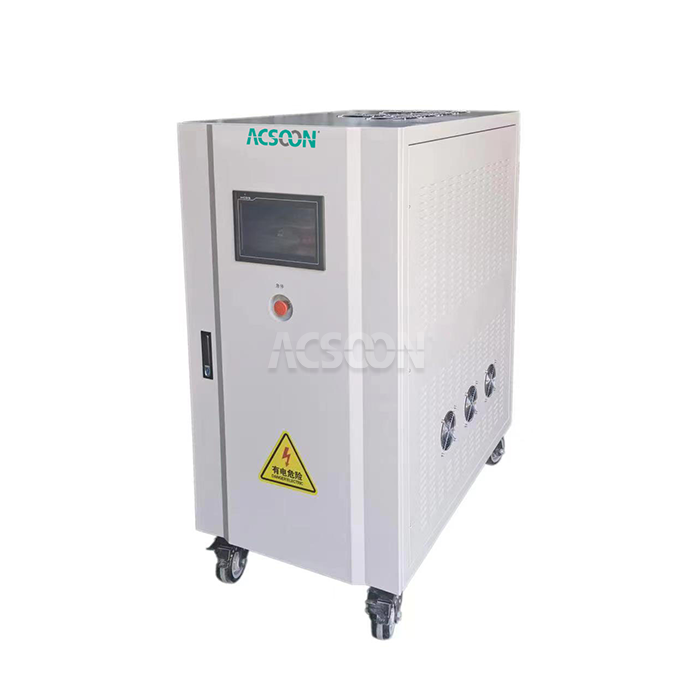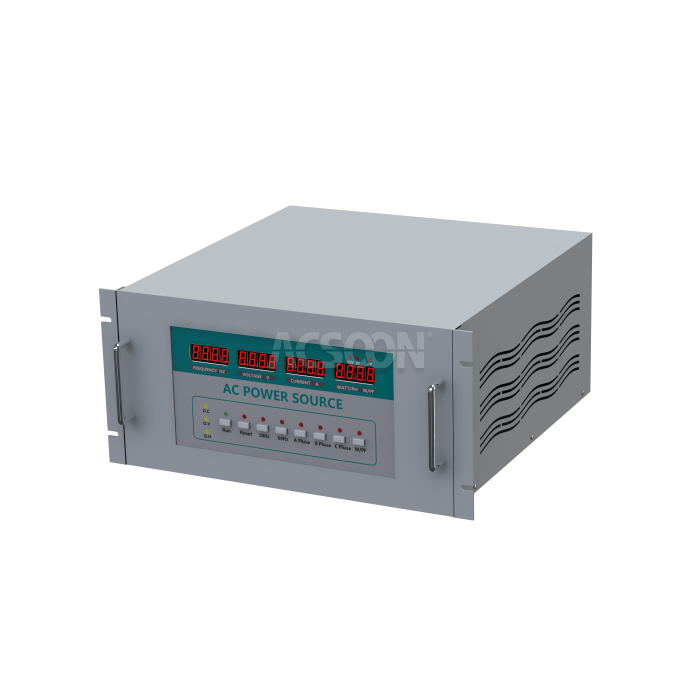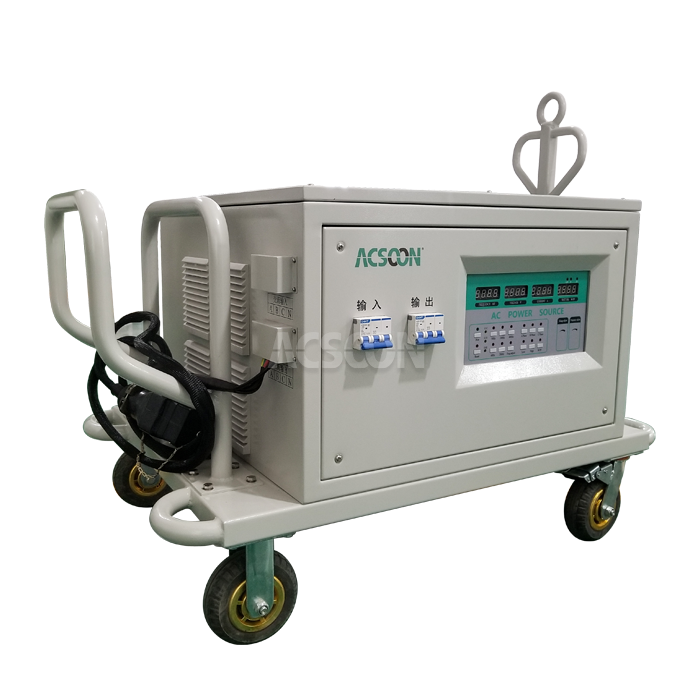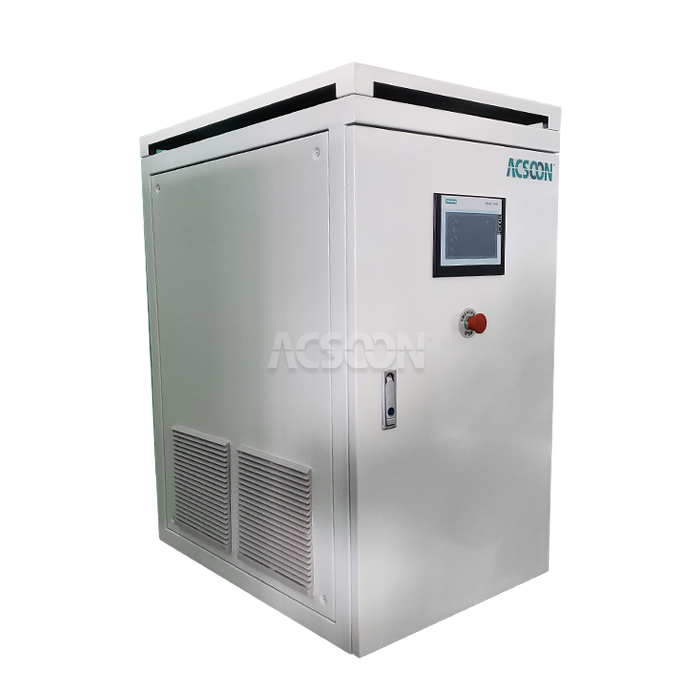




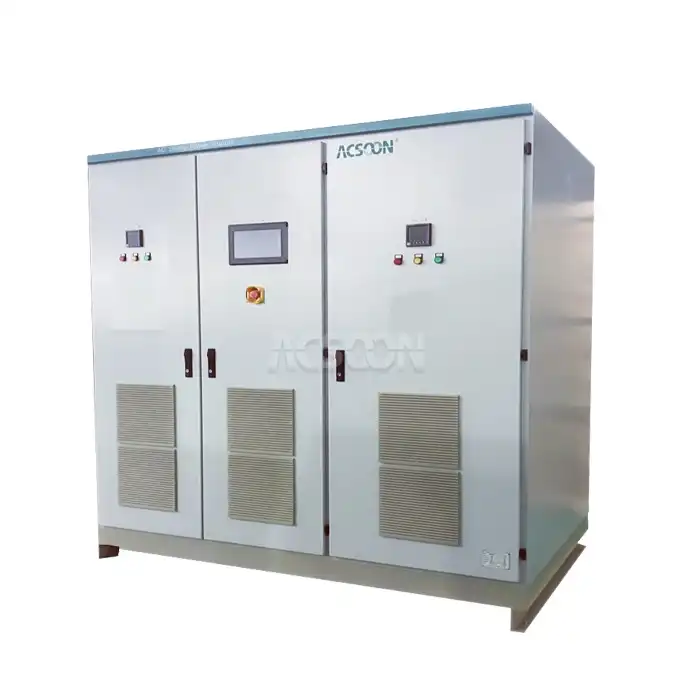
Vessel to Shore Power Converter
2.Technology: IGBT-based Static Frequency Converter with 12-Pulse Input
3.Input: 3-Phase, 440V/480V, 60Hz (Shore Side) or 400V/415V, 50Hz
4.Output: 3-Phase, 440V, 60Hz (Vessel Side) or vice versa; Clean, Stable Power
5.Applications: Cold Ironing, Port Electrification, Cruise & Cargo Ships, Naval Vessels
6.Core Features: High Efficiency, Low THD, Grid Code Compliance, Automatic Synchronization
7.Brand: ACSOON (Port Power Solutions Provider).
- Product Description
Vessel to Shore Power Converter | Shore Connection System Power Supply
XI'AN JERRYSTAR INSTRUMENT CO., LTD engineers the Vessel to Shore Power Converter, a critical component for shore connection (cold ironing) systems. This converter ensures seamless and safe power transfer between the local port grid and a vessel's onboard electrical network, enabling ships to shut down auxiliary engines while docked. It provides precise voltage and frequency conversion, meeting stringent port and international marine standards for clean, reliable shore power.


Datasheet
| Parameter | Specification |
|---|---|
| Model Series | ACSOON High-Port SFC Series |
| Input (Shore Side) | Voltage: 3-Phase 440V/480V, 60Hz or 400V/415V, 50Hz Tolerance: ±10% Voltage, ±2% Frequency |
| Output (Vessel Side) | Voltage: 3-Phase 440V, 60Hz or 400V/415V, 50Hz (Configurable) Power: 100kVA, 200kVA, 500kVA, 1000kVA, etc. |
| Voltage Regulation | ≤ ±1% FS |
| Frequency Stability | ≤ ±0.1% FS |
| Output THD | <3% @ linear load |
| Efficiency | ≥92% |
| Input PF | ≥0.9 (with 12-pulse option) |
| Protections | Over/Under Voltage, Over Current, Short Circuit, Phase Loss, Over Temperature |
| Cooling | Forced Air |
| Standards | IEC/ISO/IEEE 80005-1, IEC 62613, EN 61557 |

Vessel to Shore Power Converter Main Features
- Bi-Directional Compatibility: Can be configured for 50Hz-to-60Hz or 60Hz-to-50Hz conversion as required.
- Excellent Power Quality: Low harmonic distortion (THD<3%) and precise regulation protect sensitive shipboard electronics.
- Automatic Synchronization: Features for smooth and automatic synchronization with the vessel's network before connection.
- Comprehensive Monitoring: Integrated control panel with communication (RS485/Modbus) for remote monitoring and control.

Why Choose ACSOON Vessel to Shore Power Converter?
- Ensures Compatibility: Bridges differences in voltage and frequency between shore grids and various vessel electrical systems.
- Maximizes Fuel Savings & Emissions Reduction: Enables ships to use clean shore power, cutting fuel consumption and port-side air pollution.
- High Reliability & Uptime: Built with industrial-grade components and robust protection for continuous, mission-critical operation.
- Simplifies Compliance: Helps ports and shipping companies meet IMO, IEC/ISO/IEEE 80005-1 standards for shore connection systems.
Vessel to Shore Power Converter Application Areas
- Commercial Ports & Terminals: Providing standardized power for container ships, tankers, and bulk carriers.
- Cruise Ship Homeports: Supplying high-quality power to luxury liners for hotel loads during turnarounds.
- Naval Bases & Shipyards: Supporting naval vessels and ships under repair with stable shore power.
- Ferry & RoPax Terminals: Enabling quick and frequent connections for short-sea shipping routes.

Our Services

Quality Control
- Design Review & Simulation: Electrical and thermal performance is validated through simulation prior to prototyping.
- Incoming Component Certification: All major components (IGBTs, transformers) require manufacturer certificates and are sample-tested.
- Stage Testing: Each major assembly (rectifier, inverter, control board) is tested before final integration.
- Type Testing Protocol: Sample units undergo rigorous type tests per relevant standards, including harmonic analysis and fault ride-through tests.
R&D Results
- Advanced Grid Support Functions: Developed capabilities for reactive power support and low-voltage ride-through (LVRT) to meet modern port grid codes.
- Enhanced Maritime Protection Schemes: Implemented specialized protection algorithms for marine electrical fault scenarios.
- Compact Power Density: Optimized layout using liquid-cooled IGBT stacks for higher power ratings in a smaller footprint.
- Cyber-Secure Communication: Upgraded communication interfaces with enhanced security protocols for port network integration.


Packaging and Transportation
- Modular & Protected Packaging: For large systems, sub-assemblies are shipped in separate, clearly labeled, and cushioned crates.
- Corrosion Protection: All external metal surfaces receive an extra layer of protective coating suitable for maritime saline environments.
- Detailed Installation Kit: Includes comprehensive mounting hardware, connection diagrams, and cable lug specifications.
- Project Logistics Coordination: We provide door-to-site logistics planning, especially for oversized components, coordinating with port authorities.
After‑Sales Service
We offer an extended 36-month warranty for core components, 24/7 specialized technical support, on-site commissioning services, and long-term maintenance agreements tailored to port operational schedules.

Qualification Certification
ISO 9001:2015 Certified for design and manufacturing quality assurance;Type Approval Certificates: Products can be certified by major marine classification societies (e.g., DNV, ABS, BV) upon project request;CE & EMC Compliance: Meets European directives for safety and electromagnetic compatibility;Test Reports: Full set of factory acceptance test (FAT) reports provided for each unit.


FAQ |
|---|
| Q1: What is the primary purpose of a Vessel to Shore Power Converter? |
| A: Its primary purpose is to adapt the electrical power from the local port's grid to match the specific voltage, frequency, and quality requirements of a ship's internal electrical system, allowing the ship to connect to shore power and turn off its engines. |
| Q2: Can one converter system handle different types of ships? |
| A: Yes, if designed with sufficient adjustable range. Modern converters are programmable and can be set to deliver various standard output voltages and frequencies (e.g., 440V/60Hz for some vessels, 400V/50Hz for others) to accommodate different ships. |
| Q3: How does this help ports meet environmental regulations? |
| A: By enabling shore power, it eliminates exhaust emissions (SOx, NOx, PM, CO2) from ships at berth, directly contributing to improved local air quality and helping ports fulfill "green port" initiatives and regulatory targets. |
| Q4: What is the typical payback period for a shore power system using this converter? |
| A: The payback period varies based on fuel costs, electricity tariffs, and vessel traffic. It typically ranges from 3 to 7 years, driven primarily by significant fuel savings for ship operators and potential port fee incentives. |
| Q5: Is special training required for port personnel to operate this system? |
| A: Yes, we recommend and provide comprehensive operational and safety training for port engineers and technicians to ensure safe and efficient connection/disconnection procedures. |
Contact Us
For technical specifications or global solutions for the Vessel to Shore Power Converter: acpower@acsoonpower.com, or submit your requirements using the form at the bottom of our website.