




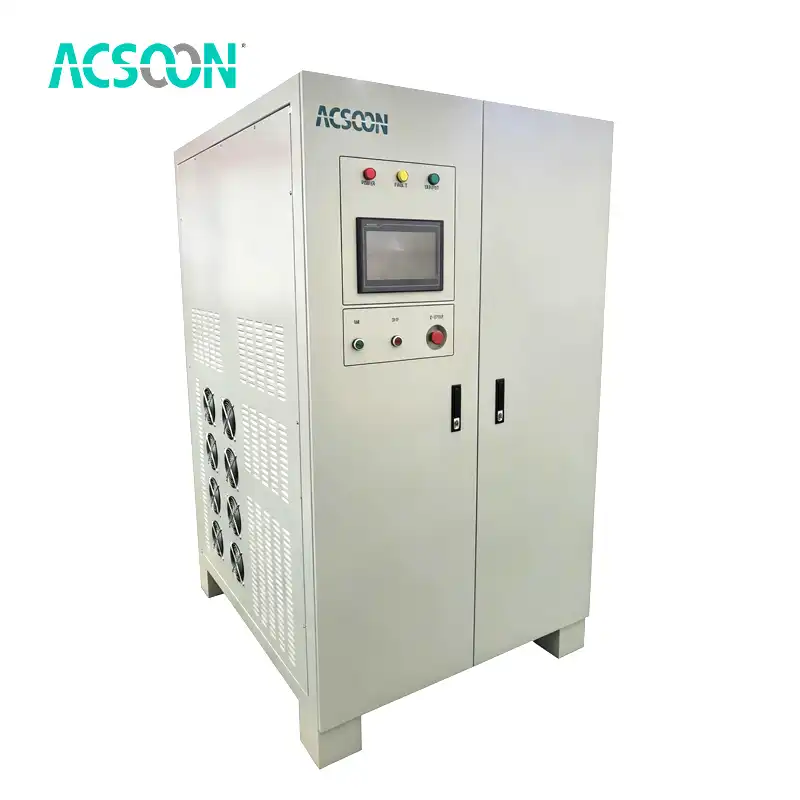
ACF60W-330150 150kVA Static Frequency Converter
- Product Description
How to Choose a 150kVA / 160kVA Static Frequency Converter: A Professional Procurement Guide for Industrial Applications
Before Purchasing a High Capacity Frequency Converter: What Should Engineers Consider?
When purchasing a 150kVA or 160kVA static frequency converter, many buyers focus only on output power capacity. However, in industrial applications, aviation systems, marine electrical systems, and laboratory testing environments, selecting the correct frequency converter requires a complete evaluation of:
Power compatibility
Voltage requirements
Frequency conversion range
Load characteristics
Output waveform quality
Protection functions
Long-term reliability
A frequency converter is not simply a device that changes 50Hz to 60Hz. It is a complete AC power conversion system designed to provide controlled, stable, and reliable electrical power for equipment operating under different power standards.

For engineering procurement teams, choosing the correct industrial static frequency converter can directly affect equipment safety, testing accuracy, and operational efficiency.
1. Determine Why You Need a Frequency Converter
Before selecting a capacity, the first question is:
What problem does the frequency converter need to solve?
Different industries have different power requirements.
Case 1: Imported Equipment Cannot Match Local Grid Frequency
Many industrial machines, testing systems, and electrical equipment are manufactured according to different regional standards.
Examples:
Equipment manufactured in the United States:
60Hz power system
Equipment manufactured in Europe:
50Hz power system
When imported equipment operates on an incompatible frequency, problems may occur:
Motor speed deviation
Equipment malfunction
Reduced efficiency
Overheating risk
Incorrect test results
A 50Hz to 60Hz frequency converter or 60Hz to 50Hz frequency converter provides a stable power environment without modifying the original equipment design.
2. Calculate the Required Capacity Correctly
One of the most common mistakes during frequency converter purchasing is selecting capacity only according to the rated power of the equipment.
Professional selection should consider:
Load Type
Different loads require different power margins.
Resistive Load
Examples:
Heating equipment
Laboratory loads
Usually requires lower starting capacity.
Motor Load
Examples:
Pumps
Compressors
Industrial motors
Requires consideration of:
Starting current
Motor acceleration
Short-term overload capability
Electronic Equipment Load
Examples:
Aircraft electronics
Testing systems
Precision instruments
Requires:
Low harmonic distortion
Stable voltage
Stable frequency
For a 150kVA / 160kVA frequency converter application, engineers normally evaluate:
Continuous operating power
Peak power demand
Starting current
Load fluctuation
The ACF60W series supports overload capability of 125% for 60 seconds and 150% for 1 second, helping handle temporary load changes.
3. Confirm Input Power Conditions Before Ordering
A professional procurement process starts with checking the available local power supply.
Important questions:
What is the existing grid input?
Common industrial input options include:
380V Three Phase
400V Three Phase
415V Three Phase
440V Three Phase
480V Three Phase
The ACF60W series supports multiple input voltage configurations including 208V, 380V, 400V, 415V, 440V and 480V three-phase systems.
What frequency is available?
Common grid frequencies:
50Hz
60Hz
The frequency converter should be compatible with the local power network.
The ACF60W series supports 50Hz and 60Hz input frequency operation.
4. Check Output Requirements of Your Equipment
Before purchasing, customers should confirm:
Output Voltage
Different industries may require:
115V single phase
120V single phase
200V three phase
208V three phase
400V/440V three phase
Output Frequency
Different applications require different frequencies:
Industrial Equipment
Usually:
50Hz
60Hz
Aviation Applications
Common requirements:
400Hz AC power
Testing Applications
May require:
Adjustable frequency output
The ACF60W series provides adjustable frequency output from 45Hz to 200Hz or customized frequency ranges according to application requirements.
5. Why Output Waveform Quality Matters
A professional buyer should not evaluate only frequency conversion capability.
The quality of output power directly affects connected equipment.
Important technical indicators include:
Pure Sine Wave Output
Required for:
Aircraft systems
Electronic testing equipment
Precision instruments
Low Harmonic Distortion
High harmonic distortion may cause:
Equipment heating
Control system errors
Measurement deviation
For industrial power applications, low THD output is an important selection factor.
The ACF60W specification provides clean sine wave output with THD less than 3% under linear loads.
6. Evaluate Protection and Reliability Features
For industrial projects, equipment downtime creates additional costs.
A professional frequency converter should include:
Electrical Protection
Check whether the system provides:
Over voltage protection
Over current protection
Short circuit protection
Overload protection
Thermal Protection
High-capacity converters operate under significant electrical loads.
Temperature monitoring and overheating protection are essential for continuous operation.
The ACF60W series includes protection and alarm functions for over voltage, over current, overheating and other abnormal conditions.
7. Choose According to Industry Application
Aviation Industry Procurement Considerations
When purchasing a frequency converter for aviation applications, focus on:
Frequency accuracy
Voltage stability
Output waveform quality
Equipment compatibility
Typical applications:
Aircraft maintenance facilities
Aviation electronic testing
Aerospace laboratories
Marine Industry Procurement Considerations
Marine applications usually require:
Stable shore power
Long operation capability
Compatibility with ship electrical systems
Important factors:
Voltage matching
Frequency stability
Environmental adaptability
Industrial Testing Procurement Considerations
Factories and laboratories should evaluate:
Adjustable output parameters
Measurement accuracy
Repeatable testing conditions
Applications include:
Motor testing
Transformer testing
Export equipment verification

8. Important Questions to Ask Frequency Converter Suppliers
Before purchasing, professional buyers should request:
Technical Questions
What is the continuous output capacity?
Can the converter handle motor starting current?
What is the output THD value?
What frequency range is adjustable?
What protection functions are included?
Can voltage and frequency be customized?
Project Questions
Where will the equipment be installed?
Is it indoor or outdoor application?
What is the expected working environment?
Is long-term continuous operation required?
Are spare parts and technical support available?
9. Common Mistakes When Buying a Frequency Converter
Mistake 1:
Choosing only based on kVA rating.
Better approach:
Evaluate load type and operating conditions.
Mistake 2:
Ignoring output waveform quality.
Better approach:
For sensitive equipment, always confirm:
THD
Voltage stability
Frequency stability
Mistake 3:
Selecting a converter without future expansion consideration.
Better approach:
Consider:
Future equipment addition
Load growth
Long-term project requirements
Professional Procurement Checklist for 150kVA / 160kVA Frequency Converter
Before placing an order, confirm:
Electrical Requirements
✔ Input voltage
✔ Input frequency
✔ Output voltage
✔ Output frequency
✔ Phase configuration
Load Requirements
✔ Total power consumption
✔ Starting current
✔ Load type
✔ Continuous operation time
Performance Requirements
✔ Pure sine wave output
✔ THD requirement
✔ Voltage stability
✔ Frequency stability
Installation Requirements
✔ Cooling method
✔ Protection class
✔ Installation environment
✔ Maintenance access
Final Consideration: Selecting the Right Frequency Converter Is About System Compatibility
A high-capacity static frequency converter is a critical part of an electrical power system, not just a frequency conversion device.
For industrial, aviation, marine, and laboratory applications, the correct selection should balance:
Power capacity
Electrical compatibility
Output quality
Reliability
Protection design
Future operating requirements
A professional procurement decision ensures that equipment receives stable power under different international electrical standards and maintains reliable performance throughout its service life.
If you need it,Contact us at Email: acpower@acsoonpower.com ACF60W technical datasheet and quotation today.
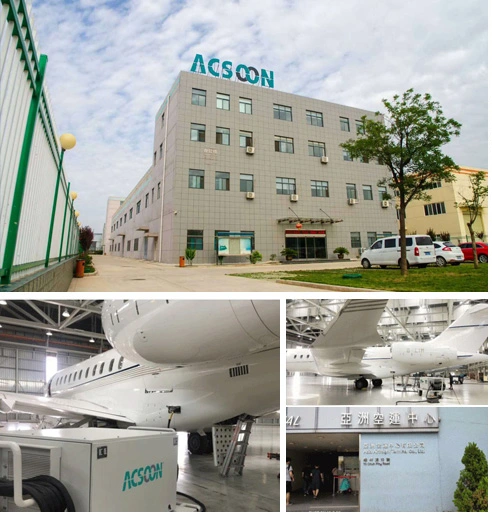
ABOUT US
·28,698+ long-term repeat clients globally with stable repeat orders
·19+ years domestic & export manufacturing experience for aviation ground power equipment
·7,000+ sq.m modern production factory
·24/7 customer service:<30 mins quick response + lifetime after-sales support
·60+ independent patented technologies
·Certified as China National High-Tech Enterprise
·Multiple provincial awards, including Shaanxi AAAAA-Level Credibility Enterprise certification
Long Standing
Customer
Over 19 years
experience
Factory Area
7/24H
High-Quality
Efficiency Service
Custom Solution & Quotation
Need a reliable 2kVA Frequency Converter Manufacturer?
Contact ACSOON for:
✔ Technical datasheet
✔ Customized voltage/frequency solution
✔ OEM cooperation
✔ Project quotation
📩 Get Price / Technical Consultation
Response within 24 hours by engineering team.
Our Services
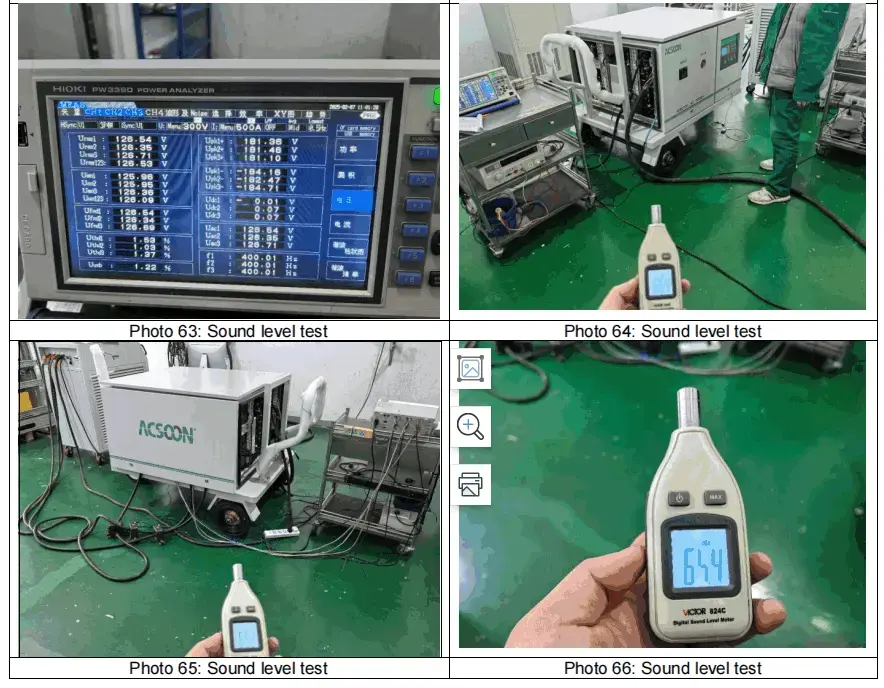
Quality Control
- Every unit tested – 2 hours at 80% load. Check for overheating.
- Output verified – Voltage accuracy at five set points. Record kept.
- Isolation test – 2kV between input and output for 1 minute. No breakdown.
- Knob cycle – 500 full rotations on each potentiometer. No scratchy spots.
R&D Results
- Cost reduction – Replaced digital display with analog meters. Cut cost by 20%.
- Transformer – Used a standard toroid instead of custom wound. Still meets specs.
- Enclosure – Painted steel instead of powder coat. Same protection, lower cost.
- User feedback – Hobbyists wanted bigger knobs. Added large rubberized knobs.

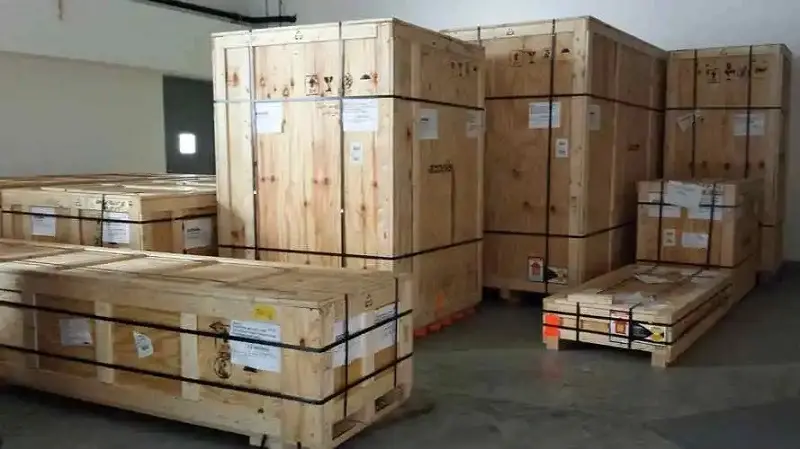
Packaging and Transportation
- Shipped from Xi'an – Cardboard box with foam inserts. Fits a courier.
- Included – Power cord (1.5m), output cable with universal socket, printed quick start.
- Manual – One sheet of paper. Double‑sided. No USB.
- Pallet – 8 units per pallet for dealers.
After‑Sales Service
- 1‑year warranty – Return to Xi'an for repair. Parts and labor.
- Spare parts (transformer, fan, meters) kept in Xi'an. Express shipping.
- Email support – We answer within one business day. Simple questions only.
Qualification Certification
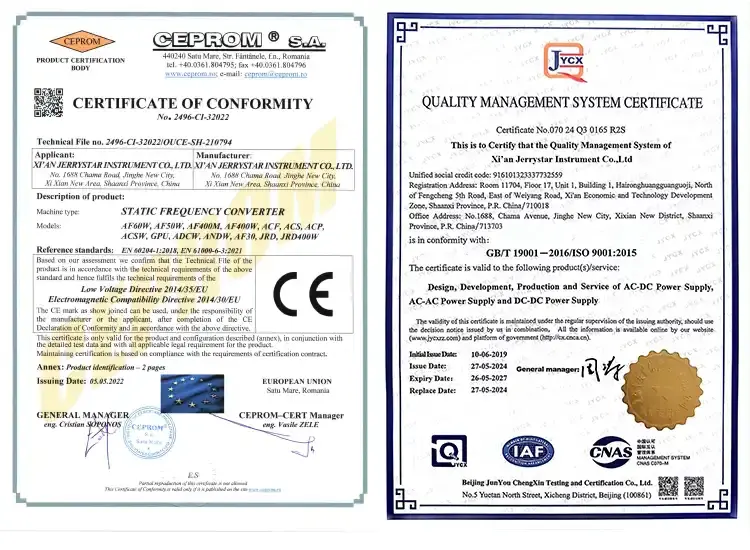
- CE – LVD and EMC tested.
- ISO 9001:2015 – Our Xi'an facility.
- RoHS – Compliant.
FAQ
Q1: Is this suitable for aircraft maintenance use?
Yes. It is commonly used in MRO environments where 400Hz aircraft power is required.
Q2: Can it simulate aircraft power conditions accurately?
Yes, it provides stable 115V/120V 400Hz output with low harmonic distortion.
Q3: Does it support both single-phase and three-phase output?
Yes, both configurations are available depending on system size.
Q4: What kind of load can it handle?
It is designed for linear and mixed industrial loads with isolated transformer support.
Q5: Is it suitable for continuous operation?
Yes, it is designed for industrial duty cycles with long-term operation in mind.
Q6:How can I get more details?
A:Click here.Send inquiry get price and specification.
Q7:Can a 60Hz to 50Hz converter change both frequency and voltage?
Yes. A static frequency converter can adjust frequency and voltage output according to application requirements. The AF60W supports adjustable voltage and frequency configurations for different electrical systems.
Q8:What equipment needs a 60Hz to 50Hz converter?
Common applications include imported industrial machines, motors, pumps, laboratory equipment, testing systems and marine electrical equipment that require a different frequency from the local power grid.
Q9:What is the difference between a transformer and a frequency converter?
A transformer can change voltage but cannot change frequency.
A frequency converter changes the electrical frequency by converting AC power into a controlled AC output.
Q10:Can AF60W convert 50Hz to 60Hz?
Yes. The AF60W series supports bidirectional frequency conversion according to system configuration requirements.
Contact Us
For technical specifications or global solutions: acpower@acsoonpower.com, or submit your requirements using the form at the bottom of our website.
YOU MAY LIKE
 VIEW MOREVoltage and Frequency Stabilizer
 VIEW MOREBest Variable AC Power Supply
 VIEW MOREFrequency Converter 60HZ To 50HZ 220V
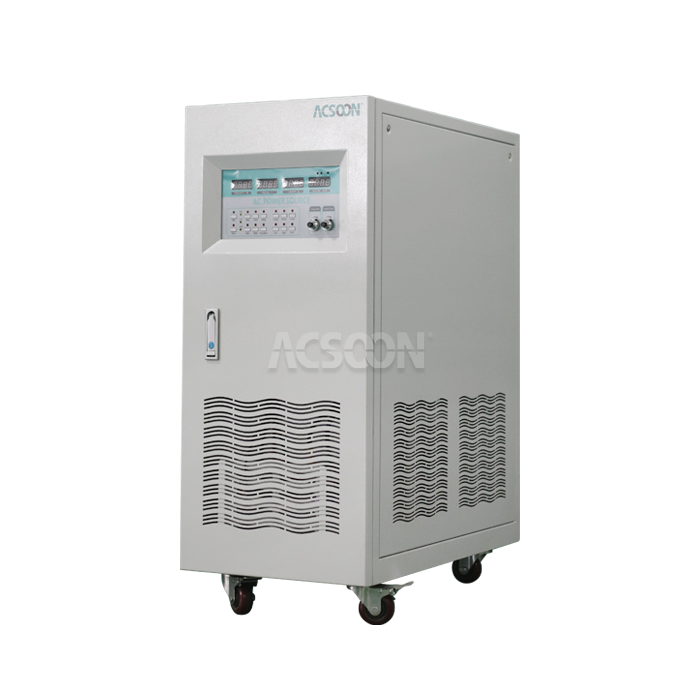 VIEW MORE60 HZ To 50 HZ Frequency Converter
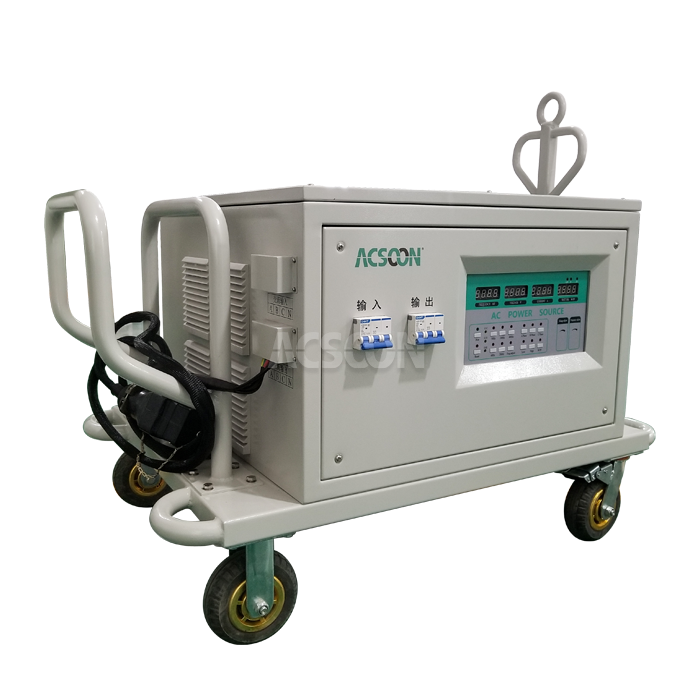 VIEW MORE400HZ AC Power Supply
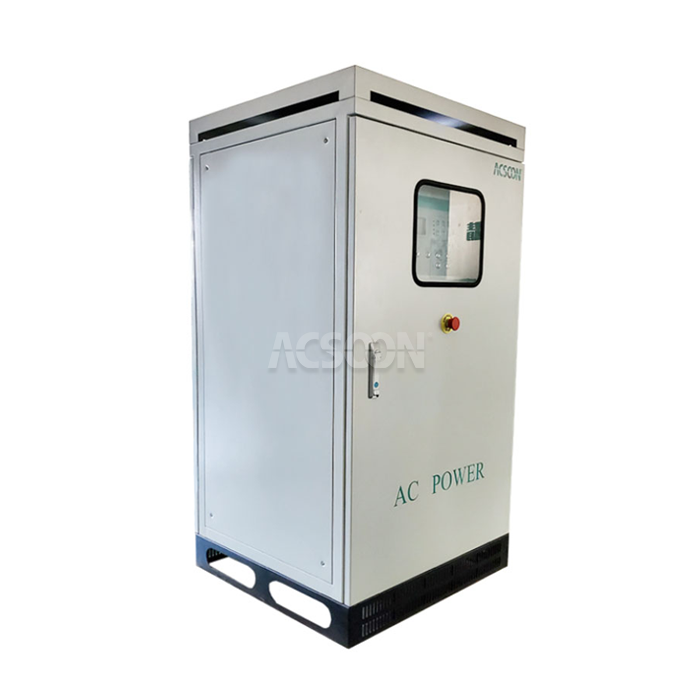 VIEW MORE400 HZ to 60HZ Frequency Converter
 VIEW MOREShore Power Frequency Converter
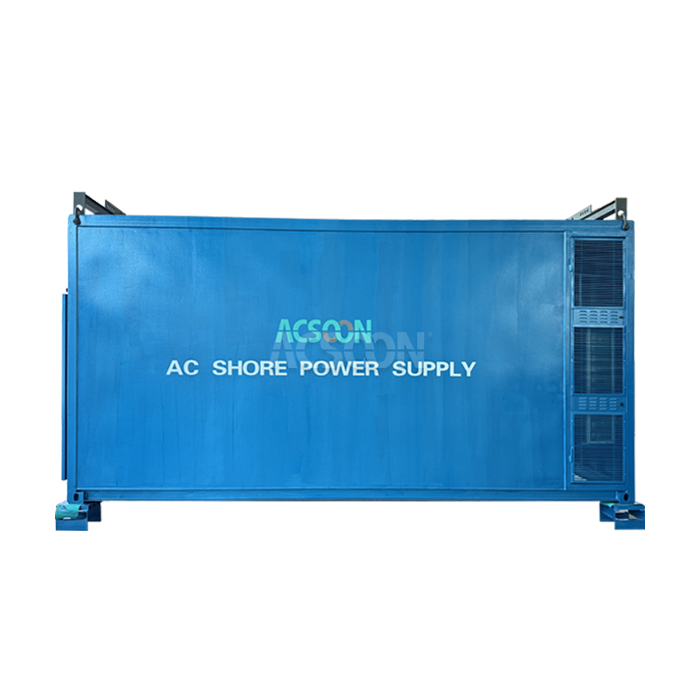 VIEW MOREContainerized Static Frequency Converter