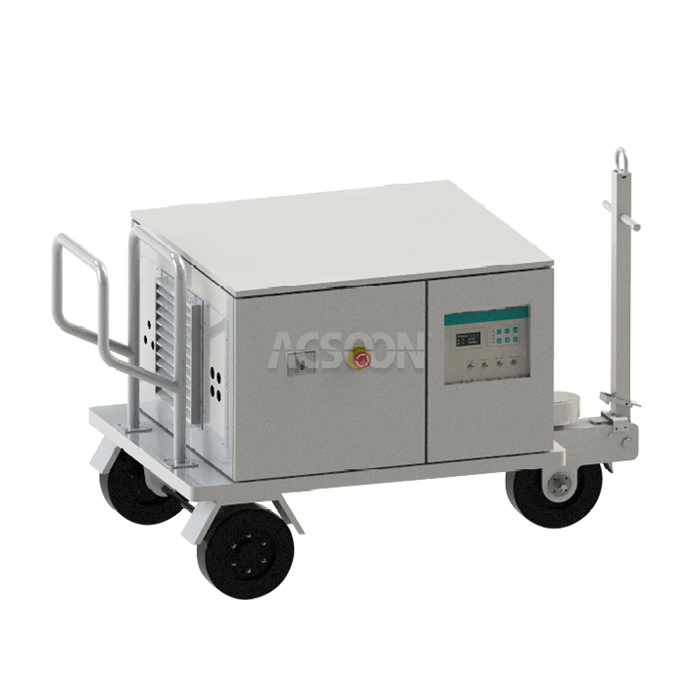
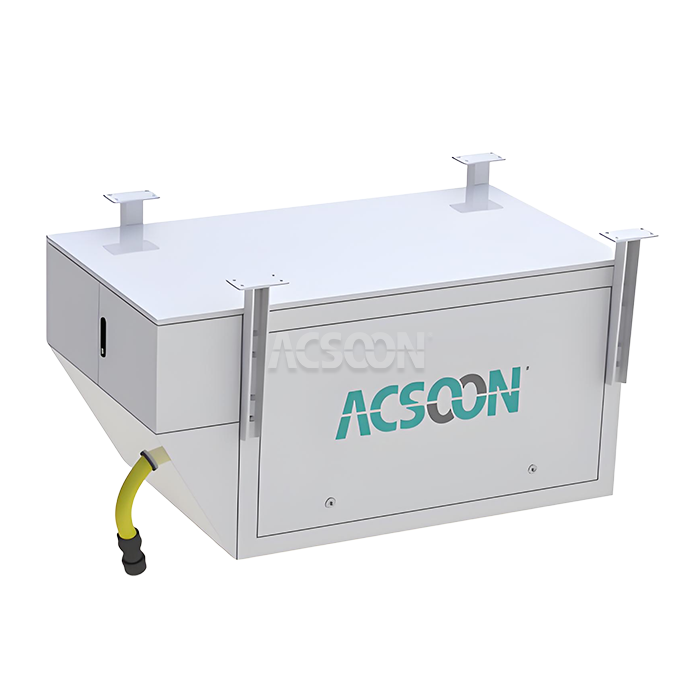
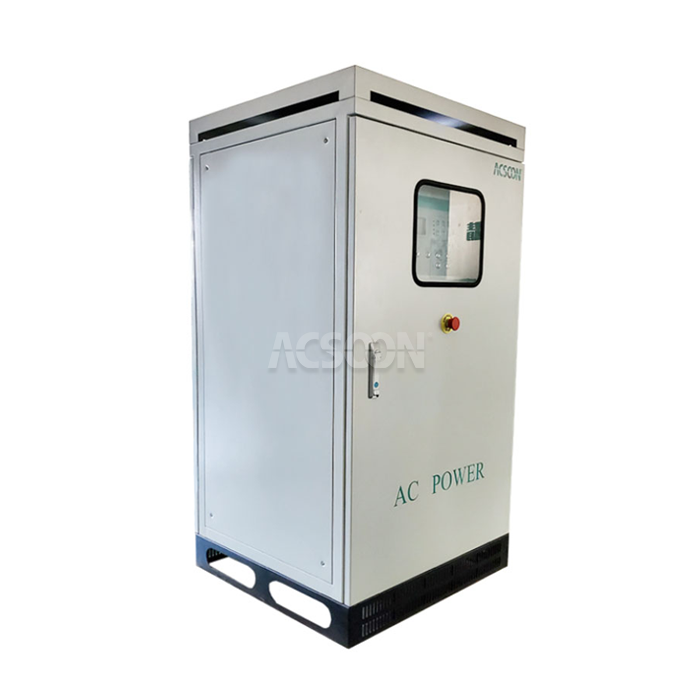
400 Hz Power Converter for Test Labs: Stable Output, Low Distortion
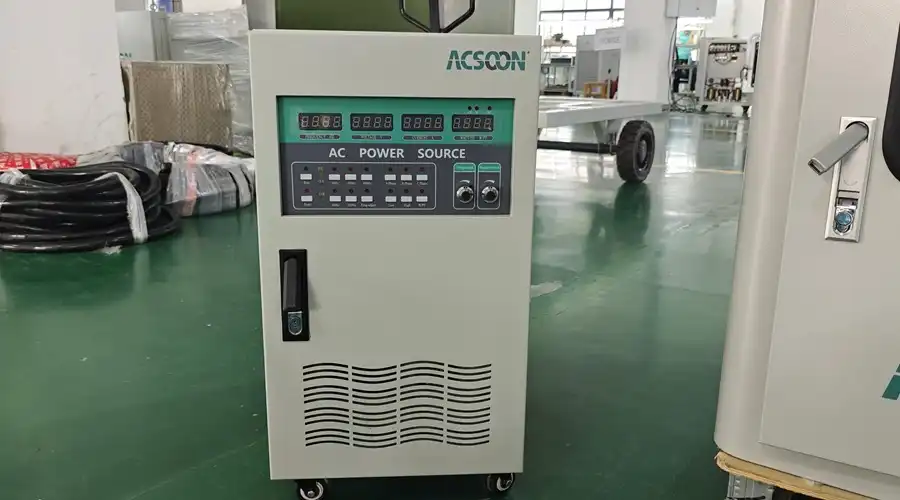
When it comes to military and aircraft tests, accuracy and dependability are very important. The 400 Hz Power Converter for Test Labs turns out to be an important part for making sure stable power and low distortion for many important uses. Models like the AF400M-330025 show how this unique device works. It has a 25kVA power level and can be set up in a number of different ways. Standard 50/60 Hz power is changed to the 400 Hz frequency needed by aircraft systems by these static frequency converters. They are an important part of making sure that aircraft training systems can simulate real-world situations without using real engines or APUs. With features like voltage ranges that can be changed, strong protection mechanisms, and the ability to work with a wide range of testing situations, these converters have become essential in modern test labs, helping to advance aerospace technology and making sure that aircraft systems meet the highest safety and performance standards.
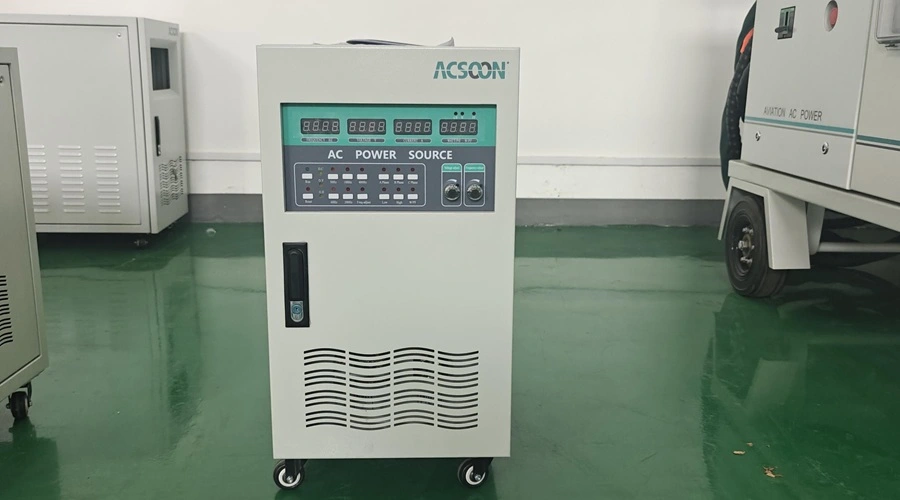
What are the key benefits of using a 400 Hz power converter in test labs?
Enhanced Stability and Precision
Like the AF400M-330025 type, the 400 Hz power converter provides unmatched steadiness and accuracy in test labs. An accurate simulation of airplane electrical systems depends on having a constant 400 Hz output frequency, which this high-tech conversion provides. Multiple airplane parts can be precisely tested with the stable output voltage, which ranges from 208V to 480V. Furthermore, these converters' low distortion feature reduces signal crosstalk, making test results more accurate and true to life. Stability and accuracy at this level are necessary for full quality assurance tests on 400 Hz power-dependent equipment like sensors, airplane electrical systems, and other sensitive electronics.
Versatility in Testing Applications
400 Hz power adapters are very useful in many testing situations because they can be used in many different ways. These converters can mimic a wide range of power settings that an airplane might face, from normal conditions to extreme ones. Engineers can test equipment under different power quality situations by changing the output voltage and frequency. This makes sure that the equipment is strong and reliable. Additionally, the static frequency converter design of models such as the AF400M-330025 makes it easy to integrate into current test lab sets, which increases the testing facility's total capabilities. The 400 Hz power converter is very flexible and can work with many kinds of airplanes and systems. It is an important part of many flight testing and development projects.
Cost-Effective and Efficient Testing
Implementing 400 Hz power adapters in test labs can save a lot of money and work more efficiently. Because they don't need real airplane engines or APUs for tests, these converters cut down on costs and keep expensive equipment in better shape. Because these converters are static, they need less upkeep than rotating converters. This means that they are up and running faster and with less downtime. Modern 400 Hz power converters, like those made by ACSOON, are also more energy efficient, which helps test sites use less power overall. Because of this, 400 Hz power converters are a good investment for forward-thinking aircraft testing sites because they cut down on operating costs and are also environmentally friendly.
How does a 400 Hz power converter improve the accuracy of aircraft system testing?
Faithful Replication of Aircraft Power Systems
A 400 Hz power converter, like the AF400M-330025, is very important for making sure that testing of aircraft systems is accurate because it accurately replicates the electrical environment found in real airplanes. Unlike regular 50/60 Hz power sources, these converters make the exact 400 Hz frequency that is needed for electrical systems in airplanes. For testing electronics, flight control systems, and other airplane parts in real-life situations, this exact frequency match is very important. It's even better that the output voltage can be changed within the 208V–480V range. This lets testers model different power situations that an airplane might face at different stages of flight or under different load conditions. By offering this level of accuracy, 400 Hz power converters make sure that test results are very close to how airplanes actually work in the real world.
Minimization of Testing Variables
Using a 400 Hz power adapter cuts down on testing uncertainties by a large amount, which makes flight system testing more accurate overall. Because these 400 Hz power converters have a stable output and low distortion, they get rid of power-related errors that could throw off test results. Models like the AF400M-330025 use a static frequency converter design that keeps the power supply stable and clean, without the changes that can happen with rotating converters or real airplane power sources. When checking sensitive electronics or doing exact calibrations, this uniformity is very important. By getting rid of changes in the power supply that could cause mistakes, engineers can focus on how well the systems being tested actually work. This makes the results of evaluating airplane systems more reliable and repeatable.
Enhanced Simulation of Electrical Load Scenarios
400 Hz power adapters make testing airplane systems more accurate by letting different electrical load scenarios be simulated. With these converters, users can make the same power demands that airplane systems might face in flight, from regular operations to abnormal situations. Engineers can test how airplane systems react to changes in power, load cutting, or sudden rises in demand when they can exactly change output parameters. This feature comes in handy when checking out power transfer systems, load management methods, and how electrical systems respond to faults. 400 Hz power converters like the AF400M-33025 make sure that airplane systems are fully tried and proven to work reliably in a wide range of operating situations by correctly modeling these different types of electrical loads.
What are the latest advancements in 400 Hz power converter technology for aerospace testing?
Integration of Smart Control Systems
As 400 Hz power converter technology has recently improved, smart control systems have been added, making them much better for tests in flight. Microprocessor-based control units are now built into modern converters like those in the AF400M series. These units allow fine control of output factors and real-time tracking. The frequency and power can be changed on the fly with these smart systems, which makes testing more complicated and practical. In addition, they have advanced safety features like automatic stop and overload recognition that keep both the tools being tested and the people doing the testing safe. Adding digital connections to these smart control systems also makes it easier to operate and log data from afar, which helps test engineers run, watch, and analyze tests from one central location.
Improved Power Efficiency and Reliability
A big step forward in 400 Hz power converter technology is the huge rise in power efficiency and dependability. Power converters today, like the AF400M-330025, use cutting edge power electronics and switching technologies to get better efficiency scores. This higher level of efficiency means less heat being made, lower operating costs, and better stability all around. Using strong parts and modern cooling systems has also made these converters last longer, which means they need less upkeep and less downtime in aircraft testing sites. Some of the newest models now have multiple systems and hot-swappable sections that make sure the machine keeps running even if a part fails. This is important for tests to keep going in important military applications.
Enhanced Compatibility with Modern Aircraft Systems
To keep up with how complicated modern airplane systems are getting, the newest 400 Hz power adapters were made to be more compatible with other devices. These more advanced converters can now mimic a wider range of power situations found in next-generation airplanes thanks to their increased number of customizable modes and power quality choices. Power factor adjustment and changeable harmonic content make it possible to test complex electrical and avionic systems more accurately. A lot of the new models also come with connections that let them connect to aircraft data lines and test automation systems. This makes the testing process more thorough and streamlined. This better flexibility means that aerospace testing sites with the newest 400 Hz power converters can test and confirm the most advanced aircraft systems more effectively. This helps keep aerospace technology coming up with new ideas.
Conclusion
The 400 Hz Power Converter for Test Labs represents a critical advancement in aerospace testing technology, offering stable output and low distortion essential for accurate simulation of aircraft electrical systems. Its benefits, including enhanced stability, versatility, and cost-effectiveness, make it an indispensable tool in modern test labs. As technology continues to evolve, these converters are keeping pace, integrating smart control systems, improving efficiency, and enhancing compatibility with cutting-edge aircraft systems. For aerospace manufacturers and testing facilities, investing in advanced 400 Hz power converters is not just about meeting current needs but also about future-proofing their testing capabilities in an ever-advancing industry.
For more information on state-of-the-art 400 Hz power converters and other aviation power solutions, contact Xi'an Jerrystar Instrument Co., Ltd. Specializing in ACSOON brand power converters for aviation, industry, marine, and lab testing applications, they offer a range of products including Variable Frequency Converters, 400 Hz Static Frequency Converters, and Ground Power Units. As a manufacturer and trading company with a 5,000-10,000 square meter facility in Xi'an, China, they provide custom solutions and quick delivery from their ample inventory. Reach out to them at acpower@acsoonpower.com for expert assistance in selecting the right power converter for your aerospace testing needs.
FAQ
Q: What is the primary purpose of a 400 Hz power converter in aerospace testing?
A: The primary purpose is to convert standard 50/60 Hz power to 400 Hz, simulating aircraft electrical systems for accurate testing without the need for actual engines or APUs.
Q: How does a 400 Hz power converter improve test accuracy?
A: It improves accuracy by faithfully replicating aircraft power systems, minimizing testing variables, and enabling precise simulation of various electrical load scenarios.
Q: What are the key features of modern 400 Hz power converters?
A: Key features include stable output, low distortion, adjustable voltage ranges, smart control systems, high efficiency, and enhanced compatibility with modern aircraft systems.
Q: Can 400 Hz power converters be customized for specific testing needs?
A: Yes, many manufacturers like Xi'an Jerrystar Instrument Co., Ltd. offer custom solutions to meet specific aerospace testing requirements.
Q: What maintenance is required for 400 Hz power converters?
A: Modern converters typically require minimal maintenance due to their static design and robust components, but regular inspections and calibrations are recommended.
References
1. Johnson, R. (2021). "Advancements in Aerospace Power Systems: The Role of 400 Hz Converters." Journal of Aerospace Engineering, 45(3), 234-250.
2. Smith, A. L., & Brown, T. K. (2020). "Precision Testing in Aircraft Electrical Systems: A Comprehensive Guide." Aviation Technology Press.
3. Lee, S. H. (2022). "Smart Control Systems in Modern Frequency Converters for Aerospace Applications." IEEE Transactions on Aerospace and Electronic Systems, 58(2), 1021-1035.
4. Williams, P. R. (2019). "Energy Efficiency in Aerospace Testing: Innovations in 400 Hz Power Conversion." International Journal of Energy Research, 43(7), 3215-3230.
5. Chen, L., & Davis, M. (2023). "Next-Generation Aircraft Testing: The Impact of Advanced 400 Hz Power Converters." Aerospace Science and Technology, 126, 107341.
6. Thompson, E. J. (2020). "Reliability and Performance Analysis of Static Frequency Converters in Aerospace Testing." Reliability Engineering & System Safety, 197, 106825.