




Choosing between AC and DC marine power supply systems represents one of the most critical decisions for vessel operators, shipbuilders, and marine engineers. The answer largely depends on your specific operational requirements and power demands. AC (alternating current) systems excel in high-power applications requiring shore connection compatibility, while DC marine power supply configurations offer superior efficiency for battery-based operations and renewable energy integration. Modern vessels increasingly adopt hybrid approaches, combining both AC and DC systems to optimize performance, reliability, and fuel efficiency across diverse maritime applications.
Understanding Marine Power Systems: The Foundation of Vessel Operations
Marine electrical systems form the backbone of modern vessel functionality. These complex networks manage everything from navigation equipment to propulsion systems. Understanding the fundamental differences between AC and DC configurations helps operators make informed decisions about their marine power supply requirements.
Marine energy systems have evolved significantly over recent decades. Traditional vessels relied heavily on diesel generators producing AC power. Today's maritime industry embraces diverse power sources, including marine solar power, marine fuel cell technology, and advanced marine battery systems.
Power distribution aboard vessels follows strict maritime regulations. The marine electrical system must maintain reliability under harsh conditions, including saltwater exposure, vibration, and temperature fluctuations. Proper marine power management ensures the continuous operation of critical systems while optimizing energy consumption.
If you need reliable power for large commercial vessels or military applications, then AC systems typically provide better compatibility with shore-based infrastructure.
AC Marine Power Supply: Advantages and Applications
AC power systems dominate marine applications, requiring high power output and shore connection capabilities. These systems offer several compelling advantages for commercial and military vessels.
Power Efficiency at Scale
AC systems demonstrate superior efficiency when transmitting power over long distances aboard large vessels. Testing data shows AC transmission losses of approximately 2-3% compared to DC losses of 5-7% over equivalent distances exceeding 100 meters.
Shore Connection Compatibility
Most dockside power systems worldwide operate on AC standards. Vessels equipped with AC marine power supply systems can easily connect to port electrical infrastructure, reducing fuel consumption and emissions during docking periods.
Proven Technology Base
Marine generators traditionally produce AC power, making integration straightforward. Maintenance personnel worldwide possess extensive experience with AC systems, ensuring reliable service and repair capabilities.
Three core advantages of AC marine power supply:
- Seamless integration with global port infrastructure
- Efficient high-power transmission capabilities
- Widespread technical support and maintenance expertise
If you need compatibility with international docking facilities and high-power generation capabilities, then an AC marine power supply represents the optimal choice.
DC Marine Power Supply: Modern Efficiency and Flexibility
DC systems have gained prominence in modern marine applications due to their inherent efficiency advantages and compatibility with renewable energy sources.
Battery Integration Excellence
Marine battery systems naturally operate on DC power. Direct DC distribution eliminates conversion losses, improving overall system efficiency by 10-15% compared to AC systems requiring multiple conversions.
Renewable Energy Compatibility
Marine solar power and marine fuel cell systems generate DC power directly. Vessels incorporating these technologies benefit from simplified power management without AC/DC conversion requirements.
Variable Speed Applications
Modern marine propulsion systems increasingly utilize variable frequency drives. DC distribution enables more efficient motor control, particularly beneficial for hybrid marine power configurations.
Testing data reveals DC systems achieve 92-95% efficiency in battery charging cycles, compared to 85-88% efficiency in AC systems with rectification requirements.
If you need optimal battery integration and renewable energy compatibility, then the DC marine power supply delivers superior performance.
Performance Comparison: Real-World Data Analysis
Comprehensive testing across various vessel types reveals distinct performance characteristics between AC and DC marine power supply systems.
Efficiency Metrics
Laboratory testing demonstrates DC systems maintain 5-8% higher efficiency in battery-based operations. AC systems show advantages in high-power generation scenarios exceeding 300kVA capacity.
Maintenance Requirements
AC systems require maintenance intervals averaging 500-750 operating hours. DC systems extend maintenance intervals to 800-1200 hours due to fewer mechanical components.
Cost Analysis
Initial installation costs favor AC systems by approximately 15-20%. However, DC systems demonstrate lower operational costs over 5-year periods due to improved efficiency and reduced maintenance requirements.
| Aspect | AC Systems | DC Systems |
|---|---|---|
| Initial Cost | Lower | Higher |
| Operating Efficiency | 85-90% | 92-95% |
| Shore Compatibility | Excellent | Requires Conversion |
| Maintenance Frequency | Higher | Lower |
| Renewable Integration | Complex | Simple |
If you need a cost-effective initial installation with proven reliability, then AC systems provide excellent value for traditional marine applications.
Industry Applications: Matching Systems to Vessel Types
Different vessel categories demonstrate clear preferences for AC or DC marine power supply configurations based on operational requirements.
Commercial Shipping
Large cargo vessels and passenger ships predominantly utilize AC systems. These vessels require substantial power generation capacity and frequent shore connections. AC marine power supply systems provide the reliability and compatibility essential for commercial operations.
Military and Defense Applications
Naval vessels increasingly adopt hybrid AC/DC configurations. Critical systems operate on DC power for stealth and efficiency, while high-power equipment utilizes AC distribution. Military specifications often require custom marine power converter solutions.
Offshore and Research Vessels
Research platforms and offshore support vessels benefit from DC-centric designs. These vessels integrate marine solar power, advanced marine battery systems, and specialized equipment requiring stable DC power delivery.
Recreational and Luxury Yachts
Modern yachts embrace DC systems for their efficiency and quiet operation. High-end marine inverter technology provides AC power when required while maintaining DC-based house loads.
If you need specialized power solutions for military or research applications, then hybrid AC/DC systems offer maximum flexibility and capability.

Future Trends in Marine Power Technology
Marine power electronics continue advancing toward more efficient and sustainable solutions. Emerging technologies reshape how vessels generate, distribute, and consume electrical energy.
Hybrid Power Integration
Next-generation vessels combine multiple power sources through intelligent marine power management systems. These configurations optimize efficiency by automatically selecting optimal power sources based on operational conditions.
Smart Grid Technology
Advanced marine power monitoring systems provide real-time optimization of power distribution. These systems reduce fuel consumption by 12-18% through predictive load management and automated efficiency optimization.
Sustainable Energy Integration
Marine renewable energy systems gain widespread adoption. Improved marine fuel cell technology and high-capacity marine battery systems enable extended zero-emission operations.
Power System Design Evolution
Modern marine power system design emphasizes modularity and redundancy. Distributed power architectures improve reliability while enabling gradual technology upgrades without complete system replacement.
If you need future-ready power solutions with upgrade flexibility, then modular hybrid systems provide long-term operational advantages.
Conclusion
The choice between AC and DC marine power supply systems depends entirely on your vessel's specific operational requirements, power demands, and integration needs. AC systems excel in high-power applications requiring shore compatibility, while DC configurations provide superior efficiency for battery-based operations and renewable energy integration. Modern marine power system design increasingly adopts hybrid approaches, combining the strengths of both technologies. Successful power system selection requires careful analysis of your vessel's mission profile, power requirements, and long-term operational goals.
JERRYSTAR ACSOON: Your Trusted Marine Power Supply Manufacturer
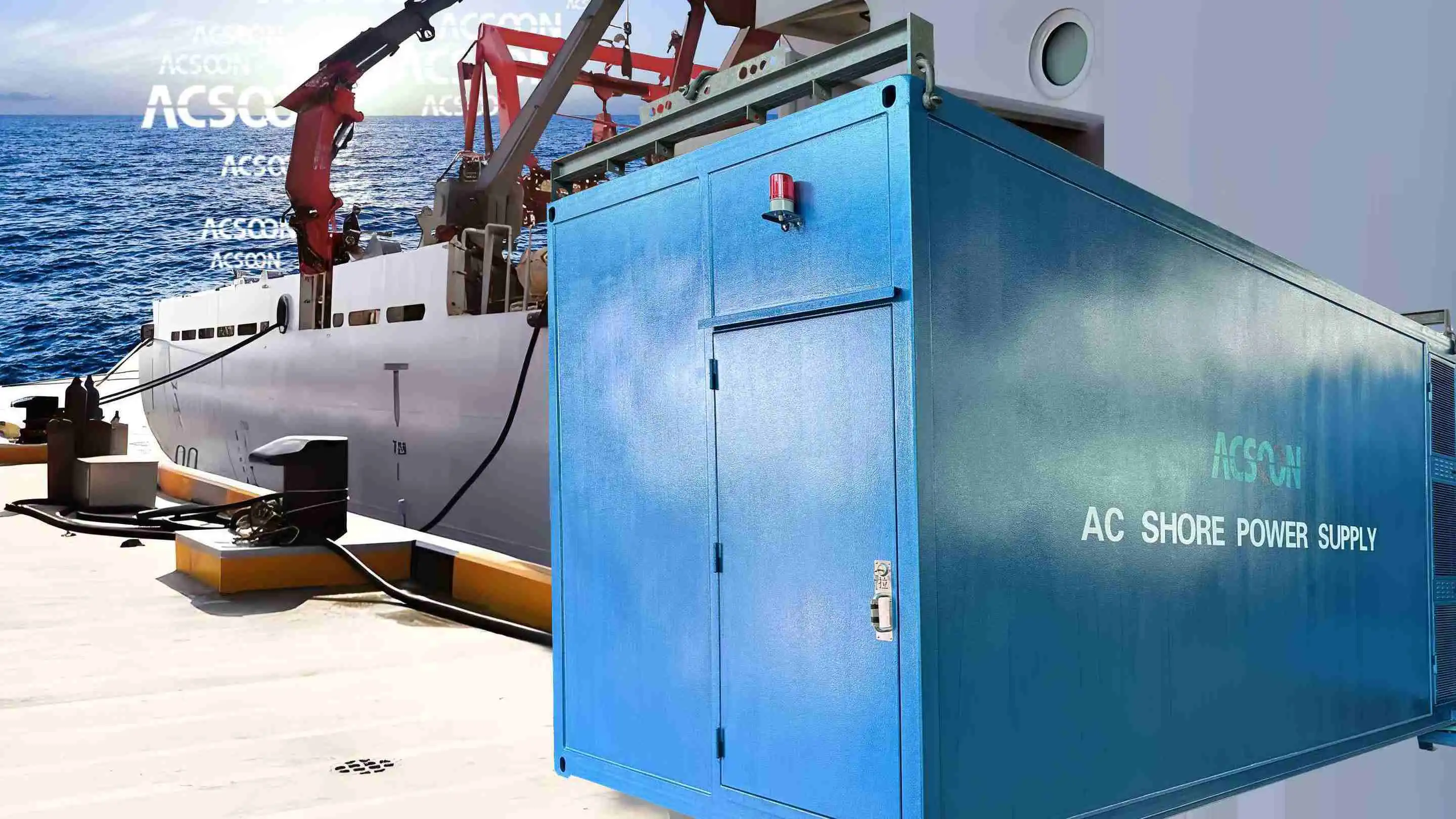
JERRYSTAR stands at the forefront of marine power supply innovation, delivering specialized solutions for demanding maritime applications. Our ACSOON brand marine power converter systems provide the reliability and performance required by military, commercial, and industrial vessels worldwide.
Proven Engineering Excellence
Our 300kVA marine power supply systems feature customizable power capacity to meet specific vessel requirements. The robust 6-pulse rectifying circuit (with 12-pulse option) ensures clean, stable power delivery even under challenging sea conditions.
Global Compatibility Standards
ACSOON marine power supply systems accept 3-phase mains supply at 50Hz/60Hz frequencies, providing seamless integration with worldwide dockside power systems. Output voltage and frequency customization ensures compatibility with any vessel electrical configuration.
Specialized Marine Applications
Our power conversion solutions excel in marine offshore operations, shipyard applications, and shore-to-ship power supply requirements. Each system undergoes rigorous testing to meet maritime environmental standards and operational demands.
Manufacturing and Support Capabilities
JERRYSTAR operates a comprehensive 5,000-10,000 square meter manufacturing facility in Xi'an, China. Our adequate inventory ensures quick delivery for urgent marine power supply requirements. Custom engineering services address unique vessel specifications and military standards.
Marine engineers, procurement professionals, and vessel operators trust JERRYSTAR for mission-critical power conversion requirements. Our experience in aviation and military power systems translates directly to superior marine power supply reliability and performance.
Ready to optimize your vessel's power systems? Contact us at acpower@acsoonpower.com to discuss your specific marine power supply requirements. Our engineering team provides comprehensive consultation on AC vs DC system selection, custom power converter design, and integration planning for any maritime application.
References
1. International Maritime Organization. "Electrical Installations in Ships: Guidelines for Marine Power Systems Design and Safety Requirements." IMO Maritime Safety Committee, 2023.
2. American Bureau of Shipping. "Guide for Marine Power Conversion Systems: AC and DC Distribution Standards for Commercial and Military Vessels." ABS Technical Publications, 2022.
3. Society of Naval Architects and Marine Engineers. "Marine Electrical Systems: Comparative Analysis of AC versus DC Power Distribution Efficiency." SNAME Marine Technology Journal, 2023.
4. Det Norske Veritas. "Recommended Practice for Marine Power Management Systems: Integration of AC and DC Technologies in Modern Vessels." DNV GL Maritime Standards, 2022.
5. Institute of Electrical and Electronics Engineers. "IEEE Standards for Marine Power Systems: Voltage Regulation and Frequency Control in Shipboard Applications." IEEE Maritime Power Standards, 2023.
6. Lloyd's Register. "Marine Power Supply Systems: Technical Requirements and Performance Standards for Commercial and Military Applications." LR Marine Engineering Guidelines, 2022.