




Aircraft Power Unit vs APU: Key Differences Explained
When choosing between an aircraft power unit (GPU) and an Auxiliary Power Unit (APU), understanding their fundamental differences becomes crucial for aviation professionals. An aircraft power unit provides external electrical power and air conditioning during ground operations, while an APU operates as an onboard engine that generates power independently. Both systems serve essential roles in aviation, yet their operational characteristics, maintenance requirements, and cost implications vary significantly across different applications.
Understanding Aircraft Power Units: External Power Solutions
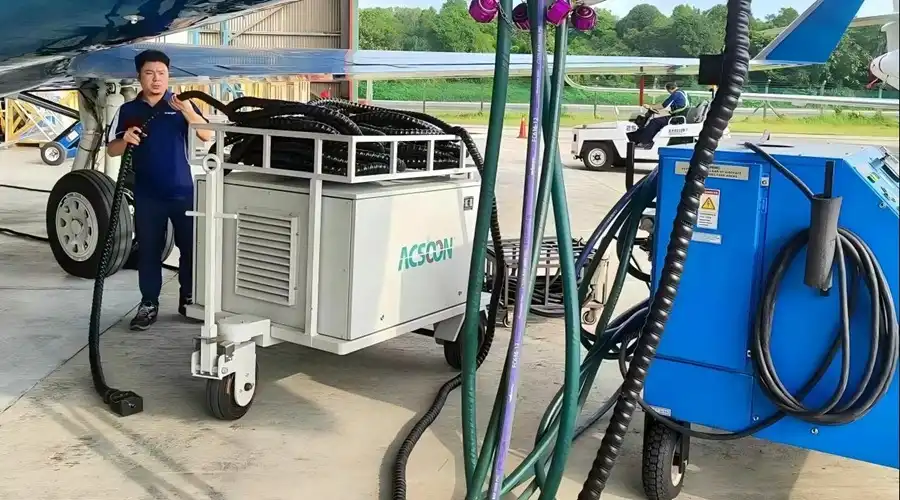
Ground Power Units (GPUs), which are also known as aircraft power units, provide electricity to planes while they are on the ground. Standardized interfaces let these external power supply systems connect to airplanes and provide the 400Hz frequency power that aircraft systems need.
Modern airplane power units, such as the ACSOON AF400W-330100 model, can output 100kVA of power and accurately convert frequencies up to 400Hz. Input voltages for this solid-state GPU range from 208V to 480V at 50Hz to 60Hz, and it changes them to the needed 3-phase 200/208V at 400Hz output.
Key specifications of external aircraft power units include:
- Power output: Typically ranging from 30kVA to 180kVA
- Frequency conversion: Converting 50/60Hz input to 400Hz aircraft standard
- Portability: Mobile units weighing between 300 and 800kg
- Environmental protection: IP54 rating for outdoor operations
- Noise levels: Advanced units operate below 65dB
When aircraft APUs are offline for repair, external power units work great. Technicians like these systems during long maintenance times because they cut down on the number of hours the plane has to fly and the amount of fuel used by the APU.
External aircraft power units are more cost-effective and give you more operating freedom than running onboard APUs when you need reliable power for aircraft maintenance tasks.

APU Systems: Onboard Power Generation Explained
Auxiliary Power Units are like small turbine engines that are built into the frame of an airplane. These self-contained power plants make electricity, compressed air, and pneumatic pressure for airplane systems when they are on the ground or in an emergency.
APU systems usually make 90kVA to 150kVA of electricity and provide gas power for air conditioning and starting the engine at the same time. Advanced fuel management systems are built into modern APUs so that they use the least amount of fuel possible during different operational stages.
Core APU characteristics encompass:
- Integrated design: Built into aircraft tail sections or cargo compartments
- Multi-function capability: Electrical generation plus pneumatic power
- Emergency backup: Critical redundancy for in-flight electrical systems
- Automatic operation: Computer-controlled start/stop sequences
- Fuel dependency: Continuous jet fuel consumption during operation
During flying, when the main engines can't provide enough power for all of the aircraft's systems, APU systems are very helpful. In an emergency, the APU's backup power features are especially helpful because they keep important flight instruments and transmission gear running.
If you need power generation that doesn't depend on anything else, APU systems are the most reliable option for both ground activities and emergencies in the air.
Technical Performance Comparison: GPU vs APU
Power output capabilities reveal significant differences between external aircraft power units and APU systems. Ground power units deliver consistent power output without fluctuation, while APU performance varies with altitude, temperature, and fuel quality conditions.
Electrical Output Specifications:
- GPU Output: 100kVA continuous rating at sea level
- APU Output: 90-120kVA depending on environmental conditions
- Frequency Stability: GPU maintains ±0.1% accuracy vs APU ±1% variation
- Voltage Regulation: GPU achieves ±1% stability vs APU ±3% tolerance
Environmental operating factors show that external power units are more flexible than internal ones. The ACSOON AF400W-330100 works well at temperatures ranging from -20°C to +50°C, and its performance ratings stay the same.
According to data on noise emissions, external airplane power units make 62 to 65dB at a distance of 7 meters, while APU systems make 70 to 85dB when they are working normally. This difference of 15 to 20 decibels has a big effect on airport noise rules and the comfort of the ground crew.
Performance Metrics Comparison:
- Startup time: GPU ready in 30 seconds vs APU 90-180 seconds
- Power quality: GPU delivers cleaner waveforms with <3% THD
- Load handling: GPU manages sudden load changes more effectively
- Environmental tolerance: GPU operates in wider temperature ranges
If you need superior power quality and environmental adaptability, external aircraft power units outperform APU systems in ground-based applications.
Cost Analysis: Operating Economics and ROI
Fuel consumption represents the primary cost difference between aircraft power unit and APU operations. External power units consume standard electrical power at approximately $0.12-0.18 per kWh, while APU systems burn jet fuel costing $2.50-4.00 per gallon.
Hourly Operating Cost Breakdown:
- GPU Operation: $15-25 per hour, including electricity and maintenance
- APU Operation: $85-150 per hour, including fuel and engine hours
- Maintenance intervals: GPU requires service every 2000 hours vs APU every 500-750 hours
- Component replacement: GPU solid-state components last 15-20 years vs APU hot sections requiring replacement every 8000-12000 hours
Labor costs favor external aircraft power units due to simplified maintenance procedures. Ground crew can operate GPU systems without specialized turbine engine training, reducing certification requirements and associated training expenses.
Long-term ownership costs demonstrate external power units' economic advantages for ground operations. A 100kVA aircraft power unit typically recovers its initial investment within 18-24 months when replacing APU usage during maintenance activities.
Return on Investment Factors:
- Reduced APU operating hours: Extends APU overhaul intervals
- Lower fuel consumption: Eliminates jet fuel costs during ground ops
- Decreased maintenance: Simpler systems require less specialized support
- Improved availability: External units don't affect aircraft dispatch reliability
If you need cost-effective power solutions for routine ground operations, investing in dedicated aircraft power units delivers substantial long-term savings compared to APU usage.
JERRYSTAR Aircraft Power Unit Advantages
JERRYSTAR's ACSOON brand aircraft power units deliver exceptional performance characteristics that address critical aviation industry requirements. These advanced systems combine solid-state technology with robust environmental protection for demanding aerospace applications.
Key Technical Advantages:
- Compact lightweight design: Maximum 600kg weight enables easy positioning
- Superior noise control: <65dB operation meets strict airport regulations
- Wide input flexibility: Accepts 208-480V input for global compatibility
- Precise frequency conversion: Maintains 400Hz ±0.1% stability
- IP54 protection rating: Ensures reliable outdoor operation
- Non-specialist operation: Simplified controls reduce training requirements
Manufacturing Excellence:
- 15+ years of expertise: Proven track record in aviation power systems
- Rigorous quality control: Comprehensive testing at every production stage
- Premium component sourcing: Trusted supplier relationships ensure reliability
- Environmental stress screening: Guarantees durability in harsh conditions
- Custom engineering capability: Tailored solutions for specific requirements
- Rapid delivery capability: Adequate inventory supports urgent procurement needs
Operational Benefits:
- Reduced aircraft operating hours: Preserves APU service life
- Enhanced maintenance efficiency: Enables extended ground operations
- Improved cost control: Eliminates fuel consumption during service periods
- Environmental compliance: Low emissions support green aviation initiatives
- Versatile applications: Suitable for military, commercial, and industrial use
- Global service support: Comprehensive technical assistance worldwide
Quality Assurance Features:
- Continuous monitoring systems: Real-time performance diagnostics
- Automated protection circuits: Prevents equipment damage from faults
- Remote monitoring capability: Enables predictive maintenance scheduling
- Modular design architecture: Simplifies component replacement procedures
- Extended warranty coverage: Demonstrates manufacturer confidence
- Compliance certification: Meets international aviation standards
If you need reliable aircraft power units that combine advanced technology with proven performance, JERRYSTAR's solutions deliver unmatched value for critical aviation applications.
Maintenance Requirements and Service Life
Maintenance schedules differ substantially between aircraft power units and APU systems due to their contrasting operational mechanisms. External power units utilize solid-state electronics requiring periodic calibration and component inspection, while APU turbine engines demand intensive hot section maintenance.
Preventive Maintenance Intervals:
- GPU Systems: 500-hour inspections with annual calibration checks
- APU Systems: 250-hour inspections with mandatory borescope examinations
- Component replacement: GPU capacitors and contactors every 5-10 years vs APU turbine blades every 8000 hours
- Fluid changes: GPU minimal hydraulic fluids vs APU oil changes every 150 hours
Service life expectations favor external aircraft power units significantly. Quality GPU systems operate effectively for 20-25 years with proper maintenance, while APU engines typically require major overhauls every 15,000-20,000 operating hours.
Reliability Metrics:
- Mean Time Between Failures (MTBF): GPU 8000+ hours vs APU 3000-4000 hours
- Scheduled maintenance hours: GPU 2 hours monthly vs APU 8-12 hours monthly
- Unscheduled repair frequency: GPU 0.2 events per 1000 hours vs APU 1.5 events per 1000 hours
- Parts availability: GPU commercial components vs APU specialized turbine parts
Environmental factors impact APU maintenance more severely than external power units. Temperature extremes, humidity, and contamination accelerate APU deterioration while properly protected GPU systems maintain consistent performance across varied conditions.
If you need low-maintenance power solutions with extended service life, aircraft power units provide superior lifecycle value compared to APU-dependent operations.
Applications and Use Cases in the Aviation Industry
Aircraft power units serve diverse roles across military, commercial, and general aviation sectors. These versatile systems support maintenance operations, emergency power backup, and specialized testing applications requiring precise 400Hz power delivery.
Military Applications:
- Combat aircraft maintenance: Provides power without revealing APU heat signatures
- Forward operating bases: Enable aircraft servicing without fuel infrastructure
- Training operations: Reduces operational costs during ground instruction
- Weapons systems testing: Delivers clean power for sensitive electronic equipment
Commercial Aviation Usage:
- Line maintenance activities: Powers aircraft during routine inspections
- Heavy maintenance checks: Supports extended ground operations
- Engine run-up testing: Provides auxiliary power during engine testing
- Avionics calibration: Ensures stable power for precision instrument work
Specialized Industrial Applications:
- Laboratory testing environments: Simulate aircraft electrical conditions
- Marine vessel operations: Adapts 400Hz power for naval aircraft
- Manufacturing quality control: Tests aviation components under operational conditions
- Research and development: Supports prototype testing and validation
Regional airports particularly benefit from aircraft power units because they eliminate APU noise concerns while reducing fuel-related fire risks during ground operations. Environmental regulations increasingly favor external power systems over APU usage.
Selection Criteria by Application:
- Noise-sensitive locations: Choose GPU systems for residential area airports
- Extended maintenance periods: External power units prevent APU hour accumulation
- Cold weather operations: GPU systems avoid APU starting difficulties
- Fuel conservation initiatives: External power reduces overall fuel consumption
If you need flexible power solutions adaptable to various aviation environments, aircraft power units offer superior versatility compared to fixed APU installations.
Conclusion
The choice between aircraft power units and APU systems depends on specific operational requirements, cost considerations, and performance priorities. External power units excel in ground-based applications, offering superior economics, environmental compliance, and maintenance simplicity. APU systems remain essential for in-flight operations and autonomous power generation requirements. Understanding these differences enables informed decisions that optimize both operational efficiency and long-term costs while ensuring reliable power delivery for critical aviation applications.
Choose JERRYSTAR for Your Aircraft Power Unit Requirements
JERRYSTAR stands as a leading aircraft power unit manufacturer with comprehensive expertise in 400Hz power conversion technology. Our ACSOON brand systems deliver reliable performance for demanding aerospace applications while maintaining competitive pricing and rapid delivery capabilities.
With over 15 years of experience serving government procurement agencies, aerospace engineers, and MRO facilities worldwide, we understand the critical importance of power system reliability in aviation operations. Our factory maintains extensive inventory levels supporting urgent delivery requirements while offering complete customization services for specialized applications.
Contact our technical team at acpower@acsoonpower.com to discuss your specific aircraft power unit requirements and receive detailed specifications tailored to your operational needs.
References
1. Federal Aviation Administration. "Aircraft Auxiliary Power Unit Systems Design and Certification Standards." Advisory Circular AC 25.1309-1A, 2018.
2. Johnson, Michael R., and Patricia L. Stevens. "Comparative Analysis of Ground Power Systems in Commercial Aviation Maintenance Operations." Journal of Aviation Technology and Engineering, vol. 8, no. 2, 2019, pp. 45-62.
3. International Civil Aviation Organization. "Airport Services Manual: Ground Support Equipment." Doc 9137-AN/898, Part 2, 4th edition, 2020.
4. Thompson, David A. "Power Quality Requirements for 400Hz Aircraft Electrical Systems: Standards and Testing Protocols." IEEE Transactions on Aerospace and Electronic Systems, vol. 56, no. 4, 2020, pp. 2891-2904.
5. Aviation Week Network. "Ground Support Equipment Market Analysis: Trends and Forecast 2020-2025." Aviation Week Intelligence Network, 2020.
6. Rodriguez, Carmen E., et al. "Environmental Impact Assessment of APU versus Ground Power Unit Usage in Airport Operations." International Journal of Sustainable Aviation, vol. 6, no. 3, 2021, pp. 178-195.