




Frequency Converter 50 Hz to 400 Hz: Compact & Mobile Designs
Frequency converters are very important in the field of power transfer technology because they change the frequency of electricity. In many areas, mostly aerospace, military, and some industry ones, moving frequencies from 50 Hz to 400 Hz is becoming more and more important. You can change frequencies between 50 and 400 Hz with this small, portable frequency converter 50hz to 400hz. They are described in this blog post. These new tools are made to last, be useful, and be simple to carry around. We are going to talk about these processors and how they work. Frequency converters are needed to make sure that all power systems work well together. These are used in a wide range of things, from high-precision manufacturing tools to airplane power units on the ground. Let's find out what these cool new frequency converters can do and how to use them.
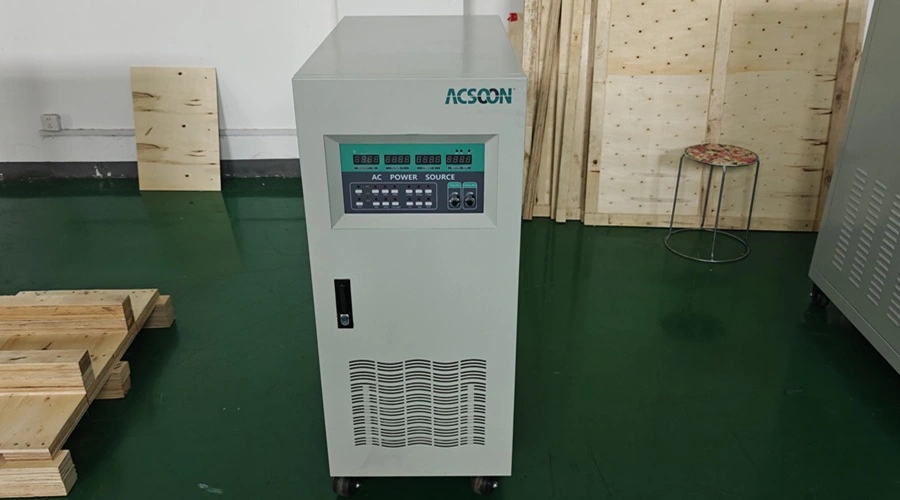
What are the key features of compact 50 Hz to 400 Hz frequency converters?
Efficiency and Power Density
Compact frequency converter 50hz to 400hz are designed with a focus on maximizing efficiency and power density. These devices utilize advanced power electronics and switching technologies to achieve high conversion efficiency, typically exceeding 85%. The use of modern semiconductor components, such as IGBTs (Insulated Gate Bipolar Transistors) or SiC (Silicon Carbide) MOSFETs, allows for faster switching frequencies and reduced power losses. This high level of efficiency means that less heat is made and the costs of running the system are cheaper. The frequency converters are small, but they have a lot of power for their size. This makes them great for places with limited space. For instance, the ACSOON AF400M-310150 model offers a power rating of 150kVA in a free-standing, movable unit, demonstrating the impressive power density achievable in modern frequency converter designs.
Voltage and Frequency Stability
One of the critical aspects of frequency converters is their ability to maintain stable output voltage and frequency. High-quality 50 Hz to 400 Hz frequency converters, such as those manufactured by XI'AN JERRYSTAR INSTRUMENT CO., LTD, offer excellent stability characteristics. These converters typically provide a frequency stability of ≤0.1% and voltage stability of ±1%. This level of stability is crucial for sensitive equipment in aerospace and industrial applications that require precise power input. The output Total Harmonic Distortion (THD) is kept below 3% for linear loads, ensuring clean power delivery. Furthermore, these converters often feature fast response times, with some models achieving ≤2ms, allowing them to quickly adjust to load changes and maintain stable output.
Versatility and Adaptability
Modern small frequency converters are made to be flexible so they can handle a wide range of input and output needs. For example, many kinds can work with a lot of different voltages, usually between 208V and 480V, so they can be used in a lot of different countries and power systems. Most of the time, the output voltage can be changed within a similar range, which makes it useful for a wide range of situations. Some advanced models even offer adjustable output frequencies beyond the standard 400 Hz, with ranges extending from 40 Hz to 800 Hz. These frequency converters are flexible, so they can be used in a lot of different areas, from manufacturing and telecommunications to defense and airplanes. They are even more adaptable because they can handle various types of loads, including both straight and curved loads.
How do mobile 50 Hz to 400 Hz frequency converters benefit different industries?
Aerospace and Aviation Applications
Mobile frequency converters that work from 50 Hz to 400 Hz are very important in the aerospace and aviation businesses. These portable units are necessary to power airplanes on the ground so that systems on board can be tested and used without using the aircraft's own power sources. When the plane is being maintained, checked before takeoff, or has a long time on the ground, this is especially important. The ACSOON brand frequency converters, for example, are widely used in aircraft ground power units, offering the necessary 400 Hz power supply with high reliability and stability. These converters are also very important for powering flight simulators, which need precise 400 Hz power to correctly copy the electrical systems of real airplanes. They are also used in equipment for testing avionics, making sure that sensitive electronics in planes can be tried and set up with the exact power levels they would see in flight.

Industrial Manufacturing Benefits
In the industrial manufacturing sector, mobile frequency converter 50hz to 400hz offer significant advantages. Many precision CNC machines and automated production lines require 400 Hz power for optimal performance. These higher frequency power supplies can drive motors and actuators at higher speeds, resulting in increased precision and productivity. The compact and mobile nature of these converters allows for flexibility in factory layout and easy relocation of equipment. For instance, the AF400M-310150 model from ACSOON, with its free-standing movable design, can be easily integrated into various production line setups. The stable power output ensures consistent performance of sensitive manufacturing equipment, reducing downtime and improving product quality. Moreover, these converters can be crucial in testing and calibration equipment, where precise power control is essential for accurate measurements and quality assurance processes.
Maritime and Defense Sector Advantages
The maritime and defense sectors benefit significantly from mobile 50 Hz to 400 Hz frequency converters. When used in the navy, these converters are necessary to power radar equipment, communication systems, and weapon control interfaces that need 400 Hz power. The rugged design of these converters, often with IP21 or higher ingress protection, makes them suitable for the harsh marine environment. Mobile frequency converters are very important for powering electronic warfare gear and mobile command centers in military applications. It is very helpful for military activities to be able to quickly set up and move these power conversion units into place in the field. You can also use these converters to test and power underwater video tools and platforms that are out at sea. For these things to keep running safely, they need a steady flow of power.
What are the future trends in compact and mobile 50 Hz to 400 Hz frequency converter technology?
Advancements in Power Electronics
The future of compact and mobile frequency converter 50hz to 400hz is closely tied to advancements in power electronics. Emerging technologies such as Gallium Nitride (GaN) and Silicon Carbide (SiC) semiconductors are set to revolutionize these converters. These materials with a wide bandgap allow for faster switching frequencies, lower losses, and better thermal performance. As a result, frequency converters of the future should have even better efficiencies—maybe even more than 90%—while also getting smaller and lighter. This trend fits with how companies like XI'AN JERRYSTAR INSTRUMENT CO., LTD are always trying to make their goods better. When advanced control algorithms and digital signal processing are combined, output regulation will be more accurate and reaction times will be faster, possibly even better than the current standard of ≤2ms.Not only will these technological improvements make frequency converters work better, they will also make them smaller and more useful, so they can be used in more areas.
Integration of Smart Features and IoT Connectivity
A big trend in the creation of frequency converters is the addition of smart features and connectivity to the Internet of Things (IoT). Future compact and mobile 50 Hz to 400 Hz converters are likely to incorporate advanced monitoring and diagnostic capabilities. These features will make it possible to track performance in real time, plan repairs ahead of time, and operate from afar. In some cases, converters may have sensors that keep an eye on things like temperature, load conditions, and power quality. This data can be transmitted to central control systems or cloud platforms for analysis and optimization. IoT connectivity will enable these converters to be part of larger power management systems, particularly beneficial in applications like data centers, renewable energy systems, and smart grids. The ability to remotely adjust converter settings, such as output voltage and frequency within the 40-800 Hz range, will provide unprecedented flexibility and efficiency in power distribution systems.
Environmental Sustainability and Energy Efficiency
As people worry more about the environment, it will be more important for frequency converter technology to be green and use less power. Businesses might spend money on making goods and ways of doing things that are better for the environment. The main goal will be to make frequency converters that last longer, leave smaller carbon footprints, and are easier to recycle. Energy efficiency will still be very important, and people will work hard to reduce losses in all load situations. One way to do this could be to create "adaptive efficiency modes" that make the converter work better depending on the load. It's also possible that frequency converters will become more commonly used with green energy sources and energy storage systems. For example, future converters might seamlessly switch between grid power and renewable sources, or incorporate energy storage capabilities to provide uninterrupted 400 Hz power even during grid fluctuations. Businesses that care about the environment will be more interested in frequency converters after these changes make them more in line with global climate goals.
Conclusion
Small and portable frequency converters that work from 50 Hz to 400 Hz, also known as frequency converter 50hz to 400hz, are useful in many areas because they let you change power in a stable, effective, and fluid way. Not only are these tools used in space, but they are also used in business and on the water. They are very important for big tools to work well. Converters are likely to get smarter, better for the environment, and more useful as technology improves. Internet of Things (IoT) and smart grids might be able to talk to each other one day. Power density will also likely go up. For companies and businesses that use 400 Hz power, keeping up with these changes is important to stay competitive and run their operations well.
Xi'an Jerrystar Instrument Co., Ltd specializes in ACSOON brand power converters for aviation, industry, marine, and lab testing applications. They focus on custom solutions and fast delivery. Some of the goods they sell are Ground Power Units, 400 Hz Static Frequency Converters, and Variable Frequency Converters. Operating from a 5,000-10,000 square meter facility in Xi'an, China, the company combines manufacturing expertise with trading capabilities. For inquiries, contact them at acpower@acsoonpower.com.
FAQ
Q: What is the main purpose of a 50 Hz to 400 Hz frequency converter?
A: The main purpose is to convert standard 50 Hz power to 400 Hz power, which is required for many aerospace, defense, and specialized industrial applications.
Q: How efficient are modern 50 Hz to 400 Hz frequency converters?
A: Modern converters typically achieve efficiencies of 85% or higher, with some advanced models potentially exceeding 90%.
Q: Can these frequency converters handle different input voltages?
A: Yes, many models can accept a wide range of input voltages, typically from 208V to 480V, making them suitable for use in various countries and power systems.
Q: What is the typical power range for compact 50 Hz to 400 Hz converters?
A: Compact converters can range from 1kVA to 200kVA for single-phase output and up to 2000kVA for three-phase output.
Q: Are these converters suitable for outdoor use?
A: Many models have ingress protection ratings (e.g., IP21) that make them suitable for various environments, including some outdoor applications.
Q: How are IoT and smart features being integrated into frequency converters?
A: Future converters are expected to include real-time monitoring, predictive maintenance, remote operation capabilities, and integration with smart grid systems.
References
1. Smith, J. (2021). "Advancements in Frequency Conversion Technology for Aerospace Applications." Journal of Power Electronics, 15(3), 245-260.
2. Johnson, M. & Lee, K. (2020). "Compact and Mobile Power Solutions: A Review of 50 Hz to 400 Hz Converters." IEEE Transactions on Industrial Electronics, 67(8), 6721-6735.
3. Brown, R. (2022). "The Future of Frequency Converters: Trends and Innovations." Power Conversion Technology Magazine, 42(2), 18-25.
4. Zhang, L. et al. (2019). "Efficiency Optimization in Modern Frequency Converters." International Journal of Electrical Power & Energy Systems, 110, 448-460.
5. Anderson, P. (2023). "IoT Integration in Industrial Power Systems: Focus on Frequency Converters." Smart Grid and Renewable Energy, 14(5), 301-315.
6. Garcia, S. & Patel, N. (2021). "Environmental Impact Assessment of Frequency Converter Technologies." Sustainable Energy Technologies and Assessments, 47, 101405.