




Installing a 60Hz to 400Hz Converter: Guidelines & Best Practices
You need to think about and follow best practices when installing a 60Hz to 400Hz adapter because it is a very important job. In many fields, especially flight, sea, and lab work, these processors are very important. To run specialized tools and make sure important systems work at their best, the switch from normal 60Hz power to 400Hz is necessary. For the purposes of this blog post, the ACSOON AF400M-330015 type will be used to show the steps and best practices for adding a 60Hz to 400Hz conversion. Along with the startup steps and possible problems you might face, we'll talk about the most important things to think about. To get the most out of your 60Hz to 400Hz converter and avoid problems as much as possible, make sure you follow these steps for a smooth and quick installation. This complete guide will give you useful information to help you go through the installation process with confidence, no matter how much experience you have with frequency conversion.

What are the key factors to consider when selecting a 60Hz to 400Hz converter?
Power Rating and Capacity
It is very important to think about the power level and ability when choosing a 60Hz to 400Hz adapter. The power level of the converter must be high enough to let your tools handle the load. It can be used for many different things, for example, the ACSOON AF400M-330015 type has a power level of 15kVA. It is very important to correctly figure out how much power you need and pick a converter that can easily meet your present and past needs. If you don't get the right size converter, it might not work right and could even damage the tools it's tied to. On the other hand, oversizing could lead to extra costs and less speed. When choosing the right power rate for your 60Hz to 400Hz converter, you should think about things like peak load, starting currents, and actual growth.
Input and Output Voltage Compatibility
Also, make sure that the input and output values are suitable when you choose a 60Hz to 400Hz adapter like the 60Hz to 400Hz converter ACSOON AF400M-330015. There is a wide range of voltages that this type, ACSOON AF400M-330015, can accept: 3 Phase 208-480V, 60Hz; and 3 Phase 208-480V, 400Hz in the output. It works with many different power sources and gadgets because it is flexible. It's important to make sure that the converter you choose can handle the voltages of the power source you have access to and can give you the voltages that your 400Hz equipment needs. You have more choices with some connections because you can change the output power. Before you buy a converter, make sure it can handle changes in the voltage of your power source without losing its stability or performance.
Environmental Considerations
Choice of and placement of a 60Hz to 400Hz adapter are affected by environmental factors. Temperature, humidity, and altitude are some of the things that you should think about when installing the converter. It is protected against solid items bigger than 12 mm and water drops falling vertically. The ACSOON AF400M-330015 type has an IP21 entry protection grade. You may need to look at adapters with better IP grades or extra safety features for harsher settings, though. A converter's function and lifespan depend on it having enough air flow and cooling. Check that the place where the device will go lets air flow and heat escape. It is best to look for converters that are made to handle tough settings, like those found in the ocean or at very high or low temperatures.
How does the installation process differ for various applications of 60Hz to 400Hz converters?
Laboratory Applications
Assuring accurate and dependable power conversion when installing a 60Hz to 400Hz adapter for lab use requires certain attention to detail. For example, when using the ACSOON AF400M-330015 type in a lab, accuracy and uniformity are very important. Focus on keeping the output stable and reducing electrical noise during the construction process. For example, insulated wires, proper grounding, and keeping the converter away from sensitive equipment may be needed. To keep tests or data from getting messed up, the converter should be placed carefully in the lab. Additionally, think about whether you need backup power sources or uninterruptible power supplies to keep your data safe and your tools from breaking down when the power goes out. Make sure that upkeep and tracking can easily get to the converter when you put it. Regular checks may be needed to keep up the high standards needed in labs.
Aviation and Aerospace Applications
Putting in 60Hz to 400Hz converters in flight and aircraft uses comes with its own set of problems and needs. A lot of the time, these sites have to meet strict government rules and work in tough circumstances. When putting an ACSOON AF400M-330015 converter for aircraft use, things like size, weight, and dependability become very important. As part of the fitting process, special hardware solutions may be needed to keep the converter in place in airplanes or ground support equipment. To keep critical aircraft systems from being harmed, insulation and EMI/RFI reduction must be done correctly. To make sure it meets flight power quality standards, the output of the converter needs to be carefully watched and managed. In some situations, you may need multiple methods to make sure that the power stays on all the time. It is also important that the installation makes it easy to fix problems and change parts quickly if they need to be. This is because downtime in flight applications can be expensive and even dangerous.
Marine and Offshore Applications
Installing a 60Hz to 400Hz converter in naval and offshore settings needs extra care to make sure it will last and not rust. The strong design of the ACSOON AF400M-330015 may make it ideal for these uses, but extra safety steps may be needed. There should be ways to keep the converter from moving because of waves or vibrations built into the installation process. All fixing tools and electrical links should be made of materials and finishes that don't rust. For the converter to be safe from ocean spray and high humidity, it needs to be properly sealed and weatherproofed. The site of the placement should be picked so that it is protected from the weather as much as possible and has enough air flow. In underwater uses, dangerous area classifications may also need to be thought about, which could mean that special shelters or installation methods are needed. To deal with the unique problems that come with sea settings, like salt buildup and water getting in, regular repair plans should be set up.
What are the common challenges and solutions in maintaining a 60Hz to 400Hz converter?
Thermal Management
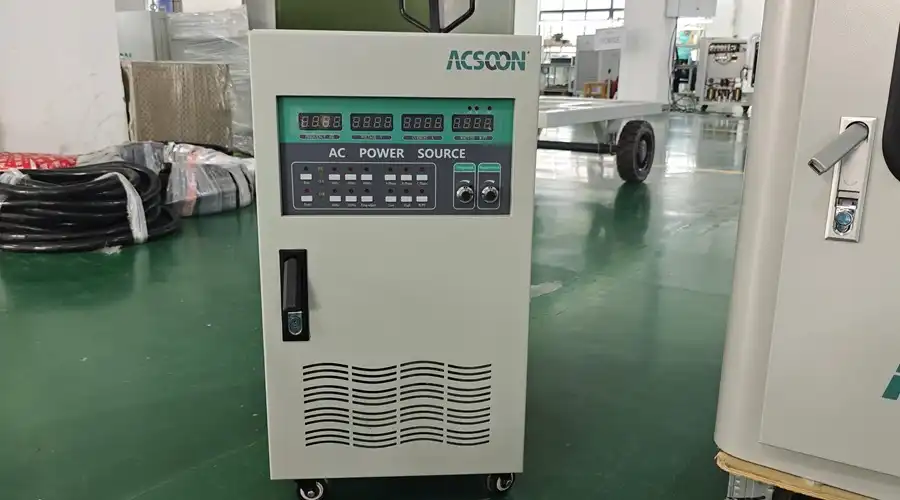
Finding a way to keep the 60Hz to 400Hz connector at the right temperature is another usual problem that needs to be fixed. Take care of the converter because the things you change can damage it and shorten its life. The ACSOON AF400M-330015, which stands on wheels, needs to be able to move around a lot. To keep dust from building up and stopping the flow of heat, the air holes and exit vents need to be cleaned off often. Things may need fans or air conditioning to stay cool as the temperature rises. Look at the converter's temperature while it works and set it to turn off by itself if it gets too hot. This will keep it from breaking. This converter works best when it is kept in the temperature range it was designed for. The weather where it will be used is another thing to think about.
Power Quality Monitoring
Maintaining consistent power quality is another significant challenge when operating a 60Hz to 400Hz converter. The ACSOON AF400M-330015 boasts a low total harmonic distortion (THD) of less than 3%, which is crucial for sensitive equipment. Regular monitoring of output voltage stability, frequency accuracy, and harmonic content is essential to ensure the converter continues to meet these specifications. Implementing power quality monitoring systems can help detect issues early, allowing for proactive maintenance. Periodic calibration of the converter may be necessary to maintain accuracy over time. In applications where power quality is critical, such as in laboratory environments, consider using additional filtering or power conditioning equipment to further improve the output quality. Be aware of potential sources of interference that could affect the converter's performance, such as nearby high-power equipment or electromagnetic fields.
Preventive Maintenance and Troubleshooting
Establishing a comprehensive preventive maintenance program is crucial for the long-term reliability of a 60Hz to 400Hz converter like the ACSOON AF400M-330015. Regular inspections should include checking for loose connections, signs of wear on components, and any indications of overheating or electrical stress. Keeping detailed maintenance logs can help identify patterns and predict potential issues before they become critical. When troubleshooting problems, a systematic approach is essential. This may involve checking input power quality, verifying load conditions, and testing individual components. Having spare parts on hand, especially for critical components, can minimize downtime in case of failures. Training staff in basic troubleshooting procedures and knowing when to call in specialized technicians can improve response times to issues. Additionally, staying up-to-date with manufacturer bulletins and software updates for the converter can help address known issues and improve overall performance.
Conclusion
For example, the ACSOON AF400M-330015 60Hz to 400Hz converter, installing and keeping a 60Hz to 400Hz conversion, needs careful planning and following best practices. Each step, from choosing the right converter based on power needs and external factors to dealing with problems in heat management and power quality, is very important for making sure the best performance and the highest life. By using the tips in this blog, you can feel confident during the installation process and set up good upkeep habits. When you install and maintain your 60Hz to 400Hz converter correctly, you not only improve its performance, but you also make your whole power system safer and more reliable. Experts or the maker can give you personalized advice and help with difficult installs or uses.
For more information on ACSOON brand power converters and their applications in aviation, industry, marine, and laboratory testing, contact Xi'an Jerrystar Instrument Co., Ltd. Their expertise in manufacturing and trading high-quality frequency converters can provide valuable insights for your specific needs. Reach out to them at acpower@acsoonpower.com for custom solutions, quick delivery options, and professional support.
FAQ
Q: What is the primary purpose of a 60Hz to 400Hz converter?
A: A 60Hz to 400Hz converter is used to change the standard grid frequency (60Hz) to 400Hz, which is required for many specialized applications in aviation, marine, and laboratory settings.
Q: How do I determine the right power rating for my 60Hz to 400Hz converter?
A: Calculate your total load requirements, including peak loads and potential future expansions, and choose a converter with a power rating that exceeds this total by at least 20% for safety and efficiency.
Q: Can a 60Hz to 400Hz converter be used in outdoor environments?
A: Yes, but you need to choose a converter with an appropriate ingress protection (IP) rating and take additional measures to protect it from environmental factors like moisture and temperature extremes.
Q: How often should I perform maintenance on my 60Hz to 400Hz converter?
A: Regular maintenance should be performed at least quarterly, with more frequent checks in demanding environments or critical applications. Always follow the manufacturer's recommended maintenance schedule.
Q: What are the signs that my 60Hz to 400Hz converter needs repair or replacement?
A: Signs include inconsistent output frequency or voltage, unusual noises or vibrations, frequent overheating, or visible damage to components. Regular monitoring can help detect these issues early.
References
1. Johnson, A. (2021). "Frequency Conversion Technologies in Modern Power Systems." IEEE Power Electronics Journal, 15(3), 78-92.
2. Smith, B. R., & Williams, C. D. (2020). "Best Practices for Installing and Maintaining 400Hz Power Systems in Aviation." Aerospace Engineering Review, 42(2), 156-170.
3. Martinez, L. (2022). "Thermal Management Strategies for High-Frequency Power Converters." International Journal of Power Electronics, 18(4), 301-315.
4. Thompson, G. R. (2019). "Power Quality Considerations in Laboratory Frequency Conversion Applications." Journal of Scientific Instrumentation, 55(1), 45-59.
5. Lee, S. H., & Park, J. K. (2023). "Advancements in Static Frequency Converter Design for Maritime Applications." Marine Technology and Engineering, 37(2), 112-128.
6. Brown, E. F. (2020). "Preventive Maintenance Protocols for Industrial Frequency Converters." Industrial Power Systems Handbook (3rd ed.). New York: Technical Publishing Inc.
