




Low-Distortion 400Hz Power Supply Aircraft for Sensitive Loads
Precision and dependability are musts when it comes to running sensitive space tools. Low-distortion 400hz power supply aircraft systems are the best in aviation power technology; they provide clean, stable electricity that is needed for mission-critical tasks. For current aircraft uses, these specialized power units are essential because they make sure that sensitive electronics, navigation systems, and communication equipment get the exact electrical qualities they need to work at their best.
Understanding 400Hz Power Supply in Aircraft
The aircraft industry likes 400Hz power supply aircraft better than regular 50Hz or 60Hz systems because of basic electrical engineering principles that make them better. Higher frequency operation lets smaller transformers, inductors, and capacitors be used, which saves a lot of weight and area, which are very important in airplane design, where every pound counts.
Frequency Advantages in Aviation
Because frequency and component size are inversely related, the 400Hz function is very good for aircraft electrical systems. At higher speeds, magnetic parts like transformers and inductors can be a lot smaller while still being able to handle the same amount of power. This decrease in size directly leads to a loss of weight, which makes the vehicle use less fuel and carry more.
Because 400Hz devices are small, they are also more reliable because they have less mechanical stress and better heat control. Smaller parts make less heat and are less likely to break because of vibrations, which are both very important in the harsh climate where airplane systems are used.
Low-Distortion Technology Benefits
For sensitive aircraft equipment, low distortion is very important. Total Harmonic Distortion (THD) levels below 3% make sure that sensitive electrical systems get clean power that doesn't interfere with their function. The low amounts of distortion in modern solid-state power sources are made possible by improved switching methods and complex filtering systems.
When you think about the electric world inside an airplane, signal quality becomes even more important. Electromagnetic interference (EMI) that could harm communication systems, navigational equipment, or flight control computers is kept to a minimum by low-distortion power sources. It makes sure that sensitive loads work within the limits that were planned for them. This keeps the system's dependability and performance high throughout the flight range.
Technical Insights and Challenges of 400Hz Power Supply in Aerospace
Power sources made for aerospace must meet strict technical requirements that are much higher than those used in everyday life. Voltage control needs to stay within ±1% of the required level when the load changes, and frequency stability needs to stay within ±0.5%. These strict requirements make sure that sensitive electronics always work the same way, even when operating conditions change.
Environmental and Regulatory Compliance
Power systems in airplanes have to work in very difficult conditions, including wide temperature ranges, vibrations, changes in altitude, and electromagnetic radiation. Power sources have to work properly in temperatures ranging from -55°C to +85°C and withstand a lot of pressure and shock during takeoff, landing, and rough weather.
Keeping up with regulations makes designing power supplies for spacecraft even more difficult. For example, DO-160 is used for testing in harsh environments, MIL-STD-461 is used for testing electromagnetic compatibility, and there are many FAA and EASA approval requirements that must be met. These standards make sure that power sources will work reliably for as long as they are used, while still having the safety limits needed for important tasks.
Thermal Management Challenges
Effective temperature control is always a problem when designing power systems for airplanes. Because of the need for high power density and limited space, complex cooling methods are needed. Advanced thermal design methods, such as optimized airflow paths, high-efficiency parts, and smart thermal tracking, help make sure that the system works reliably even in tough circumstances.
Modern power sources have temperature tracking and safety systems that change how they work automatically to keep the temperatures safe. For longer component life and uniform performance across the full working temperature range, these smart thermal control solutions are a must.
Comparing 400Hz Power Supply with Other Frequencies for Aircraft Applications
When you compare 400Hz systems to regular 50Hz/60Hz systems, you can see that 400Hz systems have clear benefits that have led to their broad use in aircraft applications. The size and weight savings of 400Hz systems can be huge compared to lower frequency options, which is often enough to support their use.
Weight and Size Analysis
An in-depth look at the weight savings shows that 400Hz transformers and inductors usually weigh 60–80% less than 60Hz equivalents. This decrease in weight has an effect on the whole power system of the plane, saving a lot of money that directly leads to better fuel economy and more cargo space.
Space utilization efficiency also favors 400Hz systems, especially in places like airplane sites that don't have a lot of room. Because high-frequency components have a smaller size, they can be installed in smaller spaces, making more room for other important systems or extra equipment.
Performance Comparison Across Applications
A 400Hz power supply aircraft is helpful for a variety of airplane kinds and tasks. For commercial flight, dependability and fuel economy are very important. This is why the lighter weight and smaller size of 400Hz systems are so appealing. When it comes to military uses, toughness and performance in harsh conditions are often very important. This is where the strong design features of current 400Hz supplies really shine.
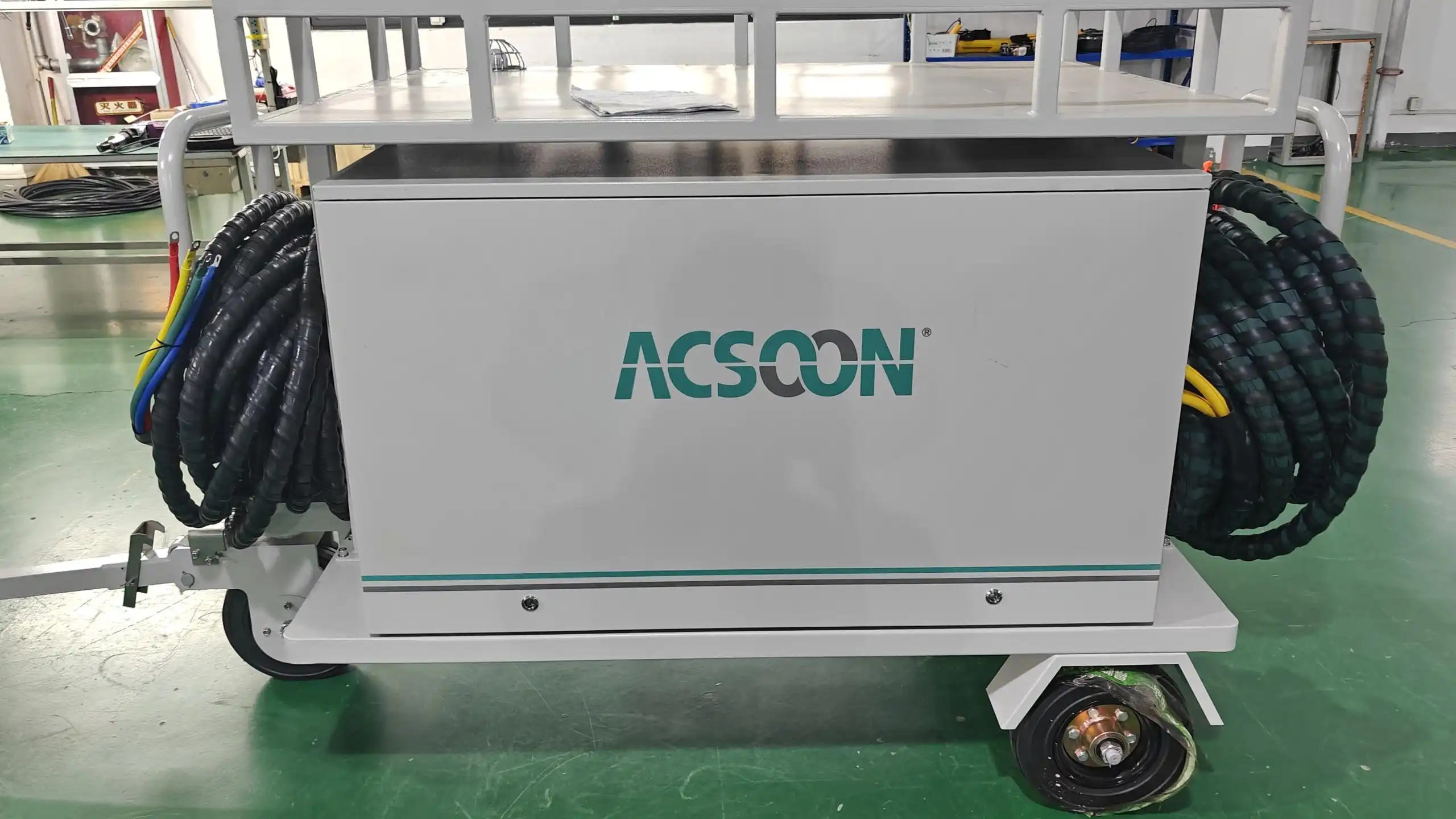
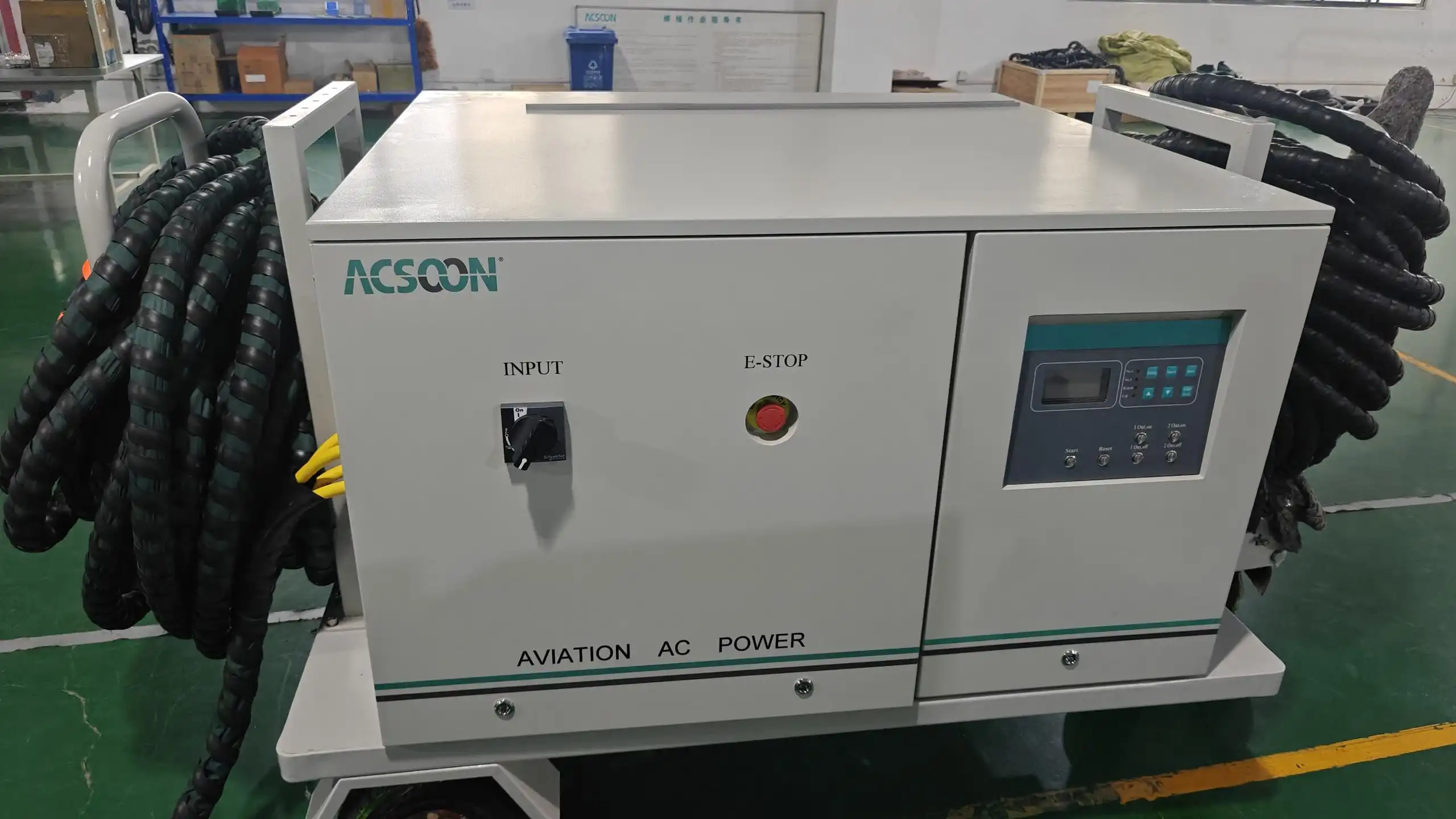
When you need ground help, you have to meet special needs that make movement and adaptability very important. Mobile 400Hz ground power units must provide power that is good enough for airplanes while still being portable and simple to use. A wheeled frame, weather cover, and easy-to-use control panels are some of the features that these systems often have that make them good for airport ground operations.
Procuring Low-Distortion 400Hz Power Supplies: Factors and Recommendations
To successfully buy power sources for spacecraft, you need to carefully think about a lot of technical and business factors. Load study is the first step in choosing the right system, and it requires a deep understanding of the power needs, load factors, and operating conditions. Different sensitive loads, like radar systems, communication gear, and flight control computers, have different power quality needs that must be carefully matched to the supply's abilities.
Vendor Evaluation Criteria
Supplier evaluation should encompass technical capabilities, quality certifications, manufacturing capacity, and after-sales support. Aerospace applications demand suppliers with proven track records in critical applications, comprehensive quality management systems, and the ability to provide ongoing technical support throughout the product lifecycle.
Customization capabilities often prove crucial in aerospace applications where standard products may not meet specific requirements. Suppliers who can provide engineering support for custom solutions, rapid prototyping capabilities, and flexible manufacturing processes offer significant value to aerospace customers with unique or specialized requirements.
Quality Assurance and Testing
Comprehensive testing protocols ensure that power supplies will meet their specifications under actual operating conditions. Environmental testing, electromagnetic compatibility verification, and long-term reliability testing provide confidence that equipment will perform reliably throughout its intended service life.
Documentation and traceability requirements in aerospace applications often exceed commercial standards. Proper documentation packages, including test reports, material certifications, and configuration management record,s help ensure regulatory compliance while supporting ongoing maintenance and configuration control requirements.
Company Introduction and Product Offering
Xi'an Jerrystar Instrument Co., Ltd. stands as a premier manufacturer specializing in aerospace-grade power conversion solutions under the ACSOON brand. With over 15 years of dedicated experience in power conversion technology, we have established ourselves as a trusted partner for aviation, military, marine, and industrial customers worldwide. Our expertise extends across the complete spectrum of power conversion applications, with particular strength in 400Hz aircraft power systems and variable frequency solutions.
Our flagship GPU400-330090 model exemplifies our commitment to excellence in aircraft power supply design. This 90KVA solid-state ground power unit delivers precise 400Hz output from standard three-phase 380V, 50Hz input power. The system provides dual output voltages of 115V and 200V at 400Hz, accommodating the diverse power requirements of modern aircraft systems. Built with IP54 ingress protection and mounted on a mobile trolley platform, this unit combines rugged construction with operational flexibility.
Advanced Engineering Capabilities
The engineering excellence embedded in our products reflects years of development focused specifically on sensitive load applications. Our power supplies maintain exceptional voltage regulation with controllable voltage error characteristics, while providing robust protection against output short circuits and load transients. The crest factor specification of 1.414±3% ensures compatibility with both linear and switching loads commonly found in aircraft systems.
Variable input and output capabilities distinguish our products in applications requiring operational flexibility. This adaptability proves invaluable in ground support operations where power supply units must accommodate various aircraft types with different electrical specifications. Our engineering team continues to refine these capabilities based on direct feedback from field operations and customer requirements.
Our manufacturing facility spans 5,000-10,000 square meters in Xi'an's Jinghe New Town, providing comprehensive production capabilities supported by advanced quality management systems. We maintain substantial inventory levels to support urgent delivery requirements while offering customization services for specialized applications. This combination of manufacturing capacity and engineering flexibility enables us to serve customers ranging from individual end-users to large-scale OEM applications.
Conclusion
Low-distortion 400Hz power supply aircraft systems represent essential infrastructure for modern aerospace operations, delivering the precise electrical characteristics required by sensitive avionics and mission-critical equipment. The combination of compact design, superior power quality, and proven reliability makes these systems indispensable for applications ranging from commercial aviation to military operations. As aircraft systems continue to evolve toward greater electronic sophistication, the importance of clean, stable power delivery will only increase. Organizations investing in high-quality 400Hz power solutions position themselves for operational excellence while ensuring compliance with stringent aerospace standards.
FAQ
Why do aircraft systems use 400Hz instead of standard 50Hz or 60Hz power?
Aircraft electrical systems utilize 400Hz power primarily due to the significant weight and space advantages offered by higher frequency operation. Transformers, inductors, and other magnetic components can be substantially smaller at 400Hz while maintaining equivalent power handling capabilities. This size reduction translates directly into weight savings, which improves aircraft fuel efficiency and increases payload capacity. Additionally, the compact design of 400Hz systems provides better reliability through reduced mechanical stress and improved thermal characteristics.
What makes low-distortion characteristics important for sensitive aircraft loads?
Low-distortion power delivery ensures that sensitive electronic equipment receives clean electrical power without harmonic interference that could affect performance. Modern aircraft rely heavily on sophisticated navigation, communication, and flight control systems that require precise electrical characteristics for optimal operation. High levels of harmonic distortion can cause electromagnetic interference, affect signal processing accuracy, and potentially compromise the reliability of mission-critical systems. Low-distortion power supplies typically maintain Total Harmonic Distortion levels below 3%, ensuring compatibility with even the most sensitive aerospace equipment.
How can procurement teams verify supplier compliance with aviation safety standards?
Verification of supplier compliance requires examination of relevant certifications and test documentation. Reputable aerospace power supply manufacturers maintain certifications including DO-160 for environmental testing, MIL-STD-461 for electromagnetic compatibility, and various quality management certifications such as AS9100. Suppliers should provide comprehensive documentation, including test reports, material certifications, and configuration management records. Site visits to manufacturing facilities and quality system audits can provide additional assurance of supplier capabilities and compliance with aerospace quality standards.
Partner with JERRYSTAR for Superior Aviation Power Solutions
JERRYSTAR delivers world-class low-distortion 400Hz power supply aircraft solutions engineered specifically for demanding aerospace applications. Our ACSOON brand products combine advanced solid-state technology with proven reliability, ensuring your sensitive loads receive the precise power quality they demand. As an established 400hz power supply aircraft manufacturer with comprehensive customization capabilities, we provide tailored solutions that meet your exact specifications while maintaining compliance with international aviation standards.
Connect with our engineering team at acpower@acsoonpower.com to discuss your specific power requirements and explore how our advanced 400Hz systems can enhance your operations. We maintain a ready inventory for immediate delivery while offering flexible customization options for specialized applications.
References
1. Institute of Electrical and Electronics Engineers. "IEEE Standard for Aircraft Electric Systems - Power Quality Requirements." IEEE Aerospace and Electronic Systems Society Publications, 2019.
2. Federal Aviation Administration. "Advisory Circular AC 25.1353-1: Aircraft Electrical and Electronic System Lightning Protection." U.S. Department of Transportation, 2018.
3. Society of Automotive Engineers. "ARP 1199: Aircraft Electric Power Characteristics and Utilization." SAE Aerospace Standards Division, 2020.
4. International Electrotechnical Commission. "IEC 60050-151: International Electrotechnical Vocabulary - Electrical and Magnetic Devices." IEC Central Office Geneva, 2017.
5. Radio Technical Commission for Aeronautics. "RTCA DO-160G: Environmental Conditions and Test Procedures for Airborne Equipment." RTCA Publications, 2019.
6. Military Standards Office. "MIL-STD-704F: Aircraft Electric Power Characteristics." U.S. Department of Defense, 2016.