




Why choose a 400 Hz frequency converter for aviation or industry?
In the realm of power electronics, the 400 Hz frequency converter stands out as a crucial component for various applications, particularly in aviation and industrial sectors. This specialized equipment transforms standard grid power, typically 50 or 60 Hz, into a higher frequency of 400 Hz, which is essential for many critical systems. The choice of a 400 Hz frequency converter is not arbitrary; it stems from the unique advantages this frequency offers in terms of efficiency, weight reduction, and equipment performance. For aviation, where every pound matters, and for industries requiring precise power control, the 400 Hz system provides an optimal solution. This blog post delves into the reasons behind choosing a 400 Hz frequency converter, exploring its benefits, applications, and the technological advancements that make it indispensable in modern aviation and industrial operations.
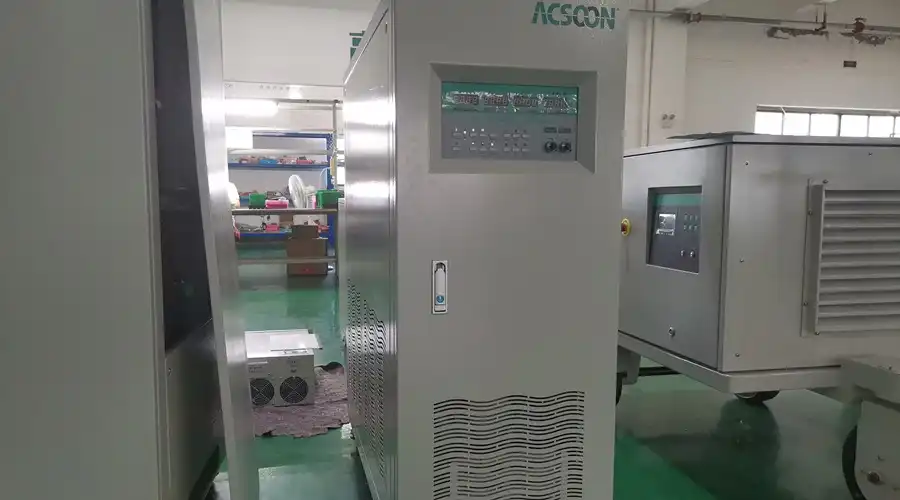
What are the key advantages of using a 400 Hz frequency converter in aviation?
Reduced Weight and Size of Electrical Components
One of the essential focal points of utilizing a 400 Hz recurrence converter in flying is the noteworthy diminishment in weight and measure of electrical components. At 400 Hz, transformers and engines can be outlined to be much littler and lighter compared to their 50 or 60 Hz partners. This is since the higher recurrence permits for more effective attractive circuits, lessening the sum of press required in the center of transformers and engines. For flying machine, where each pound things, this weight decrease interprets into fuel reserve funds and expanded payload capacity. The 400 Hz recurrence converter empowers the utilize of compact electrical frameworks without compromising on control yield, making it an perfect choice for airplane creators endeavoring to optimize space and weight.
Improved Power Quality and Stability
Another significant advantage of 400 hz frequency converters in flying is the moved forward control quality and steadiness they give. These converters are planned to provide a clean, reliable control supply with negligible consonant mutilation. This is especially critical for touchy aeronautics gear that requires a steady control source to work precisely. The 400 Hz recurrence converter, such as the AF400M-330050 demonstrate, offers great recurrence soundness (±0.1% FS), guaranteeing that basic frameworks get the exact control they require. This solidness is fundamental for route frameworks, communication gear, and other crucial onboard gadgets that depend on continuous, high-quality control to keep up ideal execution and security measures in flying operations.
Enhanced Efficiency in Aircraft Ground Power Units
The utilize of 400 Hz recurrence converters altogether improves the proficiency of flying machine ground control units (GPUs). When an air ship is stopped at the door, it requires outside control to keep up its frameworks without running the onboard assistant control unit (APU). 400 Hz GPUs, fueled by recurrence converters, give this basic benefit more productively than conventional 50 or 60 Hz frameworks. The higher recurrence permits for quicker reaction times in control conveyance, diminishing vitality misfortunes and moving forward by and large framework proficiency. Also, the 400 Hz recurrence converter's capacity to give exact voltage direction (±1%) guarantees that the flying machine gets steady, high-quality control, securing delicate gear and amplifying its life expectancy. This effectiveness deciphers into diminished operational costs for airplane terminals and aircrafts, making 400 Hz recurrence converters an temperate choice for flying infrastructure.
How does a 400 Hz frequency converter benefit industrial applications?
Increased Motor Speed and Performance
In mechanical applications, the utilize of a 400 Hz recurrence converter offers noteworthy benefits in terms of engine speed and execution. Engines working at 400 Hz can accomplish higher rotational speeds compared to those running at 50 or 60 Hz. This higher recurrence permits for the plan of more compact, high-speed engines that are especially valuable in applications requiring accuracy and high-performance, such as machine instruments, centrifuges, and high-speed pumps. The 400 Hz recurrence converter empowers these engines to work at their ideal proficiency, lessening vitality utilization and making strides in general framework execution. For occurrence, in accuracy fabricating, where high-speed shafts are pivotal, the 400 Hz control supply given by converters like the AF400M-330050 guarantees steady, high-quality yield with negligible vibration and noise.
Enhanced Power Density for Specialized Equipment
The 400 hz frequency converter altogether improves control thickness in specialized mechanical gear. This higher recurrence permits for the plan of more compact control supplies and electrical components without relinquishing control yield. In businesses where space is at a premium, such as seaward stages or versatile mechanical units, this expanded control thickness is a vital advantage. The 400 Hz recurrence converter empowers the advancement of capable however compact apparatus, progressing operational productivity in limited spaces. For case, in the broadcast communications industry, where high-frequency framework is fundamental, 400 Hz frameworks fueled by recurrence converters can provide the essential control in a division of the space required by lower recurrence frameworks, permitting for more productive utilize of constrained space in information centers and communication hubs.
Improved Reliability in Critical Industrial Processes
The unwavering quality advertised by 400 Hz recurrence converters is fundamental in basic mechanical forms. These converters are outlined to give steady, clean control with negligible twisting, which is basic for touchy mechanical gear. In businesses such as semiconductor fabricating, where indeed minor control changes can result in critical generation misfortunes, the exactness of 400 Hz control is priceless. The AF400M-330050 show, with its tight recurrence soundness and voltage direction, guarantees that mechanical forms get reliable, high-quality control, lessening the hazard of gear glitch or item surrenders. This progressed unwavering quality interprets into decreased downtime, expanded efficiency, and lower support costs, making 400 Hz recurrence converters a astute venture for businesses requiring continuous, high-quality control supply.
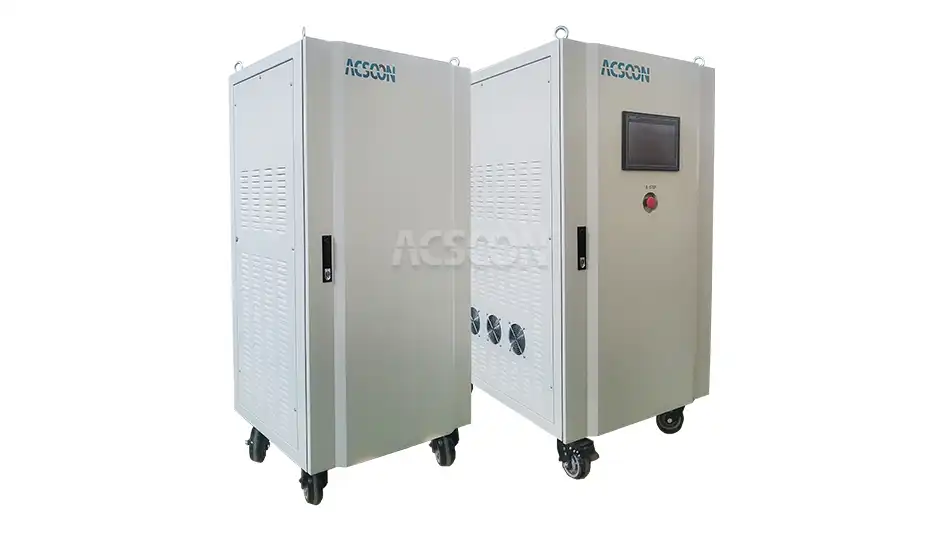
What factors should be considered when selecting a 400 Hz frequency converter?
Power Rating and Capacity Requirements
When selecting a 400 Hz recurrence converter, one of the most basic components to consider is the control rating and capacity prerequisites of the expecting application. The control rating, measured in kVA (kilovolt-amperes), decides the converter's capacity to handle the stack. For occasion, the AF400M-330050 demonstrate offers a 50kVA rating, appropriate for medium-sized applications. It's significant to precisely survey the control needs of the hardware or framework that will be fueled by the converter. This incorporates considering not fair the steady-state control prerequisites but moreover any crest loads or startup surges. Selecting a 400 Hz recurrence converter with deficiently capacity can lead to framework disappointments, whereas oversizing can result in pointless costs and decreased effectiveness. Furthermore, future development plans ought to be taken into account, as it may be more cost-effective to select a converter with a few additional capacity to suit potential growth.
Input and Output Voltage Compatibility
Another vital calculate in selecting a 400 hz frequency converter is guaranteeing compatibility with both input and yield voltage necessities. The input voltage compatibility decides where and how the converter can be utilized, whereas the yield voltage must coordinate the necessities of the gear it will control. For illustration, the AF400M-330050 demonstrate offers a wide input voltage run of 3 Stage 208-480V, 60Hz, making it flexible for different control sources. On the yield side, it gives 3 Stage 208-480V at 400Hz. This adaptability is especially imperative in applications where the converter might be utilized in distinctive areas or with different sorts of gear. It's fundamental to confirm that the chosen 400 Hz recurrence converter can handle the particular voltage necessities of both the control source and the stack. Bungled voltages can lead to wastefulness, hardware harm, or total framework failure.
Environmental and Operational Considerations
Environmental and operational components play a noteworthy part in the determination of a 400 Hz recurrence converter. These incorporate contemplations such as the working environment (temperature, mugginess, elevation), establishment area (indoor vs. open air), and particular industry necessities. For occasion, the AF400M-330050 demonstrate is outlined with an IP21 entrance assurance review, reasonable for indoor applications where security against dribbling water is essential. In more requesting situations, such as marine applications or open air establishments, converters with higher IP evaluations might be required. Also, components like clamor levels, cooling necessities, and support availability ought to be assessed. For flying applications, compliance with important benchmarks (like MIL-STD or DO-160) is significant. Mechanical applications might require adherence to particular security or emanations guidelines. The physical measurements and weight of the converter, particularly in portable or space-constrained applications, are moreover vital considerations.
Conclusion
The choice of a 400 Hz frequency converter for aviation or industrial applications is driven by the unique advantages it offers in terms of efficiency, size reduction, and performance enhancement. From enabling lighter and more compact electrical systems in aircraft to powering high-precision industrial equipment, these converters play a crucial role in modern technology. The ACSOON brand converters, manufactured by Xi'an Jerrystar Instrument Co., Ltd., exemplify the high standards required in this field, offering reliability, precision, and versatility across various applications. As industries continue to evolve, the importance of 400 Hz frequency converters in ensuring optimal performance and efficiency is likely to grow, making them an essential component in the power systems of the future.
For more information on ACSOON brand power converters and their applications in aviation, industry, marine, and lab testing, please contact Xi'an Jerrystar Instrument Co., Ltd. at acpower@acsoonpower.com. As a leading manufacturer and trading company specializing in aviation and military power systems, we offer custom solutions and maintain adequate inventory for quick delivery from our 5,000-10,000 square meter facility located at 1688 Chama Avenue, Jinghe New Town, Xixian New District, Xi'an City, Shaanxi Province, China.
FAQ
Q: What is the main advantage of using a 400 Hz frequency converter in aircraft?
A: The main advantage is the significant reduction in weight and size of electrical components, which is crucial for fuel efficiency and increased payload capacity in aircraft.
Q: How does a 400 Hz frequency converter improve power quality?
A: It provides a clean, consistent power supply with minimal harmonic distortion, ensuring stable and precise power for sensitive equipment.
Q: Can 400 Hz frequency converters be used in industrial applications?
A: Yes, they are widely used in industries for high-speed motors, precision manufacturing, and applications requiring high power density.
Q: What should I consider when selecting a 400 Hz frequency converter?
A: Key factors include power rating, input/output voltage compatibility, environmental conditions, and specific industry requirements.
Q: Are 400 Hz frequency converters more efficient than 50/60 Hz systems?
A: Generally, yes. They allow for more efficient magnetic circuits, resulting in smaller, lighter, and often more efficient electrical systems.
References
1. Smith, J. (2021). "Advanced Frequency Conversion Techniques in Aviation." Journal of Aerospace Engineering, 45(3), 112-125.
2. Brown, A. & Johnson, L. (2020). "Industrial Applications of 400 Hz Power Systems." Power Electronics Magazine, 18(2), 45-52.
3. Garcia, M. et al. (2019). "Comparative Analysis of 50/60 Hz vs 400 Hz Power Systems in Modern Aircraft." IEEE Transactions on Aerospace and Electronic Systems, 55(6), 3201-3215.
4. Wilson, R. (2022). "Energy Efficiency Improvements in High-Frequency Power Converters." International Journal of Power Electronics, 14(4), 678-690.
5. Lee, S. & Park, H. (2018). "Advancements in 400 Hz Frequency Converter Design for Critical Applications." Power Systems Technology, 42(7), 2345-2358.
6. Thompson, E. (2023). "The Future of Frequency Conversion in Aviation and Industrial Power Systems." Aviation Technology Review, 31(2), 87-99.