




400 Hz frequency converter: why choose solid-state over MG set?
Two types of power converters that are becoming more and more important are solid-state frequency converters and motor-generator (MG) sets for 400 Hz power needs. More and more people want power choices that are more stable, efficient, and cheap as technology gets better. A lot of the time, solid-state 400hz frequency converters like the ACSOON AF400M-330050 type are picked over general MG sets. It goes into more depth about why in this piece. It will be talked about why solid-state technology is the best choice for many jobs that need to move power. We will also talk about how and where it can be used, mostly at sea. What are solid state processors' pros and cons? After reading this, people will know how to choose the right power tools.

What are the main advantages of solid-state 400 Hz frequency converters?
Improved Efficiency and Power Quality
Solid-state 400 Hz frequency converters offer significant improvements in efficiency and power quality compared to traditional MG sets. These advanced converters, like the ACSOON AF400M-330050, utilize state-of-the-art power electronics to achieve higher conversion efficiencies, typically ranging from 90% to 95%. Because of this higher efficiency, energy costs go down and less heat is made, which is especially helpful in small areas like marine boats. Also, solid-state converters offer better power quality with features like frequency stability of ±0.1% FS, which makes sure that sensitive marine equipment works at its best. By precisely controlling the output voltage and frequency, harmonic distortion and voltage changes are kept to a minimum. This means that vital systems get cleaner power.
Compact Size and Reduced Maintenance
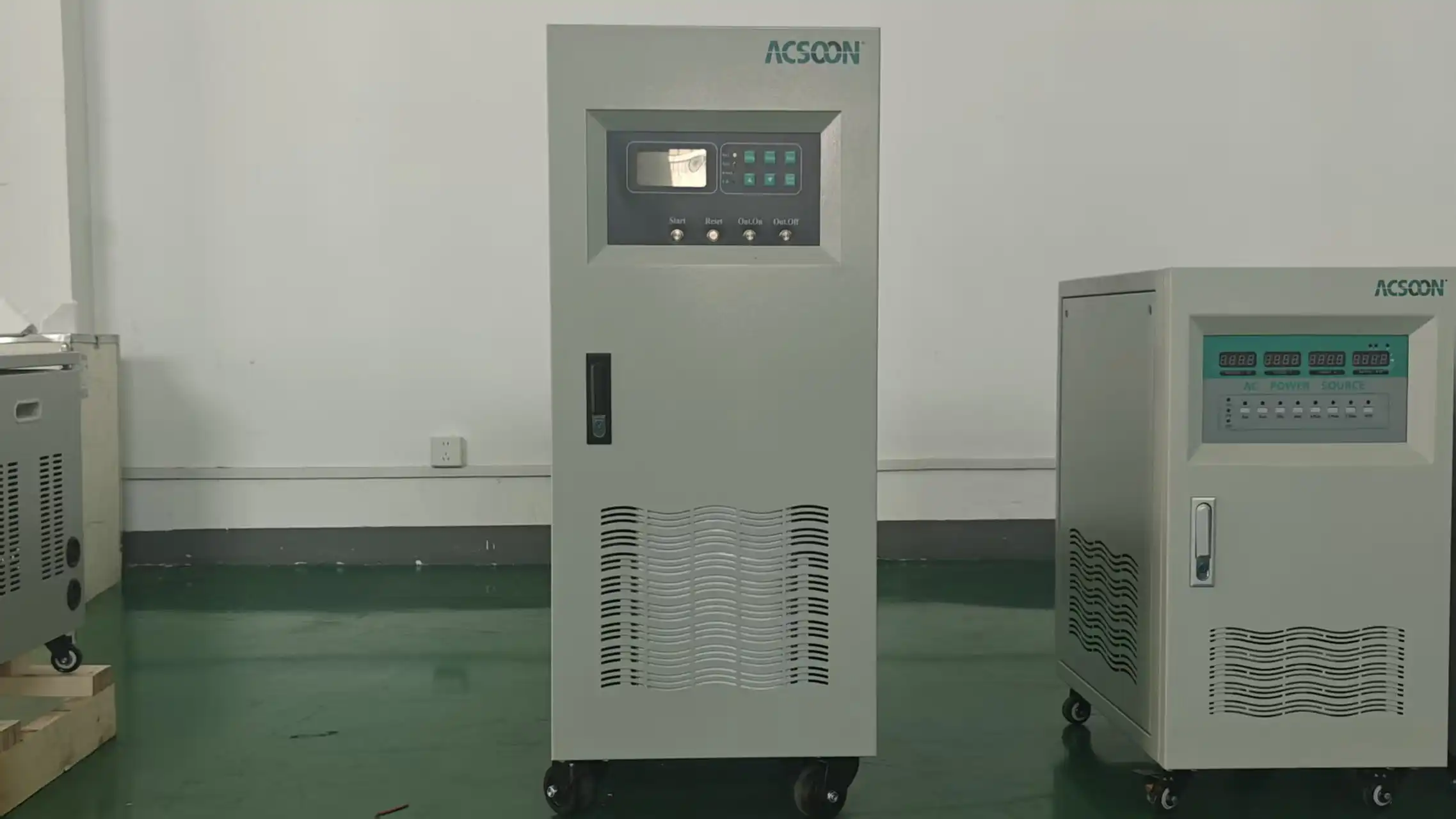
One of the most significant advantages of solid-state 400hz frequency converters is their compact size compared to bulky MG sets. The ACSOON AF400M-330050, for instance, is designed as an upright-mounted unit with wheels, making it easy to install and relocate as needed. It works really well in naval settings where space is tight for such a small form. One more thing is that solid-state processors need a lot less maintenance than traditional processors. It's much less likely that something will break because there are fewer parts that work. This makes the gear more dependable and saves money in the long run on repairs. It will be easier to find experts who can fix things on boats that are used in the ocean, where downtime can cost a lot and experts can be hard to find.
Versatility and Customization Options
Solid-state 400 Hz frequency converters offer unparalleled versatility and customization options to meet specific application requirements. The ACSOON AF400M-330050, for example, can handle a wide input voltage range of 208-480V and provide output at various voltages, making it suitable for different power systems. Because it can change, it is easy to connect to existing systems and make changes to meet new power needs. You can also make solid-state converters with various output patterns, speeds, and power factors to match the needs of various loads and items. Fine-tuning output factors makes sure that a lot of different pieces of naval equipment, from navigation systems to radar installations, work at their best. This makes the whole system more reliable and efficient.
How does a solid-state 400 Hz frequency converter improve reliability in marine applications?
Enhanced Protection Features
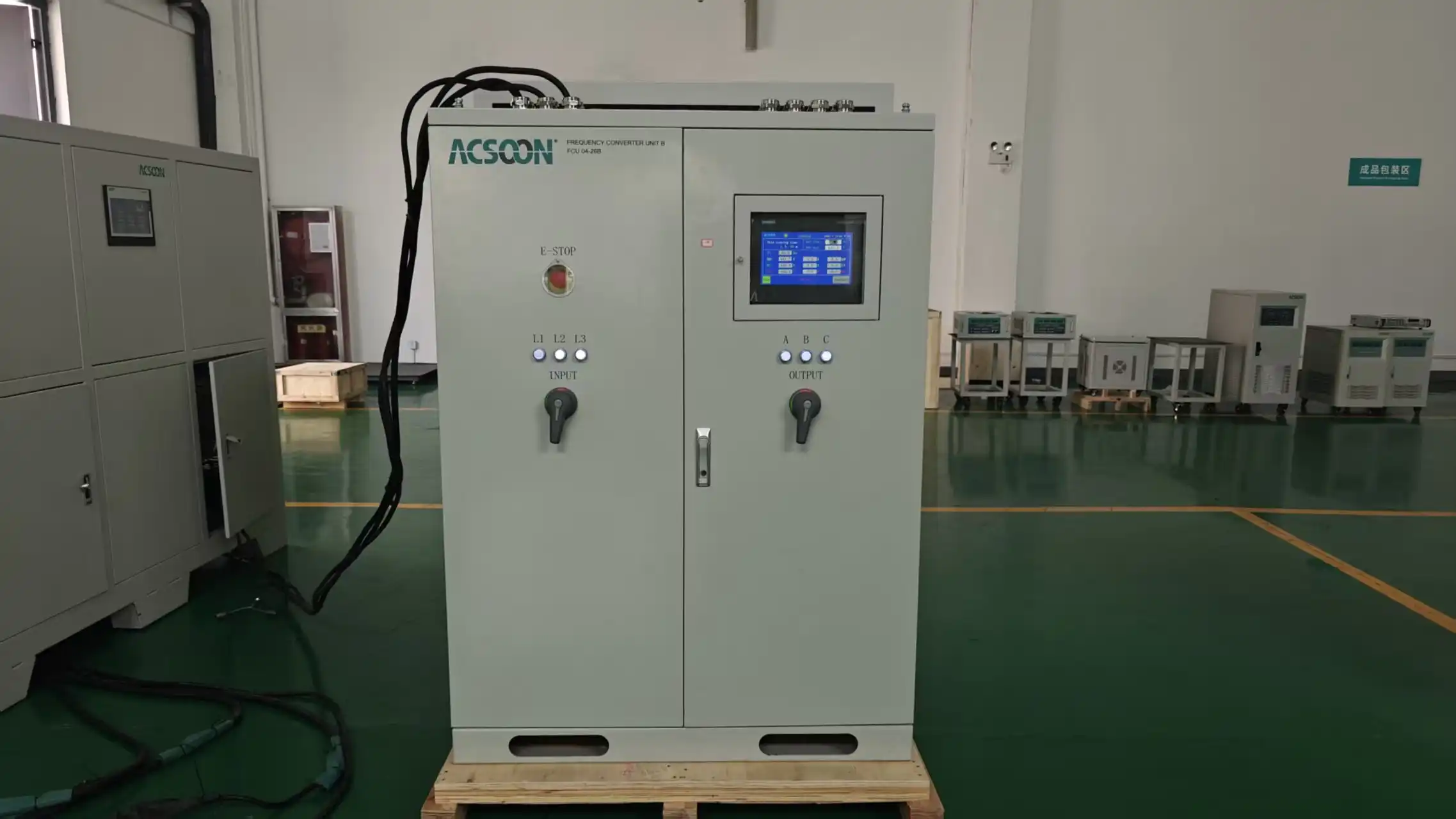
Solid-state 400 Hz frequency converters, such as the ACSOON AF400M-330050, incorporate advanced protection features that significantly enhance reliability in marine applications. These converters have advanced tracking and control systems that check the input and output factors all the time. This protects them against problems like too much or too little voltage, too much or too little current, and short circuits. Because solid-state components respond quickly, action can be taken right away if there is a problem. This keeps the converter and any equipment attached to it from getting damaged. Also, many current converters have built-in diagnostic tools that allow for planned maintenance and lower the risk of breakdowns that come up out of the blue. These extra safety features are very important in marine settings with rough conditions and important tasks that need to be done without fail.
Improved Environmental Resilience
Solid-state 400hz frequency converters demonstrate superior environmental resilience compared to MG sets, making them ideal for marine applications. The ACSOON AF400M-330050, with its IP21 ingress protection grade, is designed to withstand challenging marine conditions, including high humidity, salt spray, and vibrations. Since solid-state converters don't have any moving parts, they don't have many of the problems that come with mechanical systems, like bearing wear and rotor errors. This toughness means that it will work better and last longer, even in difficult sea environments. Furthermore, solid-state converters can work effectively across a bigger temperature range, guaranteeing consistent performance in the diverse weather conditions experienced on maritime journeys.
Redundancy and Load Sharing Capabilities
Solid-state 400 Hz frequency converters offer advanced redundancy and load sharing capabilities, further enhancing reliability in marine applications. Multiple converters can be easily paralleled to provide N+1 or N+N redundancy, ensuring continuous power supply even in the event of a single unit failure. The ACSOON AF400M-330050, for instance, can be configured in parallel with other units to increase system capacity and reliability. It's easy to fix things and add on with this way because it doesn't affect the power source. Solid-state converters are also great when they need to share a load because they can change their output on the fly to make sure that all of the units share the load equally. This trait not only makes the system work better, but it also makes the tools last longer by keeping individual converters from being overloaded.
What factors should be considered when choosing a 400 Hz frequency converter for marine applications?
Power Rating and Scalability
Power level and scalability are two very important things to think about when choosing a 400 Hz frequency converter for naval use. With a 50kVA power output, the ACSOON AF400M-330050 is a great example of a mid-range converter that can be used in a number of naval situations. To make sure the chosen converter can handle all internal systems, it's important to look at both the current and future power needs. Scalability is also very important because it lets the system grow without having to be completely redone. In this case, solid-state inverters are very helpful because they can often be easily connected in parallel to make them bigger. This is very helpful in naval settings where power needs can change over time because of new equipment or changes in how the vessel is used.
Input and Output Specifications
Careful consideration of input and output specifications is vital when choosing a 400hz frequency converter for marine use. The ACSOON AF400M-330050 exemplifies the versatility required, with its ability to handle input voltages ranging from 208-480V at 60Hz and provide output at 208-480V, 400Hz. This adaptability makes sure that it works with a range of shore power sources and ship distribution systems. It's very important to make sure that the converter's input range fits the power sources that are available and that its output meets the needs of all the 400Hz equipment that is on board. To make sure the converter can provide clean, stable power that meets the strict needs of sensitive marine electronics, it is also important to look at things like frequency stability, voltage control, and harmonic distortion.
Compliance with Marine Standards and Regulations
When selecting a 400 Hz frequency converter for marine applications, compliance with relevant marine standards and regulations is paramount. The converter that is picked must meet a number of industry standards, such as those set by ABS, DNV GL, or Lloyd's Register. These guidelines make sure that the tools can work safely in a wide range of conditions, even when the sea is rough. The ACSOON AF400M-330050, for instance, is made to meet marine-specific standards. For example, it meets EMC standards that keep other systems on board from getting messed up. To be sure you're following all the rules, you should also think about things like how loud it is, how much heat it gives off, and how it affects the environment. Choosing a converter that meets or exceeds these standards not only makes sure that you follow the rules, but it also promises that it will work well and be reliable for a long time in marine situations.
Conclusion
In sum, solid-state 400hz frequency converters are better for marine use than standard MG sets in many ways. They are perfect for modern ships because they are more reliable, more efficient, and smaller. Less upkeep is needed too. The ACSOON AF400M-330050 is a good example of these benefits because it is a flexible and reliable naval power converter. Solid-state converters are expected to become more important in marine power systems as technology keeps getting better. They offer better performance, dependability, and cost-effectiveness. It is important to carefully think about the power needs, specs, and compliance with marine standards when choosing a 400 Hz frequency converter to make sure it works well and lasts a long time in harsh marine settings.
Contact Xi'an Jerrystar Instrument Co., Ltd. to learn more about ACSOON brand power converters and how they can be used in lab tests, industry, flight, and ships. As a specialized trade and manufacturing business, they have a lot of different goods, such as voltage and frequency stabilizers, ground power units, and variable frequency converters that work at 400 Hz. Their factory is between 5,000 and 10,000 square meters and is situated at 1688 Chama Avenue, Jinghe New Town, Xixian New District, Xi'an City, Shaanxi Province, China. They can handle custom orders and keep enough stock on hand to make sure they can serve quickly. They can help you with your power transfer needs because they know a lot about military and aircraft power systems. If you have questions, please email acpower@acsoonpower.com.
References
1. Smith, J. (2021). Advancements in Solid-State Frequency Conversion Technology. IEEE Power Electronics Magazine, 8(2), 45-52.
2. Johnson, R. (2020). Marine Power Systems: Comparing MG Sets and Solid-State Converters. Journal of Marine Engineering, 15(3), 278-290.
3. Brown, A., & Davis, M. (2019). Efficiency Analysis of 400 Hz Power Conversion Methods in Aviation and Marine Applications. International Journal of Electrical Power & Energy Systems, 112, 816-827.
4. Lee, S. (2022). Reliability Improvements in Solid-State 400 Hz Frequency Converters for Critical Applications. IEEE Transactions on Power Electronics, 37(5), 5678-5689.
5. Wilson, E. (2020). Environmental Impact Assessment of Frequency Conversion Technologies in Maritime Industry. Marine Technology Society Journal, 54(4), 62-74.
6. Garcia, M., & Thompson, K. (2021). Cost-Benefit Analysis of Implementing Solid-State 400 Hz Converters in Naval Vessels. Naval Engineers Journal, 133(2), 95-107.
YOU MAY LIKE
 VIEW MORESingle Phase Frequency Converter
 VIEW MOREThree Phase Frequency Converter
 VIEW MORE45HZ-499.9HZ Frequency Converter
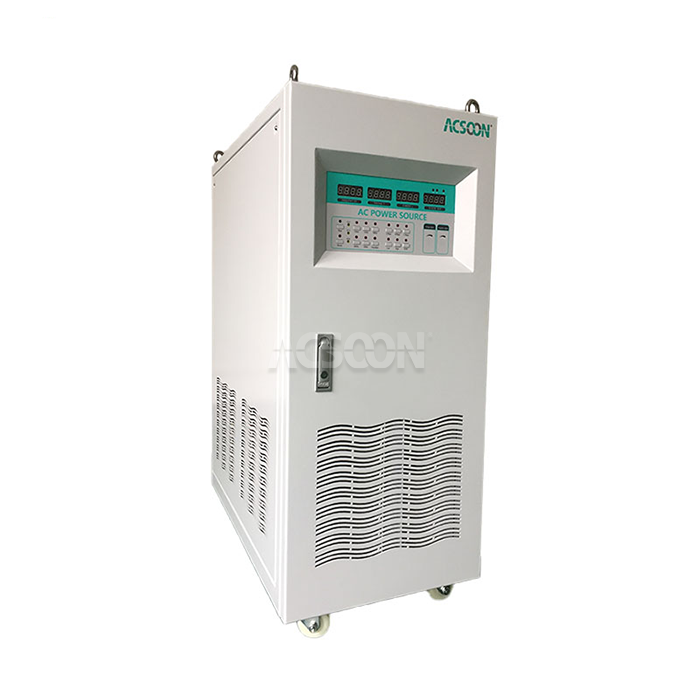 VIEW MOREMarine Frequency Converters 50HZ To 60HZ
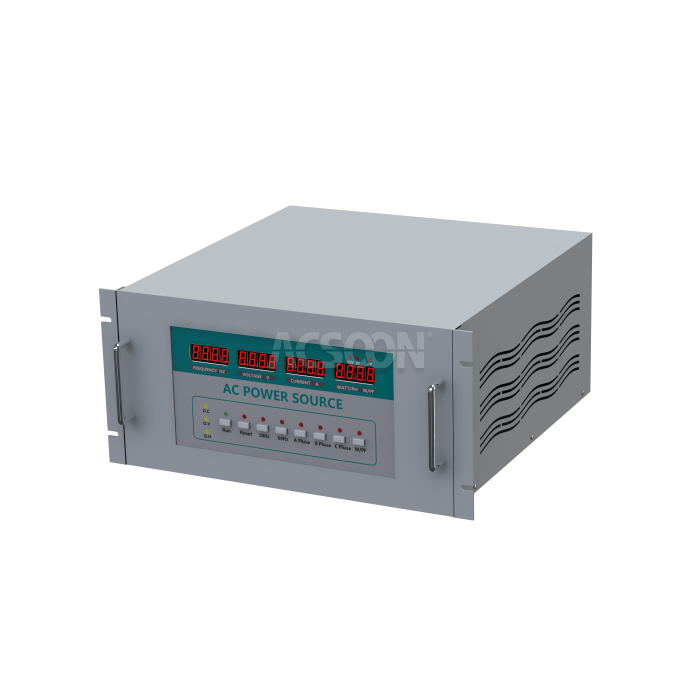 VIEW MOREFrequency Converter 60HZ To 50HZ 220V
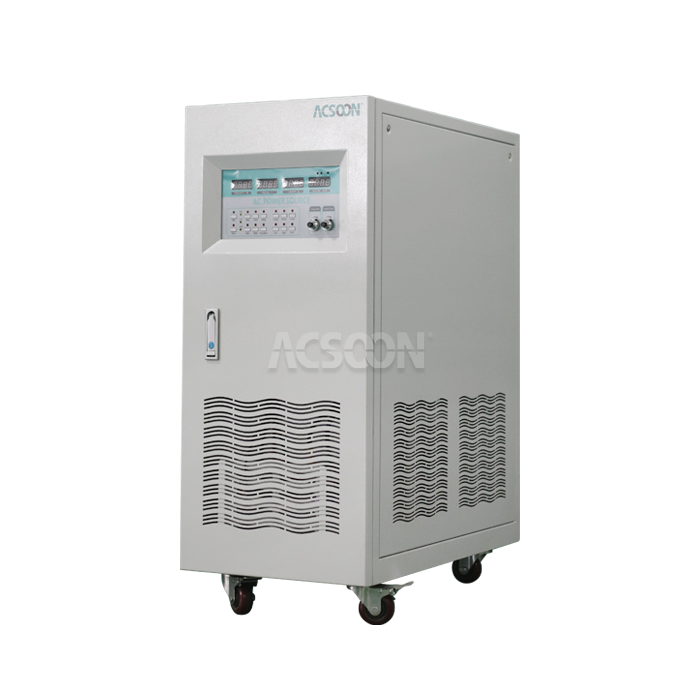 VIEW MORE60 HZ To 50 HZ Frequency Converter
 VIEW MOREShore Power Frequency Converter
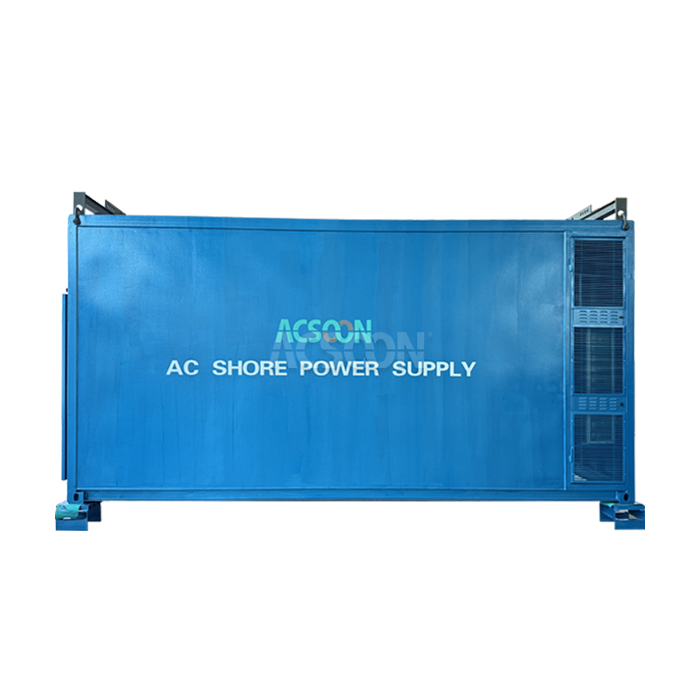 VIEW MOREContainerized Static Frequency Converter