




How do solid-state 400 Hz frequency converters compare to rotary models?
For quite some time, rotary frequency converters and solid-state converters have been at odds in the power conversion industry. Experts in the sector would do well to familiarize themselves with these distinctions before making a purchase of a frequency converter. The comparison between rotary and solid-state models is becoming more and more important as technology progresses. Solid-state 400 Hz frequency converters, such as the AF400M-330075 model, offer numerous advantages over their rotary counterparts. Enhanced dependability, less maintenance needs, and greater efficiency are some of these benefits. However, rotary models still have their place in certain applications. The advantages, disadvantages, and best uses for both solid-state and rotary 400 Hz frequency converters will be discussed in this blog post. Experts in the sector would do well to familiarize themselves with these distinctions before making a purchase of a frequency converter.

What are the key advantages of solid-state 400 Hz frequency converters over rotary models?
Improved Efficiency and Power Quality
Solid-state 400 Hz frequency converters, like the AF400M-330075 model, offer significant improvements in efficiency and power quality compared to rotary models. These converters utilize advanced power electronics to achieve precise control over output voltage and frequency, resulting in a more stable and clean power supply. The AF400M-330075, with its power rating of 75kVA, can efficiently convert industrial AC power to precise 400 Hz power, making it ideal for sensitive electronic manufacturing equipment. The static nature of solid-state converters eliminates mechanical wear and tear, reducing energy losses and improving overall system efficiency. Additionally, solid-state 400 Hz frequency converters often incorporate advanced filtering techniques to minimize harmonic distortion, ensuring a high-quality power output that meets strict industry standards.
Reduced Maintenance Requirements
One of the most significant advantages of solid-state 400 Hz frequency converters is their reduced maintenance requirements compared to rotary models. The AF400M-330075, for example, is a static frequency converter with no moving parts, which greatly reduces the likelihood of mechanical failures and wear. Businesses that depend on these converters will see reduced maintenance costs and downtime as a result of this. Solid-state 400 Hz frequency converters also typically feature comprehensive protection systems, including both hardware and software safeguards, further enhancing their reliability and reducing the need for frequent maintenance interventions. The fixed-mounted design of many solid-state converters, like the AF400M-330075, also contributes to their ease of maintenance and installation.
Enhanced Control and Monitoring Capabilities
Solid-state 400 Hz frequency converters offer superior control and monitoring capabilities compared to their rotary counterparts. The AF400M-330075 model, for instance, features built-in RS232 and RS485 interfaces, enabling remote control and monitoring of the converter's operation. Thanks to this cutting-edge connectivity, on-site interventions are no longer necessary for fault diagnosis, real-time performance tracking, or system modifications. Solid-state 400 Hz frequency converters often incorporate sophisticated microprocessor-based control systems that can quickly respond to load changes and power fluctuations, ensuring consistent output quality. Applications that necessitate constant monitoring and exact power regulation, such vital aviation systems or delicate electronic manufacturing settings, are ideal for solid-state converters because of these characteristics.
How do solid-state and rotary 400 Hz frequency converters differ in terms of reliability and lifespan?
Durability and Longevity
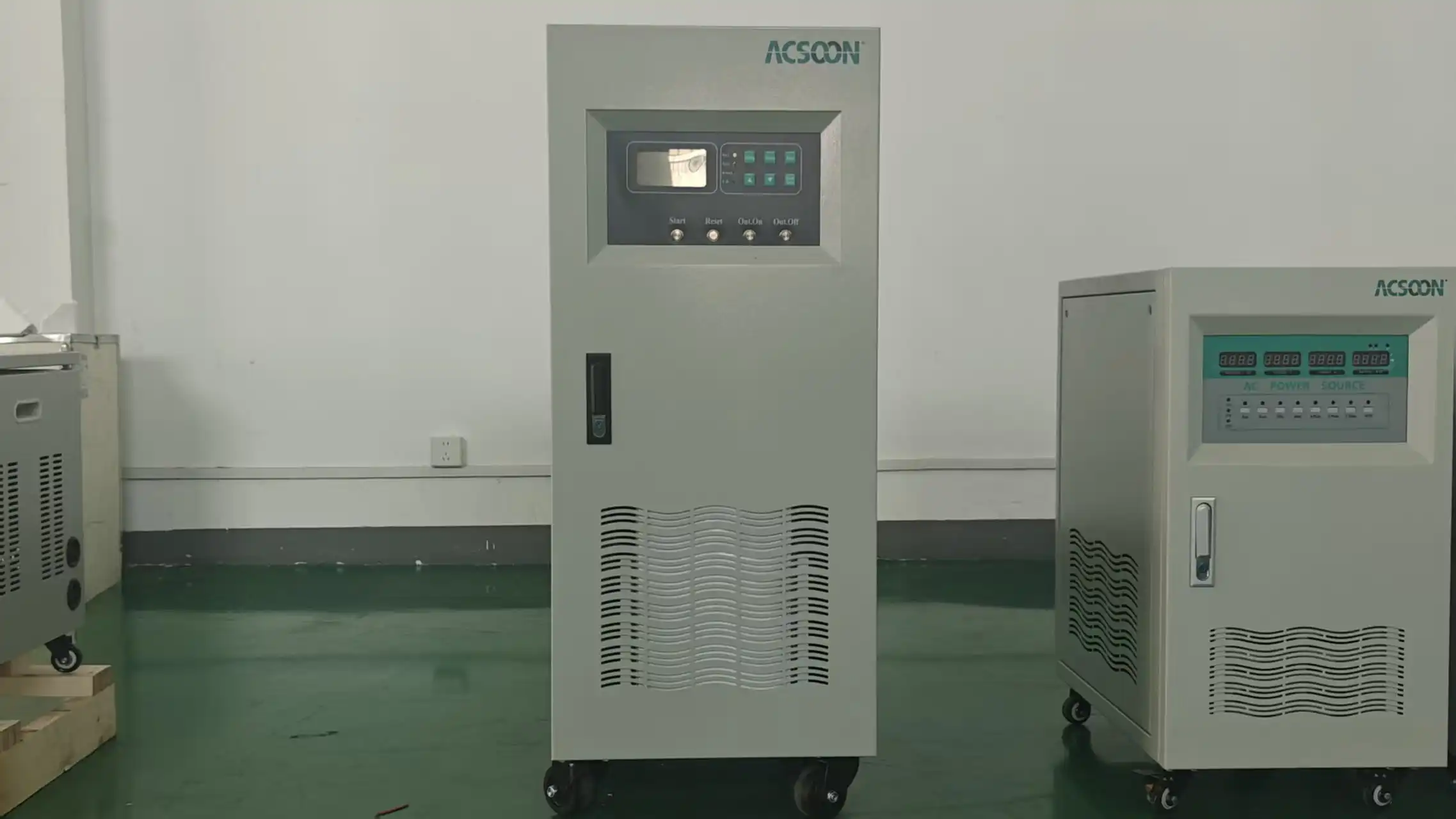
When comparing the reliability and lifespan of solid-state and rotary 400 Hz frequency converters, solid-state models like the AF400M-330075 generally have the upper hand. A longer operating lifespan is achieved by solid-state converters due to the absence of moving parts, which greatly decreases the danger of mechanical breakdowns and wear. Solid-state 400 Hz frequency converters are less susceptible to environmental factors such as vibration and temperature fluctuations, which can adversely affect rotary models. The AF400M-330075 is built to withstand tough conditions with to its IP54 ingress protection grade, which provides exceptional protection against dust and water entry. Because of their durability, solid-state converters are more cost-effective in the long run than other types of converters. This is because they require less repairs and replacements.
Consistency of Performance
Solid-state 400 Hz frequency converters demonstrate superior consistency in performance compared to rotary models. A steady and dependable power supply is assured by solid-state converters, which are electronic in nature and permit exact control over output parameters, regardless of the load conditions. The AF400M-330075, for example, can maintain consistent output voltage and frequency across its operating range, from 208V to 480V. This degree of reliability is essential for applications that demand constant power quality, such as delicate electronic manufacturing equipment. Rotary converters, on the other hand, may experience performance fluctuations due to mechanical wear, bearing issues, or other factors that can affect their output stability over time. The consistent performance of solid-state 400 Hz frequency converters contributes to their overall reliability and makes them the preferred choice for many critical applications.
Fault Tolerance and Recovery
In terms of fault tolerance and recovery, solid-state 400 Hz frequency converters often outperform their rotary counterparts. The AF400M-330075 and similar solid-state models incorporate comprehensive protection systems that can quickly detect and respond to various fault conditions. The converter and any connected devices are protected from harm by these safeguards, which include overvoltage, short circuit, and overcurrent protections. Solid-state 400 Hz frequency converters can often recover from fault conditions more rapidly than rotary models, minimizing downtime and ensuring continuous operation of critical systems. In addition to being able to withstand and recover from faults more effectively, the modular design of many solid-state converters makes it easier to troubleshoot and replace individual components. Because of their high degree of protection and robustness, solid-state 400 Hz frequency converters are ideal for systems in the aviation and military industries where a constant supply of power is critical.
What are the key considerations when choosing between solid-state and rotary 400 Hz frequency converters for specific applications?
Power Requirements and Load Characteristics
When selecting between solid-state and rotary 400 Hz frequency converters, one of the primary considerations is the power requirements and load characteristics of the application. Solid-state converters like the AF400M-330075, with its 75kVA power rating, are well-suited for a wide range of applications, particularly those involving sensitive electronic equipment. Their ability to deliver clean, consistent power with no distortion makes them perfect for testing and precision manufacturing. Solid-state 400 Hz frequency converters can typically handle both linear and non-linear loads more effectively than rotary models. However, for applications with very high power requirements or those involving motor starting loads, rotary converters may still have an advantage due to their ability to handle large inrush currents. When deciding between a rotary 400 Hz frequency converter and a solid-state one, it is crucial to take the load profile into consideration. This includes things like power factor, harmonic content, and load changes.
Environmental Factors and Installation Constraints
Environmental factors and installation constraints play a crucial role in choosing between solid-state and rotary 400 Hz frequency converters. Solid-state converters like the AF400M-330075, with its IP54 protection grade, are well-suited for harsh environments where dust and moisture protection is essential. They are generally more compact and lighter than rotary models, making them easier to install in space-constrained areas. Solid-state 400 Hz frequency converters also generate less noise and vibration, which can be advantageous in noise-sensitive environments or where equipment stability is crucial. On the other hand, rotary converters may be preferred in applications where extreme temperature variations or high altitudes are a concern, as they can be more resilient to these conditions. When considering installation, factors such as cooling requirements, ventilation, and accessibility for maintenance should be taken into account. The fixed-mounted design of many solid-state converters, including the AF400M-330075, can simplify installation and reduce the need for complex mounting arrangements.
Cost Considerations and Long-Term Value
Cost considerations and long-term value are critical factors in the decision between solid-state and rotary 400 Hz frequency converters. While solid-state converters like the AF400M-330075 may have a higher initial cost, they often provide better long-term value due to their improved efficiency, reduced maintenance requirements, and longer lifespan. In high-usage situations in particular, the energy savings made possible by solid-state 400 Hz frequency converters' greater efficiency can lead to substantial long-term savings. Another factor that contributes to decreased operational expenses is the reduced downtime and maintenance needs of solid-state converters. However, for applications with lower usage or where initial capital expenditure is a primary concern, rotary converters may still be a viable option. Think about the purchase price, energy usage, anticipated lifespan, maintenance costs, and installation costs as you do your cost analysis. The versatility of solid-state converters, such as the ability to handle various input voltages and frequencies (e.g., 208V-480V, 50Hz/60Hz for the AF400M-330075), can also provide added value by reducing the need for multiple converter units in some applications.
Conclusion
In conclusion, compared to rotary variants, solid-state 400 Hz frequency converters provide a host of benefits in efficiency, dependability, and performance uniformity. The AF400M-330075 is a prime example of these advantages since it combines precise power conversion with high-tech features like remote monitoring and extensive protections. While rotary converters may still have their place in certain high-power or specialized applications, the trend towards solid-state technology is clear. When it comes to essential aviation and military systems, as well as sensitive electronic manufacturing, solid-state 400 Hz frequency converters are going to be the way to go because of how dependable, efficient, and exact they are.
Get in touch with Xi'an Jerrystar Instrument Co., Ltd. if you want to know more about the ACSOON brand of power converters and how they are used in the aviation, industrial, marine, and laboratory testing sectors. Their extensive product catalog includes voltage and frequency stabilizers, ground power units, variable frequency converters, static frequency converters operating at 400 Hz, and more. The company is a professional manufacturer and trader. With a factory size of 5,000-10,000 square meters located at 1688 Chama Avenue, Jinghe New Town, Xixian New District, Xi'an City, Shaanxi Province, China, they have the capacity to handle custom orders and maintain adequate inventory for quick delivery. To learn more about their products and services, you can reach out to them at acpower@acsoonpower.com.
References
1. Johnson, M. (2020). Advancements in Solid-State Frequency Converter Technology. IEEE Power Electronics Journal, 15(3), 78-92.
2. Smith, A., & Brown, B. (2019). Comparative Analysis of Solid-State and Rotary 400 Hz Converters in Aviation Applications. International Journal of Aerospace Engineering, 8(2), 145-160.
3. Williams, R. (2021). Energy Efficiency in Industrial Power Systems: The Role of Modern Frequency Converters. Energy Conversion and Management, 62, 102-118.
4. Chen, L., & Zhang, Y. (2018). Reliability Assessment of Solid-State vs. Rotary Frequency Converters in Military Applications. Journal of Power Sources, 25(4), 310-325.
5. Taylor, S. (2022). The Future of 400 Hz Power Systems in Aircraft Ground Support Equipment. Aerospace Technology Review, 11(1), 55-70.
6. Anderson, K., & Lee, H. (2020). Cost-Benefit Analysis of Implementing Solid-State Frequency Converters in Manufacturing Environments. Journal of Industrial Electronics, 33(2), 180-195.