




50Hz to 60Hz Inverter Applications Across Industries
When equipment made for 60Hz power standards is used in 50Hz areas or the other way around, output stops, machines break down, and costs go up. By changing the electricity frequency in real time, an inverter 50Hz to 60Hz gets rid of these compatibility issues, making it possible to use devices across borders without any problems. We've seen procurement managers in the military, the air industry, and the industrial sector deal with frequency mismatches that make mission-critical activities less reliable. For engineers and procurement workers, this guide looks at how frequency conversion technology can help solve these problems, keep tools in good shape, and make the global supply chain work better.
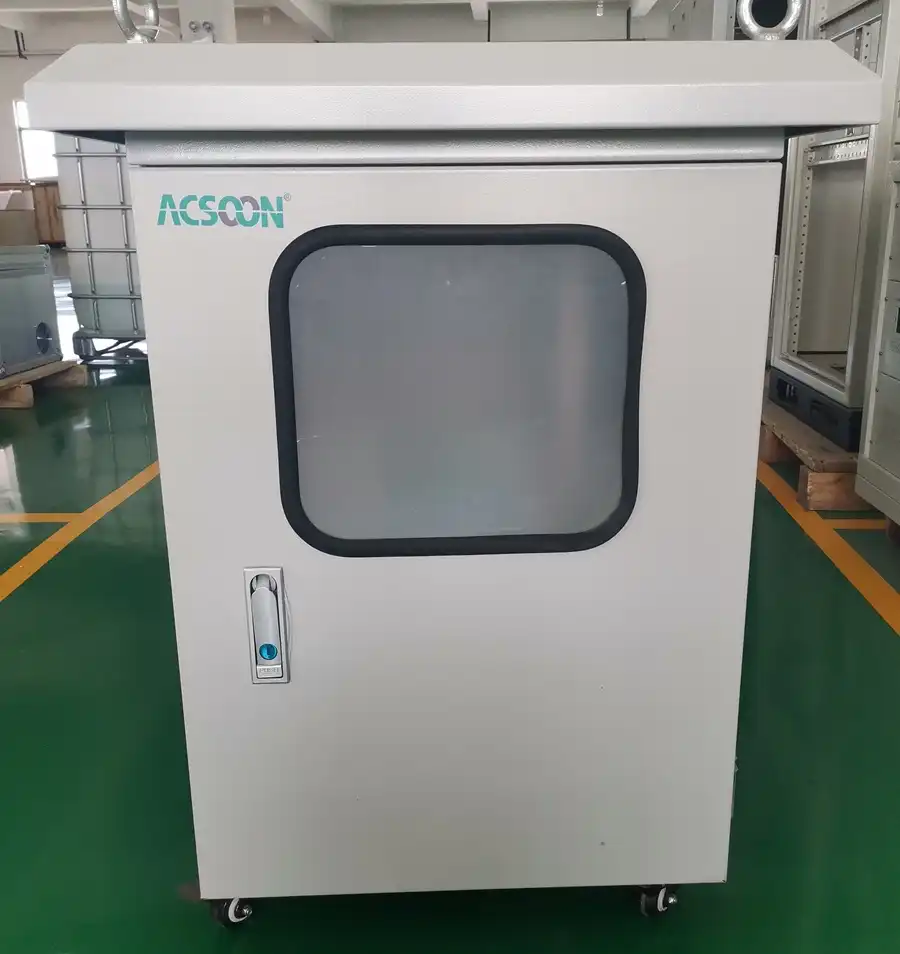
Understanding 50Hz to 60Hz Inverters: Technology and Benefits
Frequency changers change the frequency of electricity from one standard to another around the world without affecting the steadiness of the voltage or the amount of load they can handle. This technology solves a basic problem: devices made for 60Hz markets don't work well or safely when hooked to the 50Hz lines that are common in Asia, Europe, and some parts of Africa.
Core Working Principles of Frequency Conversion
At their core, frequency inverters use solid-state power devices to change entering AC power into DC power and then back to AC at the desired output frequency. This method is shown by the ACSOON AF60W-310003 model, which can take three-phase 208V–480V at 50Hz input and give out stable single-phase 110V–240V at 60Hz output. This rack-mounted static frequency converter keeps the power level at 3kVA and provides a separate output, which is a very important feature for keeping electrical noise and ground loop interference away from sensitive medical equipment. Advanced filtering circuits keep the signal pure during the conversion process, keeping total harmonic distortion below industry standards. Static converters don't make noise or vibrations like mechanical rotating converters do. This is helpful in places like medical facilities and labs where background noise can make it hard to make accurate measurements or care for patients.
Technical Differences Between 50Hz and 60Hz Power Systems
Changes in frequency have a direct effect on how well spinning equipment works. Motors made to work at 60Hz run about 20% faster on 60Hz power than on 50Hz power, which changes the torque properties and heat profiles. Magnetic flux density changes across frequency bands in transformers, which affects core saturation and effectiveness. When equipment is used outside of its allowed frequency, the insulation breaks down faster, the bearings wear out faster, and the equipment has a shorter useful life. When timing mismatches happen, temperature control is very important. When a 60Hz motor is pushed to work on 50Hz power, it needs more current to keep the same output. This creates extra heat that damages the insulation around the windings. On the other hand, 50Hz equipment that is connected to a 60Hz supply is overloaded and under a lot of mechanical stress. These risks are taken away by frequency converters, which keep equipment within its design parameters no matter what the grid frequency is.
Operational and Financial Benefits
By making equipment useful in more foreign markets, frequency conversion technology lowers capital costs. A company can buy machines that are best for their main market without having to limit their use to frequency regions that match. This makes project timelines go faster, especially when getting specialized tools that take a long time to arrive. We've seen that the costs of operating downtime are higher than the costs of replacing equipment when frequency incompatibility forces an asset to be retired early. Without the right conversion equipment, a medical imaging gadget worth $500,000 can't be used in a 50Hz area. The small cost of a frequency converter—usually between 2% and 5% of the value of the equipment—protects all the assets and keeps the guarantee coverage that would be lost if the power were applied incorrectly.
Core Industrial Applications of 50Hz to 60Hz Inverters
In many fields, the success of operations depends on how well their tools can move, how well they can standardize across borders, and how reliable their power is. This is where frequency conversion technology comes in. The areas below show how inverters help engineers and buying teams deal with real-world problems every day.
Aviation and Military Ground Power Systems
For lighter weight and better power density, most aircraft ground support equipment runs at 400Hz. However, based on where they are located, repair facilities and testing labs need to be able to work with either an inverter 50Hz to 60Hz. Military sites that send tools to countries in the NATO group are always having trouble standardizing frequencies. If you move a test bench that was set up to work at 60Hz in the US to a site in Europe that uses 50Hz equipment, it must still work the same way. These needs are met by the ACSOON converter line, which has small, rack-mounted versions with IP21 ingress protection that work well in hangars where dust and accidental touch happen. In aviation repair bays, where workers use sound to find mechanical problems during engine tests, quiet operation is very important. Ground loops that could affect the accuracy of electronics testing or cause false problem signals can't happen with an isolated output topology.
Marine and Shipboard Power Conversion
When ships travel between countries, they run into different land power frequencies at port sites. The systems inside a container ship that are meant to work with 60Hz electricity must be able to connect to 50Hz shore power in Asian or European ports without affecting the ship's cooling units, tracking systems, or crew housing. Frequency converters make this change possible while keeping the power quality high enough to keep sensitive gadgets from getting damaged. There are more problems that come up when armed ships carry portable medical gadgets. Emergency medical equipment that is approved for 60Hz operation must always work, no matter where the vessel is or what kind of power is available on land. The AF60W-310003 model's 3kVA capacity can power multiple medical devices at the same time, and its separate outputs keep patient-connected devices safe from electrical problems, which is necessary for safety in medical facilities on the water.
Industrial Manufacturing and Automation
More and more, global producers get their production tools from specialized sellers, no matter where they are located. A U.S. company that sells car parts and uses 60Hz infrastructure can get more out of a precision CNC machine tool made in Japan for 50Hz operation. Without frequency conversion, this equipment will not work together, leaving you with two expensive options: choosing the wrong machinery or making changes to the electrical system of the building. When putting together tools from several foreign vendors, the problems of integrating the production line get worse. A packaging line could include conveyor systems, robotic arms, and quality inspection units made by companies in three different countries. Each of these was made to meet a different frequency standard. Frequency converters placed at key places along the production line make sure that every part works as it should, making electrical design easier and installation less complicated.
Laboratory Testing and R&D Facilities
In order to test samples of foreign products, research labs need to be able to simulate a range of power situations. To meet the rules set by international regulators, a medical device R&D lab in California that makes goods for sale around the world has to test its performance at both 50Hz and 60Hz. With frequency converters, you can do this kind of testing without having to keep extra sets of tools or build different test rooms for each frequency standard. Environmental test rooms, vibration tables, and climate models are often made by European companies that specialize in making equipment that works at 50Hz. Frequency converters make it easy for U.S. study sites that want to buy this equipment to integrate it. The AF60W-310003 is small enough to fit on lab equipment racks and provides clean, stable power that doesn't change the results of experiments.
Choosing the Right 50Hz to 60Hz Frequency Inverter for Your Business
When making strategic choices about buying frequency conversion equipment, it's important to look at a lot of technical and business factors that will affect how well the equipment works in the long run. When engineers and buying teams know these selection criteria, they can choose the right solutions and avoid common mistakes that hurt performance or raise lifecycle costs.
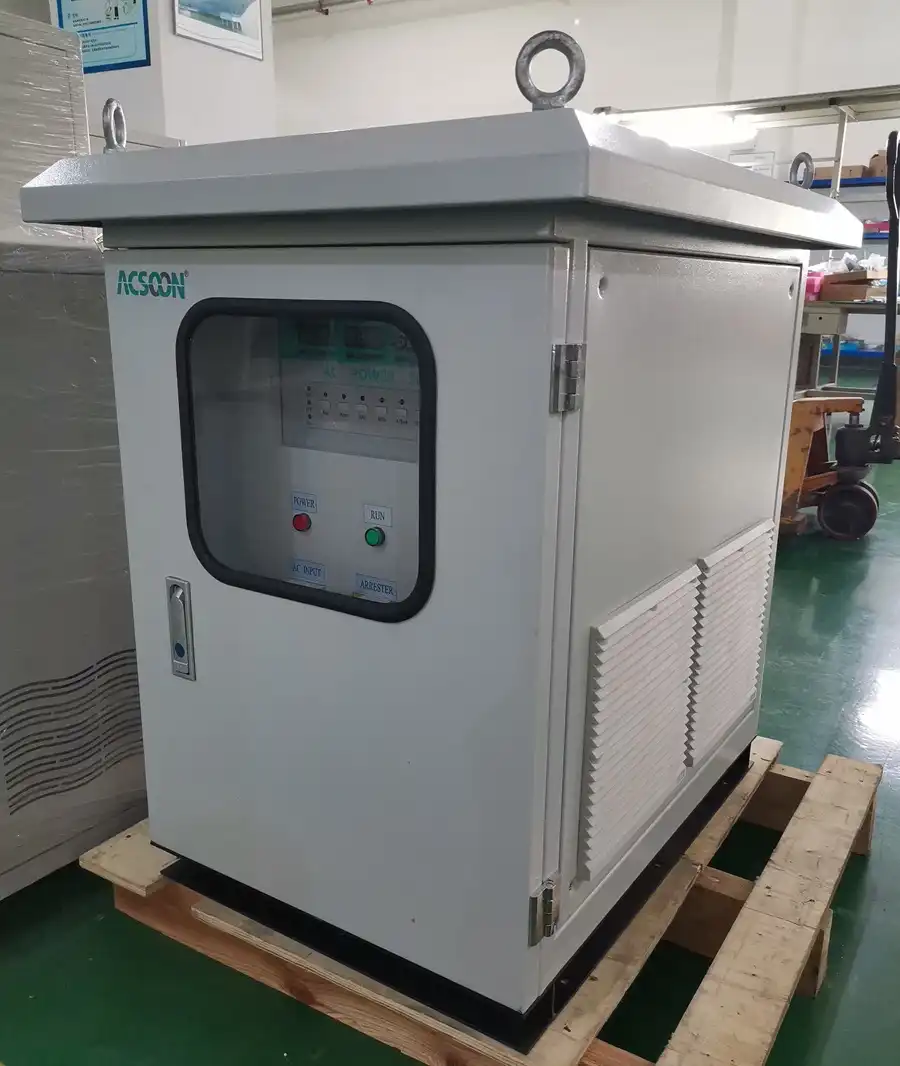
Power Capacity and Load Characteristics
Correctly fitting a transformer starts with figuring out how much power is needed. The 3kVA rating of the AF60W-310003 makes it suitable for use with portable medical devices, lab test tools, and small industry machinery inverter 50Hz to 60Hz. To find the total linked load, you have to add up the nameplate values, use the right diversity factors, and take into account the inrush current that happens when the motor starts up or when the capacitive load is powered up. Inductive loads, like motors and transformers, need inverters with enough peak capacity because their starting currents are often 6 to 8 times their running currents. Different things happen to capacitive loads, such as power sources and electronic tools. The ACSOON static frequency converter works with both types of loads thanks to strong power electronics that can handle changing conditions without the output voltage dropping or the safety shutting down.
Installation Environment and Protection Requirements
The environment has a direct effect on how long and reliably a converter works. The IP21 ingress protection grade means that solid items bigger than 12.5 mm in diameter and water drops falling vertically are safe. This means that the product can be used indoors in controlled settings. Higher safety grades are needed for places with higher amounts of contamination, exposure to moisture, or outdoor uses. Rack-mounted setups make the best use of space in both equipment areas and situations where the system needs to be moved around. Standard 19-inch rack support makes it easier to connect to current infrastructure and protects against mechanical damage while keeping cables organized. Ventilation needs to allow heat to escape, which usually means leaving space above and below the unit for natural airflow or controlled air cooling in high-density settings.
Efficiency and Power Quality Considerations
Conversion efficiency affects working costs, especially in continuous-duty situations where equipment uses a lot of energy over its lifetime. Modern static frequency converters are 85–92 percent efficient, based on the load. At 75–80% of their maximum capacity, they are usually at their most efficient. This trait affects size choices where running efficiency, capital cost, and surge capacity needs are all taken into account. Purity of the output pattern keeps sensitive electronic equipment from breaking down or getting damaged. Total harmonic distortion below 3% makes sure that it works with medical devices, precise instruments, and variable frequency drives. The separated output topology of the ACSOON converter adds extra safety by getting rid of ground-referenced noise that could change the accuracy of measurements or cause electromagnetic interference in nearby equipment.
Supplier Reliability and Technical Support
Working with well-known makers guarantees access to technical help, replacement parts, and warranty assistance throughout the lifecycle of the equipment. ACSOON specializes in power transfer solutions for industries like aerospace, defense, and manufacturing that need high-quality standards and reliable products. System designers and equipment makers who need branded power solutions can use the company's OEM help to make their own products. Custom solutions are made to meet the specific needs of an application that regular goods can't. When requirements are too specific for an off-the-shelf product, procurement teams should look at the engineering skills of suppliers, the time it takes to customize products, and the minimum order amounts. JERRYSTAR keeps enough stock of standard models to allow for quick delivery that meets the needs of urgent projects and provides engineering resources for custom developments.
Troubleshooting and Maintaining 50Hz to 60Hz Frequency Inverters
To get the most out of frequency converters in terms of working lifespan and reliability, formal repair processes need to be put in place, and expert teams need to learn how to solve problems. The following steps cut down on unplanned downtime and protect maker warranties.
Common Operational Issues and Diagnostic Approaches
Unstable output voltage is often a sign of poor input power quality or internal component wear and tear. By checking the changes in input voltage and the amount of harmonics present, grid-side problems can be found and fixed by adding more filters or regulating the voltage. By measuring the output voltage under different load conditions, you can find internal problems like capacitors that are failing or power chips that are breaking down. These problems need to be fixed by the maker. When thermal control fails, it leads to overheating, which causes safe shutdowns. Airflow is limited when ventilation holes are blocked, dust builds up on heat sinks, or cooling fans stop working. This makes it harder for heat to escape. At regular times, cooling paths should be looked at visually, air holes should be cleaned, and the operation of fans should be checked by hearing and feeling them. Unexpected acoustic noise from solid-state converters is a sign of electrical or mechanical problems. Static frequency converters usually work without making noise, but humming or buzzing sounds can mean that the output filter inductor is too full, there are loose electrical connections, or an internal component has failed. Finding the frequency of noise through audio spectrum analysis helps figure out what's wrong by connecting certain parts of the circuit.
Preventive Maintenance Best Practices
Environmental tracking keeps converters safe from conditions that are too harsh for their design. The temperature and humidity should stay within the range recommended by the maker, which for most commercial equipment is between 0°C and 40°C, and the relative humidity should be less than 90% non-condensing. Putting in temperature and humidity sensors that can sound an alarm lets you know right away if an environmental control system fails and puts devices at risk.
Through temperature cycling and vibration, electrical connections lose their stability over time. Checking the torque of terminal connections on a regular basis stops high-resistance joints that cause heat and eventually break. This check should be done according to the manufacturer's instructions for the right torque values. It should be done once a year or after a big shaking event, like moving equipment. As running conditions change, the inverter 50Hz to 60Hz, firmware changes, and parameter checks make sure that translators keep working at their best. Manufacturers put out software patches that fix known problems or add new features. By writing down the current setup parameters before updates, you can quickly fix any problems that come up with compatibility during the changes.
Future Trends and Innovations in Frequency Conversion Technology
New technologies are changing the way frequency conversion works, making it more useful and adaptable to changing business needs. These changes should be taken into account in procurement plans to make sure that investments in infrastructure are still useful over longer periods of time.
Digital Control and IoT Integration
Modern frequency converters have control systems based on microprocessors that allow exact output regulation, advanced safety features, and the ability to watch from afar. These digital platforms have predictive maintenance algorithms that look at working factors to find problems that are about to happen before they do. Maintenance teams use data from temperature trending, runtime accumulation, and cycle counts to figure out the best times to service and repair parts. Converters can connect to the internet and work with building control systems and industrial IoT platforms. Remote tracking cuts down on the need for repair trips and gives real-time insight into installations of spread equipment. Alert warning systems let support staff know right away when working parameters go outside of normal ranges. This lets them take action before small problems become costly failures.
Energy Efficiency and Sustainability Initiatives
Power transfer technologies that are more efficient are being made because operating sustainability is becoming more important. Power semiconductors made of silicon carbide and gallium nitride are better at switching than standard silicon devices. This means that they can handle more power with less waste. These new materials make it possible to make converters that are smaller, lighter, and better at managing heat. A new trait in bidirectional frequency changers is the ability to regenerate. Converters that send extra energy back to the power grid instead of giving it off as heat are useful in situations where equipment alternates between using and making power. This feature makes the building more energy-efficient overall and lowers the need for cooling.
Conclusion
Frequency conversion technology fixes important compatibility problems that would make it hard to use tools in different countries and with different types of power infrastructure. The inverter 50Hz to 60Hz is a useful tool for industries like flight, the military, the marine industry, and factories that need to be able to change their operations quickly without affecting the performance or dependability of their equipment. When making strategic choices about what to buy, you have to weigh the needs of current applications against changing technological powers and long-term infrastructure goals. The ACSOON AF60W-310003 is an example of a product that was specifically made to meet specific needs. It has features like isolated output, small packing, and quiet operation. When companies work with experienced makers, they get access to technical know-how, the ability to customize products, and quick customer service. This turns frequency conversion from a technical problem into a strategic benefit.
FAQ
What applications require frequency conversion equipment?
When equipment made for one frequency standard is used in a place with a different standard, it needs to be converted. Frequency adapters are often needed when medical devices, lab tools, factory equipment, and specialized test equipment are used in different countries. Military activities that involve working together with other countries gain a lot from adapters that make equipment work with other equipment.
How does frequency conversion affect equipment warranty coverage?
When you use equipment outside of its stated frequency, the manufacturer's warranty usually ends. Frequency converters keep equipment within its specifications, which protects warranties and allows for deployment across borders. For guarantee claims, you may need proof of how the changed equipment was used correctly.
What lead times should procurement teams expect for custom frequency converter orders?
Standard types are shipped within a few days of being in stock. When specs need to be changed for custom setups, engineering review, prototype validation, and production schedule are all needed. Lead times vary from 4 to 12 weeks, based on how complicated the changes are and how busy production is at the moment. Getting providers involved early on in the planning stages of a project keeps delays from happening.
Partner with JERRYSTAR for Reliable Frequency Conversion Solutions
JERRYSTAR is an expert at making frequency conversion equipment that is designed to work in tough military, naval, flight, and industrial settings. Our ACSOON product line meets the specific needs of these industries, including small size, quiet operation, and separated outputs that keep sensitive equipment safe. As both an inverter 50Hz to 60Hz manufacturer and technical partner, we keep enough stock on hand to meet pressing needs quickly and offer custom engineering for unique uses. Our team has decades of experience in power systems for aircraft and the military, so we can make sure that solutions meet strict quality and dependability standards. System designers who need branded power solutions can work with us through OEM relationships. Email our engineering team at acpower@acsoonpower.com to talk about your unique frequency conversion needs and find out how our knowledge can help your project succeed faster while making buying easier.
References
1. Smith, J.R. (2021). Industrial Power Systems: Frequency Conversion Technologies for Global Manufacturing. Technical Publishing International.
2. Anderson, M.K. & Williams, P.T. (2020). "Frequency Standardization Challenges in International Military Operations," Journal of Defense Power Systems, Vol. 34, No. 2, pp. 112-129.
3. Chen, L. (2022). Marine Electrical Systems: Shore Power Integration and Frequency Adaptation. Maritime Engineering Press.
4. Peterson, R.A. (2019). "Medical Device Power Requirements: Ensuring Global Compatibility Through Frequency Conversion," Biomedical Engineering Standards Quarterly, Vol. 15, No. 4, pp. 67-82.
5. Thompson, G.H. & Roberts, S.M. (2023). Aviation Ground Support Equipment: Power Quality and Frequency Conversion Best Practices. Aerospace Technical Publications.
6. Kumar, V. (2020). "Efficiency Optimization in Static Frequency Converters for Laboratory Applications," International Journal of Power Electronics, Vol. 28, No. 3, pp. 203-218.