




120V DC to AC Inverter Applications in Industrial & Residential Use
When working in harsh conditions, a 120v dc to ac inverter changes direct current from batteries or other DC power sources into safe alternating current that can power delicate machines and instruments. For applications that need to be reliable, these power conversion devices are essential in aircraft ground support, naval navigation systems, industrial automation facilities, and lab testing areas. It is easier for expert decision-makers to choose the best solution for their needs when they know about the solutions' operating principles, application reach, and procurement issues.
Understanding 120V DC to AC Inverters: Basics and Operational Principles
What Defines a 120V DC Input Power Inverter?
When you plug in 120 volts of direct current, a 120v dc to AC inverter changes it into alternating current at a certain voltage and frequency. The process of conversion uses semiconductor switching technology to quickly change the direction of the DC input. This creates an AC pattern through precise electronic control. Modern inverters use pulse-width modulation to create output voltages that range from standard 110-120VAC power for homes to specialized industrial voltages of up to 520VAC. The frequency can be changed from 50Hz to 60Hz based on local standards and equipment needs. In the inverter's power stage, insulated-gate bipolar transistors (MOSFETs) switch at high frequencies to make the AC output that is needed. This is where the core change takes place. Galvanic isolation between input and output circuits is provided by transformer isolation. This makes the system safer and stops electromagnetic interference. This isolation is very helpful in naval and flight settings, where electrical noise can mess up important communication and guidance systems.
Pure Sine Wave vs. Modified Sine Wave Technology
When looking at inverters for business use, it's still important to understand output quality. Pure sine wave inverters make smooth, continuous waveforms that are the same as energy from the utility company. This means that they can be used with almost all AC-powered devices, such as motors, transformers, medical devices, and precision tools. The rhythmic output reduces harmonic distortion to a minimum, which keeps linked loads from getting too hot and keeps sensitive electronics from having problems. Modified sine wave inverters make stepped versions of sine waves, which can be used to power resistive loads like heaters and electric lights at a low cost. However, their higher harmonic content can make radio equipment buzz, transformer-based devices overheat, and lab tools make mistakes when measuring. When buying equipment for naval navigation or industrial automation, procurement workers should put pure sine wave technology at the top of their list to make sure the equipment lasts a long time and measurements are accurate.
Key Performance Metrics for Technical Evaluation
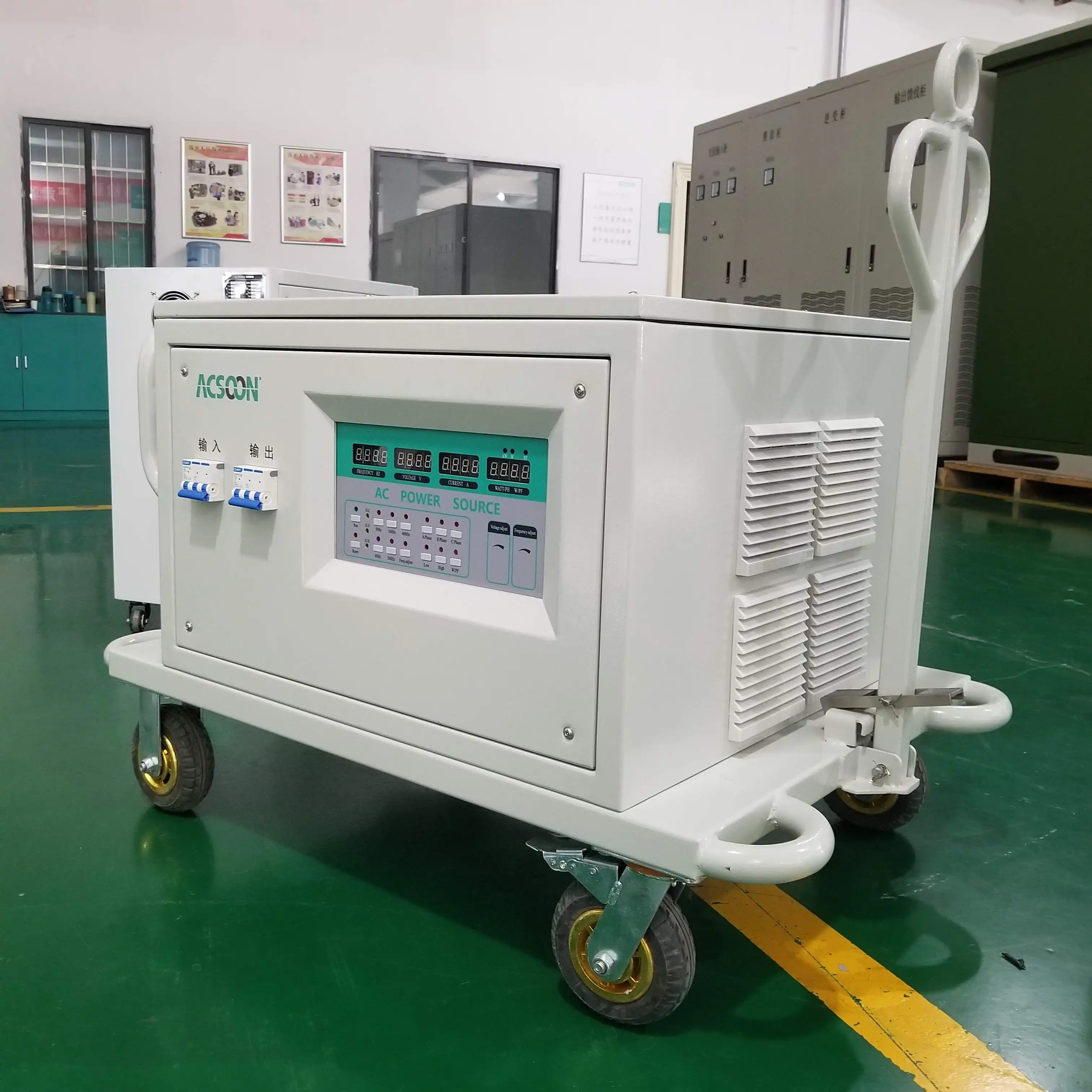
When looking at an inverter's specs, a few important factors decide how well it will work. Power grade shows the constant output power in kilowatts or kilovolt-amperes. For example, the ACSOON ANDW120-330020 model can provide 20kVA for tough industrial uses. Efficiency levels usually fall between 85% and 95%, which has a direct effect on running costs and the amount of heat that needs to be removed in sealed setups. The inverter's voltage regulation power tells you how well it keeps the output fixed even when the input voltage changes or the load changes. Quality units keep the output voltage within a range of ±2%, which keeps linked equipment from getting damaged by too little or too much voltage. Electromagnetic compatibility approval makes sure that the device meets industry standards for both the interference it sends out and resistance to electrical noise from outside sources. This is especially important in places where many electronic systems are working at the same time.
Applications of 120V DC to AC Inverters in Industrial and Residential Sectors
Industrial Automation and Manufacturing Facilities
DC battery backup systems paired with 120v dc to ac inverter units are being used more and more in manufacturing settings to keep production going when grid power goes out. To keep production lines from stopping, which costs a lot of money every minute, programmable logic controls, human-machine interfaces, servo drives, and variable frequency drives all need clean, stable AC power. When set up correctly, an inverter system connects spare battery banks to important factory equipment. The ANDW120-330020 model works great in factory automation settings because it can power multiple control boxes at the same time with its 20kVA capacity. Because it has low harmonic distortion, it keeps sensitive proximity sensors and encoders that depend on signal purity from being falsely activated. The IP21 grade keeps dust and water from getting into the internal parts, which is common in industrial settings. The EMC-compatible design also keeps wireless communication systems used for tracking production from getting messed up. Galvanically separated inverters keep ground loop currents from messing up precision measurement systems. This is especially helpful in pharmaceutical and food preparation plants. To keep the accuracy needed for quality control and legal compliance, temperature controllers, pH meters, and analytical scales all need power that doesn't cause interruption.
Marine Navigation and Shipboard Power Systems
Different types of ships, from business cargo ships to study platforms in the ocean, use large DC electrical systems that are charged by alternators that are powered by the engines. By changing this DC power to AC, standard tools on land can be used instead of DC models that are only good for marine use. Navigation computers, radar systems, contact radios, and electronic chart plotters all work best when they are powered by stable AC power that meets the requirements set by the maker. Marine settings have their own problems, like constant shaking, being exposed to salt spray, and big changes in temperature. Good marine inverters have protective covering on the circuit boards to keep them from rusting, ruggedized housings to protect them from physical damage, and the ability to work in temperatures ranging from -20°C to +60°C. The result of a pure sine wave is very important for naval electronics because signal interference can make sailing less safe or communication less reliable. Inverters let fishing boats use their DC house batteries to power things like fish finders, freezer fans, and the controls for their hydraulic systems. By letting you use AC equipment without running the main engines, you can cut down on fuel use during long fishing trips, which saves money over the lifetime of the vessel.
Laboratory Testing and Research Applications
For precision tools, research labs that test materials, simulate the environment, or do analytical science need power that is steady and doesn't cause interference. Instruments like mass spectrometers, electron microscopes, and chromatography systems have sensitive monitors that pick up on changes in power quality that are recorded in millivolts. With a good DC to AC transformer, these instruments are protected from changes and surges in power from the utility company that could mess up experiments or break expensive gear. For foreign projects involving equipment from different parts of the world that works at 50Hz or 60Hz, universities and government research centers often ask for variable frequency inverters. The ACSOON ANDW120-330020's changeable frequency output meets this need without the need for extra power conditioning equipment. This makes installation easier and lowers the cost of buying it. Mobile labs that are sent out into the field for study, environmental monitoring, or emergency action use battery-powered inverters to power their analytical tools when they can't get to a power source. Because they are reliable, have a lot of space, and don't make a lot of noise, these systems are essential for scientific projects that need to collect accurate data in tough situations.
Selecting the Right 120V DC to AC Inverter: Comparison and Decision-Making Guide
Capacity Planning and Load Analysis
To find the right size 120v dc to ac inverter, you must first do a full load study that takes into account both steady and surge power needs. Find the total watts of the linked load, which should include motors that use three to seven times their rated current when they first turn on. By adding a 25% safety window, you can plan for future growth and avoid running at full capacity, where efficiency drops and component stress rises. The ANDW120-330020 can handle a lot of industrial loads at once, like several three-phase motors, control systems, and instruments, thanks to its 20kVA ability. When choosing inverters for naval use, you should think about how navigational tools, communication systems, and hotel loads like lighting and air conditioning will all be used at the same time. When multiple motors start at the same time, industrial sites should think about the starting order of their equipment to make sure they don't exceed the inverter surge capacity. The size of the battery bank should match the size of the inverter so that there is enough saved energy for the backup time needed while keeping the power within the inverter's input range. A 120VDC battery system usually has ten 12V batteries linked in series. The runtime depends on the load conditions and the number of amp-hours in each battery.
Advanced Features for Mission-Critical Applications
Modern inverters have smart tracking and security features that make them more reliable in business settings. Automatic voltage control takes into account how the battery drains over time, keeping the output voltage fixed even as the input voltage drops over time. Overload safety stops damage when associated loads are higher than the rated capacity, and temperature-controlled cooling in thermal management systems ensures reliable operation in hot environments. Communication connections let you check on the state, output parameters, and fault conditions of an inverter from afar using Ethernet, RS-485, or wireless methods. Integration with building management systems or vessel tracking tools lets you see how the power system is working in real time, so you can fix problems before they happen. The ACSOON brand inverters have low noise operation thanks to advanced switching algorithms and acoustic dampening. This makes them good for labs where noise can interfere with focus or sensitive acoustic measures. Galvanic isolation gets rid of ground loop interference that happens in setups with multiple instruments, and the changeable output voltage range works with special equipment that needs to work at different voltages.
Evaluating Manufacturer Credentials and Support
Buying transformers from well-known companies that have a history of making high-quality products that work in tough situations lowers the risk of the purchase. Check to see if the seller offers expert support that includes application engineering help, options for custom setup, and quick warranty service. Manufacturers that allow OEM modification, such as ACSOON, make it possible for inverters to be added to bigger systems with custom control interfaces, branded casings, or different mounting arrangements. Certification to foreign standards like IEC, UL, and military specs shows that the product meets well-known safety and performance standards. When the government buys things, these licenses are especially important because following the rules is part of the design requirements and acceptance testing processes. Lead times for deliveries have a big effect on project schedules, especially for major works that have set dates for when they need to be turned over. Manufacturers who keep enough stock on hand to quickly deliver standard models and offer quick production of custom setups offer flexibility that lowers project risk and lets them meet urgent business needs.
Troubleshooting, Safety Tips, and Maintenance for 120V DC to AC Inverters
Common Operational Issues and Diagnostic Procedures
Common problems with 120v dc to ac inverter operations often involve output voltage changing a lot, which is usually because of loose links in the DC input circuit or batteries that are losing power. Make sure that all of the leads have tight connections and clean, corrosion-free contact areas. Check the DC input voltage while the load is on to make sure the battery's capacity is still enough for the connected equipment. If the input voltage goes below what the maker recommends during operation, the battery needs to be replaced, or extra capacity must be added. When something is too hot, it either lowers its output capacity, shuts down automatically, or sounds an alarm. Make sure there is enough air flow around the inverter container by following the minimum gaps listed in the installation instructions. In dusty industrial settings where material builds up and blocks airflow, it's important to clean the cooling air intake screens on a regular basis. During regular inspections, the working of the cooling fans inside should be checked, and any noisy or worn-out fans should be changed right away. Low output voltage under load is a sign of inverters that are too small and are working above their maximum capacity. Figure out the real linked load and compare it to the inverter's specs, making sure to take into account motor starting currents and any other surge needs. If loads are higher than estimates, either connect fewer pieces of equipment or get higher-capacity types that match the real demand.
Installation Safety and Regulatory Compliance
The right way to put something keeps electrical dangers away and makes sure that the equipment works reliably for its whole life. DC input cables need to be the right size to handle the highest current load while keeping the voltage drop to less than 2% when the wires are fully loaded. When you use wires that are too small, they get too hot from the resistance and can cause fires. They can also hurt the performance of an inverter by not providing enough power. Overcurrent security for the wiring between the batteries and the inverter input terminals is provided by protective fuses or circuit breakers on both the positive and negative DC lines. Fuse ratings should be higher than the regular working current, but they should stop fault currents before they heat the wires. Put fuses close to the battery connections to cover the whole length of the circuit. The need for grounding depends on the product and the electrical rules in the area. For bonding and grounding, marine installations follow the rules set by the American Boat and Yacht Council. Industrial installations follow the rules set by the National Electrical Code. Proper grounding keeps people from getting electric shocks, makes it easier for safety devices to work when there is a fault, and lowers electromagnetic interference that can damage nearby equipment.
Preventive Maintenance Programs
The frequency of scheduled inspections depends on how harsh the working environment is and how important the driven equipment is. Marine setups that are exposed to salt air need to be checked every three months to make sure the cooling system is clean and to check for rust on the connections. If an industrial facility has an electrical room with temperature control, inspections can be done every six months instead of once every year, as long as results and corrective actions are recorded. Thermal imaging studies find problems that are starting to show up before they become major problems. Infrared cameras are used to look inside transformer cases and find hot spots that mean the connections are bad, parts are breaking down, or there isn't enough airflow to cool the electronics. Temperature differences that are higher than what the maker recommends should be looked into and fixed right away. Keeping correct service records shows the past maintenance for warranty claims and gives information for analyzing dependability. During regular checks, taking readings of output voltage, operating temperatures, and connected load profiles sets a baseline for performance measures that show how things are slowly getting worse and needing attention before catastrophic failures stop operations.
Procurement Insights: How and Where to Buy Quality 120V DC to AC Inverters
Price Analysis and Value Assessment
The price of a 120v dc to ac inverter depends on its capability, features, build quality, and where the maker stands in the market. Entry-level modified sine wave units cost about $100 per kilowatt for basic home uses. On the other hand, $300–$500 per kilowatt goes for industrial-grade pure sine wave inverters with extra features. Units with high dependability that meet military standards or naval certifications cost more, but they last longer and are more durable in harsh settings. The full cost of ownership includes more than just the initial purchase price. It also includes work for installation, spare parts, energy savings over the system's lifetime, and repairs that need to be done. A more efficient inverter wastes less energy, which lowers the amount of battery capacity needed and increases battery life by lowering the number of charge-discharge cycles. These practical savings usually make the higher prices worth it within three to five years. Facilities that want to stick with a certain model or companies that want to upgrade their whole fleet can discuss prices when they buy in bulk. Manufacturers like JERRYSTAR can handle large sales by offering discounts, combining shipping, and providing specialized technical help to make sure that the product is installed correctly in all of its locations.
Verifying Supplier Credentials and Product Authenticity
There is a lot of fake power equipment out there, which is dangerous for buying organizations that look for the lowest starting cost without properly screening their suppliers. Genuine goods that meet stated specs and come with valid warranties can be bought from authorized wholesalers or directly from makers like Xi'an Jerrystar Instrument Co., Ltd. Well-known companies offer approval papers, test results, and the ability to track back to specific production batches, which makes quality assurance checks easier. Ask for supplier examples from customers who use similar products and then get in touch with these companies to find out how well the products work, how reliable they are, and how quickly the maker responds to support requests. Before making big purchases, you should be extra careful with suppliers who won't give you customer references or who only give you vague recommendations. The length of the warranty shows how confident the maker is in the product's trustworthiness. Full coverage for 2 to 5 years shows that the product was built well and went through strict testing procedures. Check the warranty to see if it covers labor costs, shipping costs for both returning and replacing the unit, and the ability to get new units ahead of time to keep downtime to a minimum while the guarantee is being serviced.
Working with Specialized Power Equipment Manufacturers
Companies like JERRYSTAR that make power conversion tools for use in flight, the military, ships, and factories have a lot of experience in this field and can help with complicated procurement needs. Our engineering team helps with application analysis, custom configuration definition, and integration planning to make sure that inverter systems meet practical needs and follow all rules and standards. Variable frequency converters, 400Hz static frequency converters for airplane ground support, and voltage stabilizers that protect sensitive equipment from utility changes are all part of the ACSOON product line. Manufacturing sites that are between 5,000 and 10,000 square meters can handle both standard production and custom changes, and they have short lead times that allow for quick purchases. Direct ties with manufacturers give you access to expert tools, application notes, and training materials that speed up the process of installation and commissioning. Our inventory management practices make sure that we always have a supply of popular models on hand, so we can quickly meet urgent needs and also make sure that unique setups are delivered on time to meet project deadlines.
Conclusion
To choose the right 120v dc to ac inverter conversion tools, you have to weigh technical specs, application needs, quality concerns, and the total cost of ownership. Pure sine wave inverters, such as the ACSOON ANDW120-330020, provide the clean, stable power that is needed for industrial automation, naval navigation, and laboratory equipment, all of which depend on reliable power to run smoothly and safely. Partnering with specialized manufacturers that offer engineering support, customization options, and quick delivery that can handle both planned projects and pressing operating needs is good for procurement pros. Putting money into good power conversion infrastructure saves expensive connected equipment, lowers the chance of downtime, and sets the stage for reliable operations in harsh naval and industrial settings.
FAQ
What capacity inverter do I need for my industrial equipment?
Find the total wattage of all the devices that are linked, increase that number by 1.25 to add a safety margin, and then add the surge capacity for motor loads. A 20kVA 120v dc to ac inverter like the ANDW120-330020 can handle a steady load of about 16kW, plus extra current for starting motors. Check the equipment's nameplates for information on voltage, current, and power factor that will help you plan for the right amount of capability.
Can I operate 50Hz European equipment on a 60Hz inverter?
Many current electronics with switching power sources can work with either frequency without any problems. When used at the wrong frequencies, motors, generators, and other timing-dependent equipment may not work as well or even get damaged. The ACSOON ANDW120-330020 has a frequency output that can be changed from 50Hz to 60Hz, so it can work with equipment from other countries without any problems.
How long will my batteries run the inverter under load?
Runtime depends on the connected load, the battery's amp-hour size, and how well the charger works. Find the battery's watt-hours by multiplying its voltage by its amp-hours, then dividing that number by the load's power. The inverter's performance is usually 90%. A 120V 200Ah battery bank gives you 24kWh, which can power a 2kW load for about 10.8 hours, which means that the conversion is 90% efficient.
Partner with JERRYSTAR for Reliable 120v DC to AC Inverter Solutions
JERRYSTAR stands as your trusted 120v dc to ac inverter supplier, combining decades of specialization in aviation, military, and marine power systems with responsive customer service and technical excellence. Our ACSOON brand inverters undergo rigorous testing, ensuring reliable performance in the harshest environments, backed by comprehensive warranties and knowledgeable application support. We maintain adequate inventory enabling quick delivery of standard configurations, while our engineering team develops custom solutions meeting unique operational requirements. Whether you need a single unit for laboratory testing or fleet-wide standardization across multiple facilities, our manufacturing capabilities and flexible ordering processes accommodate projects of any scale. Contact our team at acpower@acsoonpower.com to discuss your power conversion requirements and discover how our proven inverter solutions enhance operational reliability while reducing total cost of ownership.
References
1. Rashid, M.H. (2017). Power Electronics Handbook: Devices, Circuits, and Applications. Butterworth-Heinemann, Oxford, United Kingdom.
2. Mohan, N., Undeland, T.M., & Robbins, W.P. (2019). Power Electronics: Converters, Applications, and Design. John Wiley & Sons, Hoboken, New Jersey.
3. International Electrotechnical Commission (2021). IEC 62040-1: Uninterruptible Power Systems - General and Safety Requirements for UPS. IEC Standards, Geneva, Switzerland.
4. United States Coast Guard Navigation and Vessel Inspection Circular (2020). Electrical Engineering Regulations, Standards, and Guidance. Department of Homeland Security, Washington, D.C.
5. Institute of Electrical and Electronics Engineers (2018). IEEE Standard 519: Recommended Practice and Requirements for Harmonic Control in Electric Power Systems. IEEE Standards Association, Piscataway, New Jersey.
6. American Boat & Yacht Council (2021). ABYC E-11: AC and DC Electrical Systems on Boats. ABYC Technical Board, Annapolis, Maryland.