




Avionics Power Supply vs Standard Aircraft Power: What’s the Difference?
When flight engineers and procurement managers ask what the difference is between normal aircraft power and avionics power supply systems, the answer is that it depends on the application. An avionics power supply provides very stable, low-noise electricity that is specially made for electronic flight control, guidance, and communication systems. Standard airplane power, on the other hand, is the main system that makes electricity for the whole plane. It usually produces 28VDC or 115VAC at 400Hz, which powers all the electronics as well as non-essential loads like lights and climate controls. The first one needs a very stable voltage and electromagnetic compatibility to keep mission-critical electronics from being affected by interference, while the second one focuses on efficiently distributing bulk power to all the different systems on board.
Understanding Avionics Power Supply Systems
Some of the harshest conditions you can think of are used by aviation gadgets. Changes in temperature from -55°C to +85°C, shaking, changes in pressure caused by altitude, and electromagnetic interference from radar and communication systems are all things that could damage electronics. Because of this, avionics power supply conversion units made just for aviation uses have very specific engineering.
Core Design Architectures in Aviation Power Systems
Linear and switching designs are the two most common types. Each meets a different set of practical needs. Linear power sources work great in situations where electromagnetic noise needs to be almost nonexistent. The voltage is lowered by a transformer and then linearly controlled by pass transistors in these units. This makes the output very clean, with ripple voltage often being less than 5mV peak-to-peak. Linear topologies are often used in military cockpit screens and precision navigation devices to make sure that switching noise doesn't mess up sensitive analog signals. Because they are better at distributing power and keeping heat down, switching power sources has become very popular in modern electronics. When these converters work at frequencies between 50kHz and 500kHz, they achieve efficiency rates of more than 90%, which means they need less heat dissipation, which is a big plus for aircraft setups that need to be light. To meet the standards of DO-160 Section 21 for electromagnetic compatibility, advanced filtering methods and careful PCB arrangement are used to reduce the amount of conducted and radiated emissions.
Regulatory Compliance and Certification Standards
When talking about flight power tools, it's impossible to avoid talking about certification. DO-160G is the official standard for testing aerial equipment in all kinds of weather conditions, such as temperature, altitude, vibration, humidity, and transient vulnerability caused by lightning. In Section 16, the features of the power input are spelled out in detail. This includes the limits for accepted voltage changes, frequency changes, and harmonic distortion. For military uses, MIL-STD-704F for airplane electric power characteristics and MIL-STD-461G for electromagnetic interference control add extra levels of review. These requirements make sure that equipment works properly and survives tough situations like starting engines, moving generators, and fighting damage. Teams in charge of buying things must make sure that sellers have up-to-date certifications and can show test results that show they are compliant in all areas that matter.
Isolation Requirements and Safety Considerations
There are several safety reasons why galvanic separation between input and output circuits is important. Isolation barriers keep the main power lines of an airplane away from sensitive electronics, which is very important for safety reasons. They also stop ground loops that cause noise. Isolation ratings of 1500VAC or higher are usually provided by transformers or optocouplers. These ratings keep systems further down the line safe from problems on the main distribution networks. When lightning hits, when transient voltages can reach thousands of volts in microseconds, this separation is very helpful.
Comparing Avionics Power Supplies and Standard Aircraft Power
There is more than one difference between specialized avionics power supply units and the main electrical systems of an airplane. When procurement experts understand these differences, they can choose the right equipment for each operating job.
Voltage Regulation and Stability Parameters
Standard airplane power production systems, like engine-driven generators or auxiliary power units, provide a lot of electricity with regulation limits that are usually within ±5% of the standard voltage when everything is running smoothly. Voltage changes of ±25% can last for several milliseconds during transient situations like when the load changes or the engine switches on and off. These changes are okay for motors, heaters, and lights, but they would hurt or mess up aircraft computers.
Electromagnetic Interference Management
When used with dedicated avionics power supplies, regulation is tightened to ±1% or better, no matter what the load is. This accuracy keeps analog circuits accurate, stops digital logic from falsely activating, and increases the life of components by removing voltage stress. Transient reaction times are measured in microseconds instead of milliseconds, and the output resistance is low enough to meet sudden current needs without causing the voltage to drop.
Military versus Commercial Aviation Requirements
The electrical conditions in airplanes are hard to build for because there are many sources of interference. Power distribution wire is affected by things like generator switching, motor brush arcing, radio emitter harmonics, and transients caused by lightning. This noise is carried by standard airplane power lines throughout the electrical system. For sensitive loads, extra filtering is needed. A lot of modern avionics power supplies have multiple stages of filtering that include differential-mode capacitors, common-mode chokes, and active EMI suppression circuits. Noise from equipment doesn't get sent back onto aircraft buses through input filters, and linked electronics get clean power from output filters. DO-160 Section 21 testing procedures show that this two-way filtering keeps electromagnetic compatibility in both the conducted and emitted domains. Different operating envelopes for military and business tools lead to different power system requirements. Commercial transport planes fly in controlled areas and have a lot of ground support infrastructure. Their flight paths are pretty predictable, and they follow strict preventative repair plans. These factors allow improvement for cost-effectiveness, speed, and weight loss. Military systems have to deal with combat situations, harsh working environments, and long tasks where they can't get to upkeep. Power sources for fighter aircraft electronics have to be able to handle continuous 9G movements, chaff/flare pyrotechnic discharges, and electromagnetic pulse risks. Naval flight adds salt fog corrosion and ship launch shock loads that are higher than 10G acceleration. To meet these requirements, the product has to be ruggedized, coated with a conformal layer, and undergo a lot of qualification tests. These tests are very expensive, but they make sure the task is successful in harsh circumstances.
Common Challenges and Troubleshooting in Avionics Power Systems
Power conversion equipment has problems even when it is fully installed and described. Aircraft downtime and repair costs can be kept to a minimum by recognizing common failure modes and putting in place systematic troubleshooting methods for any avionics power supply installation.
Thermal Management and Overheating Issues
Based on how inefficient they are and how much current they are carrying, power sources give off waste heat. When circulation paths are blocked, cooling fans stop working, or the installation isn't done correctly, internal temperatures rise above what the components are rated for. For every 10°C rise in temperature above the recommended levels, electrolytic capacitors lose half of their useful life. During testing on the ground, thermal imaging cameras find hot spots. During flight, failures are avoided by embedded temperature monitors that can be monitored from afar.
Voltage Regulation Failures and Load Compatibility
Failures in the regulation circuits show up as either a total drop in power or output levels that are not in the right range. Voltage changes slowly when parts of a feedback circuit drift, but control is lost right away when pass transistors or switching MOSFETs fail catastrophically. Stability is also affected by the type of load. Loads that are very capacitive or magnetic can cause oscillations in regulators that aren't properly adjusted, and short circuits quickly destroy outputs that aren't protected. Diagnostic methods start by measuring the output voltage when there is no load to separate problems with the regulation circuit. Then, programmable electronic loads act like real aircraft gear by changing resistance, capacitance, and inductance while checking the accuracy of control and transient reaction. Oscilloscopes record voltage ripple and switching patterns, which show when filtering is getting worse or chips are failing before they completely break down.
Environmental Stress and Connector Degradation
Power connections in airplanes are put through thousands of connecting cycles and are exposed to vibrations, dirt, and dust in the environment. As protected plating falls away, contact resistance goes up. This causes localized heating and voltage drops. In serious situations, the higher cost of military-spec circular connections with gold-plated contacts is worth it because they keep low resistance for longer than market rectangular connectors. Even though the right amount of power is used and lock wires are installed, vibration-induced connection backout is still a problem. Maintenance methods must include checking the retorque and measuring the contact resistance on a regular basis. When temperatures change between ground and flight situations, different metals expand at different rates, which loosens links over time. Using conductive grease during assembly lowers fretting rust and keeps the electricity flowing even when the parts move very slightly.

Selecting the Right Power Supply for Aviation Systems – A Procurement Perspective
When buying aviation power tools, choices are made that weigh the short-term cost against the long-term dependability, supportability, and compliance with regulations. Systematic evaluation factors make sure that the best avionics power supply options for each application are chosen.
OEM Specifications and Performance Requirements
Original equipment makers put out thorough power supply specs that list the input voltage range, the output voltage and current, the accuracy of the control, the ripple limits, the efficiency, the working temperature range, and the MTBF numbers. These factors set the lowest standards of performance that supplier proposals must meet or beat. MIL-PRF-28800 Class 3 power supplies are usually required for military uses because they meet strict quality and dependability standards. Output power rates need more than just wattage numbers to be carefully looked at. Peak current during rapid loads, continuous vs. irregular duty cycles, and derating curves at high temperatures are all things that affect how well something works in the real world. Oversizing power sources by 20 to 30 percent gives you room for future improvements, worn-out parts, and unexpected load increases without having to run them at full stress all the time.
Certification Documentation and Supplier Qualifications
Aviation providers must show strong quality control systems by getting AS9100 certification, which is like ISO 9001 but for the aerospace business. This certification shows that written processes are used for design, production, testing, and managing configurations throughout the lifetime of a product. Supplier audits look at how these processes are actually put into action and make sure that the hardware supplied meets the accepted standards. Test records that show DO-160 achievement should be carefully reviewed. Electromagnetic compatibility is proven by tests in Section 16 (power input), Section 19 (lightning-induced transient susceptibility), Section 20 (radio frequency susceptibility), and Section 21 (release of radio frequency energy). As required by Sections 4 and 5, testing of temperature and altitude shows function across the full range of flight conditions. Vibration and shock tests according to Sections 7 and 8 prove that the mechanical structure is strong. Suppliers should give full test records instead of brief certificates so that engineers can look over the margin to make sure it meets the requirements.
Custom Solutions Versus Off-the-Shelf Products
Standard stock power sources are ready to ship right away and have lower unit costs because of economies of scale in production. Established designs have reliable data that is quite old and have been tested in the field by many customers. It's still easy to integrate when the mounting measurements, connecting types, and electrical properties meet the needs of the application. Custom power sources are needed when normal goods can't be used because of limited area, special environmental conditions, voltage needs, or custom interface methods. Costs of development, which include engineering design, making a prototype, qualifying testing, and getting certified, usually fall between $50,000 and $200,000. This depends on how complicated the project is. When you make more than 100 units, the costs of special development are usually spread out over time, and you get better size, weight, and performance than with standard products.
Ground Power Units for Aircraft Maintenance
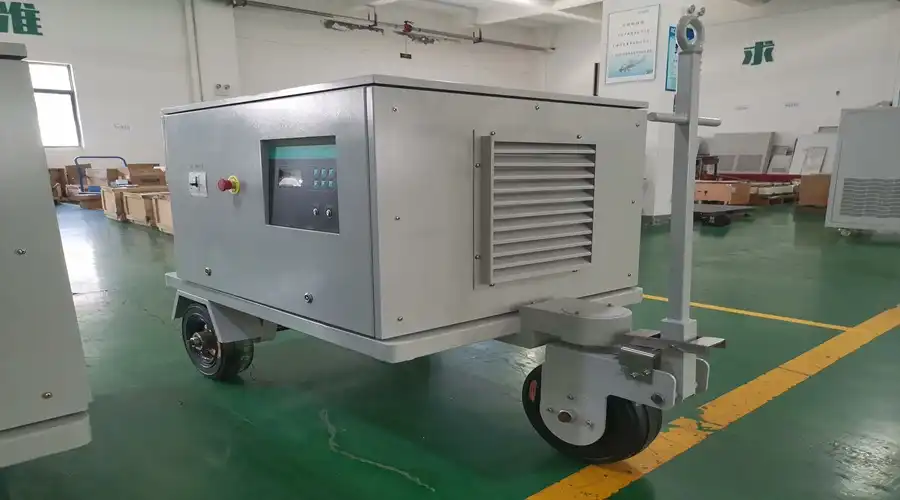
When extra power units aren't working or aren't available, aircraft repair tasks need power from outside sources. Ground power units provide 115VAC at 400Hz or 28VDC, which is the same as what airplanes need. This lets systems be tested, software be updated, and functionality checked without the propulsion engines being running. There is a special option called the ACSOON AF400W-330100 that was made just for these uses.This solid-state ground power unit can take three-phase input from 208V to 480V at standard 50/60Hz utility frequencies and change it to 200V/208V at 400Hz, which is the normal frequency for flight. The 100kVA power level is enough for most passenger carriers with a single aisle and tactical military aircraft. This unit works well in hangars because it weighs less than 600 kg and makes less than 65dB of noise. IP54 ingress protection keeps dust and water spray from getting into gadgets inside repair facilities.The flexible design that accepts a wide range of input voltage makes it possible to use it around the world with different utility standards. The fixed-mount setup works well for permanent hangar sites or mobile repair vehicles. Solid-state design gets rid of the need to maintain spinning machinery, which makes it more reliable and lowers its lifecycle costs compared to motor-generator options. When purchasing managers look at ground support equipment, ACSOON's custom making feature comes in handy because it lets them change voltage, frequency, and connectors to meet the needs of particular airplanes.
Future Trends and Innovations in Avionics Power Supply Technology
The creation of aviation power systems keeps moving toward higher efficiency, smaller and lighter designs, higher dependability, and easier maintenance. Understanding new technologies helps procurement pros predict what will be needed in the future and judge how innovative an avionics power supply seller can be.
Wide Bandgap Semiconductors and Efficiency Gains
Power transistors made of silicon carbide and gallium nitride can switch at higher rates, temperatures, and voltages than silicon devices made in the past. Because of these features, switching rates higher than 1MHz are possible, which means that magnetic components are 75% smaller than in 100kHz designs. Efficiency gains of 2% to 3% lower the need for cooling and raise the power output to 50W per cubic inch, which is three times what regular designs can do. Higher working temperatures—up to 200°C junction temperature compared to 150°C for silicon—allow operation in engine chambers and other hot places without using forced air cooling. This thermal ability is especially useful for electric airplanes and robotic aerial vehicles, since every watt of cooling power shortens the range. To speed up industry usage and get these benefits, procurement specifications should start to include the needs for wide-bandgap devices.
Digital Control and Smart Monitoring Capabilities
Microcontroller-based power supply controllers make it possible to watch, protect, and communicate in ways that aren't possible with analog regulation circuits. Real-time telemetry sends data about voltage, current, temperature, and efficiency to systems that keep an eye on the health of an airplane through ARINC 429, MIL-STD-1553, or Ethernet connections. Predictive maintenance programs look for patterns of slow decline and replace parts before they break down in the air. Adaptive efficiency improvement is also easier with digital control. Load-dependent efficiency optimization methods change the modulation schemes and swapping frequencies to get the most efficient performance even when power needs are very different. Soft-start current limiting stops annoying circuit breakers from tripping during power-up surges. During system startup, programmable voltage sequencing controls multiple output rails. This keeps complex aircraft equipment from getting stuck in a latch-up state.
Additive Manufacturing and Customization
Three-dimensional printing technologies change how power supplies are made and how much they cost to make. Heat sinks with complex internal shapes that can't be made with traditional machining work better at keeping heat in and are lighter. Topology optimization programs make organic shapes that have the best strength-to-weight ratios while using the least amount of materials. Additive manufacturing works especially well for unique jobs that are made in small quantities because the cost of standard tools is too high. Iterations of prototypes happen in days instead of weeks, which speeds up the creation process. For thermal management parts, you can now choose from aluminum, titanium, and copper. For structural and insulating parts, you can use high-temperature plastics. Adoption of approved aircraft gear will speed up as qualification standards get better and databases of material properties grow.
Sustainability and Environmental Considerations
Commitments from the aviation business to be carbon neutral by 2050 push every instrument on an airplane to work as efficiently as possible. Power conversion equipment helps because it lowers electrical losses, which directly leads to less fuel use or longer battery life in electric power users. Along with standard cost and performance measures, life cycle assessments are now used to make procurement choices. Making products without lead according to RoHS rules, using reusable packaging, and having programs to collect old equipment are all signs that a provider cares about the environment. Conflict minerals reporting rules make sure that the gold, tin, tantalum, and tungsten used in capacitors and other electronics come from ethical sources. More and more, environmental compliance paperwork is being asked for as a normal part of procurement specifications.
Conclusion
Precision, safety, and application-specific optimization are the primary differences between avionics power supply systems and normal airplane power distribution. Primary aircraft electrical systems provide bulk power to the airframe efficiently. Dedicated avionics power supplies provide the tightly controlled, low-noise electricity that sensitive flight control, navigation, and communication systems need. When choosing power conversion equipment, procurement workers have to weigh the costs of following the rules, meeting technical requirements, finding a qualified source, and the equipment's overall useful life. Companies that know about new technologies like wide bandgap semiconductors, digital control systems, and environmentally friendly manufacturing methods can choose solutions that are ready for the future and give them real operating benefits.
FAQ
What voltage does avionics equipment typically require?
For military and common flight use, most current avionics technology runs on 28VDC, which comes from aircraft batteries and generators. Standard power for commercial passenger planes is 115VAC at 400Hz three-phase, and each electronics unit has its own power supply that changes this to the necessary DC voltages, which are usually 5V, 12V, and 28V rails. Some older analog tools need specific values, such as 26VAC at 400Hz. In order to keep equipment from breaking down during functional checks, ground testing, and maintenance often need external power sources that exactly match these specs.
How do I verify compliance with DO-160 requirements?
Request complete test reports from accredited laboratories showing results for all applicable DO-160 sections, not merely summary certificates. Section 16 power input testing demonstrates tolerance of voltage transients and interruptions. Sections 19 and 20 validate lightning and RF susceptibility. Section 21 confirms that conducted and radiated emissions remain below limits. Temperature, altitude, vibration, humidity, and shock testing per additional sections verify environmental qualification. Test reports should identify equipment serial numbers, configurations tested, and margin to specification limits at critical test points.
What distinguishes military-grade from commercial aviation power supplies?
Military specifications impose substantially more stringent environmental qualification, including extended temperature ranges (-55°C to +125°C versus -40°C to +85°C), enhanced vibration and shock resistance for tactical aircraft maneuvers, electromagnetic pulse hardening, and resistance to chemical/biological contamination. MIL-STD-704F defines more severe power input transients than commercial standards, while MIL-STD-461G electromagnetic compatibility requirements exceed DO-160 in many test categories. Materials selection emphasizes battle damage tolerance and operation after exposure to fire suppression agents. These requirements typically triple unit costs compared to commercial avionics power supply equivalents.
Partner with a Trusted Avionics Power Supply Manufacturer
Xi'an Jerrystar Instrument Co., Ltd. specializes in aviation-grade power conversion solutions through our ACSOON brand, serving military, aerospace, marine, and industrial testing applications across North America. Our AF400W-330100 ground power unit exemplifies the engineering precision and operational reliability that procurement managers demand—100kVA output capacity, wide input voltage compatibility, IP54 environmental protection, and whisper-quiet operation under 65dB. With manufacturing facilities spanning 5,000-10,000 square meters and substantial inventory for rapid deployment, we deliver both standard and custom-engineered frequency converters that meet rigorous DO-160 and MIL-STD requirements. Whether your program requires variable frequency power systems, 400Hz static converters, or specialized ground support equipment, our technical team collaborates with your engineering staff to specify optimal solutions. As an established avionics power supply manufacturer supporting OEM partnerships, we maintain stringent quality controls throughout design, production, and testing phases. Contact our aerospace power specialists at acpower@acsoonpower.com to discuss your specific requirements and receive detailed technical proposals backed by comprehensive certification documentation.
References
1. Anderson, M. & Thompson, R. (2021). Aircraft Electrical and Electronic Systems: Principles, Maintenance and Operation. Aviation Technical Publishers, Denver, Colorado.
2. Department of Defense. (2018). MIL-STD-704F: Aircraft Electric Power Characteristics. United States Department of Defense Interface Standard, Washington, D.C.
3. Eismin, T. & Hale, P. (2020). Power Electronics for Aviation: Design, Testing and Certification. Aerospace Engineering Press, Reston, Virginia.
4. Radio Technical Commission for Aeronautics. (2019). DO-160G: Environmental Conditions and Test Procedures for Airborne Equipment. RTCA Inc., Washington, D.C.
5. Smith, J. D. (2022). "Wide Bandgap Semiconductors in Aerospace Power Systems." Journal of Aviation Electronics, Volume 47, Issue 3, pages 112-128.
6. Williams, K. & Martinez, L. (2023). Modern Avionics Power Supply Design: From Specification to Certification. Technical Aerospace Publications, Seattle, Washington.