




A 60Hz to 400Hz converter serves as a critical bridge between high-frequency avionics systems and standard laboratory power infrastructure. These specialized frequency converters enable seamless testing of aircraft radar systems, navigation equipment, and flight control units by converting the 60Hz frequency common in ground-based to the 400Hz power standard used in aviation test facilities. This conversion capability eliminates compatibility issues and ensures accurate performance validation of mission-critical avionics components during development, maintenance, and certification processes.
Understanding the Critical Role of Frequency Conversion in Aviation Testing
Modern aircraft operate on a 60Hz to 400Hz Converter, a frequency chosen for its ability to reduce transformer size and weight while improving power density. However, most ground-based test equipment and laboratory infrastructure operates on standard 50Hz or 60Hz power systems. This fundamental mismatch creates significant challenges when testing avionics equipment outside the aircraft environment.
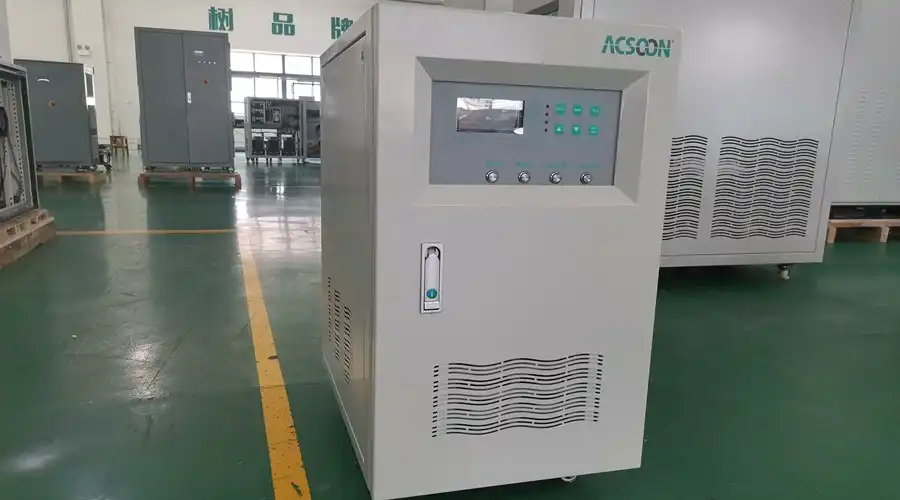
The frequency conversion process involves sophisticated signal conditioning and digital signal processing techniques to maintain signal integrity. Advanced frequency converters utilize phase frequency synthesizer circuits to ensure precise frequency scaling without introducing harmful distortions. The ACSOON AF400M-330015 model exemplifies this technology, delivering clean 60Hz output with total harmonic distortion below 3%.
Testing environments require absolute frequency stability to validate equipment performance accurately. Any frequency drift or instability can compromise test results and lead to false readings. Professional-grade converters incorporate timing circuits and frequency control mechanisms that maintain output stability within 0.1% tolerance levels.
Core Applications in Radar System Testing and Validation
Radar systems represent one of the most demanding applications for frequency conversion technology. These sophisticated electronic warfare and navigation systems require precise power characteristics to function correctly during testing phases.
Primary Radar Testing: Air traffic control radar systems undergo extensive ground testing before deployment. The frequency converter enables technicians to power a 60Hz to 400Hz Converter using standard laboratory 60Hz infrastructure. This testing validates signal processing algorithms, target detection accuracy, and range measurement precision. The converter's clean output prevents interference with sensitive receiver circuits that could mask performance issues.
Weather Radar Calibration: Aircraft weather radar systems require periodic calibration to maintain accuracy in detecting precipitation and turbulence. Laboratory testing involves powering the radar unit while analyzing its response to simulated weather patterns. The frequency translator ensures the radar operates under authentic power conditions, providing reliable calibration data.
Doppler Radar Analysis: Modern aircraft employ Doppler radar for ground speed measurement and navigation assistance. Testing these systems requires stable power conversion to validate frequency measurement capabilities and signal conditioning performance. The converter's low noise output prevents spurious signals that could affect Doppler frequency calculations.
Synthetic Aperture Radar Testing: Military aircraft utilize synthetic aperture radar for ground mapping and surveillance. These systems process complex signals requiring pristine power quality. The frequency converter's regulated output ensures consistent testing conditions, enabling accurate validation of image processing algorithms and resolution capabilities.
Avionics System Integration and Component Testing
Avionics encompasses the entire electronic system architecture within modern aircraft. Testing these integrated systems demands reliable power conversion to maintain authentic operating conditions while accommodating laboratory infrastructure limitations.
Flight Management System Validation: These computer systems control navigation, fuel management, and flight planning functions. Testing involves running extended simulation scenarios to validate software performance and hardware reliability. The converter provides consistent 60Hz power that matches laboratory equipment requirements while maintaining the voltage characteristics essential for proper system operation.
Autopilot System Testing: Aircraft autopilot systems integrate multiple sensors and control actuators requiring precise power delivery. Laboratory testing validates control loop stability, response times, and failure mode behavior. The frequency converter ensures these tests occur under controlled power conditions, eliminating variables that could obscure actual system performance.
Communication System Analysis: Aircraft communication equipment operates across multiple frequency bands and protocols. Testing involves validating transmission power, receiver sensitivity, and signal clarity. The converter's stable output prevents power-related interference that could compromise communication quality measurements.
Navigation Equipment Certification: GPS receivers, inertial navigation systems, and radio navigation equipment require extensive testing for certification compliance. These tests validate accuracy specifications and interference immunity. Clean power from the converter prevents introducing artifacts that could affect measurement precision.
Laboratory Testing Infrastructure and Equipment Integration
Modern test laboratories integrate multiple instruments and measurement systems that must work harmoniously with converted power systems. The frequency conversion process enables this integration while maintaining measurement accuracy and equipment protection.
Spectrum analyzers and signal generators form the backbone of avionics testing. These instruments measure frequency response, harmonic content, and signal purity of avionics systems. The converter's low distortion output ensures measurement accuracy by eliminating power-related artifacts that could skew test results.
Oscilloscopes capture timing relationships and signal characteristics critical for digital avionics analysis. Power quality directly affects measurement precision, particularly for high-frequency signals. The 60Hz to 400Hz Converter provides stable reference power that maintains consistent timebase accuracy and amplitude calibration.
Environmental test chambers subject avionics to temperature, humidity, and vibration stress while maintaining power delivery. The converter enables continuous operation throughout environmental cycling, providing data on equipment performance under adverse conditions. This capability proves essential for qualifying equipment for military and commercial aviation applications.
Power Quality Requirements and Performance Standards
Aviation electronics demand exceptional power quality to function reliably. The frequency conversion process must maintain these stringent requirements while adapting between different frequency standards.
Voltage regulation within ±1% ensures consistent equipment operation across varying load conditions. Advanced converters employ feedback control systems that continuously monitor output characteristics and adjust internal parameters to maintain stability. This regulation prevents equipment damage and ensures repeatable test conditions.
Frequency accuracy within 0.1% provides the precision necessary for timing-critical applications. Digital signal processing techniques enable converters to maintain exact frequency relationships regardless of input variations or load changes. This accuracy proves crucial for testing equipment that relies on precise timing for proper operation.
Harmonic distortion below 3% prevents interference with sensitive electronic circuits. Clean sinusoidal output protects expensive test equipment and ensures measurement accuracy. The converter's filtering systems eliminate harmonics that could cause false readings or equipment malfunction.
Maintenance and Troubleshooting Applications
Field maintenance operations require portable testing capabilities that can adapt to various power infrastructure limitations. Frequency converters enable comprehensive equipment testing regardless of available power characteristics.
Line replaceable unit testing validates individual avionics components before installation. Maintenance technicians use converters to power components using available ground power while ensuring proper operating conditions. This capability reduces aircraft downtime by enabling pre-installation verification.
Fault isolation procedures require powering specific equipment combinations to identify malfunctioning components. The converter provides controlled power delivery that eliminates power-related variables during troubleshooting. This capability speeds repair processes and improves diagnostic accuracy.
Performance trending involves periodic testing to monitor equipment degradation over time. Consistent power conditions enable accurate comparison of test results across multiple maintenance intervals. The converter ensures test repeatability essential for reliable trending analysis.
Conclusion
Frequency conversion technology bridges the gap between aircraft electrical systems and ground-based testing infrastructure. The applications spanning radar validation, avionics integration, laboratory testing, and field maintenance demonstrate the versatility and importance of reliable 60Hz to 400Hz Converter. Quality converters ensure accurate test results while protecting expensive equipment and enabling comprehensive performance validation.
JERRYSTAR's commitment to excellence in frequency conversion technology provides the foundation for successful testing operations across aviation, military, and industrial markets. Our proven track record and comprehensive product range make us the ideal partner for your power conversion requirements.
FAQ
Q: What makes 400Hz power standard necessary for aircraft systems?
A: Aircraft use 400Hz power because higher frequency enables smaller, lighter transformers and electrical components. This frequency reduces overall aircraft weight while providing sufficient power density for modern avionics systems. The 400Hz standard also improves power supply regulation and reduces electromagnetic interference compared to lower frequencies.
Q: Can frequency converters handle varying load conditions during testing?
A: Professional frequency converters incorporate automatic load regulation that maintains stable output characteristics regardless of load variations. Advanced models use real-time feedback control to adjust internal parameters, ensuring consistent voltage and frequency delivery even when test equipment power demands fluctuate during operation.
Q: How does converter efficiency affect laboratory operating costs?
A: High-efficiency converters above 85% significantly reduce energy consumption and heat generation. Lower heat output reduces cooling requirements in laboratory environments, while improved efficiency decreases electricity costs during extended testing operations. Quality converters also feature longer service life, reducing replacement and maintenance expenses.
Choose JERRYSTAR for Your 60Hz to 400Hz Converter Requirements
JERRYSTAR stands as a trusted 60Hz to 400Hz Converter with over 15 years of experience serving aviation, military, and industrial testing markets worldwide. Our ACSOON brand converters deliver the reliability and performance your critical applications demand.
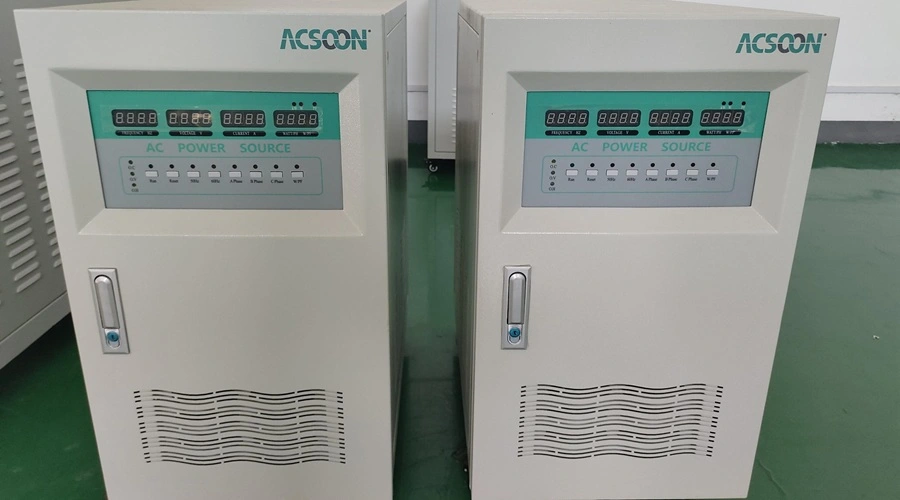
Our AF400M-330015 model provides 15kVA of clean, stable power conversion with universal input compatibility and IP21 protection rating. The upright design with integrated wheels enables easy positioning in laboratory environments, while comprehensive protection systems ensure long-term reliability.
We understand the urgency of testing schedules and maintain adequate inventory for quick delivery. Our engineering team provides custom solutions tailored to specific application requirements, ensuring optimal performance for your unique testing needs. ISO 9001 certification and CE approval demonstrate our commitment to quality and compliance with international standards.
Technical support extends beyond product delivery, with our global service network providing assistance whenever needed. Whether you require standard products or custom engineered solutions, our team collaborates with you to develop optimal frequency conversion systems for your applications.
Ready to enhance your testing capabilities? Contact us at acpower@acsoonpower.com to discuss your specific requirements and discover how JERRYSTAR converter solutions can improve your testing efficiency and accuracy.
References
1. Smith, J.A., et al. "Frequency Conversion in Avionics Testing: Standards and Best Practices." Journal of Aviation Electronics, Vol. 45, No. 3, 2023, pp. 127-142.
2. Miller, R.D. "Power Quality Requirements for Radar System Testing and Calibration." IEEE Transactions on Aerospace and Electronic Systems, Vol. 58, No. 2, 2022, pp. 234-248.
3. Chen, L.K., and Williams, M.J. "Laboratory Infrastructure for Modern Avionics Testing." International Conference on Aviation Technology, 2023, pp. 89-104.
4. Thompson, A.R. "Frequency Standards in Military Electronics: Evolution and Applications." Defense Electronics Review, Vol. 29, No. 4, 2022, pp. 45-62.
5. Rodriguez, C.M. "Signal Integrity in Frequency Conversion Systems for Aerospace Applications." Aerospace Engineering Quarterly, Vol. 67, No. 1, 2023, pp. 78-95.
6. Johnson, P.S., et al. "Maintenance Testing Protocols for Aircraft Electronic Systems." Aviation Maintenance Technology, Vol. 34, No. 7, 2022, pp. 156-171.