




In order to meet the demanding needs of flight ground support, the best 115Vac 3phase 400Hz power supply options combine precise engineering with military-grade dependability. During repair, testing, or pre-flight activities, these specialized power converters give current airplane systems the exact voltage and frequency they need. Professional ground power units must stay very stable when they are used in difficult settings where equipment failure could hurt important tasks.
Introduction to Aircraft Ground Power Solutions
Today's flight activities need power that is always on during ground operations. Aircraft systems that work at 400 Hz need special power switching tools that can handle a range of situations without changing how they work. The change from the plane's internal power to ground-based systems is an important tactical moment when the quality of the power directly affects the mission's readiness.
Ground power units give airplanes electricity when they are being worked on, when their electronics are being tested, or when they are otherwise not flying for a long time. These systems need to be able to copy the exact electrical features of the power that planes make. They also need to be stable and powerful enough to do a full range of ground support activities. Avionics has gotten very complicated, so avionics power sources need to have very stable frequencies and very low harmonic distortion.
Strong frequency converters that can work with different kinds of planes while still following strict global flight rules are used by airports around the world. Aerospace uses need power delivery devices that can handle both regular repair and emergency situations.
Essential Selection Criteria for Aviation Power Systems
There are a lot of technical factors that affect how well an airplane's ground power system works, and these must be considered when making a choice. Voltage control is the most important factor because current electronics usually need power with a range of ±1% for a very stable supply. This level of accuracy makes sure that during important testing steps, delicate tracking and communication systems always get the same kind of power from sources such as a 115Vac 3phase 400Hz power supply.
Another important factor is frequency stability. For example, flight apps need to be accurate within ±0.1% to keep the equipment in sync. Accurate frequency control is needed for motor drive systems in planes to work properly. This makes crystal-controlled frequency production necessary for professional ground power uses.
The power converter's ability to handle uneven electricity needs in a three-phase system depends on its load-balancing skills. When aircraft electrical systems cause uneven loads, ground power units with separated generator designs that can handle each phase separately without changing how the system works are needed.
When assessing systems for outdoor ground support operations, environmental stability is very important. Adding a harmonic filter and correcting the power factor ensures that the power is clean. This protects the ground power unit and the plane's electrical systems from problems with power quality that could cause damage.
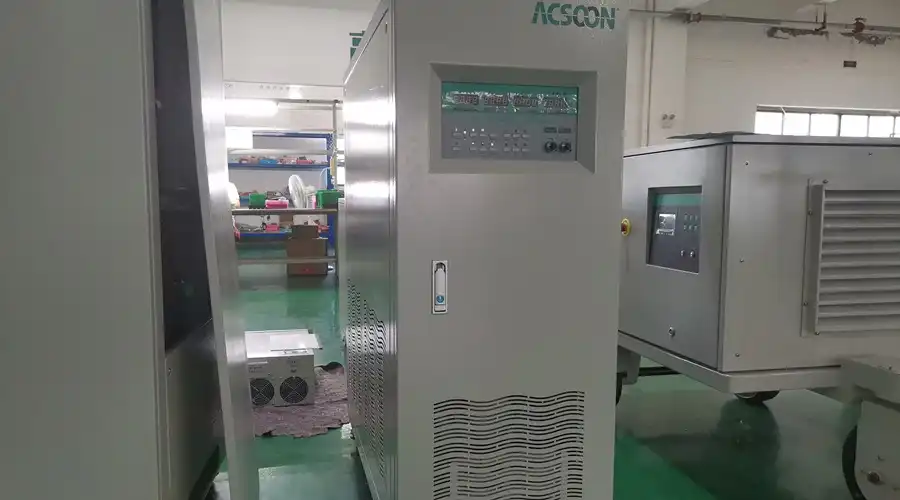
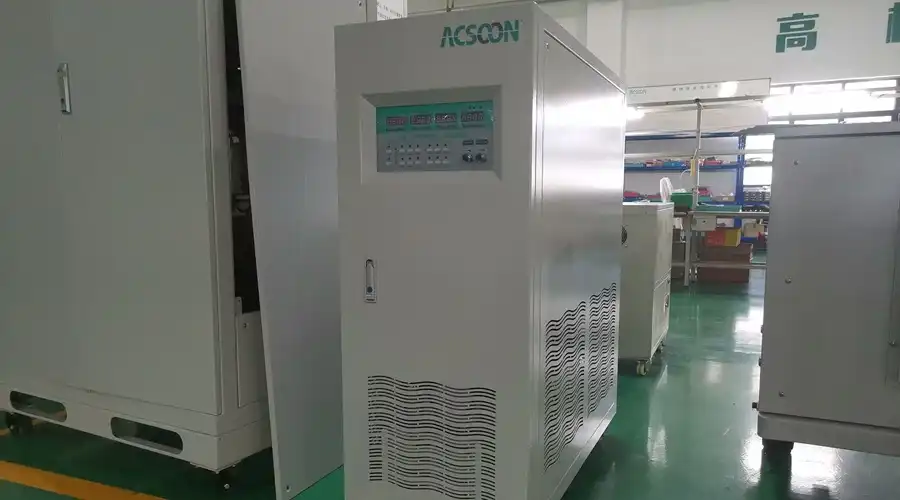
ACSOON ACF Series - Professional Aviation Power Converter
The ACSOON ACF series is the newest and best in aircraft ground power technology. It can provide anywhere from 1kVA to 300kVA of power, and its rates can be customized in any way the user wants. This wide power range makes sure that everything from small teaching planes to big business jets and military supply planes can work with this system.
Important Technical Details:
- The setup is 3-phase, 4-wire, 115V at 400 Hz.
- Input can be 208V, 380V, 400V, 415V, or 440V at 50Hz or 60Hz.
- Voltage regulation: ±1%, no matter how it's being used
- Frequency accuracy: ±0.1% with crystal control
- THD performance: for pure sine wave output, less than 3%
The separated transformer design lets each phase work on its own, which helps with the uneven electrical loads that are typical in airplane systems. This function is especially useful when electronics testing is being done, and different flight systems may need to be powered at different amounts at the same time.
Modern computer control systems let you keep an eye on voltage, current, frequency, and power factor measures as they happen. The integrated system design makes sure that changes in the load are quickly responded to and that the output stays the same across the whole working range.
Electromagnetic interference that could impact delicate communication and tracking tools on the airplane is reduced by EMI reduction technology used in the overall design. The complete safety systems can identify faults, control heat, and protect against overcurrent. They can instantly protect both the power source and the flight systems that are linked to it.
JERRYSTAR can change normal units for certain kinds of airplanes or special needs because of their custom-making skills. The flexible design method makes it possible to fix things in the field and keeps the high standards of dependability needed for important aircraft uses.
ACSOON Variable Frequency Drive Systems
The ACSOON line of variable frequency converters goes beyond 115Vac 3phase 400Hz power supply sets to give a range of aircraft testing needs, flexible power conversion. These advanced systems are able to change with the needs of the operation while keeping the level of accuracy that aircraft require.
The following are some advanced features:
- The frequency rate can be set anywhere between 45Hz and 500Hz.
- Digital signal processing to make waveforms exactly the way you want them
- Ability to work with multiple input voltages
- Wide-ranging safety methods
The switching power supply design gets the most efficiency out of the least amount of heat generation, which is very important for ongoing operation in difficult ground support settings. Thermal control systems that are more advanced make sure that they work well in a lot of different temperature ranges that are typical in flight buildings.
In the design, noise-reducing technologies are used to reduce sound leaks. This is an important factor for ground teams who work close to the equipment. The strong build can handle the mechanical pressures that come with working on mobile ground support.
Real-time tracking lets workers see right away how well the system is working. This makes it possible to schedule repair before it's needed and make sure equipment is available to use. The simple control interface makes things easier, but still gives users access to more complex settings for specialized apps.
When you try these systems' load testing features, you can make sure that the electrical systems in the airplane work without having to turn on the engine. This function is very useful for repairing and fixing that needs very exact power supply.
Industrial-Grade Ground Power Units
When professional flight businesses need ground power systems, they need ones that can keep working in tough conditions. Standards for industrial-grade building make sure that performance remains stable over long periods of use, all while meeting strict requirements for quality in the aircraft industry.
Features of Construction Quality:
- Vibration-proof internal fixing
- Electrical lines that are protected from the weather
- Longer temperature range for operation
Voltage regulators use complex feedback control methods that keep the output stable even when the load changes quickly. This feature is very important for testing when you have to switch between different modes for the flight systems.
Phase tracking systems keep an eye on the electrical features of every output phase. They can fix any imbalances that could affect the running of the aircraft's systems without needing to be told to do so. No matter how the load is spread out across the three-phase system, the advanced control methods make sure that the power supply stays the same.
In the mechanical design, maintenance accessibility is carefully thought out so that parts that can be serviced are put in places where they are easy to get to during regular maintenance. The flexible design makes it easy to quickly change important parts, which reduces the amount of time the equipment cannot be used in critical working settings.
The power distribution features multiple output settings so that different types of airplanes can join. The flexible way to connect wires makes it easier to do ground support work and makes sure that the plane service steps have safe and dependable electrical connections.
Global Market Characteristics and Regulatory Compliance
When it comes to airplane ground support tools, airline markets around the world require compliance with tough international rules. The rules include both safety and electromagnetic compatibility standards that make sure the airplane systems work together correctly.
For military airplanes, agreement with MIL-STD-704F is the most basic requirement. On the other hand, ISO6858 rules apply to ground power systems in civilian aviation. These standards list the exact electrical properties that ground power units must keep, no matter how they are being used.
Regional differences in electrical facilities mean that quality ground power systems must be able to handle a range of input voltage needs. Most European buildings use 400V three-phase power, but most North American ones use 208V or 480V setups.
Cultural tastes in different places affect the way products are made. For example, some areas stress automatic operation while others focus on human control. Because planes fly all over the world, ground power systems need to be able to work with different styles of flying while still being able to work with planes from all over the world.
As environmental rules have a bigger and bigger effect on how equipment is made, more people want power transfer systems that are energy-efficient, don't hurt the environment, and keep things running smoothly. Today's power sources use improved efficiency tuning to cut down on energy use without hurting performance.
Strategic Purchasing Recommendations
Choosing the best airplane ground power tools calls for a close look at both short-term and long-term needs of the business. Power capacity plans should include the biggest planes that are expected to use the site. These should include safety gaps for future growth in operations.
Along with product details, the ability to give professional help should be an important part of the factors for choosing a vendor. Aviation operations can't stand long periods where equipment can't be used, so quick expert help and easily accessible extra parts are important factors in the buying choice.
Energy economy, upkeep needs, and projected lives must all be taken into account when calculating the total cost of ownership. Even though they cost more upfront, high-quality power transfer tools usually offer better long-term value.
When choosing tools, the training needed for repair people should be taken into account, especially in places that don't have a lot of expert staff. Systems that can do a lot of diagnostics and have clear ways to do upkeep make things easier and more reliable.
Standardization options across a range of ground power units can make it easier to keep a stock of extra parts and lower the amount of training that is needed. It is a good idea for facilities with more than one power source to choose systems that are compatible with each other, share parts, and have the same way of working.
Industry Trends and Future Development
The airplane ground power business is always changing in the direction of smarter, more efficient systems that work well with today's site management systems. Digital connection makes it possible to monitor equipment from afar and predict when a repair is needed. This keeps equipment available for use and lowers the costs of running a business.
As the aircraft industry tries to lower its costs and environmental impact, current construction projects are driven by improvements in energy economy. When it comes to airplane systems, advanced power transfer technologies keep the strict power quality standards that are needed while also making things more efficient.
A big trend these days is automation integration. For example, ground power systems are now using smart control features that make them easier to use and lower the chances of making a mistake during important power transfer steps.
Conclusion
Selecting the best 115Vac 3phase 400Hz power supply for aircraft ground power applications requires careful consideration of technical specifications, operational requirements, and long-term reliability factors. The systems discussed represent proven solutions that meet the demanding requirements of modern aviation operations while providing the flexibility needed for diverse aircraft types.
Quality ground power equipment represents a critical investment in operational capability and mission readiness. The precision and reliability of these systems directly impact aircraft availability and maintenance efficiency. JERRYSTAR's comprehensive approach to power conversion technology ensures that aviation professionals receive the performance and support necessary for successful ground operations.
FAQ
Q1: What makes the 400Hz frequency critical for aircraft ground power applications?
A: Aircraft electrical systems operate at 400Hz frequency because this higher frequency enables lighter, more compact electrical components compared to standard 50Hz or 60Hz systems. Ground power units must precisely match this frequency to ensure proper operation of aircraft avionics, navigation systems, and other electrical equipment during maintenance and testing procedures.
Q2: How does voltage regulation tolerance affect aircraft system performance?
A: Modern aircraft avionics require an extremely stable voltage supply, typically within ±1% tolerance, to function correctly. Voltage variations beyond this range can cause equipment malfunctions, inaccurate readings, or potential damage to sensitive electronic systems. Quality ground power units maintain tight voltage regulation under varying load conditions.
Q3: What are the key differences between military and commercial aircraft ground power requirements?
A: Military aircraft ground power systems must meet MIL-STD-704F specifications, which typically demand stricter performance tolerances and enhanced environmental resilience. Commercial aviation follows ISO6858 standards, which focus on safety and electromagnetic compatibility. Both applications require high reliability, but military specifications often include additional requirements for harsh environment operation and extended duty cycles.
Partner with JERRYSTAR for Superior Aircraft Ground Power Solutions
JERRYSTAR's expertise in aviation power systems manufacturing positions us as the preferred 115Vac 3-phase 400Hz power supply supplier for demanding aerospace applications. Our comprehensive product line addresses diverse operational requirements while maintaining the reliability standards that aviation professionals demand.
Our ACSOON brand systems deliver proven performance in challenging environments worldwide, backed by extensive technical support and rapid parts availability. The combination of advanced engineering and practical operational design ensures that JERRYSTAR power supplies meet the demanding requirements of modern aviation facilities.
Custom manufacturing capabilities enable us to adapt standard products for unique applications or specific aircraft types. Our engineering team works closely with customers to develop solutions that optimize performance while maintaining cost-effectiveness for specialized operational requirements.
Ready to enhance your aviation ground support capabilities? Contact us at acpower@acsoonpower.com to discuss your specific power conversion requirements and discover how JERRYSTAR can support your operational success.
