




Looking for the greatest 60 to 50 Hz frequency converter costs from top manufactures demands considering more than just pricing. Manufacturing, aerospace, and laboratory testing facilities worldwide need reliable frequency conversion solutions with consistent performance and low cost. Professional frequency converter equipment is used in critical applications where downtime is unacceptable. JERRYSTAR and other top manufacturers make static frequency converters that convert 60Hz input power to stable 50Hz output, ensuring electrical standard compatibility. The global market offers modest rack-mounted units to high-capacity industrial systems for harsh settings.
Why 60 to 50 Hz Frequency Conversion Matters in Professional Applications
In today's globalized economy, equipment must be compatible with multiple electrical standards. Precision equipment and specialist gear built for 50Hz operation struggle in 60Hz power settings. A 60 to 50 Hz frequency converter can resolve this issue, preventing equipment malfunction, lower efficiency, and sensitive component damage that result from this frequency mismatch.
Professional frequency converters solve this compatibility issue by providing clean, stable power conversion. Aviation ground support equipment, marine navigation systems, and laboratory testing instruments often require specific frequency standards regardless of local power grid specifications. Military applications particularly demand reliable frequency conversion for mission-critical equipment operation.
The investment in quality frequency conversion equipment pays dividends through reduced maintenance costs, extended equipment lifespan, and improved operational reliability. Professional-grade converters incorporate advanced power electronics and sophisticated control algorithms to maintain precise output characteristics under varying load conditions.
Essential Selection Criteria for Professional Frequency Converters
Selecting the optimal frequency converter requires evaluating several technical and commercial factors that directly impact operational success. Power rating represents the primary consideration, as undersized units cannot handle peak loads while oversized equipment increases unnecessary costs.
Harmonic distortion levels significantly affect sensitive equipment performance. Quality converters maintain total harmonic distortion (THD) below 3%, protecting valuable instrumentation from power quality issues. Input voltage flexibility allows operation across different electrical systems without additional transformers.
Efficiency ratings exceeding 85% reduce operating expenses and heat generation, especially in confined spaces. IP21 protection ratings improve industrial reliability in dust and moisture environments.
Customization capability becomes crucial for specialized applications. Leading manufacturers offer tailored solutions addressing unique voltage requirements, mounting configurations, and environmental specifications. Fast delivery schedules support urgent project timelines and emergency replacements.
Manufacturer reputation and technical support quality affect long-term operational success. Established companies provide comprehensive documentation, responsive customer service, and readily available replacement components.
ACSOON AF60W-11002: Precision Performance for Commercial Applications
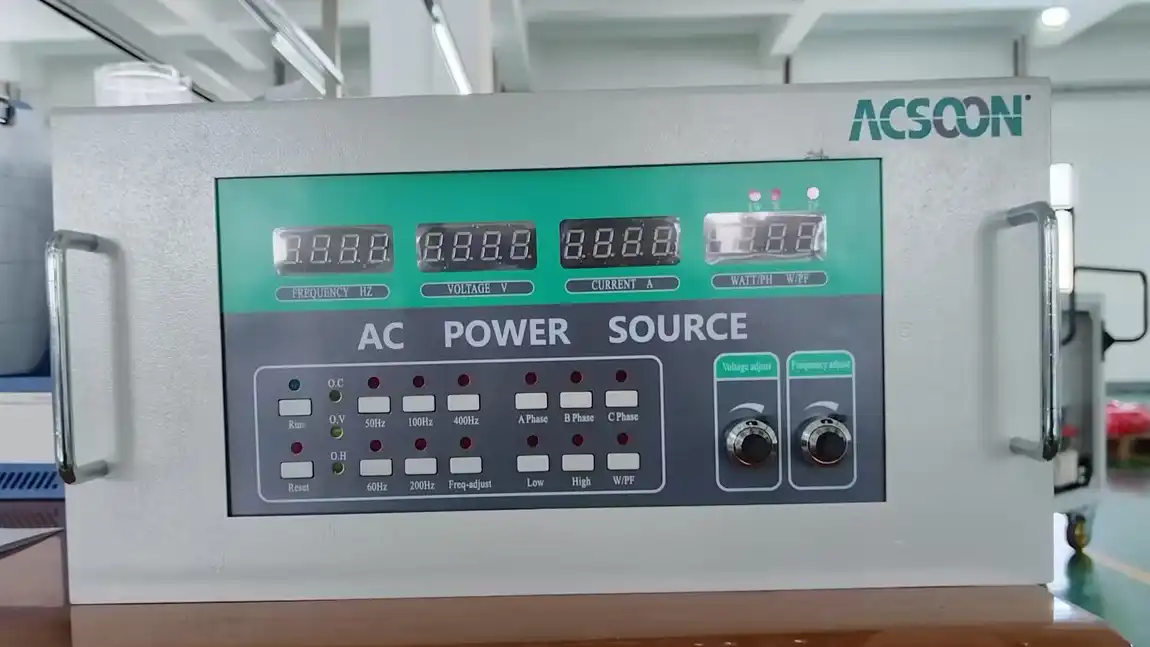
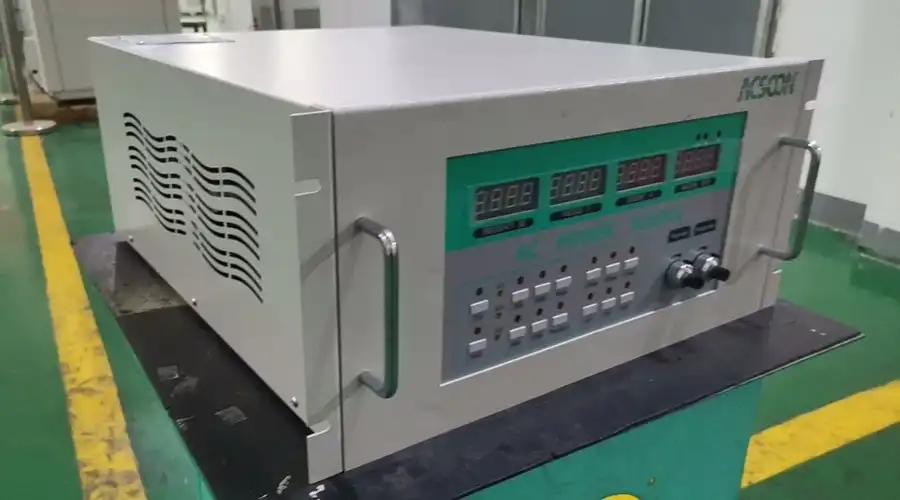
The ACSOON AF60W-11002 represents advanced frequency conversion technology specifically engineered for commercial precision equipment. This 60 to 50 Hz frequency converter, with a 2kVA static power rating, accommodates single-phase input voltages from 110V to 240V at 60Hz, delivering clean 50Hz output across the same voltage range.
Technical Specifications:
- Power capacity: 2kVA continuous rating
- Input compatibility: 110V-240V, single-phase, 60Hz
- Output delivery: 110V-240V, single-phase, 50Hz
- Efficiency rating: ≥85% across load range
- Harmonic distortion: THD <3%
- Protection grade: IP21 for industrial environments
- Form factor: Rack-mounted design
Application Benefits:
This frequency converter excel in precision induction cooker applications where consistent heating performance requires stable 50Hz power. The advanced frequency synthesis LSI technology maintains precise output characteristics even under dynamic load conditions. Commercial kitchens and food processing facilities benefit from the reliable frequency conversion that ensures uniform cooking results.
The rack-mounted configuration simplifies installation in equipment cabinets and control panels. Professional installers appreciate the compact design that maximizes space utilization while providing easy access for maintenance procedures.
Low harmonic distortion protects sensitive electronic controls commonly found in modern precision equipment. The clean sinusoidal output waveform prevents interference with digital control systems and extends component lifespan.
JERRYSTAR supports OEM partnerships, allowing equipment manufacturers to integrate this 60 to 50 Hz frequency converter into their products under private labeling arrangements. This flexibility enables custom branding while leveraging proven conversion technology.
Industrial-Grade Solutions for Heavy-Duty Applications
Heavy industrial applications demand robust frequency converters capable of handling substantial power loads while maintaining precise output characteristics. Manufacturing facilities, marine installations, and aerospace ground support operations require converters that operate reliably in challenging environments.
Advanced digital frequency converters incorporate sophisticated microcontroller technology for enhanced performance monitoring and fault detection. These systems provide real-time feedback on operating parameters, enabling predictive maintenance strategies that minimize unexpected downtime.
A range of input voltages that work with foreign electrical standards means that global operations don't have to keep as many parts in stock. Variable frequency capability helps test tools and do specialized work that needs frequencies that aren't standard.
If you use modular designs, you can make your space bigger when you need to. Top makers make systems with the ability to work in parallel, which allows for extra setups in important applications where continuous operation is required.
Conformal coated circuit boards, sealed enclosures, and wide temperature ranges safeguard the environment. These criteria enable reliable operation in maritime, industrial, and outdoor locations where electronic equipment faces environmental challenges.
Global Market Analysis and Regional Considerations
The worldwide frequency converter market shows a variety of electricity standards and needs in different areas of the world. Most of the time, North American markets use 60Hz power systems. This creates a need for frequency adapters when setting up equipment from other countries that was made to work with 50Hz power.
European and Asian markets typically utilize 50Hz power distribution, requiring conversion equipment for North American machinery integration. This global diversity drives demand for bidirectional frequency conversion capability and multi-standard compatibility.
Military and aerospace applications follow strict qualification standards that vary by region and application. NATO standardization agreements (STANAGs) influence specification requirements for allied nation procurement, while national standards govern domestic military systems.
Marine applications must comply with international maritime organization (IMO) regulations and classification society requirements. These standards affect converter design specifications, testing protocols, and certification requirements.
Emerging markets increasingly adopt international equipment standards, creating opportunities for frequency converter suppliers. Infrastructure development projects often incorporate equipment from multiple countries, necessitating flexible power conversion solutions.
Procurement Strategies and Cost Optimization
Effective frequency converter procurement requires balancing initial acquisition costs with long-term operational expenses. Total cost of ownership analysis includes purchase price, installation expenses, operating efficiency, maintenance requirements, and expected service life.
Volume purchasing agreements with established manufacturers often provide significant cost advantages for large-scale deployments. Multi-year contracts can stabilize pricing while ensuring priority delivery schedules for urgent requirements.
Standardizing on certain converter models makes training, keeping spare parts on hand, and upkeep easier. Common platforms make it easier to fix things and let technicians learn how to work on different setups.
Local distribution partnerships make it easier to get help quickly, and they might also lower shipping times and transportation costs. Regional service centers do emergency repairs and regular upkeep faster.
If you need to install something temporarily or are not sure how long a job will last, lease options might be helpful. If you don't want to own something for a long time, operating leases can help you keep your money while making sure you have access to the newest technologies.
Technical Innovation and Future Developments
Frequency converter technology keeps getting better thanks to advances in power electronics, digital signal processing, and control methods. Wide bandgap semiconductors make it possible for higher switching frequencies, smaller components, and better efficiency scores.
Ethernet connectivity, web-based monitoring interfaces, and the ability to work with building control systems are all features of the latest smart converter technology. These features make it possible to diagnose issues from afar, optimize speed, and schedule maintenance based on predictions.
Modular architectures provide scalable solutions that grow with application requirements. Hot-swappable modules enable maintenance without system shutdowns, critical for continuous operation applications.
Industry Trends and Summary
As more businesses use equipment that works together, the global frequency converter market keeps growing. The latest power electronics technology makes things more efficient, keeps costs down, and maintains competitive pricing. Digital control systems make it easier to keep an eye on performance and do repair based on what they predict. In this specialized market niche, manufacturers who focus on quality, customization, and quick customer support get ahead of their competitors. Professional applications need more and more dependable frequency conversion solutions that make sure tools can be used in a wide range of electrical settings around the world.
FAQ
Q: What applications require 60 to 50 Hz frequency conversion?
A: Common applications include precision manufacturing equipment, laboratory instruments, marine electronics, aviation ground support equipment, and international machinery integration. Any situation where equipment designed for one frequency standard must operate on different grid frequency requires conversion.
Q: How do I determine the correct power rating for my frequency converter?
A: Calculate total connected load power consumption and add 20-30% safety margin for startup transients and future expansion. Consider peak power requirements during motor starting or other high-demand operations. Consult manufacturer specifications for derating factors in high-temperature environments.
Q: Can frequency converters handle variable load conditions?
A: Quality frequency converters automatically adjust to varying load conditions while maintaining stable output voltage and frequency. Look for models with wide load range specifications and good regulation characteristics. Some applications may benefit from converters with load monitoring and automatic optimization features.
Partner with JERRYSTAR for Professional Frequency Converter Solutions
JERRYSTAR delivers comprehensive frequency converter solutions tailored to demanding industrial applications worldwide. Our ACSOON brand equipment serves aviation, military, marine, and laboratory testing environments where reliability cannot be compromised. As both a manufacturer and trading company, we provide competitive pricing direct from our factory while maintaining extensive inventory for rapid delivery.
Our engineering team collaborates closely with customers to develop custom solutions addressing unique application requirements. Whether you need standard rack-mounted units or specialized configurations, we adapt our designs to meet your exact specifications. Quality manufacturing processes ensure consistent performance while competitive factory pricing delivers exceptional value.
Located in Xi'an, China, our modern facility spans 5,000-10,000 square meters dedicated to power conversion equipment production. This substantial manufacturing capacity supports both standard product availability and custom project requirements with shortened lead times.
Experience the difference that professional-grade frequency conversion equipment makes in your operations. Contact us at acpower@acsoonpower.com to discuss your specific requirements and receive detailed specifications for our complete range of 60 to 50 Hz frequency converter products. Our technical specialists provide expert guidance for optimal equipment selection and application engineering support.
References
1. Institute of Electrical and Electronics Engineers. "Standards for Static Power Converters for AC Power Systems." IEEE Standard 519-2022, Power Quality Guidelines.
2. International Electrotechnical Commission. "Rotating Electrical Machines - Part 1: Rating and Performance." IEC 60034-1:2017, Frequency Converter Applications.
3. Society of Automotive Engineers. "Aerospace Ground Support Equipment Standards." SAE AS50881, Power Conversion Requirements for Aviation Applications.
4. American Society for Testing and Materials. "Standard Specification for Laboratory Equipment Power Systems." ASTM E1578-18, Frequency Converter Testing Protocols.
5. International Maritime Organization. "Marine Electrical Installation Standards." IMO Resolution A.1021, Frequency Converter Requirements for Marine Applications.
6. North American Electric Reliability Corporation. "Power System Frequency Response and Control Standards." NERC BAL-003-2, Grid Integration Guidelines for Frequency Converters.