




Choosing the Right Aircraft Power Unit Manufacturer
Selecting the right aircraft power unit manufacturer represents a critical decision that directly impacts operational safety, efficiency, and long-term costs across aviation, military, and industrial applications. The aircraft power unit serves as the backbone of ground support equipment, providing essential power conversion capabilities for aircraft maintenance, testing, and operations. When procurement professionals evaluate manufacturers, they must consider technical specifications, reliability standards, customization capabilities, and after-sales support to ensure optimal performance in demanding environments.
Understanding the Importance of Selecting the Right Aircraft Power Unit Manufacturer
When it comes to safety and performance, the aviation business has very strict rules that require every part to be very reliable. Ground power units and auxiliary power systems are very important for keeping planes ready to fly, helping with maintenance, and making sure that international flight standards are met. Understanding how important these systems are helps procurement professionals understand why choosing a manufacturer takes more than just looking at price.
Critical Functions of Modern Power Conversion Systems
Maintenance work on airplanes needs stable, high-quality power sources that can give exact voltage and frequency levels. For aviation uses, the standard frequency of 400Hz means that special tools are needed to deal with the equipment's unique electrical properties. Modern solid-state ground power units give off clean, steady power while reducing electromagnetic radiation that could harm sensitive aircraft electronics while they are being serviced.
The difficulties in military and commercial aviation are different, so the way power systems are designed needs to be different too. Extreme temperatures, humidity, vibrations, and electromagnetic compatibility are some of the environmental factors that affect the choice of tools. Manufacturers who know about these operational realities make products that can work in harsh circumstances and keep up their performance over a long period of time.
Risk Mitigation Through Proper Manufacturer Selection
Power conversion equipment that isn't up to par can put expensive aircraft systems at great risk and cause delays, failed inspections, or safety issues that cost a lot of money. Not following aviation rules leads to liability risks and operational problems that cost a lot more than the original cost savings of the equipment. Manufacturers with a lot of experience put money into strict testing methods, quality control systems, and certification processes to make sure their goods meet or beat industry standards.
Modern airplane electrical systems are very complicated, so they need power units that can handle high-tech avionics, navigation equipment, and environmental control systems. Manufacturers who know a lot about the aviation business know these requirements and design their products to meet them. Manufacturers who don't know much about aviation may miss important details that affect how well and how compatible their systems are.
Core Criteria for Evaluating Aircraft Power Unit Manufacturers
A methodical approach that matches technical skills with business goals and operational needs is needed for a manufacturer evaluation to work well. Setting clear evaluation criteria that take into account both short-term wants and long-term strategic goals is helpful for procurement professionals. This organized approach helps find manufacturers who can provide dependable solutions while meeting ongoing business needs.
Technical Specifications and Performance Standards
Power rating skills are the most important part of evaluating an aircraft's power unit. The 100kVA capacity range is useful for a lot of different military and business tasks, and it has enough power for all kinds of aircraft maintenance tasks. Input voltage flexibility, like the 3-phase 208-480V range with 50-60Hz compatibility, makes sure that devices can work with a variety of building electrical systems without having to make expensive changes to the infrastructure.
In aviation uses, output specifications need extra care. To keep sensitive flight systems safe, the standard 3-phase 200/208V, 400Hz output has to keep the voltage and frequency stable. Manufacturers who meet these requirements using cutting-edge solid-state technology are better at engineering than those who use older conversion methods that could cause harmonic distortion or voltage changes.
Quality Assurance and Manufacturing Standards
Professional makers are different from those who don't have much oversight because they use strict quality control procedures. Comprehensive testing procedures, such as environmental stress screening, make sure that the equipment will work reliably in real-world settings. When manufacturers get high-quality parts from reputable suppliers and do in-process checks, they show that they care about quality, which leads to better performance in the field.
Certification compliance shows that the maker is qualified and that the product is reliable. Certifications in the aviation industry require a lot of paperwork, tests, and ongoing compliance tracking that makes sure the design is correct and the manufacturing is consistent. Manufacturers who are serious about serving the aircraft market well make big investments in these certifications.
Customization Capabilities and Engineering Support
For aviation uses, configurations or changes often need to be made to meet specific operating needs. Manufacturers who are good at engineering can make changes to regular products or come up with new ones that meet the needs of specific customers. When used by the military or for testing needs that go beyond regular commercial requirements, this flexibility is very useful.
Original Equipment Manufacturer (OEM) support skills show how ready a company is to work with others on product development and offer ongoing technical support. Companies that offer OEM services show that they believe in their goods and want their customers to be successful. They also offer private labeling or custom branding options.
Comparison of Top Aircraft Power Unit Manufacturers and Market Solutions
There are a number of well-known companies in the airplane power unit market, and each one has its own benefits and special skills. By knowing these differences, procurement professionals can find suppliers whose strengths match their needs and the goals of the business. A study of the market shows that the top providers have big differences in the kinds of products they offer, how they use technology, and the kinds of services they can provide.
Established Aviation Industry Leaders
Big aerospace companies like Pratt & Whitney, Honeywell, and Rolls Royce bring to the market a wide range of products and a lot of knowledge in the aviation field. These businesses have decades of experience with aircraft engines and systems, which they use to make power units that fit in perfectly with modern aircraft designs. Their goods usually have high-tech materials, complex control systems, and a lot of validation testing to make sure they work well in harsh conditions.
But these big names in the industry tend to focus on high-volume uses and might not be able to adapt to unique needs or custom solutions. Their prices show their high-end positioning, which might not work with procurement strategies that are focused on saving money. Their sales and support teams may also give bigger OEM customers more attention than smaller operators or apps that are more specific.
Specialized Power Conversion Manufacturers
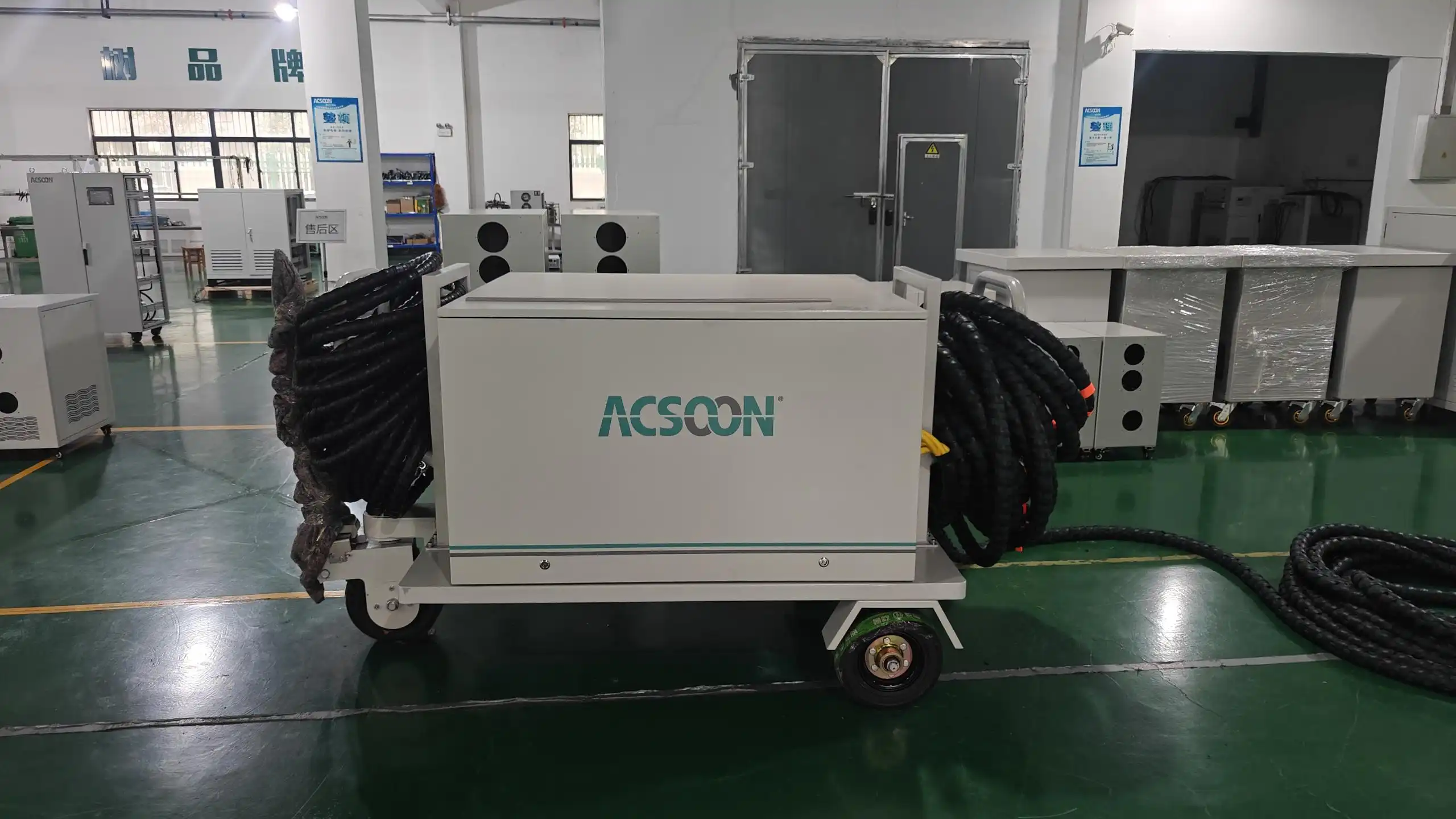
Companies that focus on power conversion technology, like Xi'an Jerrystar Instrument Co., Ltd., are very good at making frequency conversion and voltage regulation devices, including aircraft power units. These companies are aware of the unique difficulties of changing regular power to aviation-grade standards. The ACSOON brand GPU400-330100 model is a good example of this specialized method because it has a 100kVA power capacity, a small size, and low noise operation.
When compared to big aerospace conglomerates, specialized manufacturers often offer better customization options and faster customer service. Their technical teams only work on problems related to converting power, which leads to new solutions that meet the needs of the market. Because these businesses can offer OEM services, they can support private labeling deals that are good for system developers and resellers.
Performance and Operational Considerations
Noise levels have a big effect on how well ground support equipment works, especially in airports where noise is a problem. Using equipment that operates below 65dB lets you use it in places where noise limits apply, which gives you more working options. Weight also affects portability and installation needs; units weighing less than 600 kg are easy to move and require less infrastructure.
Environmental protection ratings, like IP54 ingress protection, make sure that equipment works reliably in harsh outdoor conditions that are common at aircraft maintenance sites. This level of protection keeps dust and water splashes from getting in and causing damage, but still lets non-electrical staff do regular maintenance and operate the system.
Procurement and Partnership Strategies for Global B2B Clients
Procurement strategies that work well balance short-term cost concerns with long-term business needs and manage relationships with suppliers. Knowing the different types of sourcing models and the pros and cons of each one helps procurement professionals make deals that minimize the total cost of ownership while still guaranteeing solid supply chain support. Most of the time, strategic partnerships with suppliers are more valuable than transactional buying agreements.
Sourcing Models and Cost Considerations
When you buy new tools, you get a full warranty, the newest technology, and a guaranteed length of service life. Manufacturers like Jerrystar offer reasonable prices on new units and offer customization options and technical support that make their premium positioning more appropriate than alternatives that use used equipment. When you buy new technology, it usually pays for itself in the form of higher reliability, lower maintenance costs, and longer service intervals.
Used equipment markets can save groups money, but they need to carefully look at the equipment's remaining useful life, maintenance history, and availability of parts. Professionals in procurement have to look at the total costs, which may include the need for repairs, a shorter warranty, and problems that might not work with current flight systems.
Inventory Management and Delivery Considerations
When manufacturers keep enough inventory on hand, they can quickly meet the urgent delivery needs that are common in aviation repair operations. Companies that keep a lot of stock on hand can usually fill requests within days instead of weeks, which cuts down on aircraft downtime and the revenue losses that come with it. This feature is especially useful for unplanned repair or when equipment breaks down and needs to be replaced right away.
Custom manufacturing usually makes delivery times longer, but it also lets you get the best options for unique uses. When planning to buy equipment, procurement plans should take into account both the availability of standard products and the time it takes to do custom engineering. Setting up framework agreements with capable manufacturers can make future purchases easier and make sure that you get first-class service when capacity is limited.
Regional Support and Service Networks
The quality of ongoing support and the time it takes to send goods are both affected by how close they are to manufacturing facilities and service centers. Manufacturers who can make their products in their own countries can offer faster delivery and better technical support than those who have to rely on foreign supply chains. Local service networks also make it easier to do regular maintenance, warranty fixes, and emergency support, which keeps operations running as smoothly as possible.
Different areas have very different rules about following the law, so it's helpful to have someone who lives in the area help you with things like getting certified and going through the import process. When manufacturers know the rules in a certain area, they can speed up approvals and make sure that all the right paperwork is included for foreign shipments. This makes the process simpler and less likely to cause delays.
JERRYSTAR's Advanced Aircraft Power Solutions
Xi'an Jerrystar Instrument Co., Ltd. is one of the biggest companies that makes specialized power conversion tools for use in the military, on ships, in factories, and in the air. Because we've been in this business for fifteen years, we have good ties with government procurement agencies, aerospace engineers, and maintenance groups all over the world. Modern flight operations have very specific needs that are perfectly met by the company's focus on technical reliability, customization, and fast delivery.
ACSOON Brand Technology and Innovation
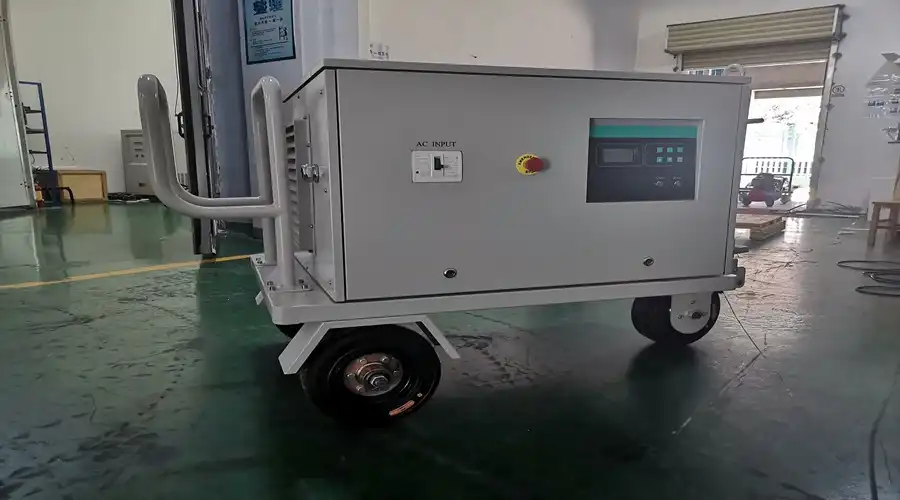
Our most popular brand, ACSOON, has a wide choice of power conversion products, such as the GPU400-330100 aircraft power unit, which has a 100kVA capacity and is small and light. This solid-state ground power unit shows how dedicated we are to advanced engineering. It has accurate control over the 400Hz output frequency, wide input voltage compatibility, and strong defense against the environment. The design of the unit lets people who aren't electrical experts use it while still meeting professional performance standards.
Here are the core advantages of the GPU400-330100 aircraft power unit:
• Compact Design Excellence: Weighing less than 600kg, the unit provides exceptional power density while maintaining portability for diverse installation requirements
• Ultra-Quiet Operation: Noise levels below 65dB enable use in noise-sensitive environments without disturbing adjacent operations or violating airport noise restrictions
• Versatile Input Compatibility: 3-phase 208-480V input with 50-60Hz flexibility accommodates various facility electrical systems without requiring infrastructure modifications
• Precision Output Control: Delivers stable 3-phase 200/208V at 400Hz with tight regulation suitable for sensitive avionics and testing applications
• Environmental Durability: IP54 ingress protection ensures reliable operation in challenging outdoor conditions typical of aircraft maintenance facilities
These advantages effectively solve common challenges faced by aircraft maintenance operations, including space constraints, noise restrictions, and the need for reliable power during critical maintenance procedures. The combination of technical performance and operational practicality makes this unit ideal for both routine maintenance and emergency power requirements.
Quality Assurance and Manufacturing Excellence
Our quality control processes encompass every aspect of design, manufacturing, and testing to ensure consistent product performance. We source premium components from established suppliers who meet our stringent quality standards. In-process inspections at each manufacturing stage verify dimensional accuracy, electrical performance, and assembly quality before products advance to final testing.
Comprehensive functional testing validates every unit's performance against published specifications under various load conditions and environmental stresses. Environmental stress screening exposes products to temperature cycling, vibration, and humidity extremes that simulate actual operating conditions. This rigorous testing protocol identifies potential reliability issues before delivery, ensuring customers receive products capable of providing years of dependable service.
Customization Services and OEM Support
Our engineering team collaborates with customers to develop solutions that address unique operational requirements or integrate with existing systems. Whether modifying standard products or developing entirely new designs, we leverage deep technical expertise to deliver optimal solutions. OEM services enable partners to offer private-labeled products while benefiting from our manufacturing capabilities and quality systems.
Custom projects receive dedicated engineering support throughout the development process, from initial concept through prototype testing and production validation. This comprehensive approach ensures custom solutions meet or exceed performance expectations while maintaining compatibility with existing systems and operational procedures.
Conclusion
Selecting the right aircraft power unit manufacturer requires careful evaluation of technical capabilities, quality standards, and long-term support commitments. The decision impacts operational safety, equipment reliability, and total cost of ownership across the product lifecycle. Procurement professionals benefit from working with experienced manufacturers who understand aviation requirements and provide comprehensive solutions rather than simply selling equipment. Companies like Jerrystar demonstrate how specialized expertise, quality manufacturing, and customer-focused service create value beyond initial purchase price considerations.
Frequently Asked Questions
Q: What factors should I prioritize when selecting an aircraft power unit manufacturer?
A: Technical reliability stands as the most critical factor, followed by compliance with aviation standards and customization capabilities. Evaluate manufacturers based on their quality control processes, testing protocols, and industry certifications. Consider after-sales support, parts availability, and service network coverage in your operational area. Cost should be evaluated on a total ownership basis rather than initial purchase price alone.
Q: How does maintenance support impact the total cost of ownership?
A: Comprehensive maintenance support significantly reduces long-term costs through improved equipment reliability, faster issue resolution, and extended service life. Manufacturers providing detailed maintenance documentation, readily available spare parts, and technical support minimize downtime costs that often exceed equipment purchase prices. Preventive maintenance programs and operator training further enhance cost-effectiveness.
Q: What distinguishes military aircraft power units from commercial applications?
A: Military applications typically require enhanced environmental protection, electromagnetic compatibility, and security features not necessary for commercial use. Military standards often specify unique testing protocols, documentation requirements, and supply chain security measures. However, many commercial-grade units like the GPU400-330100 meet military operational requirements while offering cost advantages over specialized military-only products.
Partner with JERRYSTAR for Reliable Aircraft Power Solutions
Procurement professionals seeking dependable aircraft power unit suppliers will find exceptional value in partnering with JERRYSTAR's experienced team. Our ACSOON brand products combine proven technology with competitive pricing and responsive customer service. We maintain adequate inventory levels for quick delivery while offering comprehensive customization services for specialized requirements. Contact our expert team at acpower@acsoonpower.com to discuss your aircraft power unit needs and discover how our solutions can enhance your operational efficiency and reliability.
References
1. Federal Aviation Administration. "Advisory Circular 150/5220-14: Ground Support Equipment Certification Requirements." U.S. Department of Transportation, 2019.
2. International Civil Aviation Organization. "Annex 14 to the Convention on International Civil Aviation: Aerodromes Volume I Aerodrome Design and Operations." ICAO Publications, 2018.
3. Society of Automotive Engineers. "ARP 1179: Aircraft Ground Support Equipment - General Requirements." SAE International Aerospace Standard, 2020.
4. Aviation Week Intelligence Network. "Ground Support Equipment Market Analysis and Forecast 2021-2030." Aviation Week Network Publications, 2021.
5. National Institute of Standards and Technology. "Power Quality Standards for Aircraft Ground Support Equipment." NIST Special Publication 1800-series, 2020.
6. International Electrotechnical Commission. "IEC 60309: Plugs, Socket-outlets and Couplers for Industrial Purposes." IEC Standards Publication, 2021.