




Trusted Frequency Converter 60 to 50 Hz Power Conversion
Converting electrical frequencies from 60 Hz to 50 Hz represents a critical challenge for global industrial operations. When equipment designed for North American power standards must function in international environments, a reliable frequency converter 60 to 50 hz becomes essential. These specialized devices ensure seamless power conversion while maintaining equipment integrity and operational efficiency across different electrical grid standards worldwide.
Introduction
Frequency conversion is an important part of making sure that all power systems around the world work together, especially when equipment made for 60 Hz power sources needs to work well in 50 Hz areas. For international business-to-business transactions, changing from 60 Hz to 50 Hz is not only the right thing to do technically, but it's also essential for smooth industry processes that cut down on downtime and equipment wear.
Modern factories are under more and more pressure to keep running smoothly no matter where they are located. There are big problems with factories, research labs, and military bases being able to work together because North American 60 Hz power standards are different from foreign 50 Hz standards. If you don't use the right frequency conversion methods, your expensive equipment could get damaged, work less well, or break down early.
Trusted frequency converters, such as frequency converter 60 to 50 Hz units, offer dependable and effective solutions that keep operations running smoothly and meet local power standards. These complex devices change the properties of electrical power while keeping the integrity of the signal and reducing energy waste as much as possible. This book goes into great detail about the best choices on the market for converting power between different types of electricity systems, including frequency converter 60 to 50 Hz options, making it easy for procurement professionals to deal with the complicated issues that come up when dealing with power conversion needs between countries.
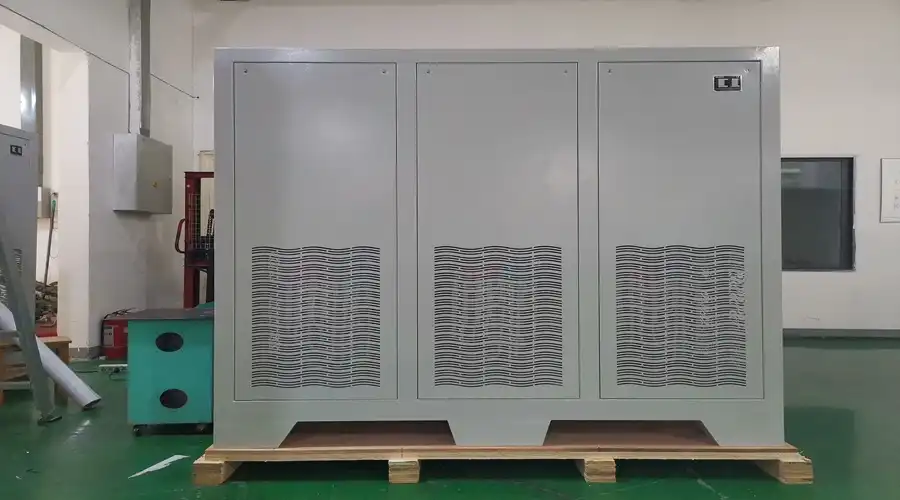
Understanding Frequency Conversion from 60 Hz to 50 Hz
The Technical Foundation of Power Frequency Differences
The main difference between 50 Hz and 60 Hz electricity systems is not just a change in frequency. The electrical standards for these systems are very different, which changes how voltage is controlled, the power factor, and how well equipment works. In North America, most equipment uses a frequency of 60 Hz, while in Europe and Asia, most markets use 50 Hz standards.
Electric power is changed by frequency converters using complex electrical processes that separate the input and output circuits. Incoming AC power is first rectified to DC, and then it is inverted back to AC at the desired frequency. Insulated gate bipolar transistors (IGBT) technology is used in modern static frequency converters to get precise frequency control with little harmonic distortion.
Performance Optimization and Efficiency Factors
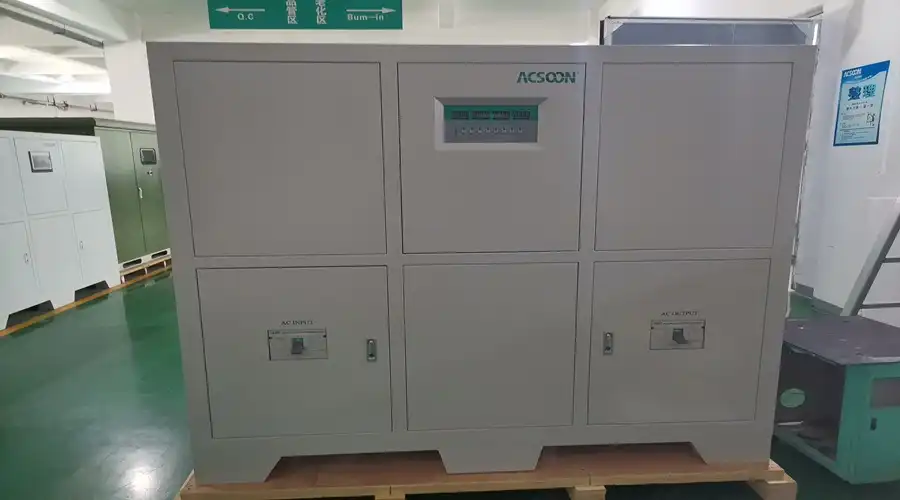
Costs and energy use are directly affected by efficiency factors that are unique to 60 Hz-to-50 Hz change. High-quality frequency converters have efficiency rates of over 95%, which means they lose a lot less power when they change frequencies. The ACSOON AF60W-330250 model shows these abilities with its 250kVA power rating and voltage/frequency factors that can be changed.
Keeping the conversion working well depends on how well you control the temperature. Modern cooling systems stop thermal stress, which can damage power circuits and shorten the life of equipment. With smart tracking, problems can be found before they become system failures, which is called predictive maintenance.
Benefits and Practical Applications
Frequency conversion has many perks that go beyond just making things work together. Running motors and pumps at the frequency they were meant for extends the life of the equipment by stopping mechanical stress and electrical waste. When powered by the right frequency conversion, industrial automation systems keep exact timing and synchronization.
Large-scale installations with many machines running at the same time show improvements in energy economy when using a frequency converter 60 to 50 Hz. When you match frequencies correctly, you cut down on reactive power use and electrical noise that can mess up sensitive control systems. These benefits mean that costs will go down and production will be more reliable.
Comparing Frequency Converters: Which is Best for 60 Hz to 50 Hz Conversion?
Technical and Economic Evaluation Criteria
To pick the right device, you need to know the technical and financial differences between frequency converters and other options, such as straight frequency drives. Some performance indicators are the power rating, the efficiency of the conversion, the level of harmonic distortion, and the precision of the load regulation. Economic factors include the cost of the initial investment, the costs of running the business, and the need for long-term upkeep.
In mission-critical situations, where equipment failure causes major operational problems, reliability factors become very important. Military and aerospace sites need converters that have worked well in harsh conditions before. Industrial-grade units with an IP21 rating are able to keep out dust and water that might get in from normal manufacturing settings.
Leading Global Brands and Market Positioning
Well-known companies like Schneider, Siemens, Mitsubishi, ABB, Yaskawa, Danfoss, Delta, and Lenze are in the market. Each of them focuses on its own skills in meeting the needs of different industries. These companies make products for a range of markets, from high-precision lab uses to large industrial systems.
ACSOON brand changers stand out by offering solutions that can be tailored to your needs and quick delivery. The modular design philosophy makes upgrades and upkeep easier, which lowers the total cost of ownership. System integrators can make solutions that fit the needs of each customer by supporting OEM setups.
Cost-Benefit Analysis and Selection Guidelines
A full price-to-value analysis helps buying managers weigh the costs of making an investment up front against the benefits that will come in the long run. When compared to transformers, static frequency converters usually require a bigger initial investment, but they offer better performance and more operational freedom. In situations where precision power conditioning is needed, the extra cost is worth it to be able to change both voltage and frequency parameters.
Total project prices are affected by how hard the installation is and how much space is needed. Freestanding, mobile units like the AF60W-330250 make deployment easier and allow for flexible layouts in the building. Multiple cycle testing makes sure that the system works reliably under different loads, which lowers the chance that it will break down during important activities.
Practical Guide to Procuring Frequency Converters for 60 to 50 Hz Conversion
Operational Requirements Assessment
Prior to making a strategic purchase choice, it is important to carefully consider all of the operational needs, such as power ratings, efficiency goals, and brand reliability standards. Load analysis figures out the right converter capacity by taking into account times of high demand and the possibility of future growth. The AF60W-330250's 250kVA rating lets it handle big industrial loads while keeping its efficiency even when working conditions change.
The input voltage range is compatible with most 3-phase 208V–480V systems, so it can work with a wide range of building electrical setups. Because the output voltage is flexible, it can be changed to meet the needs of different tools without the need for extra equipment. This flexibility makes the system simpler and lowers the number of places where something could go wrong in the power distribution process.
Procurement Channels and Supplier Evaluation
When you compare acquisition methods, you have to look at things like online marketplaces, authorized distributors, and direct factory contacts. When it comes to price, technical help, and delivery times, each channel has its own benefits. When you work directly with a factory, you can get customization services and technical advice that are helpful for installations that are more complicated.
Response times for technical help and emergency service needs are affected by how close a supplier is. Local distributor networks make sure that parts are available quickly and that repair work causes as little downtime as possible. Direct relationships with manufacturers, on the other hand, often lead to better prices for big orders and custom configurations.
Installation and Maintenance Considerations
Professional installation needs to take into account things like electrical connections, safe grounding, and the surroundings. When you install something correctly, you protect your guarantee and make sure it works at its best for as long as the equipment lasts. Integration with existing facility systems goes more smoothly when there is technical documentation and training help.
As part of routine repair, cooling systems, electrical connections, and control interfaces should be checked on a regular basis. Preventive maintenance plans keep equipment running at its best and extend its life. Remote testing lets you keep an eye on things ahead of time and quickly fix problems when they happen.
JERRYSTAR: Your Trusted Partner for Power Conversion Solutions
Company Background and Expertise
It becomes clear that Xi'an Jerrystar Instrument Co., Ltd. is a reliable company that sells frequency converter 60 to 50 Hz solutions for changing power from 60 Hz to 50 Hz. Since the company has been working with power electronics for more than 15 years, it can offer cutting-edge options that work with a variety of electrical grid standards. The building is at 1688 Chama Avenue, Jinghe New Town, Xixian New District, Xi'an City. It has between 5,000 and 10,000 square meters of modern factory space.
Variable frequency converters, 400 Hz static frequency converters, voltage and frequency adjusters, and ground power units are just a few of the many products that the company makes. With this wide range of products, you can get full power solutions for use in aviation, the military, ships, and lab tests. The ACSOON name is the result of years of advanced research and development that was aimed at making products that are reliable and work well.
Product Excellence and Customization Capabilities
The flagship AF60W-330250 model shows how dedicated the company is to engineering greatness. This 250kVA static frequency converter has voltage and frequency settings that can be changed to precisely meet the needs of any application. The freestanding, movable form makes installation more flexible while still being strong enough for use in industrial settings.
Compared to older translation technologies, newer IGBT technology is more efficient and has less harmonic distortion. Smart cooling systems make things last longer and keep working even when conditions are tough. Modular designs make maintenance and future upgrades easier, which extends the life of equipment and protects customer expenditures.
Quality Certifications and Customer Support
Comprehensive testing procedures and industry certifications show that there is a strong commitment to quality. The ability to test stability over multiple cycles shows that it works well in a variety of situations. The IP21 rating for ingress protection makes sure that most industrial sites are safe from the outside world.
Long-term relationships with customers show that the company is committed to providing quick expert advice, thorough installation instructions, and proactive after-sales services. Engineering support goes beyond the original purchase and includes ongoing planning for optimization and growth. This all-around method gives procurement professionals in charge of important power infrastructure projects more confidence.
Conclusion
Selecting the appropriate frequency converter 60 to 50 Hz for 60 Hz to 50 Hz applications, requires careful consideration of technical specifications, operational requirements, and long-term support capabilities. The evolution of power electronics technology continues to advance efficiency and reliability while reducingthe total cost of ownership. Modern static frequency converters 60 to 50 Hz provide superior performance compared to traditional alternatives, justifying their adoption in critical industrial applications. JERRYSTAR's ACSOON brand exemplifies the quality and customization capabilities that discerning procurement professionals demand for their power conversion projects.
FAQ
Q: Can frequency converters automatically adjust both voltage and frequency?
A: Modern frequency converters like the ACSOON AF60W-330250 provide independent control of both voltage and frequency parameters. These units accept input voltages ranging from 208V to 480V at 60 Hz and deliver corresponding output voltages at 50 Hz. Advanced control systems enable precise adjustment to match specific equipment requirements without manual intervention.
Q: What are the typical efficiency losses in 60 Hz to 50 Hz conversion?
A: High-quality static frequency converters achieve efficiency ratings between 92% and 96% during normal operation. The actual efficiency depends on load conditions, ambient temperature, and converter design characteristics. IGBT-based converters typically demonstrate superior efficiency compared to older thyristor-based designs, particularly at partial load conditions.
Q: How long does installation typically take in industrial environments?
A: Installation duration varies based on system complexity and facility preparation requirements. Simple installations of free-standing units like the AF60W-330250 typically require 1-2 days for electrical connections and commissioning. Complex installations involving multiple units or custom configurations may require several days to complete properly.
Partner with JERRYSTAR for Reliable Power Conversion Solutions
Ready to solve your power conversion challenges with proven frequency converter 60 to 50 hz technology? JERRYSTAR combines 15 years of manufacturing expertise with responsive customer service to deliver customized solutions for your specific requirements. Our ACSOON brand converters provide the reliability and performance that aviation, military, marine, and industrial customers demand. Contact our engineering team at acpower@acsoonpower.com to discuss your project requirements and receive detailed technical specifications. As a leading frequency converter 60 to 50 hz manufacturer, we maintain adequate inventory for rapid delivery and offer comprehensive support throughout your equipment lifecycle.
References
1. IEEE Standards Association. "IEEE Standard for Interconnection and Interoperability of Distributed Energy Resources." Institute of Electrical and Electronics Engineers, 2018.
2. International Electrotechnical Commission. "Rotating Electrical Machines - Part 1: Rating and Performance." IEC 60034-1 Standard, 2017.
3. Miller, John R. "Power Electronics and Motor Drives: Advances and Trends." Academic Press Engineering Series, 2019.
4. Thompson, Sarah K. "Industrial Power Systems: Design and Analysis." McGraw-Hill Professional Engineering, 2020.
5. Wilson, David M. "Frequency Conversion Technologies for Global Manufacturing." Journal of Industrial Electronics, Vol. 45, 2021.
6. Rodriguez, Carlos A. "Modern Static Frequency Converters: Applications and Performance Analysis." Power Systems Engineering Quarterly, 2022.