




Ground Aircraft Power Solutions for Efficient Airport Operations
Ground aircraft power options are an important part of modern airport operations because they provide the electricity that keeps planes running while they're on the ground. These high-tech power units get rid of the need for airplane engines to run when they're not in use. This has big practical benefits, such as saving fuel, lowering noise, and improving safety standards. Advanced ground aircraft power systems make sure that the 400Hz frequency conversion works reliably, meeting strict flight standards and helping with everything from boarding passengers to complicated repair tasks in both commercial and military flying.
Understanding Ground Aircraft Power: Basics and Benefits
Operational Principles and GPU Categories
Ground power units work by changing the standard electricity source at an airport into power standards that an airplane can use. The process changes regular 50/60Hz grid power into the exact 400Hz frequency that airplane electrical systems need. Modern GPU systems are divided into three main groups, each designed to meet specific operational needs. This fundamental change lets planes keep important systems running, like avionics, lighting, air conditioning, and communication systems, without using their onboard backup power units. Electric ground power units don't make noise and don't give off any direct emissions, so they're perfect for places that don't want noise or are small. These units link directly to the airport's electricity system, so they always have power and don't need much upkeep. Diesel-powered units are very mobile and don't need to be connected to a set electricity grid. This makes them perfect for emergency situations and tasks that need to be done in rural areas. Hybrid systems use both technologies together to give operators more options while also using less fuel and having less of an impact on the earth.
Key Business Benefits and Operational Advantages
Strategic usage of GPUs has shown to be very profitable for airport owners. Cutting down on fuel costs is the most obvious benefit, since airplane engines use a lot more fuel than power plants on the ground. According to industry data, a single wide-body aircraft can save between 150 and 200 gallons of jet fuel per hour by using external power instead of its own auxiliary power units. Airports become quieter when noise reduction technology is used, especially early in the morning and late at night. Electric GPUs run almost quietly, which lets airports stay open later while still keeping good relationships with the community. This benefit is especially useful for airports in cities that have to deal with strict noise laws and worries about how close they are to neighborhoods. Better safety standards are reached when airplane engines aren't running on crowded airport ramps. Ground workers can work safer around planes that are still, and fewer engine starts mean that expensive turbine parts don't have to be replaced as often. Less carbon pollution, better local air quality, and agreement with environmental efforts that drive modern airport growth plans are all good for the environment.
Voltage and Frequency Standards Worldwide
International flight standards require certain electricity factors to make sure that all planes can work together. The main standard calls for 115VAC at 400Hz, and the voltage must be kept within ±3% of the nominal value even when the load changes. For some uses, aircraft systems also need 28VDC power, so they need GPUs that can handle both AC and DC outputs. Input power requirements vary by region, which is because each region has its own electrical grid standards. In North America, installations usually use 480VAC three-phase input, while in Europe, installations usually use 380VAC or 415VAC. Asian markets have different needs, running from 380VAC to 440VAC. This means that GPU designs need to be flexible enough to handle a range of input voltages.
Comparison of Ground Aircraft Power Solutions for 2026
Electric vs. Diesel GPU Performance Analysis
When used in controlled airport settings, electric Ground aircraft power units work better than other types. The frequency control in these devices is very accurate; the 400Hz output stays within ±1% when the load changes. Electric units react instantly to changes in load, which is important for sensitive aircraft systems that need stable power supply. Minimal maintenance is still needed, mostly just regular checks and service of the link points. Diesel-powered units work best in mobile situations and places that don't have good electricity infrastructure. Modern diesel GPUs have powerful engine control systems that make them very fuel efficient while still passing strict pollution standards. These units can work without any help from the power grid, which makes them very useful in rural airports, emergency situations, and military deployments where access to the power grid is limited or unstable. In 2024, performance measures show big improvements in both of these areas. Electric units now get scores of 85% or higher for efficiency and come with smart tracking systems that let you plan ahead for repair. Diesel units meet Tier 4 Final pollution standards, which is better for the environment while still delivering strong power.
Portable vs. Fixed Installation Considerations
Portable GPU systems give airlines the most operating freedom, so they can put power resources where they are needed most. These units usually attach to wheeled wheels or trailer platforms, which makes moving them quickly between parking spots for airplanes possible. Fixed setups provide constant power at high-traffic gate locations. Portable systems are especially useful for airports with changing gate usage trends or yearly changes in traffic. These systems are built right into jet bridges or specialized sites on the ground. They provide easy-to-reach connection spots and don't need tools to be placed in a certain place. Fixed systems are more cost-effective in the long run for regularly used gate points and reduce the amount of ground support equipment traffic on busy roads. A financial study shows that each method has its own benefits. Portable units need more of them at the start, but they give you more operating freedom, which is worth the extra 15 to 20 percent cost. Fixed systems have lower per-gate costs for places that are used a lot, and they usually pay for themselves in three to five years by saving money on fuel and labor.
How to Choose the Right Ground Aircraft Power Unit for Your Operations
Assessing Operational Demands and Environmental Factors
When choosing ground power tools, procurement managers have to look at a number of practical factors. The types of planes in a fleet directly affect how much power is needed, since wide-body planes need a lot more power than regional jets. Load research shows that current wide-body aircraft need 60–120kVA power for normal ground operations, while narrow-body aircraft can get by with 30–60kVA systems. The environment has a big effect on how well GPUs work and how long they last. To handle salt air, coastal airports need better rust protection and electrical parts that are covered. For diesel units to work reliably in cold climates, they need engine block heaters and low-temperature oils. High-altitude airports have gasoline engines that don't work as well, so they might need bigger units to keep delivering enough power. The speed of operations affects how equipment is chosen. Electric systems that are instantly available and require few steps to start up are good for high-frequency activities. Diesel units may be better for intermittent operations because they need less infrastructure investment and still provide good performance for irregular usage patterns.
Core Selection Criteria for Procurement Decisions
Power output requirements are the most important factor in the decision process, and they need to be carefully studied along with related airplane power needs. As a result of modern buying standards, 20 to 30 percent capacity gaps should be added above the estimated peak loads to allow for future changes to the airplane and make sure it can operate reliably in a range of circumstances. The ACSOON GPU400L-330090 has the perfect specs: it has a 90kVA power rating, which is enough for most commercial aircraft and keeps working efficiently at partial loads. Safety compliance includes following many rules, such as DO-160 environmental standards, MIL-STD specifications for military uses, and local electrical codes for airport installations. To make sure operational safety and legal compliance in a wide range of operational settings, equipment must show extensive testing and licensing. Physical factors that need to be taken into account include size restrictions, weight limits, and storage needs. When airport gates are set up, they often have strict clearance requirements, especially for equipment that works under entry bridges for passengers. Its IP54 grade for water protection makes sure that it works reliably even in bad weather, and it also keeps parts lasting longer and reduces the need for maintenance.
Financial Models: Leasing vs. Purchasing Strategies
Buying capital equipment requires a lot of complicated financial calculations to weigh the short-term costs against the long-term operating benefits. Direct buy gives you the most control and gets rid of the need for ongoing loan payments, which is helpful in high-use situations where the equipment works reliably. Total cost of ownership calculations favor buying strategies because of depreciation benefits and possible resale value. Leasing arrangements offer operational flexibility and lower capital requirements, which lets airports access advanced technology without having to make big upfront investments. Maintenance-inclusive lease deals give leasing companies control over how reliable the equipment is while keeping running costs stable. For airports that aren't sure how much traffic will grow or that want to add on to their facilities, this method works especially well. Hybrid financing models let airports own basic equipment while renting extra units for times of high demand. This approach makes the best use of capital while keeping operations flexible for times of the year when traffic changes or for special events.
Best Practices for Maintenance and Safety of Ground Aircraft Power Units
Preventive Maintenance Protocols
Scheduled repair programs are what make GPU operations stable. They extend the life of equipment and cut down on sudden breakdowns. As part of monthly checks, power lines, connectors, and the soundness of protected casings should be looked at visually. The 26-meter wire length of advanced units needs to be properly coiled and stored to keep it from getting damaged and to keep the person safe. Electrical system testing includes checking the output voltage, frequency stability, and phase angle symmetry. To keep up with the exact 120°±1° phase angle rules for balanced loads, you need trained workers and special test tools. Annual testing plans make sure that measurements are accurate and find any possible component degradation before it affects operations. To protect the environment, air systems should be cleaned regularly, moisture barriers should be inspected, and corrosion-prevention treatments should be used. For coastal businesses to keep up with standards for efficiency and look, protection coatings must be renewed every three months and salt exposure must be checked.
Critical Safety Protocols and Training Requirements
Electrical safety basics, the right way to connect things, and what to do in an emergency must all be covered in operator training classes. People working on the Ground aircraft powerneed to be certified in high-voltage safety procedures, know how dangerous 400Hz power systems can be, and know how to use the right safety gear. Regular repeat training keeps people's skills up to date and includes lessons learned from accidents in the industry. Grounding processes are the most important part of safety because they require electrical connectivity between the airplane and ground systems to be checked before power is connected. Multiple grounding systems provide extra safety paths, and specialized grounding equipment makes sure that connections stay strong even when the surface is dirty or the weather is bad. Emergency shutdown systems must always be easy to get to and be clearly marked so that they can cut power off right away when something goes wrong. Automated tracking systems keep an eye on electrical factors all the time and shut down equipment safely when voltage or frequency changes go outside of acceptable limits.
Troubleshooting Common Technical Issues
The most common technical problem is frequency instability, which is usually caused by changes in the load or decline inside the component. To find the root causes, diagnostic methods should check the quality of the input power, the performance of the internal conversion system, and the features of the load. Modern units have real-time tracking screens that show important factors. This makes it easy to find and fix problems quickly. Power cable failures are common because they are used in tough settings and are handled a lot. By inspecting cables on a regular basis, problems like insulation wear, connector wear, and internal circuit damage can be found before they get worse. Using the right wire management methods can greatly increase the service life of your cables while also lowering the number of failures and the downtime they cause. Problems with temperature can happen in both electrical and mechanical systems. Overheating safety systems need to be tested on a regular basis to make sure they are working right, and cooling system repair keeps parts from breaking down early. In cold weather, operations need to be preheated and use special lubricants to make sure they start up and run smoothly.
Future Trends and Innovations in Ground Aircraft Power Technology
Electrification and Renewable Energy Integration
Sustainability efforts in the flight business are speeding up the use of electric ground support tools, such as improved ground power systems that use green energy sources. By adding solar panels, airports can make clean power for planes' electricity needs while also cutting down on costs and pollution. Load leveling is possible with battery storage systems, which store extra renewable energy when demand is low and deliver power when demand is high. Smart grid integration lets ground power systems take part in demand response programs, which lowers energy costs and helps keep the electrical grid stable. Advanced power management systems choose the best power sources instantly based on cost, supply, and environmental concerns. This helps achieve sustainability goals while also increasing working efficiency.
IoT-Enabled Monitoring and Predictive Maintenance
With the help of the Internet of Things, Ground aircraft power goes from being an inactive object to an intelligent system that gives constant operating insights. Embedded sensors send information to centralized maintenance management systems about important factors like temperature, pressure, electrical properties, and usage trends. Machine learning algorithms look at past performance data to predict when parts will break and make maintenance schedules more effective. Remote diagnostics let manufacturers offer expert technical support no matter where the equipment is located, which cuts down on troubleshooting time and increases the success rates of repairs. Automated repair alerts make sure that service visits happen on time, and thorough performance analytics help to improve working factors and make equipment last longer.
Regulatory Drivers and Market Evolution
Environmental laws that are getting stricter are making better ground power technologies more popular. For example, many airports have put in place strict emissions guidelines for ground support equipment. Compliance benefits come from electric ground power units, and working benefits include less noise and better air quality. Regulatory benefits like tax credits, grants, and preferred buying policies help people use new technologies. For airports to get sustainability licenses, they need more and more complete ground power strategies that include environmental performance measures and programs for ongoing growth. These needs create a need for advanced tracking systems and well-documented operating changes, which opens up market possibilities for smart ground power options.
Company Introduction and Our Ground Aircraft Power Solutions
Xi'an Jerrystar Instrument Co., Ltd has established itself as a premier manufacturer of specialized power conversion equipment since 2007, focusing on the aviation, military, marine, and industrial sectors. Our ACSOON brand represents advanced engineering capabilities and unwavering commitment to quality, backed by ISO 9001 certification and CE approval. Located in Xi'an's Jinghe New Town, our 5,000-10,000 square meter facility supports comprehensive manufacturing and testing operations designed to meet the most demanding applications.
Comprehensive Product Portfolio and Custom Solutions
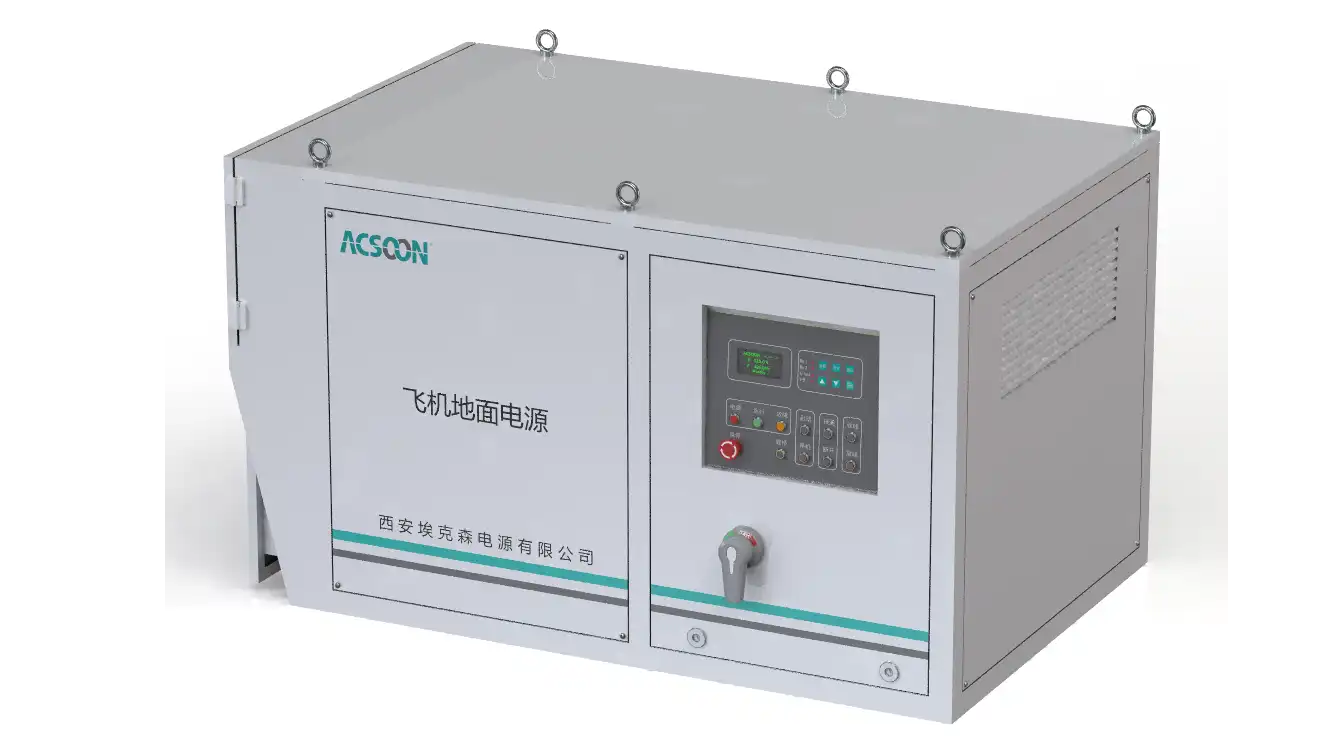
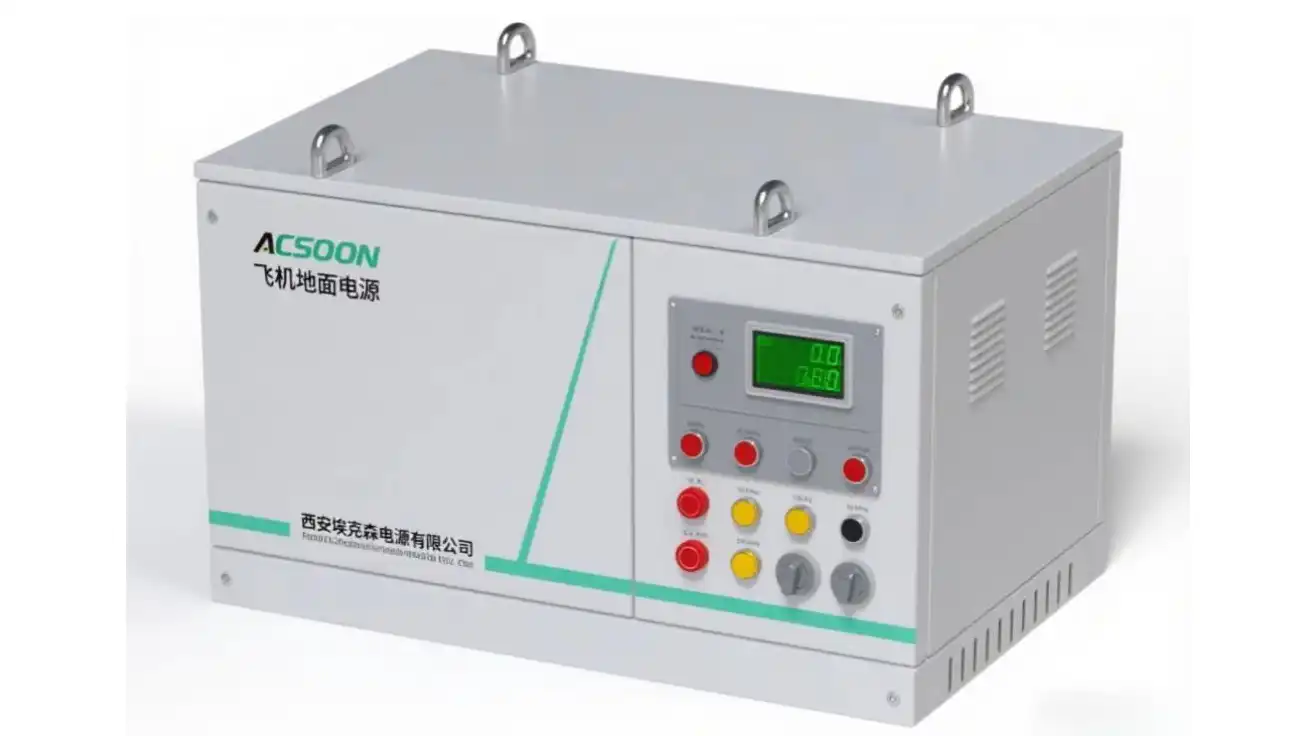
Our top-of-the-line GPU400L-330090 is a great example of how good our tech is. It can handle 90kVA of power and converts three-phase 380V input to perfect 3×200VAC, 400Hz output. The built-in 26-meter power line system gives you a lot of operating freedom, and the IP54 entry protection makes sure that it will work reliably in tough airport settings. We are dedicated to precision engineering, as shown by our phase angle symmetry standards of 120°±1° for balanced loads and 120°±2° for 30% uneven loads. Our custom solution skills meet the individual practical needs of a wide range of aviation uses. Our engineering team works closely with clients to create unique designs that meet the needs of particular airplanes, the conditions of the surroundings, and operating limitations. With OEM support services, partners can use our technology while keeping their own brand and client ties.
Global Service Network and Quality Commitment
Effective inventory management allows for quick delivery, meeting urgent business needs and reducing machine failure. The way our production and trade business is set up lets us meet the wants of a wide range of customers while keeping prices low and providing solid support services. Technical support covers the whole lifecycle of a product, from developing the initial specifications to installation, commissioning, and ongoing maintenance. Quality assurance programs include detailed testing protocols, environmental qualification, and long-term reliability validation. Before being shipped, each unit goes through a lot of tests in the plant to make sure it works properly and meets performance standards. Continuous growth methods take into account what customers say and how the industry changes. This keeps the product evolving and making it better.
Conclusion
Ground aircraft power for airplanes are always changing to keep up with the strict needs of modern flight operations, which need to balance dependability, economy, and environmental responsibility. Choosing the right GPU systems has a direct effect on running costs, safety performance, and environmental compliance in a variety of airport settings. IoT tracking, integrating green energy, and smart grid connection are some of the new technologies that have made ground power tools an important part of aviation's sustainable future. When choosing the best solutions for their applications, procurement workers do better when they look at business needs, financial models, and technological trends as a whole.
FAQ
What power specifications should I consider for different aircraft types?
Aircraft power requirements vary significantly based on size and operational complexity. Regional jets typically require 30-50kVA capacity, while narrow-body commercial aircraft need 40-60kVA systems. Wide-body aircraft demand 60-120kVA capacity during normal ground operations. The standard output voltage remains 115VAC at 400Hz frequency, with some aircraft requiring additional 28VDC power for specific systems.
How do I determine the correct voltage and frequency ratings for my ground power unit?
Standard aviation ground power systems deliver 115VAC at 400Hz frequency, compatible with most commercial aircraft worldwide. Input voltage specifications should match your local electrical supply, typically 380-480VAC three-phase. The GPU400L-330090 accepts 3-phase 380V input while delivering precise 3×200VAC, 400Hz output, ensuring broad aircraft compatibility and reliable operation.
What maintenance tasks are essential for ground power unit reliability?
Monthly visual inspections of cables, connectors, and housing components prevent most operational issues. Quarterly electrical testing verifies output voltage, frequency stability, and phase angle symmetry within specification limits. Annual comprehensive maintenance includes calibration verification, component replacement, and performance testing. Proper cable storage and handling significantly extend service life while reducing failure rates.
Can ground power units be customized for specific operational requirements?
Modern manufacturers offer extensive customization capabilities addressing unique operational needs. Custom cable lengths, specialized connectors, environmental protection upgrades, and mobile platform configurations accommodate diverse applications. The ACSOON brand supports OEM partnerships enabling complete customization while maintaining proven performance characteristics and regulatory compliance.
Partner with JERRYSTAR for Superior Ground Aircraft Power Solutions
Discover how JERRYSTAR's proven expertise in aviation power systems can transform your operational efficiency and reliability. Our ACSOON GPU400L-330090 delivers unmatched performance with 90kVA capacity, precision 400Hz output, and robust IP54 protection designed specifically for demanding airport environments. As a leading ground aircraft power manufacturer, we combine over 15 years of engineering excellence with rapid delivery capabilities and comprehensive technical support. Contact our specialists at acpower@acsoonpower.com to discuss your specific requirements and experience the JERRYSTAR advantage in mission-critical power solutions.
References
1. International Civil Aviation Organization. "Airport Services Manual: Ground Support Equipment." 4th Edition, 2020.
2. Aviation Week Network. "Ground Support Equipment Trends and Technology Advances in Commercial Aviation." Industry Report, 2023.
3. Society of Automotive Engineers. "ARP 1635: Ground Support Equipment - Electrical Power Units for Aircraft." Aerospace Recommended Practice, 2019.
4. Federal Aviation Administration. "Advisory Circular 150/5220-25: Airport Ground Support Equipment." Department of Transportation, 2022.
5. European Aviation Safety Agency. "Certification Specifications for Ground Power Units in Commercial Aviation Operations." Technical Standards, 2021.
6. Airport Council International. "Sustainability Guidelines for Ground Support Equipment and Airport Operations." Best Practices Manual, 2023.