




What Power Ratings Matter in a High Voltage DC to AC Inverter?
Power levels are the most important thing to look at when choosing a high voltage dc to ac inverter for important tasks. They tell you how well the system will work and how long it will last. These specs tell you if your inverter can handle steady loads, handle sudden demands, and keep the power stable in different situations. When your operations depend on constant power conversion for things like flight testing, marine systems, or industrial manufacturing, you need to know about maximum power, surge capacity, and heat limits.
Understanding Power Ratings in High Voltage DC to AC Inverters
Power rates in high voltage conversion systems are more than just numbers that tell you how much power the system can handle. They also set limits for how the system can be used, which keeps it safe and reliable. How well a transformer works in real life is directly related to how rated power, peak power, and steady power are connected.
Rated Power Specifications and Their Impact
Rated power tells you how much steady load a generator can handle when it's working normally. When building systems for aircraft ground support tools or naval power systems that must always give the same output, this standard becomes very important. With a power level of 100kVA, the JERRYSTAR ANDW270-330100 model shows how the right capacity size can support hard industrial uses while keeping temperatures stable. Inverters with surge power can handle short-term energy spikes that happen when motors start up or when equipment is first set up. This number is very important in lab tests where quick power demands can put a lot of stress on systems that aren't rated properly. For short amounts of time, good inverters usually offer peak power between 150% and 200% of their rated output.
Continuous Power and Thermal Management
Continuous power rates show how long something can run at a certain level of load and in a certain environment. Innovative temperature management systems, like the ones used by JERRYSTAR in their designs, make it possible for steady performance even in harsh circumstances. These systems use smart ways to get rid of heat to stop thermal runaway and make tools last longer. Inverters often have to work at high capacity factors for long periods of time in industrial settings. When purchasing, professionals understand derating curves and thermal features, and they can choose equipment that will keep working well in a wide range of temperatures and job cycles that are common in their use.
Key Power Rating Dimensions Explained
The technical factors that determine the performance of an inverter go beyond just its power levels. They also include its efficiency, voltage compatibility, and frequency stability. All of these factors affect how well a system is integrated and how much it costs to run.
Input Voltage and Current Specifications
How well a high voltage DC to AC inverter works with high-voltage DC sources depends on how well it can handle different input voltages. The ANDW270-330100 can accept 270VDC, which is the same voltage as industrial battery banks and green energy systems that are popular in aircraft and naval uses. Matching the input voltage correctly stops efficiency losses and makes sure that the conversion process transfers power as efficiently as possible. Basic electrical connections show that the ability to handle current has a direct effect on the power level. Higher voltage sources usually mean less current is needed to get the same amount of power, which means less loss in the conductors and a more efficient system. In coastal and remote settings, where cable runs may be long, this connection is even more important.
Output Voltage and Frequency Flexibility
With the ANDW270-330100's 0-300V and 0-520V ranges and 50Hz to 60Hz versatility, the output voltage and frequency can be changed to meet the needs of a wide range of loads. This adaptability is useful for foreign projects or situations where different equipment standards need to be met. The output of a clean sine wave makes sure that it works with sensitive electrical loads that are popular in tests and labs.
Efficiency and Power Factor Considerations
Modern technologies like SPWM and IGBT make it possible for good inverter designs to have efficiency levels above 90%. When efficiency is high, running costs go down, and heat stress on parts goes down. When linking to the grid or figuring out the best size generator for use when not connected to the grid, power factor becomes important. Advanced designs with electromagnetic compatibility (EMC) features keep sensitive equipment from being affected by interference. This makes these inverters suitable for use in laboratories and precision testing environments where signal integrity is still important.
Comparing Power Ratings: Making the Right Choice for Industrial Applications
When choosing an industrial transformer, it's important to think about both the current power needs and the needs for future growth, as well as the total cost of ownership. When looking at high voltage systems for important uses, this research gets a lot trickier.
High Voltage Versus Low Voltage System Trade-offs
When it comes to power density and efficiency, high voltage DC to AC generators are clearly better than low-voltage options. When the working voltage is higher, the amount of current needed to move the same amount of power is lower. This makes the wires smaller and the resistance losses lower. These perks stand out more in places that need a lot of power, like factories that make things or places that do a lot of testing. When it comes to safety and system separation, high voltage and low voltage setups are very different. When installing and maintaining high voltage systems, they need stricter safety rules and trained workers. These factors affect the overall cost of the job and how it is run.
Lifecycle Cost Analysis
The lifespan economics of high-quality transformers are better because they last longer and need less upkeep. JERRYSTAR's dedication to carefully choosing parts and checking all of them for failure before sending them out is in line with best practices in the industry, which help keep failures in the field to a minimum and reduce the costs of downtime. Modular design makes upkeep easier and lets you add more capacity without having to update the whole system. This flexibility is useful for activities or applications that are growing and whose power needs may change over time.
Application-Specific Performance Requirements
In different industries, different success traits are more important than others. Marine systems focus on being resistant to salt air and harsh environments, while aerospace systems focus on being reliable and controlling frequencies precisely. When checking things in a lab, you need a high voltage dc to ac inverter with low harmonic distortion and constant voltage control, even when the load changes. The IP21 grade for entry protection is good enough for controlled indoor settings like those found in testing labs and factories. For uses that are outside or in difficult environments, higher safety levels may be needed.
Practical Applications and Power Rating Considerations
Real-life examples show how choosing the right power level can affect how well a system works and how well it runs. Knowing about these connections helps people who work in buying make smart choices that match expert skills with project needs.
Renewable Energy Integration
Inverters that can handle changing input conditions and keep the AC output stable are needed for solar and wind power systems. Systems like the ANDW270-330100 can take in high voltage DC, which lets them connect directly to solar panels that are linked in series. This makes the system simpler and more efficient. To stay in line with utility systems, grid-tie applications need precise control over frequency and power. The ability to change the frequency lets it adapt to different grid standards, which is useful for foreign projects or testing needs that are specific.
Industrial Automation and Manufacturing
Motor starts, welding tools, and varying frequency drives all create changing power needs in manufacturing settings, which can make load profiles difficult. When you choose the right extra capacity size, you can avoid annoying shutdowns and keep production going even when regular operations changes happen. Advanced switching technologies make it possible for devices to make very little noise. This is useful in industry settings where noise can affect worker happiness or the accuracy of work. EMC compatibility keeps control systems and communication networks from getting messed up, which is very important for modern automatic facilities.
Laboratory and Testing Applications
To get exact results and protect expensive measuring tools, precision testing needs power that is stable and clean. Harmonic distortion, which can change test results or damage sensitive instruments, can't happen with pure sine wave output. Testing tools that can change power and frequency can meet foreign standards, which helps with the approval and quality assurance processes for products. Being able to model different power conditions lets you fully test a product in a wide range of working conditions.
Troubleshooting and Maintaining High Voltage DC to AC Inverters Related to Power Ratings
Proper power rating selection prevents many common operational issues, while understanding rating-related problems enables quick diagnosis and resolution when difficulties arise.
Common Power Rating-Related Issues
Undersized inverters show signs like frequent shutdowns due to overload, too much heat, and premature component wear. Not only do these things make the system less reliable, but they can also cause catastrophic breakdowns that hurt both the generator and the loads that are tied to it. Oversized inverters might not work as well at light loads, which would raise costs and could lead to issues with voltage control with some types of loads. To find the best grade balance, you need to carefully look at the real job cycles and load patterns.
Preventive Maintenance Strategies
Regular testing of capacity makes sure that performance stays within the allowed limits and finds signs of wear and tear before they lead to failures. Thermal tracking helps find problems with the cooling system that could cause it to derate or shut down when the load is average. Load analysis and trends show how power needs are changing, which could mean that capacity needs to be changed or the system needs to be upgraded. Unexpected gaps in capacity can stop key processes from running smoothly when tracking is done ahead of time.
Professional Support and System Enhancement
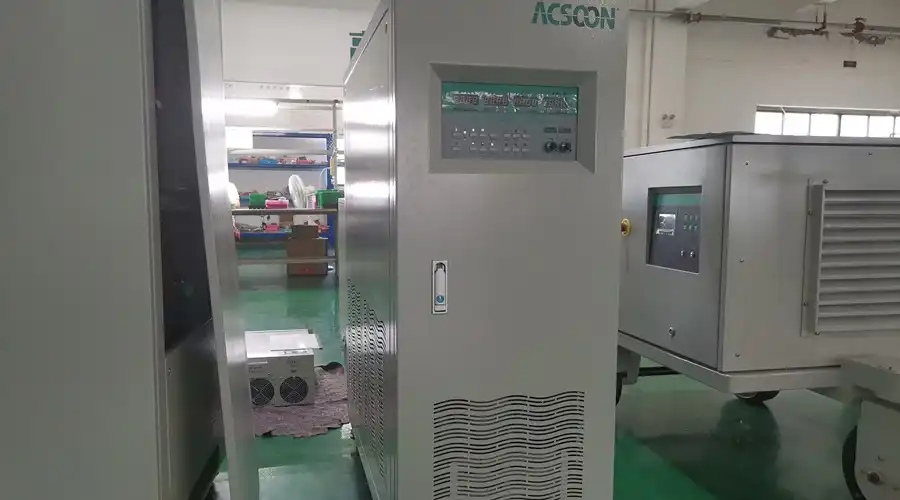
JERRYSTAR offers full professional help 24 hours a day, seven days a week. This includes on-site setup and speed improvement services. This support structure makes sure that systems keep meeting the standards for power ratings for as long as they are in use. Regular software changes and testing services keep things accurate and reliable while adding speed gains found through research and development.
JERRYSTAR: Your Trusted Partner for High Voltage Power Conversion Solutions
When it comes to making high voltage DC to AC inverters for tough industrial uses, Xi'an Jerrystar Instrument Co., Ltd. has more than 15 years of experience. Our ACSOON name is the best in power conversion technology. It combines advanced SPWM and IGBT technologies with strict quality control systems.
Advanced Product Capabilities
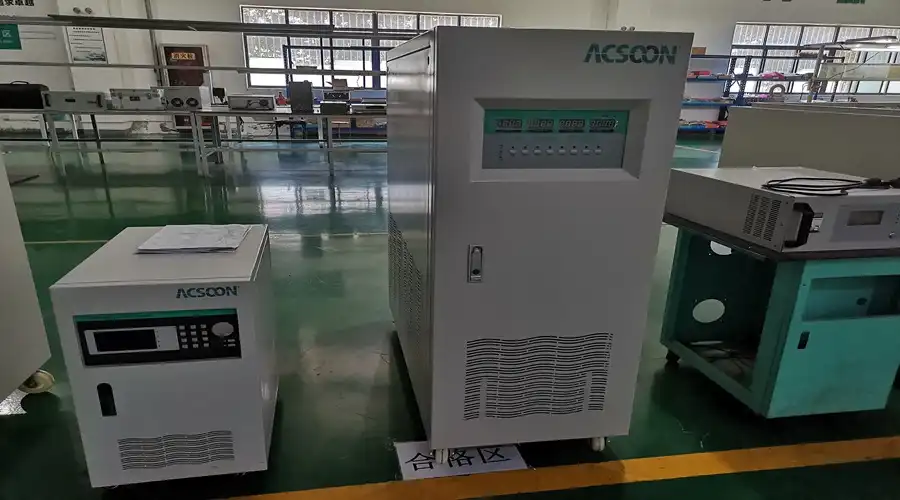
With its 100kVA power level and adjustable output setups, our top ANDW270-330100 model shows how committed we are to technical greatness. The result is a clean sine wave, and the frequency can be changed from 50Hz to 60Hz to meet the needs of a wide range of applications while still keeping the accuracy needed for tests in aircraft, sea, and lab settings. Patented high-frequency switching technology and smart heat management systems are part of the strong design philosophy and make sure that the equipment works reliably even in tough circumstances. Because they are EMC compatible and operate with low noise, these inverters can be used in sensitive areas where interference needs to be kept to a minimum.
Comprehensive Quality Assurance
Our quality management system is ISO 9001 approved and includes careful selection of parts, improved quality checks on the production line, and full burn-in testing before shipping. This all-around method makes sure that every inverter meets certain performance and power requirements before it gets to the customer's building. Ongoing research and development efforts are aimed at improving heat management, control algorithms, and flexible design ideas that make things more reliable and easier to service. Customers directly gain from these improvements because they improve performance and lower costs over time.
Global Application Success
JERRYSTAR inverters are used in many important ways, such as to integrate green energy, improve power quality in factories, build charging stations for electric vehicles, and support tools for astronauts on the ground. Our products work with microgrids, grid storage systems, data center power, and marine/offshore sites that need to convert power reliably. Because our product line is so flexible, we can make solutions that meet specific power rate needs while also working with different operating or environmental limits. Being able to support OEMs makes it easier to integrate into bigger systems or make private-label apps.
Conclusion
To fully understand power levels in high voltage DC to AC inverters, you need to look at their estimated capacity, spike capability, and standards for continued operation. Across a wide range of industrial sectors, these standards have a direct effect on system stability, running costs, and the usefulness of applications. Modern inverter technologies, like JERRYSTAR's ANDW270-330100 type, show how advanced design methods can meet the performance and reliability needs of important applications while also giving operators the freedom to adapt to changing needs.
FAQ
What factors determine the appropriate power rating for my application?
Application requirements, load profiles, duty cycles, and environmental conditions collectively determine optimal power ratings. Consider peak demands, continuous operation requirements, and future expansion needs when specifying inverter capacity.
How does surge power differ from rated power in practical applications?
Surge power represents short-term overload capability, typically lasting seconds to minutes, while rated power indicates continuous operation capacity. Surge capability handles motor starts and temporary load spikes without system shutdown.
What impact does inverter efficiency have on operational costs?
Higher efficiency reduces energy consumption, heat generation, and cooling requirements. A 5% efficiency improvement can result in substantial cost savings over the inverter's operational lifetime, particularly in high-duty-cycle applications.
How do I determine if my current inverter is properly sized?
Monitor load levels, operating temperatures, and frequency of overload events. Consistent operation above 80% capacity or frequent thermal derating indicates potential undersizing issues requiring evaluation.
What maintenance practices help preserve power rating performance?
Regular cleaning, thermal monitoring, load testing, and component inspections maintain rated performance. Schedule professional calibration and capacity verification annually or per manufacturer recommendations.
Partner with JERRYSTAR for Your High Voltage DC to AC Inverter Requirements
Ready to optimize your power conversion systems with proven high voltage dc to ac inverter technology? JERRYSTAR combines decades of engineering expertise with comprehensive support services to deliver solutions that exceed performance expectations. Our team stands ready to analyze your specific requirements and recommend optimal power rating configurations that ensure reliable operation and cost-effective performance. Connect with our specialists at acpower@acsoonpower.com to discuss your project needs and discover why leading organizations choose JERRYSTAR as their preferred high voltage dc to AC inverter supplier.
References
1. IEEE Standards Association. "IEEE Standard for Interconnecting Distributed Resources with Electric Power Systems." Institute of Electrical and Electronics Engineers, 2018.
2. International Electrotechnical Commission. "Photovoltaic System Components - Power Conditioners - Test Procedures for Islanding Prevention Measures." IEC Technical Report 62910, 2019.
3. Miller, Robert H. "Power Electronics: Converters, Applications, and Design." Fourth Edition, Wiley Engineering, 2020.
4. National Renewable Energy Laboratory. "Best Practices for Operation and Maintenance of Photovoltaic and Energy Storage Systems." NREL Technical Report, 2021.
5. Society of Automotive Engineers. "Electric Vehicle Power Electronics Cooling Systems Design Guidelines." SAE International Standard J2954, 2019.
6. Thompson, Sarah K. "Industrial Power Quality and Voltage Regulation in High-Power Inverter Applications." Journal of Power Engineering Systems, Vol. 45, No. 3, 2022.