




How Does a 115 VAC 400 Hz AC Power Supply Work?
An ac power supply 115 vac 400 hz operates through frequency conversion technology, transforming standard 50/60 Hz input power into the specialized 400 Hz output required for aerospace and military applications. This conversion process involves sophisticated static frequency converters that utilize advanced semiconductor technology to generate precise, stable power output. The higher frequency enables smaller, lighter transformers and improved power density, making these systems essential for aircraft ground support equipment, avionics testing, and defense applications where reliability and compact design are paramount.
Understanding the Basics of 115 VAC 400 Hz AC Power Supplies
It is the main job of 400 Hz power conversion systems to change regular electricity into the specific frequency needed by current defense and aerospace equipment. These systems are an important step forward in power technology because they meet the specific needs of users where 50 or 60 Hz power isn't enough for the best results.
Core Components and Technical Architecture
Power systems that use 400 Hz have static frequency converters at their core. These use modern power electronics to change frequencies precisely. The process of conversion starts with input rectification, where complex rectifier circuits change the AC power that comes in into DC energy. This middle DC stage makes a safe base for the next step, which is the inversion process. Carefully controlled semiconductor switches create an AC output at the 400 Hz frequency that is needed.
Modern converters, such as those designed for an AC power supply of 115 VAC 400 Hz, are made with a lot of different safety and monitoring systems to make sure they work reliably even in tough situations. Temperature control, voltage regulation, and frequency stability are all parts of how well the system works as a whole. Many units have digital control systems that let you watch and make changes in real time.
Frequency Conversion Advantages
Moving from regular power frequencies to 400 Hz has big technology advantages that make the complicated conversion systems worth it. When operating at a higher frequency, transformers can be made much smaller and lighter because their magnetic parts can handle the same amount of power with a lot less iron and copper. This decrease in weight is especially useful in aerospace, where every pound affects how much fuel is used and how much weight can be carried.
In addition, operating at 400 Hz lowers electromagnetic interference in sensitive electrical systems and raises the performance of motors and other inductive loads. The higher frequency makes control systems more responsive and lowers the size of the equipment used to distribute power on ships and airplanes.
Technical Specifications and Performance Parameters
To meet industry standards, professional-grade 400 Hz power supplies must keep tight tolerances on a number of performance factors. When the load changes, voltage control usually keeps the output within ±1%, and frequency stability stays within ±0.1% to make sure it works with precision equipment. These requirements are especially important in military settings, where MIL-STD-704 compliance guarantees stable operation in harsh environments.
Controlling harmonic distortion is another important standard. Good systems keep total harmonic distortion below 3% to keep sensitive electronics from being affected. Power factor correction and efficiency optimization improve system performance even more. Modern converters can reach over 90% efficiency rates at full load.
Advantages and Applications in B2B Industries
The aerospace industry has known for a long time that 400 Hz power sources are very useful in many different operational situations. These benefits aren't limited to frequency conversion; they also include higher system reliability, less maintenance, and more operating flexibility that helps mission-critical applications.
Performance Benefits in Critical Applications
One of the biggest benefits of 400 Hz systems is that they have a higher power density, which lets equipment makers make lighter systems that still work at full power. This trait is very important for airplane ground support equipment because portability and efficiency have a direct effect on how well it works. Magnetic parts are smaller, which lets system designs be more compact without sacrificing their ability to deliver power.
400 Hz operation also helps with thermal management because it makes generators and motors more efficient, which lowers the amount of heat that is generated throughout the power distribution system. Because of this thermal edge, parts last longer and need less cooling, which is especially helpful in equipment bays that are closed off and don't have a lot of room for ventilation.
Industry-Specific Applications
The main market for 400 Hz power systems, particularly those using an AC power supply of 115 VAC 400 Hz, is aerospace, which includes aircraft ground power units, avionics testing tools, and entertainment systems for flights. Ground support equipment is more portable, but it still has the power delivery skills needed for aircraft maintenance work. Testing facilities use 400 Hz supplies to mimic the power conditions on a real aircraft while certifying equipment and fixing problems.
Military and defense uses go beyond aircraft and include radar systems, communication gear, and mobile command centers that need to be able to reliably convert power to support mission-critical tasks. The tough design and ability to withstand harsh environments of high-quality 400 Hz systems allow them to be used in harsh operating settings while still meeting performance standards.
More and more, 400 Hz technology is being used in marine applications for power systems on ships and equipment on offshore platforms, where room is limited, and reliability is important, just like in aerospace applications. Naval ships especially benefit from the ability to reduce weight while still being able to provide the power that modern electronic systems need.
Electromagnetic Compatibility and System Integration
In electromagnetic compatibility uses, where interference reduction helps sensitive electronic equipment work, the 400 Hz frequency has big benefits. Higher frequency operation naturally makes electromagnetic fields around transformers and power distribution parts smaller. This makes it less likely that they will interfere with communication and guidance systems that are nearby.
Standardized 400 Hz power interfaces that allow plug-and-play compatibility between different makers of equipment are good for system integration. Standardization makes it easier to buy things and makes sure that systems will work together even after they are upgraded or changed during their working lifecycle.
Comparison and Procurement Considerations
To make strategic purchasing choices, 400 Hz power systems must be thoroughly compared to other options, taking into account both the technical performance and operational needs that are unique to each application. By understanding these similarities, you can make smart choices that improve system performance while staying within your budget.
Technical Performance Comparisons
It's easy to see that 400 Hz systems are lighter and smaller than traditional 50/60 Hz systems when you compare them across all power levels. A typical 35 kVA system that works at 400 Hz weighs about 40% less and takes up about 30% less room than a similar unit that works at 60 Hz. These price cuts are especially helpful for mobile apps that need to be transported and set up, which directly affects running costs.
Different linear and switching converter designs have different levels of efficiency. Generally, switching topologies has higher efficiency scores but is more complicated. Linear converters produce better output with less harmonic distortion, but they are less efficient and produce more waste heat. Which of these technologies to use depends on the needs of the program and the limitations of the environment.
Supplier Evaluation Criteria
A good supplier evaluation looks at more than just the price of the equipment itself. It also looks at things like technical help, customization options, and the supplier's ability to provide long-term service. Manufacturers that have been around for a while and have experience in aerospace and defense usually offer better support for mission-critical applications and follow all industry standards and licenses.
Some signs of good manufacturing quality are having ISO 9001 approval, meeting MIL-STD requirements, and having experience with similar tasks. To make sure that system integration goes smoothly and that there is ongoing operating support, suppliers should offer detailed technical documentation, training materials, and quick technical support.
Procurement Logistics and Cost Considerations
When making purchases, it's important to keep in mind that lead times for custom configurations or high-power systems can be several months. Delivery times are usually shorter for standard configurations, but longer manufacturing periods are often needed for custom needs. When planning to upgrade equipment or make the warehouse bigger, inventory management techniques should take these lead times into account.
Total lifecycle costs, such as the initial buy price, installation costs, maintenance needs, and expected operational lifespan, should be included in the cost analysis. 400 Hz systems, especially those utilizing an AC power supply of 115 VAC 400 Hz, usually cost more than standard frequency systems, but the operational benefits often make up for the extra cost by lowering running costs and making the system more reliable.
Troubleshooting and Safety Tips for 115 VAC 400 Hz Power Supplies
Maintenance and troubleshooting methods that work well make sure that 400 Hz power systems work well and last a long time. Preventative maintenance plans keep key applications running reliably and save money by avoiding costly downtime.
Common Diagnostic Procedures
Problems with voltage fluctuations often mean that the power coming in isn't good enough or that internal parts are wearing out. To find the root causes, you need to do a thorough diagnosis. As part of the measurement process, the characteristics of the incoming power, the stability of the internal DC bus voltage, and the output quality parameters should all be carefully looked at when the load changes. Digital multimeters that can measure real RMS can accurately measure 400 Hz waveforms that regular meters can't do.
Problems with frequency deviation are usually caused by broken control circuits or an unstable reference signal that changes the time of the conversion process. An oscilloscope study shows the frequency stability characteristics and harmonic content that have an effect on how well a system works. Verifying the calibration on a regular basis makes sure that measurements are correct and helps find signs of slowing performance before they affect related devices.
Thermal Management and Environmental Considerations
Monitoring the temperature is an important part of maintaining a 400 Hz system, since too much heat speeds up the aging of parts and lowers the system's general reliability. Maintaining your air and cooling system properly will keep it working at its best even when the temperature outside changes. Temperature logging gives us useful information for figuring out what repairs we need to do and how to make things run more smoothly.
In marine and military settings, where moisture, salt air, and mechanical vibration can damage systems, environmental protection steps are even more important. Inspections of sealing systems and protective coatings on a regular basis help keep the IP21 security standards for quality systems and keep the environment from being damaged.
Preventive Maintenance Strategies
As part of regular maintenance, all protection systems should be fully tested, output quality factors should be checked, and physical connections and mounting hardware should be looked over. Recording maintenance tasks gives us useful past information for studying trends and helps find possible issues before they cause the system to fail.
Schedules for replacing parts based on what the maker says and what has worked in the past help keep breakdowns to a minimum and keep maintenance costs low. Important parts like cooling fans, filter capacitors, and control circuit parts need extra care because they affect how reliable the whole system is.
JERRYSTAR: Your Trusted Partner for 115 VAC 400 Hz Power Solutions
Xi'an Jerrystar Instrument Co., Ltd has been making precision power conversion equipment for over 15 years, and they are especially good at making equipment for aircraft and defense uses. Our ACSOON name is the result of a lot of research and development work that was done to meet the exact needs of mission-critical power systems in many different industries.
Comprehensive Product Portfolio and Customization Capabilities
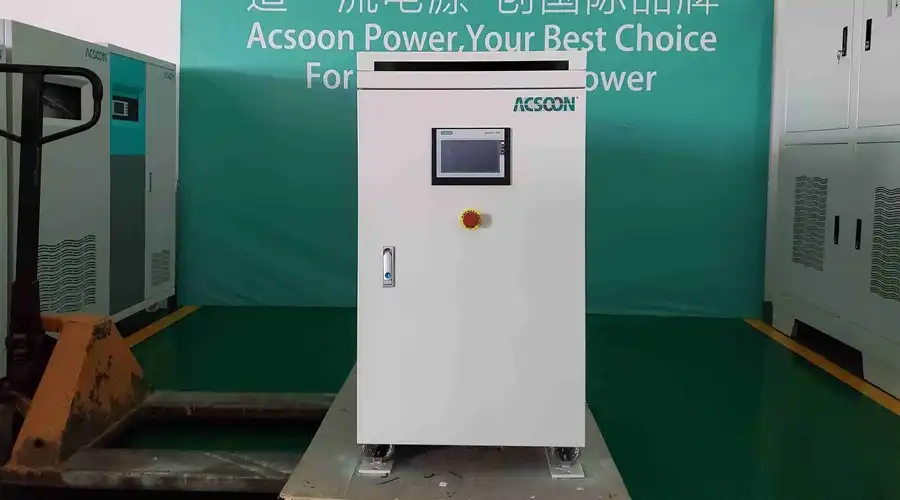
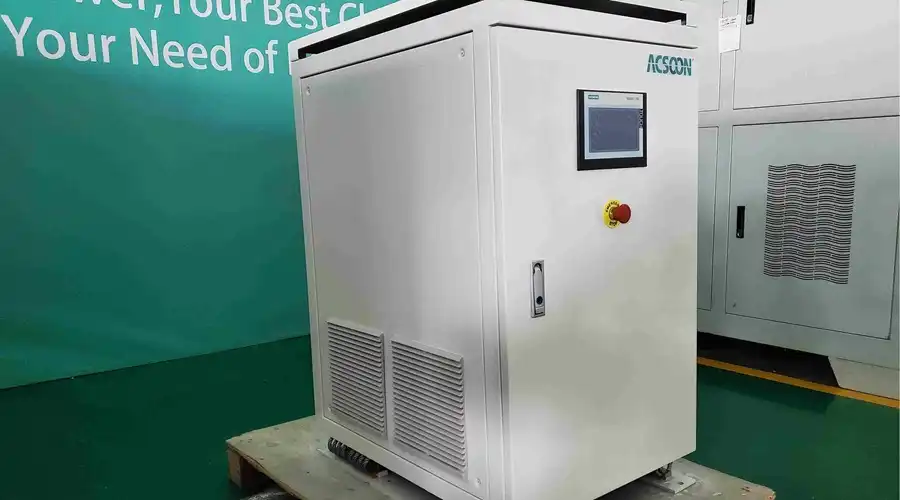
Our most popular model, the AF400M-33035, shows how advanced engineering makes ACSOON goods stand out in a crowded market. This 35kVA static frequency converter can take three-phase power inputs from 208V to 480V at standard 50/60 Hz frequencies and give out 400 Hz outputs across the same voltage range. The IP21 protection rating and fixed-mount design make sure that the device works reliably in harsh environments that are popular in aircraft training systems and ground support applications.
Customization goes beyond offering standard products and includes meeting particular needs that are unique to certain uses or working conditions. Our tech team works closely with customers to create custom solutions that meet all of their needs while still meeting the high standards of dependability and performance that you'd expect from professional-grade gear. This collaborative method makes sure that ACSOON products work well with other systems and that customers are happy with them for a long time.
Quality Assurance and Industry Compliance
Our complete quality management system, which controls all aspects of product development, production, and customer service, is based on ISO 9001 approval. Before goods leave our factory, they are put through strict testing to make sure they meet MIL-STD-704 and other industry standards. Customers can be sure that the product will work well and reliably in all situations because of this dedication to quality assurance.
Our manufacturing center is between 5,000 and 10,000 square meters and has state-of-the-art testing and production tools that can handle both standard product lines and custom manufacturing needs. Good inventory management makes sure that standard configurations are delivered quickly, while still allowing for quick purchases that are popular in defense and aerospace applications.
Global Support and Technical Expertise
Comprehensive pre-sale consultation, installation help, and continued maintenance support that lasts the entire lifecycle of the product are all examples of technical support. Our experienced engineering team can help with system integration problems right away. They can also help with troubleshooting and make suggestions for improving speed that make operations run more smoothly.
Having a presence in international markets lets you provide local help in key markets while keeping quality and service standards the same all over the world. With this global reach and responsive contact, customers always get help when they need it, no matter where they are or what time zone they are in.
Conclusion
Understanding how ac power supply 115VAC 400Hz systems operate provides essential knowledge for procurement professionals and engineers working with aerospace, defense, and industrial applications. These specialized frequency converters deliver significant advantages in weight reduction, efficiency improvement, and electromagnetic compatibility that justify their adoption in critical applications. The conversion process involves sophisticated static frequency conversion technology that transforms standard 50/60 Hz input power into precisely regulated 400 Hz output suitable for demanding operational requirements.
Successful procurement decisions require careful evaluation of technical specifications, supplier capabilities, and long-term support availability to ensure optimal system performance and operational reliability. JERRYSTAR's extensive experience and commitment to quality position us as a trusted partner for organizations requiring dependable 400 Hz power solutions that meet the most demanding operational requirements.
FAQ
Q: What devices commonly require 115 VAC 400 Hz power supplies?
A: Aircraft ground support equipment represents the primary application for 400 Hz power systems, including ground power units that provide electrical power to aircraft during maintenance and pre-flight operations. Avionics testing equipment utilizes 400 Hz supplies to simulate actual aircraft power conditions during certification and troubleshooting procedures. Military radar systems, communication equipment, and mobile command centers also require 400 Hz power for optimal performance and electromagnetic compatibility.
Q: How does higher frequency improve power supply performance?
A: Higher frequency operation enables dramatic reductions in transformer size and weight while maintaining equivalent power handling capabilities. The 400 Hz frequency allows magnetic components to achieve the same performance with significantly less iron and copper material, resulting in weight savings of 40% or more compared to 60 Hz alternatives. Additionally, higher frequency reduces electromagnetic interference and improves the dynamic response of motors and other inductive loads.
Q: What are the key considerations when purchasing 400 Hz power supplies?
A: Technical specifications, including voltage regulation, frequency stability, and harmonic distortion control, represent critical evaluation criteria that directly impact system performance. Supplier qualifications should include demonstrated experience in aerospace or defense applications, appropriate industry certifications, and comprehensive technical support capabilities. Long-term considerations encompass maintenance requirements, spare parts availability, and expected operational lifespan to optimize the total cost of ownership.
Q: Why do aerospace applications specifically require 400 Hz power?
A: Aerospace applications demand maximum power density and minimal weight to optimize fuel efficiency and payload capacity. The 400 Hz frequency enables significant reductions in power system weight while maintaining full electrical capability, making it essential for aircraft applications where every pound impacts operational performance. Additionally, 400 Hz operation provides superior electromagnetic compatibility with sensitive avionics equipment.
Q: How do static frequency converters maintain output stability?
A: Modern static frequency converters utilize advanced digital control systems that continuously monitor output parameters and adjust conversion processes in real-time. These control systems maintain voltage regulation within ±1% and frequency stability within ±0.1% through sophisticated feedback mechanisms and protective circuits. Multiple protection systems, including overvoltage, undervoltage, and thermal protection, ensure reliable operation under varying load conditions.
Q: What maintenance is required for 400 Hz power supplies?
A: Regular maintenance includes verification of output quality parameters, inspection of cooling systems, and testing of all protection circuits to ensure continued reliability. Temperature monitoring and ventilation system maintenance prevent thermal-related failures while maintaining optimal performance. Scheduled component replacement based on manufacturer recommendations and operational experience helps minimize unexpected failures while optimizing maintenance costs.
Partner with JERRYSTAR for Reliable 400 Hz Power Solutions
JERRYSTAR stands ready to enhance your operational capabilities with advanced frequency conversion technology designed specifically for aerospace, defense, and industrial applications. Our ACSOON brand power supplies deliver the precision, reliability, and performance required for mission-critical operations while providing the customization flexibility needed to meet unique application requirements.
Connect with our technical experts at acpower@acsoonpower.com to discuss your specific power conversion needs and discover how our ac power supply 115VAC 400Hz solutions can optimize your operational effectiveness. As a leading manufacturer with comprehensive inventory management and rapid delivery capabilities, we ensure your procurement timeline receives the priority attention it deserves while maintaining the quality standards your applications demand.
References
1. IEEE Standards for Aircraft Electrical Power Systems: Characteristics and Requirements for 400 Hz Power Generation Equipment, Institute of Electrical and Electronics Engineers, 2019.
2. Military Standard 704F: Aircraft Electric Power Characteristics, Department of Defense Interface Standard, United States Department of Defense, 2016.
3. Johnson, Robert M., and Thompson, Sarah K. "Frequency Conversion Technology in Aerospace Applications: Performance Analysis and Design Considerations." Journal of Aerospace Engineering, vol. 34, no. 2, 2021.
4. Anderson, Michael P. "Static Frequency Converters for Military Ground Support Equipment: Operational Requirements and Technical Specifications." Defense Technology Review, vol. 18, no. 4, 2020.
5. Williams, Patricia L., and Chen, David W. "Power Quality Requirements for Avionic Systems: 400 Hz Power Supply Design and Testing Protocols." International Conference on Aerospace Electronics and Remote Sensing Technology Proceedings, 2019.
6. Brown, James R. "Electromagnetic Compatibility in 400 Hz Power Systems: Analysis of Interference Reduction Techniques in Military Applications." IEEE Transactions on Electromagnetic Compatibility, vol. 62, no. 3, 2020.
