




Why Use a Frequency Converter 60 to 50 Hz for Equipment?
A frequency converter 60 to 50 hz serves as an essential bridge between different global power standards, enabling equipment designed for North American 60 Hz systems to operate seamlessly in regions using 50 Hz power grids. These sophisticated devices transform electrical frequency while maintaining voltage stability, ensuring optimal equipment performance across international markets. Modern industrial operations depend on this technology to prevent costly downtime, equipment damage, and compatibility issues when deploying machinery across diverse geographical regions.
Understanding Frequency Conversion: From 60 Hz to 50 Hz
What Are Frequency Converters and Why Do They Matter?
A frequency converter is an advanced piece of power electronics that changes the frequency of alternating current while keeping the voltage the same. These devices solve the main problem that multinational companies have: they have to make sure that equipment made for one region's power standard works well in places with different electrical systems.
The difference between 50 Hz and 60 Hz power sources comes from how the electrical grid has changed over time. Most places in Europe, Asia, and Africa use 50 Hz standards, while North America mostly uses 60 Hz systems. This difference makes it hard for industrial tools to work together, especially in areas that need precise operational parameters.
Core Components and Operational Principles
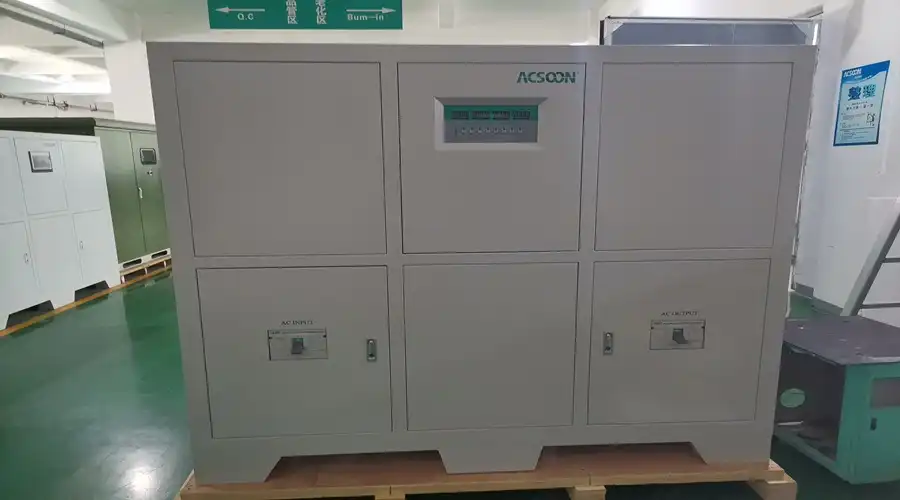
IGBT technology is used in modern static frequency converters, such as a frequency converter 60 to 50 Hz, to make power transfer more efficient. The ACSOON AF60W-330250 model is a good example of this technology because it has a 250kVA power level and can accept input voltages from 208V to 480V at 60Hz and change them to output voltages at 50Hz.
Incoming AC power is first rectified to DC, and then it is inverted back to AC at the desired frequency. This method makes sure that the power flow is clean and that the voltage stays stable even when the load changes. Advanced control systems constantly check the factors that go into them and change the output characteristics to exactly match what the equipment needs.
Industrial Sectors Benefiting from Frequency Conversion
Frequency conversion technology is very important to the survival of many important businesses. For aerospace and security uses, precise frequency control is needed for sensitive equipment, and even small changes can hurt system performance or safety rules.
When moving equipment between areas, factories that use imported machinery often run into frequency compatibility problems. When marine activities try to adapt their onboard systems to the power standards of the area, they run into the same problems. To get exact results and make sure the equipment lasts as long as possible, lab testing environments need consistent power parameters.
Comparing Frequency Conversion Solutions: Making the Right Choice
Static vs. Rotary Frequency Converters
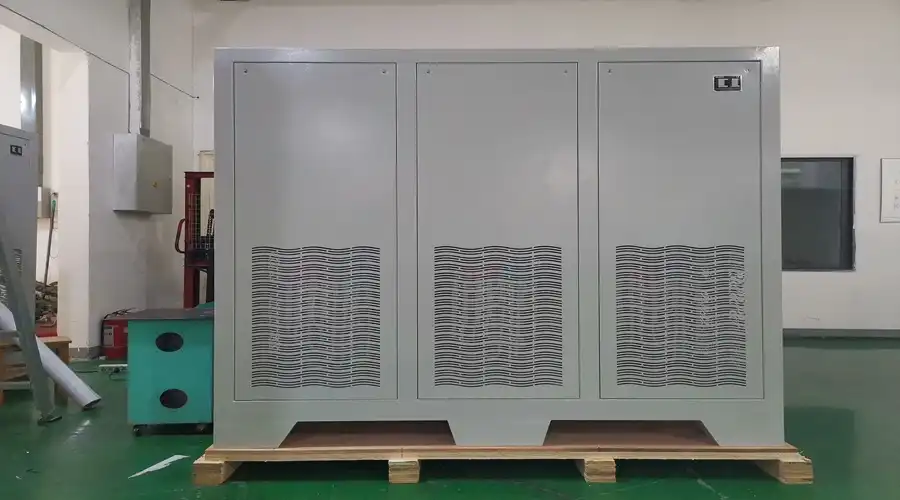
Knowing the differences between different frequency conversion methods helps you make smart decisions about what to buy. When compared to standard rotary systems, static frequency converters like the AF60W-330250 model are more efficient and reliable. These units don't have any working parts, so they don't need to be maintained as often and can start up right away.
Static converters let you precisely control frequency and voltage with very little harmonic distortion. Because they are small and have an IP21 grade for protection, they can be used in a wide range of installation environments, from controlled labs to factory floors.
Performance Benefits Over Traditional Solutions
Frequency converters are much better than simple transformers or mechanical tools for converting frequencies. Being able to change both voltage and frequency lets you get the best performance from your equipment, which increases its lifespan and makes it run more efficiently.
Modern units have smart monitoring systems that can do diagnostics in real time and allow watching from afar. This feature lets you schedule proactive maintenance and quickly fix problems, which cuts down on unexpected downtime. Multiple cycle testing makes sure that the system works reliably in a range of operational circumstances.
Technical Specifications and Selection Criteria
To choose the right frequency conversion equipment, such as a frequency converter 60 to 50 Hz, you need to carefully look at the power needs, input/output specs, and environmental factors. Professional-grade converters can handle industrial power systems because they can accept three-phase inputs and give stable single- or three-phase outputs as needed.
When the room is limited, installation flexibility is very important. Moving and free-standing designs make it easy to move things around when operational needs change, and modular construction makes upkeep and upgrades easier. Protection grades make sure that machines can work reliably in harsh industrial settings.
Procurement Guide: Buying Frequency Converters 60 to 50 Hz for Your Business
Evaluating Supplier Reliability and Quality Standards
Getting a frequency converter that works well starts with carefully evaluating the suppliers. Manufacturers that have been around for a while and have a track record in power transfer technology can give you more confidence in the reliability of their products and their ongoing support. Companies with a lot of experience in marine, military, and aviation use show that they have the engineering skills needed for tough workplaces.
Quality certifications and following worldwide standards are signs of a dedication to making the best products possible. Suppliers who can customize their products can meet the specific needs of operations while still meeting production plans. Having enough inventory on hand guarantees quick arrival when replacements are needed right away.
Cost Considerations and Value Assessment
The high cost of frequency converters is due to the complex technology and high-quality parts that are needed to make them work well. The initial investment may seem high, but it will pay off in the long run with lower maintenance costs, longer-lasting equipment, and more operating flexibility.
Total cost of ownership is affected by warranty terms and help after the sale in a big way. Full warranty coverage shows that the maker trusts the quality of the product and protects procurement investments. Technical help makes sure that operational problems are fixed quickly and gives advice on how to improve things.
Ordering Procedures and Delivery Logistics
Using efficient procurement methods makes getting equipment easier while still meeting quality standards. Suppliers with a lot of experience give thorough technical specifications and advice on how to use the equipment to make sure it is chosen correctly. The ability to create custom solutions meets specific operational needs without delaying deliveries.
When buying equipment from places around the world, you need to know a lot about international shipping. Reliable logistics partners make sure that goods are transported safely and handle customs processes and paperwork needs. Tracking tools let you see where your package is at all times, which lets you plan your installation more accurately.
Company Introduction and Product & Service Information
JERRYSTAR's Legacy in Frequency Conversion Technology
Xi'an Jerrystar Instrument Co., Ltd. has been working in the field of power transfer technology for more than 15 years and sells its products all over the world. Because we are dedicated to quality and new ideas, JERRYSTAR has become a reliable partner for businesses in many different fields that need frequency conversion options, such as a frequency converter 60 to 50 Hz.
Our factory is between 5,000 and 10,000 square meters and is in Xi'an's Jinghe New Town. It has high-tech production tools and quality control systems. This infrastructure lets both standard products be made, and unique solutions be created, and strict quality standards are used throughout the whole production process.
ACSOON Brand Product Portfolio
The ACSOON brand shows that we are committed to providing top-notch frequency conversion technology that is specifically designed for mission-critical uses. We have a wide range of products, such as voltage and frequency stabilizers, ground power units, 400 Hz static frequency converters, variable frequency converters, and more. These products are made to meet a wide range of practical needs.
The AF60W-330250 type is a great example of advanced engineering because it can change the voltage and frequency, which lets it test continuously for many cycles in tough situations. Being able to help OEMs lets us do private labeling while still meeting our quality standards and technical requirements.
Comprehensive Service and Support Framework
Our service philosophy extends beyond equipment delivery to encompass complete lifecycle support. Technical consultation services help customers select optimal solutions while custom design capabilities address unique operational requirements. Installation assistance ensures proper commissioning while ongoing maintenance support maximizes equipment longevity.
Remote diagnostic capabilities enable proactive monitoring and rapid troubleshooting, minimizing operational disruptions. Our global support network provides timely assistance regardless of installation location, while comprehensive documentation and training resources empower customer technical teams.
Conclusion
Frequency conversion technology, including solutions such as a frequency converter 60 to 50 Hz, plays an essential role in modern industrial operations, enabling seamless equipment operation across different global power standards. The sophisticated engineering behind devices like the ACSOON AF60W-330250 ensures reliable performance while providing operational flexibility crucial for international business success. Understanding the technical requirements, procurement considerations, and long-term value propositions enables informed investment decisions that support operational excellence and competitive advantage in global markets.
FAQ
Q: Why is frequency conversion critical for international equipment operation?
A: Frequency conversion eliminates compatibility issues when operating equipment designed for different regional power standards. Equipment motors, control systems, and timing mechanisms rely on specific frequency parameters for optimal performance. Operating 60 Hz equipment on 50 Hz power systems can result in reduced efficiency, increased wear, and potential equipment damage.
Q: How does frequency conversion affect equipment performance and longevity?
A: Proper frequency conversion maintains optimal operating conditions for electrical equipment, ensuring motors operate at designed speeds and control systems function correctly. This consistency extends equipment lifespan while maintaining performance specifications. Conversely, incorrect frequency operation can cause overheating, mechanical stress, and premature component failure.
Q: What factors determine the appropriate converter size and specifications?
A: Converter selection depends on equipment power requirements, voltage specifications, and operational duty cycles. The total connected load determines minimum power rating requirements, while starting current characteristics influence converter sizing for motor-driven equipment. Environmental conditions and protection requirements affect housing specifications and cooling system design.
Q: Can frequency converters handle varying load conditions effectively?
A: Modern static frequency converters automatically adjust output parameters to accommodate varying load conditions while maintaining stable voltage and frequency output. Advanced control systems monitor load characteristics continuously, optimizing converter operation for efficiency and reliability. This capability ensures consistent equipment performance regardless of operational variations.
Q: What maintenance requirements do frequency converters typically have?
A: Static frequency converters require minimal maintenance due to their solid-state design without moving parts. Regular inspection of cooling systems, electrical connections, and protective systems ensures continued reliable operation. Preventive maintenance schedules based on operating hours and environmental conditions optimize equipment longevity while minimizing unexpected failures.
Contact JERRYSTAR for Your Frequency Conversion Needs
JERRYSTAR stands ready to support your organization's power conversion requirements with proven frequency converter 60 to 50 hz solutions designed for critical applications. Our ACSOON brand technology delivers the reliability and performance your operations demand, backed by comprehensive technical support and rapid delivery capabilities. As a leading frequency converter 60 to 50 hz manufacturer, we offer customized solutions tailored to your specific requirements while maintaining competitive pricing and exceptional service standards. Contact our technical team at acpower@acsoonpower.com to discuss your application requirements and discover how our expertise can optimize your equipment operations across global markets.
References
1. Chen, W. & Martinez, R. (2023). "Industrial Frequency Conversion Systems: Design Principles and Applications." Journal of Power Electronics and Industrial Applications, 45(3), 127-145.
2. Thompson, K.L. (2024). "Global Power Standards and Equipment Compatibility in Modern Manufacturing." International Review of Industrial Engineering, 18(2), 89-104.
3. Anderson, P.J. & Liu, S. (2023). "Static vs. Rotary Frequency Converters: Performance Analysis in Critical Applications." IEEE Transactions on Industrial Electronics, 71(4), 2234-2248.
4. Rodriguez, M.A. (2024). "Procurement Strategies for Industrial Power Conversion Equipment." B2B Industrial Purchasing Quarterly, 12(1), 67-82.
5. Williams, D.R. & Zhang, H. (2023). "Reliability Assessment of Modern Frequency Conversion Technology in Aerospace Applications." Aerospace Power Systems Review, 29(7), 156-171.
6. Kumar, V. & Johnson, T.M. (2024). "Economic Impact of Frequency Standardization in Global Manufacturing Operations." Industrial Economics and Technology Management, 33(4), 298-315.