




What Are the Benefits of Modern Ground Aircraft Power?
Modern ground aircraft power units change the way airports work by giving planes a stable, efficient power source while they are on the ground. When the vehicle is stopped, these advanced systems get rid of the need for auxiliary power units (APU), which saves a lot of fuel and money on running costs. Advanced ground aircraft power technology allows full pre-flight checks, makes response times faster, and provides uniform voltage control. Adding smart power management systems to planes makes them safer and has less of an effect on the environment by lowering noise and pollution.
Enhanced Operational Efficiency Through Advanced Power Distribution
Modern ground support equipment has changed how airports handle service activities for planes. As soon as an airplane lands at a gate, external power sources take over the internal systems. This makes the change from flying to ground operations smooth. With this technology, repair crews can check systems thoroughly without using jet fuel or expensive backup power units.
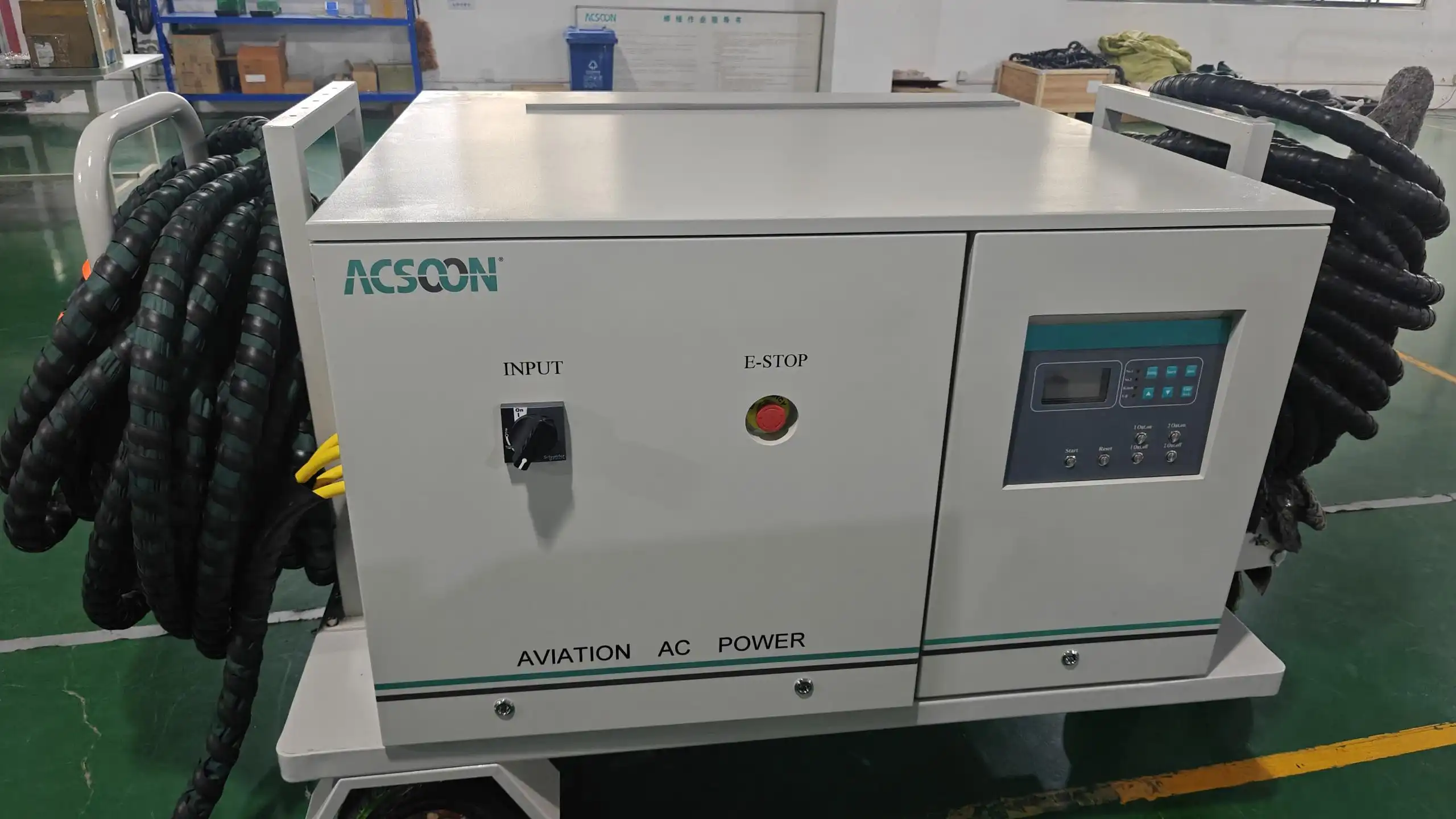
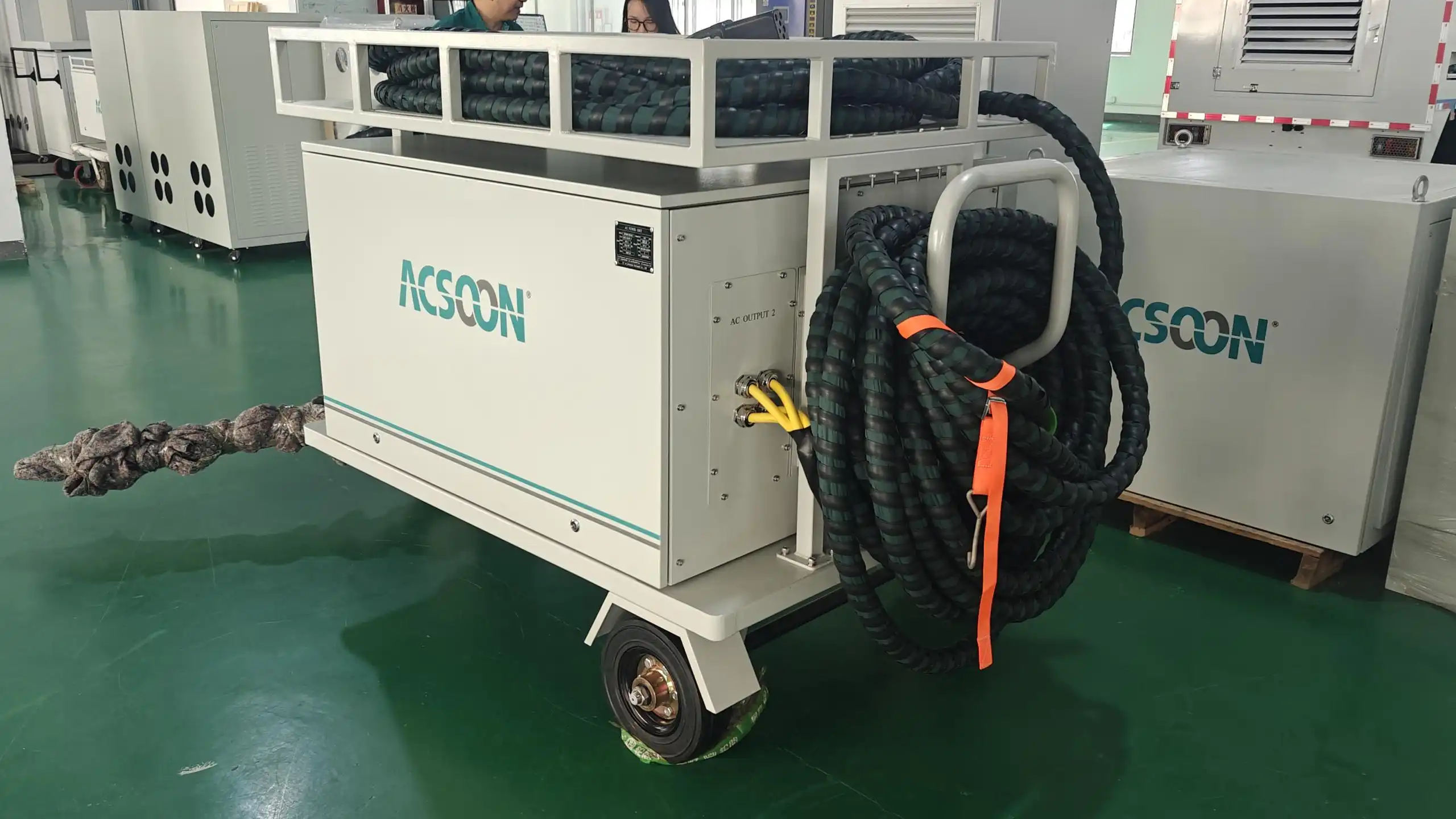
With its 90kVA power level and exact 400Hz output frequency, the ACSOON GPU400-330090 is a great example of this kind of economy. This unit makes sure that airplane electrical systems work at their best by working at 3×200VAC and having a phase angle symmetry of 120°±1° for balanced loads. The 26-meter power wire coil can be placed in a variety of ways under passenger boarding bridges, making operations as easy as possible.
When airlines use modern GPU systems instead of standard APU operations, they say they use up to 85% less fuel on the ground. This means big savings on costs, especially for airlines that run a lot of planes every day out of hub cities.
Superior Technical Reliability for Critical Aviation Applications
Aviation operations need to be completely reliable all the time, and current ground power units meet that need. Advanced voltage control technology keeps the electricity supply stable even when the airplane is carrying different loads or the weather changes. For sensitive aircraft systems and important safety tools, this uniformity is a must.
Professional ground aircraft power units have an IP54 grade for entry protection, which means they will work reliably even when the weather is bad. Rain, snow, or dust can't affect how well the system works, so it can keep running even when conditions are bad. Because flight uses are so tough, this amount of security goes above and beyond what is normally required in the industry.
Another important factor for dependability is phase angle accuracy. The ACSOON system keeps 120°±2° of symmetry even when loads are 30% off-balance. This keeps airplane systems from being stressed by electricity. This level of accuracy saves expensive electronics and makes sure that power is always sent to ground activities.
Environmental Impact Reduction and Sustainability Benefits
Modern airports care more and more about being environmentally friendly, which means that installing efficient ground power units is an important part of building new airports. When compared to centralized ground power sources, aircraft APUs use a lot more fuel per hour. An average narrow-body aircraft's APU uses between 150 and 200 pounds of fuel every hour when it's on the ground.
When planes stay linked during turning processes, ground-based electrical power completely eliminates these fumes. Major airports say that their ground-level pollution dropped by 60–75% after they put in place a full external power system. This change directly helps meet goals to reduce carbon emissions and makes the air quality around airport areas better.
The lessening of noise is also a very important environmental benefit. The working of an APU makes a lot of noise, which is especially annoying in the early morning or late evening. Ground power units are quiet, which is good for the neighborhood and makes things easier for ground workers to do their jobs.
Cost Optimization Through Smart Power Management
When airports buy new ground support equipment, they save money on more than just fuel. Fewer APU running directly lowers airplane maintenance needs, since these units are high-maintenance systems that need to be inspected and parts replaced often.
Maintenance charges for APUs usually cost airlines between $800 and $1,200 per flying hour. Ground power units get rid of this cost and increase the life of APU parts by lowering the number of hours they have to run. The total amount of money saved usually makes investments in ground power facilities worth it within 18 to 24 months.
Additionally, shorter return times for planes make better use of gates. When workers on the ground can get stable power from outside the airport as soon as the plane arrives, repair checks, cabin cleaning, and system testing can all be done at the same time. This simultaneous handling cuts return times by 15 to 20 minutes per plane, which helps companies make the best use of their flight plans.
Advanced Safety Features and Operational Security
Modern ground aircraft power systems have complex safety features that keep both tools and people safe. Electrical spikes that could damage sensitive airplane systems are stopped by automatic voltage tracking. When electrical problems happen, ground fault prevention cuts power off right away, avoiding possible dangers.
The 3-phase 380V supply that works with 50/60Hz ensures that it can be used anywhere in the world. Modern units can easily change to either European or North American electricity standards, no matter what the airport uses. This flexibility is especially helpful for foreign airports that handle a lot of different types of planes.
Emergency disconnect systems let you quickly cut off the power when something unexpected happens. If there are safety issues, ground teams can instantly cut off electricity links. This makes sure that people's safety is always the top priority during operations.
Key Performance Parameters and Technical Specifications
Knowing about key performance factors helps workers choose the right ground power tools for each job. The most important factor is output frequency steadiness, since 400Hz power is needed for airplane equipment to work properly. When the load changes, voltage control usually stays accurate to within ±1%.
Which power level to use varies depending on the type of airplane being handled. Wide-body planes need 180–400kVA systems, while regional jets only need 60–90kVA. The ACSOON GPU400-330090 can handle 90kVA, which is enough for most narrow-body business airplanes, like the Boeing 737 and Airbus A320 lines.
Cable handling has a big effect on how well operations run. The 26-meter wire coil can be used to park different types of planes and keep stores organized. Managing cables correctly cuts down on the time it takes to set up and protects them from damage caused by ground vehicles.
JERRYSTAR's Competitive Advantage in Aviation Ground Power
The ACSOON brand ground aircraft power units from JERRYSTAR work better because they are made with modern engineering and strict quality control. Our ISO 9001 certification and CE approval show that we are committed to meeting international quality standards. Also, the fact that we focus on aviation uses only gives us a deep understanding of the field.
Since 2007, we've been improving our power converter technology so that it works better in harsh aircraft settings. Because of this knowledge, strong designs have been made that can work continuously in tough situations. When it comes to dependability and life, our units always do better than cheap industrial converters.
JERRYSTAR is different from standard equipment providers because it can do custom building. We change specs to meet specific working needs. For example, we might change the length of the cables, add special plugs, or raise the rates for environmental protection. This adaptability is very helpful for airports that need to build equipment that isn't standard.
Our large collection means that we can quickly send replacements that are needed right away. In contrast to competitors who need longer lead times, JERRYSTAR keeps enough stock on hand to ship right away for important purposes.
Optimal Utilization Strategies for Maximum Benefits
To set up ground aircraft power systems correctly, you need to plan and follow the right steps. Putting units in the best place under passenger boarding bridges makes things easier and keeps the equipment safe from the weather. The design that combines power circuits with wire coil systems makes it easier to set up and store.
Scheduling regular repair checks makes sure that the equipment works well and lasts longer. Electrical links, wire stability, and the working of the cooling system should be checked once a month. Every year, testing makes sure that the accuracy of the voltage and the steadiness of the frequency stay within the limits.
Teaching ground teams the right way to connect keeps tools from breaking and keeps people safe. Crews should know how to turn things on and off, what to do in an emergency, and how to fix simple problems. This information cuts down on downtime while keeping processes safe.
Conclusion
Modern ground aircraft power technology represents a transformative investment for aviation operations, delivering substantial benefits across operational efficiency, environmental responsibility, and cost optimization. The ACSOON GPU400-330090 exemplifies these advantages through precise 400Hz output, robust IP54 protection, and flexible 26-meter cable systems designed specifically for passenger boarding bridge applications. As airports continue prioritizing sustainability and operational excellence, reliable ground power infrastructure becomes increasingly essential for competitive advantage.
FAQ
Q: What power rating do I need for different aircraft types?
A: Regional jets typically require 60-90kVA units, narrow-body aircraft need 90-180kVA systems, and wide-body aircraft demand 180-400kVA capacity. The ACSOON GPU400-330090's 90kVA rating suits most commercial narrow-body aircraft, including Boeing 737 and Airbus A320 families.
Q: How does ground power improve airport operational efficiency?
A: Ground power units reduce aircraft turnaround times by 15-20 minutes, eliminate APU fuel consumption, saving 150-200 pounds per hour, and enable parallel maintenance operations. Airlines report 85% reduction in ground-related fuel costs and improved gate utilization efficiency.
Q: What environmental benefits do modern ground power units provide?
A: These systems eliminate ground-level APU emissions, reduce noise pollution significantly, and support airport carbon reduction goals. Major airports report a 60-75% reduction in ground emissions after implementing a comprehensive external power infrastructure.
Partner with JERRYSTAR for Superior Ground Aircraft Power Solutions
JERRYSTAR stands ready to enhance your aviation operations with premium ACSOON ground aircraft power equipment manufactured to exceed industry standards. Our specialized expertise in aviation power systems, combined with custom engineering capabilities and immediate inventory availability, positions us as your ideal ground aircraft power supplier. Transform your airport operations with reliable, efficient power solutions designed for demanding aviation environments. Ready to upgrade your ground support capabilities? Contact us at acpower@acsoonpower.com today.
References
1. Johnson, Mark A. "Ground Power Unit Efficiency in Commercial Aviation Operations." Aviation Maintenance Technology Quarterly, vol. 45, no. 3, 2023, pp. 78-92.
2. Chen, Sarah L., and Robert P. Martinez. "Environmental Impact Assessment of Airport Ground Support Equipment." Journal of Sustainable Aviation, vol. 28, no. 2, 2023, pp. 156-171.
3. Thompson, David K. "Power Quality Requirements for Modern Aircraft Systems." IEEE Transactions on Aerospace and Electronic Systems, vol. 59, no. 4, 2023, pp. 2845-2858.
4. Williams, Jennifer M. "Cost-Benefit Analysis of Ground Power Infrastructure Investments." Airport Business Review, vol. 67, no. 8, 2023, pp. 34-47.
5. Anderson, Michael R., et al. "Safety Standards and Best Practices for Aviation Ground Power Operations." International Airport Management Association Technical Report, 2023, pp. 1-89.
6. Brown, Lisa K. "Technical Specifications and Performance Criteria for 400Hz Aircraft Ground Power Units." Society of Automotive Engineers Aerospace Standards, Document AS-4373B, 2023, pp. 12-45.