




How Does a 120V DC to AC Inverter Improve Power Quality?
A 120V DC to AC inverter makes the power quality better by changing the dirty direct current into clean, stable alternating current that can be controlled very precisely. These devices get rid of voltage fluctuations, lower harmonic distortion, and keep the frequency output stable. This makes sure that sensitive equipment gets the clean power it needs. These days, inverters protect important systems from electrical noise, short-term surges, and grid problems using advanced filtering technology and galvanic separation. This leads to longer-lasting equipment, fewer operating problems, and higher productivity in places like marine navigation systems, industrial automation facilities, and labs where power stability can't be compromised.

Introduction
Power quality is still one of the most important issues for procurement managers and experts who are in charge of mission-critical activities. A stable electricity supply is very important in places where broken equipment can cost a lot of money or put people in danger, like on factory floors or in naval guidance systems. Even though we know that most industry gear runs on alternating current, we also know that direct current is used for many other things, like batteries, solar panels, and ship systems. This article talks about how 120V DC to AC inverter technology solves basic problems with power quality. Our talk is aimed at government procurement experts, aerospace engineers, military equipment managers, and industry OEMs, and it is mainly about real-world solutions that make things better. Clean, stable power means less money spent on repairs, longer life for equipment, and operating dependability that meets strict military and aircraft standards. Changing 120 volts direct current (DC) into useful alternating current (AC) is a complex technical process that goes far beyond changing the voltage. How well this conversion process works decides whether sensitive technology works perfectly or breaks down too soon. When buyers understand these technical issues, they can make smart purchasing choices that are in line with their long-term business goals and their budgets.
Understanding the Working Principle of 120V DC to AC Inverters
When direct current enters the 120V DC to AC inverter circuit through carefully built input connections, power conversion starts. Internal switching parts, usually insulated-gate bipolar transistors (IGBTs) or MOSFETs, quickly turn on and off based on precise timing set by circuits based on microprocessors. This switching action makes an output that looks like an alternating pattern because it is stepped. The raw signal is then improved using advanced modulation methods to make the smooth sinusoidal output that sensitive equipment needs.
Core Conversion Process
Power conversion starts with the switching of direct current into a stepped waveform. Through high-frequency pulse width modulation, the internal circuitry creates a signal that mimics the characteristics of utility power. This process is highly dependent on the precision of the microprocessor control to ensure that the timing of the MOSFET or IGBT switching remains constant even under varying load conditions.
Waveform Quality and Equipment Compatibility
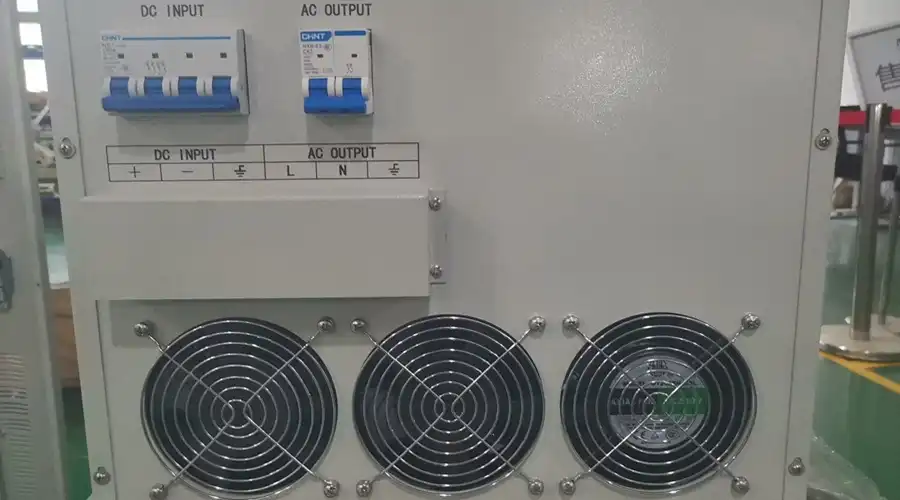
When talking about power quality, it's important to stress the difference between pure sine wave output and changed sine wave output. Pure sine wave inverters copy the smooth, continuous pattern that comes from utility lines. This means that they can work with almost all AC equipment, such as sensitive instruments, variable speed drives, and accurate measuring tools. Modified sine wave inverters make a stepped approximation that works fine for resistive loads like heaters, but can go wrong with inductive loads like motors and electronics with transformers. Our ACSOON ANDW120-330020 type is an example of pure sine wave technology. It provides low harmonic distortion, which keeps sensitive equipment safe. This 20kVA unit takes 120VDC as an input and gives out a voltage that can be changed from 0V to 520V with speeds between 50Hz and 60Hz. This kind of adaptability is very helpful in test labs where engineers need to change the voltage and frequency to mimic different working conditions.
Critical Components Ensuring Stability
Several important parts work together to keep the quality of the result high. Galvanic separation between the input and output circuits is provided by high-frequency transformers. This stops ground loops and the transfer of electrical noise. This keeps the DC source and any AC equipment that is attached from getting input that could be harmful. Output filters, which are usually made up of inductors and capacitors, get rid of high-frequency switching artifacts and turn the shifted signal into a clean sinusoid. Voltage control circuits keep an eye on the output parameters all the time and change the switching patterns to account for changes in the input voltage or the load. This active control makes sure that the output voltage stays stable within very small ranges, even if the battery voltage changes or the load needs change quickly. Good inverters have surge capacity that lets them handle short periods of overloading when the motor is starting up or when capacitive inrush happens, without affecting the steadiness of the output or setting off safety shutdowns.
Common Issues Affecting Power Quality and How 120V DC to AC Inverters Address Them
One of the worst problems with power quality for industrial tools is energy that isn't stable. Voltage drops can make motors draw too much power while trying to keep the same speed, which can cause them to overheat and break down early. When there are voltage spikes, electronic parts are put under more stress than they were designed to handle. This wears down insulation and semiconductor joints over time. Good 120V DC to AC inverter models have closed-loop voltage control that keeps the output voltage within ±1% to 2% of the standard voltage even when the input voltage or load changes a lot.
Voltage Fluctuations and Regulation
This control is done by the ANDW120-330020's advanced feedback control. The control processor gets real-time data from the output voltage monitors. It then quickly changes the pulse width modulation to fix any errors. This reaction happens in microseconds, so related devices can't see it. However, it is very important for protecting sensitive electronics.
Harmonic Distortion Mitigation
Harmonic distortion happens when patterns that aren't sinusoidal have frequency components that are integer multiples of the basic frequency. These harmonics cause a lot of problems, like making transformers and motors heat up faster, overloading the neutral wire in three-phase systems, and messing up sensitive electronic gear. This problem can be measured by total harmonic distortion (THD), and lower amounts of THD mean better power.At full load, industrial-grade pure sine wave inverters have THD values below 3%, which is about the same as the quality of the power grid. This is done by the ACSOON unit using multi-stage filters and switching methods that have been improved. EMC compatibility features further lower electromagnetic interference that could mess up nearby communication systems or precision instruments. This is a very important thing to think about in test labs and when installing marine navigation bridges.
Frequency Stability for Sensitive Applications
Changes in frequency have a different effect on electronics than changes in power. Motors' speeds change, which throws off the time of the process. Synchronous equipment can lose its lock or start working in strange ways. When digital devices use AC frequency as a timing guide, things can go wrong. Quality inverters keep the frequency stable within ±0.1 Hz by using crystal-controlled time standards that don't change when the temperature does or when parts get old.
Protective Features Enhancing Reliability
There are many ways to protect against faults that lower the quality of the power. Overload safety constantly checks the output current and lowers the output voltage in proportion to mild overloads, while leaving a short surge capacity for starting the motor. Heavy overloads cause a rapid shutdown before any damage happens. Within microseconds, short circuit safety can find faults and cut off the output to protect both the inverter and the wires. Thermal tracking stops damage from happening when there isn't enough cooling or when the temperature is too high. Temperature sensors spread out in the power assembly set off a series of responses: when temperatures rise slightly, the fan speed speeds up; when temperatures rise even more, power is limited; and finally, if thermal limits are reached, the whole system shuts down. These multiple layers of safety make sure that the device works reliably in all IP21-rated environments.
Comparing Different Types of 120V DC to AC Inverters to Optimize Power Quality
The original investment and long-term operating costs are both affected by the choice of pulse technology in a 120V DC to AC inverter. Because they need more complex switching methods and filtering, pure sine wave inverters are more expensive to make. But this investment pays off because it makes all kinds of equipment work together, cuts down on heat loss, and gets rid of noise from generators and motors. Pure sine wave power works best with equipment that was made to work with the electric grid without any changes or de-rating.
Pure Sine Wave Versus Modified Sine Wave Technology
Modified sine wave inverters are cheaper to buy at first, but they have some restrictions. Their stepped pattern has a lot of harmonic material that makes motors work less efficiently and hotter. Power sources have transformers that make popping sounds. Some computer tools either stop working or stop working after a certain amount of time. We have seen these inverters work well in situations with simple resistive loads, where cost is more important than performance.
Efficiency Considerations and Operating Costs
When it comes to continuous-duty uses, conversion efficiency has a direct effect on running costs. Peak efficiency for good pure sine wave inverters is between 88 and 94%, which means that 6 to 12 percent of the power that goes into them is turned into heat instead of useful output. This efficiency changes depending on the load. It usually peaks between 50 and 80% of its maximum capacity and goes down at very low loads, where control circuits use more power. The ANDW120-330020 stays very efficient even at 20kVA thanks to its advanced switching technology and well-designed magnetic parts. The low noise level is partly due to this efficiency—less lost energy means less cooling needs and quieter fan operation. A small amount of losses is caused by galvanic separation, but it has huge benefits in terms of safety and noise protection.
Reliability Metrics and Total Cost of Ownership
The mean time between failures (MTBF) tells you how reliable something is expected to be. mean time between failures (MTBF) values of more than 100,000 hours under rated settings are reached by industrial-grade inverters made to work continuously in harsh situations. These numbers depend on which parts are used. For example, commercial-grade capacitors have short life spans, while industrial-rated parts have much longer service times. Thermal management is also very important—conservative power efficiency and enough cooling make parts last a lot longer. When buyers figure out the total cost of ownership, they should look at the initial purchase price along with the expected service life, upkeep needs, and efficiency losses. In most commercial settings, an inverter that costs 30% more but lasts twice as long and works 5% more efficiently is a better deal. When buying things for the military or space, where dependability and long-term supportability are more important than original cost, these figures become especially useful.
Installation Best Practices and Maintenance Tips to Ensure Sustained Power Quality
Finding the right-sized 120V DC to AC inverter starts with figuring out how much load there is. Make a list of all the nameplate values of the related devices, keeping in mind that motor loads need surge capacity three to six times their running current when they are starting up. When power factor adjustment is used on electronic loads, the inrush currents may be higher than their steady-state draws. Conservative size guidelines say to choose an inverter capacity that is 25–30% higher than the predicted peak demand to allow for future growth.
Proper Sizing and Application Matching
Decisions about size are affected by environmental factors. The temperature around an inverter affects both its power and its life. Most units give off their full maximum power at 25°C, but they need to be derated when the temperature rises. The ANDW120-330020 has an IP21 rating for ingress protection, which means it can work in controlled indoor settings like those found in industrial automation facilities. It can keep out solid items larger than 12 mm in diameter and drips of water.
Wiring Standards and Connection Procedures
The best power quality and safety are both guaranteed by proper connections. DC input lines must use wires of the right size to keep the voltage drop to a minimum. This is especially important at 120VDC, where currents are high. The goal for voltage drop estimates should be less than 2% when the load is full. To stop resistive heating at the ends, connections must be physically tight and properly torqued. Pay close attention to the polarity marks because DC connections that are in the wrong order can damage the input circuits. When connecting an AC output, standard electrical codes are used that are right for the voltage and current levels. Because the ANDW120-330020 can change its output voltage between 0V and 520V, it is important to pay attention to its insulation values and gaps. When using systems with galvanic isolation, you need to be extra careful with grounding practices because the isolated output needs a reference ground that is right for the related equipment while keeping the isolation barrier intact.
Monitoring and Preventive Maintenance
Setting standard performance factors during commissioning gives you a way to keep an eye on things. A performance profile is made by keeping track of the input voltage, output voltage, output current, and working temperature at different loads. By measuring these baselines regularly, you can see how they're slowly breaking down before they fail. Thermal imaging finds hotspots that could mean that links are loose or parts are breaking. Regular repair keeps the power quality stable and extends the life of the equipment.
Procurement Insights: Choosing the Right 120V DC to AC Inverter for Your Business Needs
Specification sheets for a 120V DC to AC inverter are important for making choices, but they need to be carefully interpreted. The continuous power ratings show how much power can be used continuously, while the spike ratings show how much power can be used temporarily. Make sure that the inverter's surge capacity and length are right for the starting needs of your application. Instead of just listing a single high number, efficiency specs should include curves that show how well the system works across the whole load range.
Evaluating Technical Specifications
Specifications for waveform quality, especially THD rates at different loads, have a direct effect on how well equipment works together and how much it costs to run. The input voltage range tells you if it works with your DC source. When batteries are fully charged and when they are fully drained, the voltage changes a lot. This swing must be able to fit into the inverter's input range without lowering its output power. Temperature derating graphs show how capacity drops as outdoor temperatures rise.
Brand Reputation and Manufacturing Quality
Choosing a vendor has effects that last longer than the original buy price. Our ACSOON brand shows that Xi'an Jerrystar Instrument Co., Ltd. is an expert in power systems for aircraft, the military, and ships. This background makes sure that plans meet strict criteria that can be used in mission-critical situations. Our work in the defense and aircraft industries has taught us design methods and quality control procedures that go above and beyond what is expected in the industrial world. The quality processes and manufacturing skills have a direct effect on how consistent and reliable a product is. Our 5,000–10,000-square-meter factory in Shaanxi Province uses both modern automated manufacturing and a skilled expert staff. We keep enough inventory to meet pressing needs quickly and offer customization services for specific uses because we are both a manufacturer and a trading business.
Customization Capabilities and Technical Support
Standard catalog goods meet most needs well, but solutions that are specifically made for specific uses are often needed. Our engineering team often makes changes to standard designs to meet specific power needs, space limitations, or weather conditions. The ANDW120-330020 has built-in freedom because its output voltage and frequency can be changed. However, some uses may need completely different voltage ranges, special connectors, or built-in control interfaces. The quality of technical help is clear when making specifications, fixing problems during installation, or providing service. Quick responses to expert questions keep project completion from being held up, which costs a lot of money. When putting together complicated systems that use power conversion tools, it's very helpful to have access to application engineers who know the unique needs of your business. These help skills set true solution companies apart from simple equipment sellers.
Warranty Coverage and After-Sales Service
A full warranty protects you financially against early failures and shows that the maker trusts the quality of the product. Carefully read the guarantee terms, making sure you remember how long the coverage lasts, what parts are covered, and how to get help. With some guarantees, you only get the parts covered; you have to pay for the work and shipping. Others offer full coverage, such as field service or advanced repair units that cut down on downtime. Long-term supply of parts guarantees that equipment can be maintained for its entire working life.
Conclusion
In challenging industrial, military, and marine settings, the quality of the power directly affects how reliably it works. Good 120V DC to AC inverter conversion technology changes pure direct current into precisely controlled alternating current that meets the strict needs of all equipment. The ACSOON ANDW120-330020 is a good example of the technical ideas we've been talking about in this guide: its pure sine wave output reduces harmonic distortion, its galvanic isolation stops noise from traveling, and its many safety features make sure it works well in a wide range of situations. Strategic procurement choices balance technical requirements against the total cost of ownership while giving top priority to vendor commitment to long-term service.
FAQ
Can industrial facilities safely integrate DC to AC inverters into existing power distribution systems?
When properly chosen and set up, a 120V DC to AC inverter can safely be used with industrial electrical systems. Galvanic isolation, which is built into high-quality units like the ANDW120-330020, keeps DC sources and AC distribution systems from talking to each other. Standard electrical safety practices are used: using the right overcurrent protection, grounding, and following national electrical rules make sure that the system works safely. The IP21 protection level is good for controlled workplace settings because it keeps you safe from common contact dangers.
How do efficiency ratings impact operational costs and overall power quality?
Higher efficiency lowers running costs by wasting less energy and producing less heat, which puts less stress on parts. An inverter that works at 90% efficiency loses 10% of its raw power as heat, so it needs strong cooling devices. This lost energy adds up over time—a 5% efficiency boost saves a lot of money on energy costs over the life of the equipment. Power quality is also linked to efficiency, since better filtering and control circuits are often built into efficient designs.
Why does waveform type significantly affect sensitive equipment operation?
Pure sine wave power has most of its energy at the basic frequency, while changed sine wave power has a lot of harmonic material. These harmonics make transformers rattle loudly, motors get too hot, and power sources for electronics work less efficiently. When waveforms are distorted, precision tools that were made to work with clean sinusoidal data may not work properly or give wrong results. Good pure sine wave inverters have very little harmonic distortion, which gets rid of all of these connectivity problems.
Partner with JERRYSTAR for Superior 120V DC to AC Inverter Solutions
We know the problems that government agencies, military contractors, and companies that make industrial equipment that needs solid power conversion technology have when they try to buy it. JERRYSTAR is an expert in selling frequency converters and power conversion gear under the ACSOON name. They work with customers in North America in the flight, military, marine, and lab industries. Our skills as a 120V DC to AC inverter maker include both in-depth technical knowledge and quick customer service to make sure that all of your needs are met. Our team helps you through the whole process of specifying and buying things, whether you need standard units like the ANDW120-330020 set up or fully customized solutions designed just for you. We keep enough in stock to send quickly for pressing needs, and we can also customize to meet specific voltage, frequency, or packaging needs. Email our technical sales team at acpower@acsoonpower.com to talk about your application needs and get a thorough proposal that includes volume pricing for buying more than one unit.
References
1. IEEE Standards Association. (2019). "IEEE Recommended Practice for Monitoring Electric Power Quality." IEEE Std 1159-2019, Institute of Electrical and Electronics Engineers, New York.
2. Mohan, N., Undeland, T.M., and Robbins, W.P. (2020). "Power Electronics: Converters, Applications, and Design." Fourth Edition, John Wiley & Sons, Hoboken, New Jersey.
3. Rashid, M.H. (2018). "Power Electronics Handbook: Devices, Circuits, and Applications." Fourth Edition, Butterworth-Heinemann, Oxford.
4. Dugan, R.C., McGranaghan, M.F., Santoso, S., and Beaty, H.W. (2017). "Electrical Power Systems Quality." Third Edition, McGraw-Hill Education, New York.
5. Kazimierczuk, M.K. (2016). "Pulse-Width Modulated DC-DC Power Converters." Second Edition, John Wiley & Sons, Chichester, United Kingdom.
6. Bollen, M.H.J. and Gu, I.Y.H. (2015). "Signal Processing of Power Quality Disturbances." IEEE Press Series on Power Engineering, Wiley-IEEE Press, Piscataway, New Jersey.