




How to Size a Solid State Frequency Converter Correctly?
To get the right size solid state frequency converter, you need to know your exact load needs, operating conditions, and power features. To make sure the converter's power rate is 20–30% higher than your maximum demand, you need to figure out the total linked load and account for inrush currents that happen when the equipment first starts up. Compatibility problems can be avoided by making sure that the input and output voltage specs match the electrical system of your building. The temperature and safety grade needs of the environment also play a role in your choice. Choosing the right size protects the long life and dependability of the equipment.
Understanding the Basics of Solid State Frequency Converters
Core Operating Principles and Technology Differences
Solid state frequency converter technology changes the frequency of AC power without using any moving parts. They do this by using semiconductor technology, usually insulated gate bipolar transistors (IGBTs) or silicon-controlled rectifiers (SCRs). These static systems are more reliable than spinning converters that use motor-generator sets because they have less mechanical wear. The process of conversion includes changing the AC power that comes in through a controlled rectifier step to DC power, filtering it through capacitor banks, and then turning it back to AC at the desired output frequency using pulse-width modulation. This electrical method is much better at controlling frequencies precisely; the output frequency stability is usually better than ±0.1%. Even though rotary systems have been around for a long time, they need a lot of upkeep because of the bearings, brushes, and moving parts. Static converters keep working the same, even when the environment changes, and they respond faster to changes in load. This is very important in lab tests where accurate measurements depend on stable power quality.
Technical Specifications That Define Performance
When looking at frequency conversion tools, a number of features directly affect how well it works for a given task. The kilovolt-ampere (kVA) power number shows the total amount of power that can be used to support linked loads. Voltage compatibility includes both input and output ranges; the equipment has to fit both the characteristics of the facility source and the needs of the downstream load at the same time. Quality units usually have efficiency rates between 90 and 95%, which has a direct effect on running costs and the amount of heat that needs to be removed. Total harmonic distortion (THD) is a way to measure the quality of an output signal. This is very important for sensitive electronics and motor-driven systems. Premium converters get THD below 3%, which keeps linked tasks from overheating and losing efficiency. Protection features like overcurrent, overvoltage, and heat shutdown keep devices working longer and stop damage from happening when something goes wrong. The physical size and ingress protection (IP) ratings show what kind of location the equipment can work in. For example, IP21-rated equipment is good for controlled indoor environments, while better ratings can handle harsher industrial settings.
Application-Specific Requirements Across Industries
During repair and testing, aviation ground support operations need to change the power from 50Hz to 400Hz so that it works with the electrical systems on board the plane. For these uses, high dependability is needed because broken equipment can cause planes to be grounded and plans to get thrown off. Military bases use frequency converters to test electronic defense systems, radar gear, and communication tools that work with different types of power standards around the world. Marine uses include testing facilities on ships and dockside tools that help maintain military ships. Variable frequency features make heating patterns better for different materials and processes, which is helpful for industrial manufacturing, especially high-frequency induction heating systems. In order to test materials, simulate environments, and certify tools, research labs need stable frequency sources that can keep precise control over long test cycles. Different industries put different values on different performance factors. For example, aerospace values dependability and the ability to deploy quickly, while labs value accuracy and consistency.
Common Challenges in Sizing Frequency Converters and Their Causes
Misconceptions That Lead to Incorrect Capacity Selection
Many choices about what to buy are based on calculations that are too simple because they only look at the nameplate scores of related equipment without taking into account how they will actually be used. Starting currents for motors are six to eight times their working currents. This is something that is often forgotten when the motors are first sized. Because of this mistake, a solid state frequency converter may trip during starting processes or parts wear out faster from being overloaded over and over again. Another common misunderstanding is that scaling is linear. When duty cycles and load variation factors are properly studied, doubling load capacity doesn't always mean doubling converter size. Temperature derating is another factor that is often overlooked. The specs for converter capacities usually say that they work at 25°C, but in real life, setups often go above and beyond these temperatures. Working in places that get up to 50°C can cut useful capacity by 10–20%, which means that bigger units are needed than what the initial numbers showed. Sometimes, procurement teams mix up the ability to correct power factors with the real capacity to give power. This results in specifications that don't meet needs during times of high demand.
Technical Pitfalls in Load Analysis
To accurately describe how a load acts, you need to know about both steady-state and changing situations. Induction heating equipment uses a lot of power, and that power changes a lot during heating processes. When engineers figure out capacity, they should use peak demand numbers instead of normal power consumption numbers. This is called undersizing. In the same way, ideas about simultaneous operation are often wrong—not all attached equipment works at the same time, and it's not smart to size for 100% simultaneous load without looking at how things are actually used. Harmonic currents from nonlinear loads like variable speed drives, rectifiers, and switching power sources make it look like more power is needed than what is shown by basic frequency analysis. These waves move through distribution systems, which lowers the amount of capability that can be used for useful work. Not taking harmonic loads into account can lead to converter choices that look good on paper but have problems with heat and break down early while they're being used. When harmonic distortion builds up across different types of equipment, it's especially hard for testing labs with a lot of electrical loads.
Supplier Specification Interpretation Challenges
Different makers show technical specs in different ways, which makes direct comparisons more difficult during purchase evaluations. Some companies rate equipment based on its continuous duty at certain power factors, while others give it peak or intermittent scores that don't accurately reflect its sustained ability. Different specification sheets have different assumptions about ambient temperature, altitude corrections, and duty cycle meanings. This means that similarities need to be carefully normalized before they can be used. When reviewing specifications, it can be hard to tell the difference between active power (kW), visible power (kVA), and reactive power (kVAR). Equipment with a low power factor needs a bigger perceived power capacity even though it only uses a small amount of power in real life. When procurement papers list needs in kilowatts without talking about power factor, suppliers don't know what the real capacity needs are. This means that they come up with proposals with a wide range of capacities and prices, which makes evaluating them more difficult.
Step-by-Step Principles for Correctly Sizing a Solid State Frequency Converter
Comprehensive Load Analysis and Documentation
To choose the right size solid-state frequency converter, start by making a thorough list of all the equipment the converter will provide. Write down the nameplate rates for each piece of equipment, including its voltage, current, frequency, power factor, and starting characteristics. When working with motors, you need to pay extra attention. Write down the horsepower numbers and choose the starting method (direct-on-line, soft starter, or variable frequency drive), as each has a different effect on the inrush current. It's easy to figure out how much power resistive heating elements use based on their stated wattage, but electrical loads need both peak and average consumption numbers. Make an operating profile that lists possible situations for joint operations. Rarely do all linked loads work at the same time, which means that diversity factors can lower the total capacity needs. When several test stations share the same power equipment, a normal lab might get a diversity factor of 0.7 to 0.8. Write down the duty cycles for intermittent loads. For example, welding equipment or pulse testing equipment that only works for short periods of time needs different size methods than equipment that works all the time. This study finds a reasonably high demand level that takes into account how things are actually used, not just the worst-case situations that could happen.
Power Rating Calculations with Appropriate Safety Margins
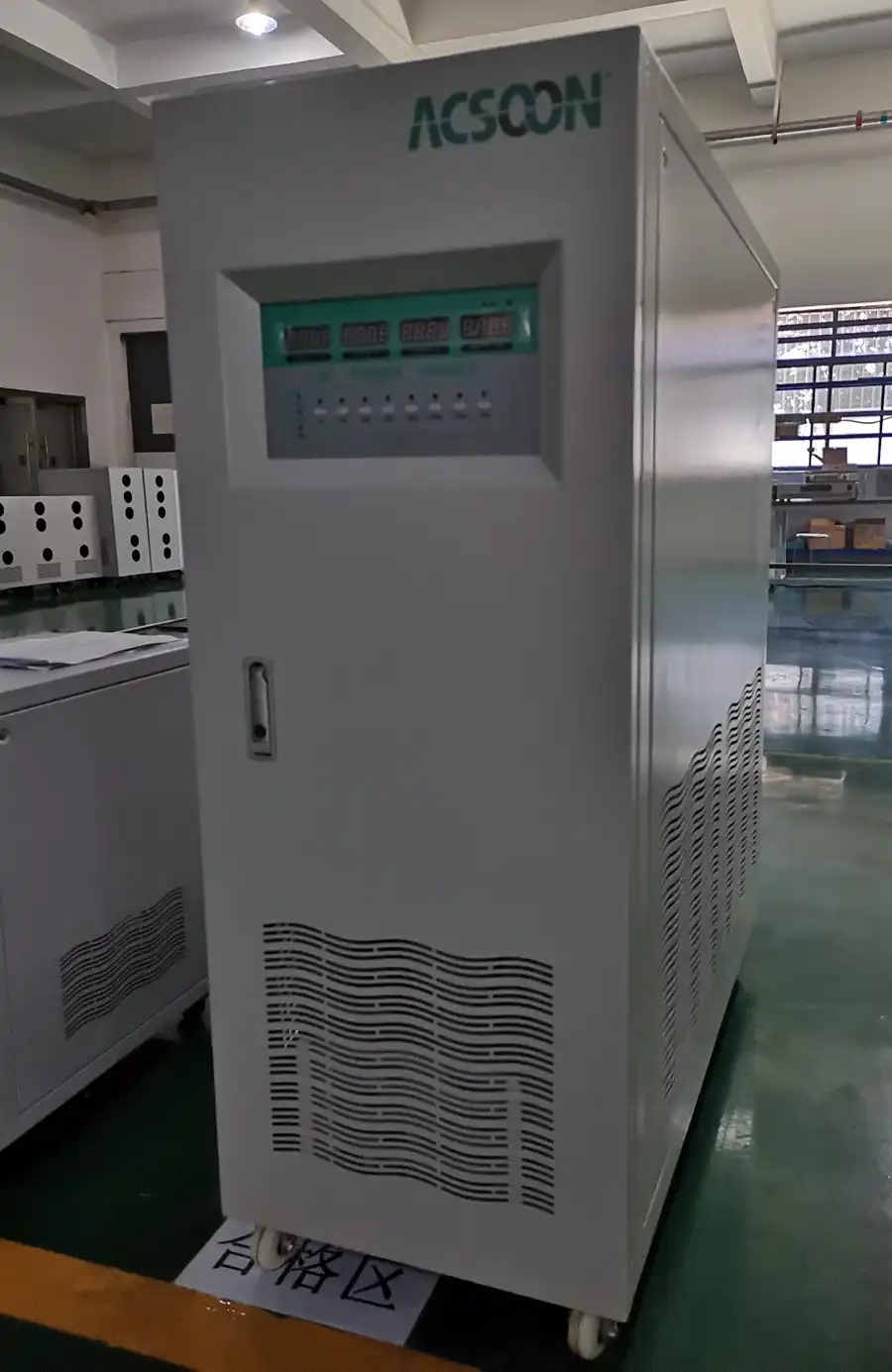
To find the total linked load, add up the scores of all the equipment and then use the diversity factor that you found in your operational analysis. Find out how much current the biggest motor's locked rotor needs to start up, and make sure the converter can handle this sudden demand while keeping the voltage stable for all other loads attached. Power factor needs to be taken into account by converting kilowatt needs to kilovolt-ampere rates using measured or manufacturer-specified power factor values. The visible power capacity needed is found by dividing real power by the power factor. Use safety limits that take into account how important the application is and how it could grow in the future. For general commercial uses, it is common to leave a 20–25% margin above the maximum demand that has been estimated. Critical uses in flight testing or military sites need 30–40% gaps to allow for operational flexibility in case something unexpected happens. The ACSOON AF60W-110009 model, which has a 9kVA rating and can change frequency and voltage, is a good example of the right size for high-frequency induction heating equipment that needs flexible power settings and real-time tracking through its built-in display interface. When figuring out temperature derating, the building surroundings must be taken into account. To find the derating factors given by the maker, multiply the nominal capacity by them. Typical numbers lower the capacity by 2.5% for every degree Celsius above the reference conditions. When placed in temperature-controlled rooms, equipment stays at full capacity, but when used in industrial settings with limited climate control, converters need to be adjusted. When sites are higher than 1000 meters, you might need to make altitude changes because the lower air density makes cooling less effective and requires more capacity derating.
Consulting Manufacturer Specifications and Performance Data
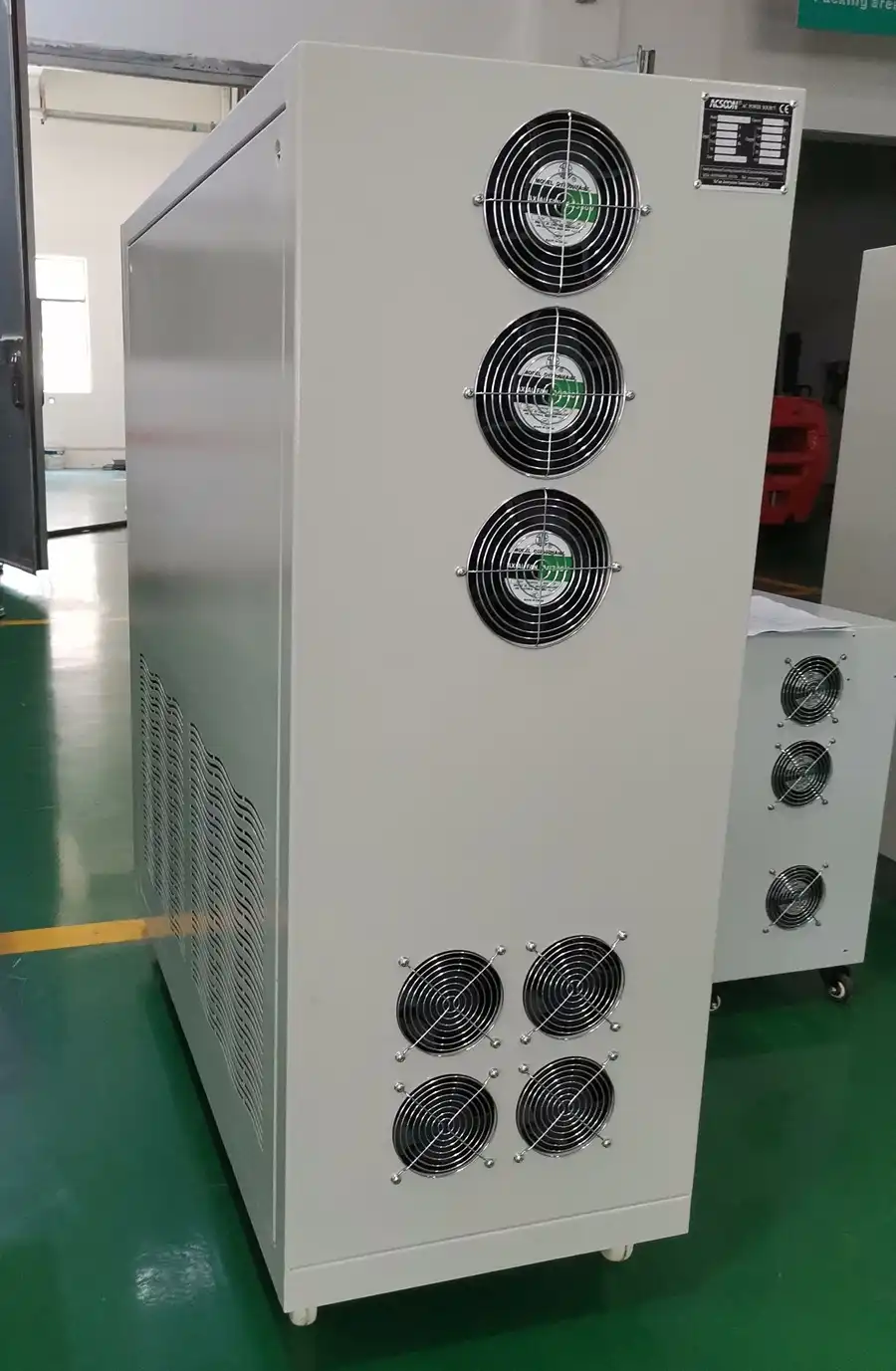
Talk to providers directly and ask them for detailed technical paperwork that goes beyond simple specification sheets. Ask for details on overload capability duration charts that show how long the converter can handle different overload percentages. Good units can usually handle 150% of their rated capacity for 60 seconds, which is enough time for motor starting transients. Find out how well the voltage is regulated across a range of load conditions. Some designs don't do a good job of regulating voltage when the load is low or changes quickly, which can affect the operation of sensitive equipment. Specifications for thermal control show what quality and dependability standards are expected for the design. In difficult situations, converters that use forced air cooling and multiple fans work better than quietly cooled units when it comes to temperature control. Companies like Siemens and ABB put out detailed application guides that connect the surroundings, the load, and the best models to use. The ACSOON brand allows OEM customization, which means that specifications can be changed to fit specific application needs while keeping enough inventory on hand for quick rollout. This is very important for procurement teams working on projects with tight deadlines. Overall system reliability is affected by protection features like output short-circuit capacity, overload trip curves, and fault separation capabilities. When there is a problem, static frequency converters with full protection keep linked loads safe while minimizing downtime through fast fault clearing and automatic restarting. Ask for case studies or setups that have been used in similar situations before. This will show that the performance claims and size methods work in the real world.
Comparing Solid State Frequency Converters with Alternative Solutions During Procurement
Technology Performance Trade-offs and Application Fit
Solid state frequency converter models are better at keeping the frequency stable and need less upkeep than rotary converters, so they are the best choice for high-reliability uses. Cycloconverters can directly change frequencies without using any DC steps in between, but they produce more harmonic distortion and are usually used for high-power uses that go beyond what is needed in industry. Variable frequency drives mostly change the speed of a motor and don't offer solid alternative frequency sources. This makes them less useful for testing and measuring tasks. Rotary converter systems made up of motor-generator sets naturally separate the input and output, making them very good at handling transients and overloads. But their mechanical parts need regular upkeep, like replacing bearings and keeping an eye on vibrations. Facilities that already have maintenance programs for rotating equipment might like this method better. On the other hand, operations that want less upkeep and better uptime should use solid state options. The choice is based on a balance of original capital costs, operational costs, dependability needs, and the level of expert help that is available. Today's static frequency converters have monitoring features that show working factors like voltage, current, frequency, power factor, and temperature in real time. This diagnostic access helps with fixing and planning preventative maintenance in a way that older technologies couldn't. When looking at the total cost of ownership over the life of an item instead of just the initial purchase price, solid state options show strong benefits by needing less upkeep and being available for longer periods of time.
Manufacturer Comparison and Brand Selection Criteria
Well-known brands like ABB, Siemens, and Schneider Electric have a wide range of products and offer world service networks and a lot of expert support resources. Their equipment usually comes with a high price tag, but this is because it has been tested extensively, and new parts are easy to find. These brands are good for large-scale installations, important infrastructure uses, and businesses that value long-term supply ties over cutting costs. New companies like ACSOON are offering appealing options by mixing modern design ideas with reasonable prices and the ability to make changes as needed. In their AF60W-110009 model, they show that they can meet tough application needs with features like a variable frequency output that can work at both 50Hz and 60Hz, a wide input voltage range (3-phase 208-480V), and a portable design with wheels and IP21 protection. When you can support OEM customization, you can meet specific needs that bigger makers' standard stock goods can't meet without long wait times. When making procurement choices, more than just meeting specifications should be taken into account. Check how responsive the maker is during the quote and technical question phases. The quality of communication during pre-sale exchanges is often a good indicator of the quality of post-sale support. Find out if extra parts are available, if the guarantee covers both parts and labor, and if the company can provide field service in the places where your installations are located. Companies with multiple locations benefit when makers keep enough inventory on hand so that new parts can be sent out quickly, and there is less downtime when a part breaks.
Cost Analysis and Procurement Strategy Development
A total cost analysis looks at the price of the equipment, how much it costs to run, how much it costs to place, and how much it costs to maintain over its predicted lifetime. The original cost of static converters is higher than that of rotary converters, but they save money in the long run because they require less upkeep and work more efficiently. To find the yearly energy costs, multiply the estimated losses at normal loading levels by the number of hours the business is open and the power rates in your area. Differences in efficiency of 3–5% between competing goods add up to high costs over the 10–15-year operational lifetimes that are common in industry settings. Strategies for buying in bulk and framing agreements can save you money and make sure that you have the right tools on hand for quick deployments. Negotiating standard specs for multiple projects makes it easier to keep track of spare parts, lowers the need for training, and takes advantage of bulk price savings. But too much standardization can lead to sizes that aren't right for certain uses. When making buying plans, you should weigh the benefits of economies of scale against the benefits of application-specific optimization. Asking for quotes from manufacturers that offer both catalog goods and customization options gives you the freedom to meet a wide range of project needs. Payment terms, shipping dates, and warranty terms all have a big effect on how much money a project makes and how well it manages risk. Longer payment times lower the amount of operating capital that is needed, but financing fees may raise the total cost. For aircraft and defense projects with tight deadlines, the ability to deliver quickly becomes essential. Comprehensive guarantees that cover parts, labor, and consequential losses offer more risk protection than basic warranties that only cover parts, so they are worth the extra cost. When making a final choice, look at the total value instead of just comparing the prices that were given.
Practical Tips and Troubleshooting for Long-Term Optimal Use
Preventive Measures for Sustained Performance
Regularly, parts of the cooling system, like fans, screens, and heat sinks, should be checked for dust buildup that is blocking airflow. Solid state frequency converter units need enough cooling to keep working at their full capacity. If movement is limited, the converters lose power, and parts could get damaged. Set up maintenance times every three months to clean the cooling passages and make sure the fan is running at its full speed. Use built-in sensors or external thermal imaging to keep an eye on working temperatures and spot signs of slow failure before they happen. Electrical connections need to be checked for loose leads on a regular basis, and their torque must be confirmed to avoid resistance, heat, and possible breakdowns. Write down initial readings of input/output voltages, currents, frequencies, and power factors while the system is being set up. Then, do the same readings again at regular maintenance times. Trending these factors shows that performance is slowly changing, which could mean that a component is getting old or starting to break down. Taking care of these problems ahead of time by replacing parts during planned maintenance stops them from breaking down during important activities. The environment around converter sites affects how well they work and how long they last. Keep the air temperature within the range recommended by the maker, make sure there is enough air flow, and think about adding extra cooling in small areas. Keep equipment away from water, corrosive air, and conductive particles that damage wiring and speed up the rusting of parts. The IP21 protection level is good for controlled indoor environments, but the environment needs to be watched to make sure it stays within the design limits for the whole time it's working.
Troubleshooting Common Issues Related to Sizing
Frequent overload trips mean that the equipment is too small or that the way it is used has changed in ways that go beyond what was expected by the designers. Power quality monitors that record demand trends over long periods of time can be used to look at real load profiles. Compare the recorded maximum demand to the converter's stated capacity, taking into account the temperature and any other factors that might affect the capacity. Depending on the results of the measures, you can either lower the number of simultaneous loads by changing the working schedule, upgrade to equipment with a higher capacity, or add parallel converters that spread the load across multiple units. If there is poor voltage control, which shows up as too much voltage drop under load or too much voltage during light loading, it could mean that the converter was not designed properly or that some of its parts are broken. Check that the quality of the input power meets the requirements. Problems with the utility supply, such as voltage sags, harmonics, or uneven phases, can affect the performance of the converter even if it is the right size. Using maker performance charts as a guide, test the output voltage regulation across a range of loading conditions. Big differences don't mean there were basic size mistakes; they mean that parts are broken and need to be fixed or replaced. Thermal shutdowns during regular operation mean that there isn't enough cooling, the environment is too hot, or a part is breaking down. Check that the cooling system works, take a reading of the real temperature and humidity, and make sure that the fitting clearances don't block airflow. If the surroundings and cooling systems look good, thermal shutdowns could mean that parts are getting old or that the thermal management isn't right for the conditions where the system is working. Talk to the manufacturer's technical support team and give them specific working data, such as ambient temperatures, duty cycles, and load factors. This will help them figure out what went wrong and how to fix it.
Maintenance Best Practices and Supplier Support Utilization
Make sure you keep detailed records of all checks, measurements, part replacements, and operating problems that happen with the equipment over its lifetime. This old data lets us look at trends that help us figure out when parts will break and how often they should be serviced. Plan big inspections to happen when the plant is closed or when demand is low so that there are as few interruptions to operations as possible. Keep important spare parts on hand based on what the maker says and failure data from past events that are specific to your working setting and application. Manufacturer expert help is a useful resource that equipment users often don't use enough. Develop ties with area service reps who know your applications and can help you quickly with troubleshooting. A lot of makers let you do diagnostics on a converter from afar by using communication interfaces to get to its working parameters. These services speed up the process of fixing problems by letting factory workers look at real working data instead of just listening to what people on the job have to say. Maintenance workers and operators get training to make sure they know how to use tools correctly and find problems quickly. Users who are used to how things normally work can quickly spot changes that don't make sense and could mean that problems are starting to form. Damage from wrong operating processes can be avoided if operators are trained in the right way to start up and shut down equipment. Comprehensive training cuts down on upkeep costs, extends the life of tools, and makes the whole system more reliable. These benefits far outweigh the costs of the training program.
Conclusion
In conclusion, to correctly size a solid state frequency converter, you need to do a load analysis, understand how it works, and add the right safety limits while taking into account the surroundings and future needs. The methods described here help engineers and procurement workers choose equipment that meets the needs of an application while avoiding common mistakes that hurt performance and dependability. To be successful, you need to have detailed paperwork, work with the maker to get detailed specs, and use procurement strategies that balance the original costs with the total value over the product's life. Making the right size choices during the initial design stages avoids expensive repairs, service interruptions, and equipment breakdowns before they're supposed to. When businesses do thorough sizing analysis, they get better reliability, lower costs for capital, and the ability to adapt to changing needs in fields like aerospace, defense, laboratories, and demanding industry uses.
FAQ
How do I determine the correct kVA rating for my specific application?
Find the total connected load in kilowatts, divide that number by the power factor to get kVA, use the right variety factors based on how many things are being used at the same time, add the motor starting demand, and leave a 20–30% safety cushion. Take into account the temperature derating if the temperature outside is higher than 25°C. This method makes sure that there is enough capacity for both steady-state function and situations that change quickly.
What energy efficiency advantages do solid state frequency converters provide?
Modern static converters are 90–95% efficient, while rotating converters are only 70–85% efficient. This means that they produce less heat and cost less to run. Getting rid of mechanical losses like bearings and windage makes things work better and requires less upkeep. Over the course of 15 years, differences in efficiency lead to big savings that more than make up for higher starting capital costs.
How frequently should I review equipment sizing as operations evolve?
Formal size reviews should be done whenever you add large new loads that are more than 10% of the converter's capacity, when the facility grows, or just about every three years as a general rule. Using power quality analyzers to compare measurements to the original design assumptions once a year to keep an eye on real demand trends. This method finds capacity problems ahead of time, before they affect activities.
Partner with JERRYSTAR for Your Frequency Conversion Requirements
Xi'an Jerrystar Instrument Co., Ltd. is an expert in power conversion options for the military, the marine industry, the aviation industry, and lab tests in North America and Europe. Our ACSOON brand solid state frequency converters give your important apps the dependability and flexibility they need. The AF60W-110009 model is a great example of our dedication to quality. It has a portable upright design with wheels for easy mobility, variable frequency and voltage options to meet a wide range of needs, and real-time data displays to help with monitoring operations and planning maintenance. As both a maker and a trading business, we keep a large inventory that lets us quickly start working on urgent projects and offer OEM customization to meet specific needs. Our engineering team works with your technical staff to make sure that the solutions you get are the right size and best for your needs. Whether you need stock items that can be shipped right away or systems that are specially designed to solve specific problems, JERRYSTAR is there to help you through the whole purchase and operation process. Get in touch with our technical experts at acpower@acsoonpower.com to talk about your frequency switching needs and get specific suggestions that fit your business needs. Working with a solid state frequency converter maker with a lot of experience and a dedication to your success will make sure that your important power infrastructure works reliably to support mission-critical operations.
References
1. Institute of Electrical and Electronics Engineers (IEEE). (2019). IEEE Standard 519-2014: Recommended Practice and Requirements for Harmonic Control in Electric Power Systems. IEEE Standards Association.
2. National Electrical Manufacturers Association (NEMA). (2020). NEMA Standards Publication No. PE 5-2020: Utility Type Solid-State Synchronous Condenser Equipment. NEMA Technical Publications.
3. Chapman, S.J. (2021). Electric Machinery Fundamentals, 6th Edition. McGraw-Hill Education, Chapter 9: Power Electronics and Motor Drives.
4. U.S. Department of Defense. (2018). MIL-STD-704F: Aircraft Electric Power Characteristics. Defense Technical Information Center.
5. International Electrotechnical Commission (IEC). (2022). IEC 61800-9-2: Adjustable Speed Electrical Power Drive Systems – Part 9-2: Ecodesign for Power Drive Systems. IEC Standards Catalog.
6. Mohan, N., & Undeland, T.M. (2020). Power Electronics: Converters, Applications, and Design, 4th Edition. John Wiley & Sons, Chapters 7-8: AC-AC Converters and Industrial Applications.