




Can an Avionics Power Supply Handle Critical Flight Systems?
Avionics power supplies are absolutely capable of handling critical flight systems—when properly engineered, certified, and maintained. Modern aviation-grade power conversion equipment delivers the voltage stability, EMI suppression, and redundancy essential to sustain navigation, communication, and flight control instruments in the most demanding conditions. Selecting the right unit requires understanding aerospace standards like DO-160 and MIL-STD-704, evaluating manufacturer credentials, and matching power output specifications to operational requirements. This guide helps B2B procurement teams, aerospace engineers, and facility managers navigate technical considerations to ensure uninterrupted power delivery for mission-critical aviation operations.

Understanding the Role of Avionics Power Supplies in Critical Flight Systems
For aviation electronics to work properly during all stages of flying, they need stable, clean electricity. Incoming electricity is changed and conditioned by an avionics power supply into precisely controlled output voltages, usually at 400Hz AC or certain DC levels, that meet the exact needs of cockpit instruments, autopilot systems, radar equipment, and communication arrays.
Why 400Hz Frequency Matters in Aviation
The frequency used by aircraft systems around the world is 400Hz, not 50Hz or 60Hz like most sites on the ground. Higher frequency makes generators and motors lighter and smaller, which directly lowers the weight of an airplane and makes it use less fuel. So, power conversion systems made for ground support need to provide a stable 400Hz output to fit the electrical layout on board. This frequency uniformity keeps sensitive avionics parts from getting damaged and makes sure that the whole system works well together during pre-flight checks and repair work.
Core Design Features That Ensure Reliability
Voltage control is still the key to making sure that flying systems work reliably. Modern power equipment for airplanes has improved feedback circuits that keep the output voltage within very tight limits (usually ±1%), even when the input voltage changes or the load demand changes quickly. EMI suppression circuits keep electromagnetic interference from messing up nearby communication or navigation gear, which is very important in aircraft bays with a lot of equipment. Advanced heat sinks and forced-air cooling are used in thermal management systems to keep safe working temperatures even in the hottest desert tarmacs (over 50°C) and the coldest high-altitude settings. There are backup power paths and automatic failover methods that make sure the system keeps running even if a main part fails during important parts of servicing or checking an airplane.
Common Challenges in Aviation Power Delivery
Power spikes that happen when the engine starts or when the load on the system changes quickly can put too much stress on electrical parts. Surge protection and transient suppression are built into good power supplies to keep critical electronics safe from these events. Switching circuits causes harmonic distortion that needs to be filtered out so that it doesn't mess up precision instruments. Electrical noise that weakens signals in communication systems can get through ground loops and bad insulation. Knowing about these problems helps procurement teams choose tools with the right level of security and grounding to keep the system's integrity throughout its working lifecycle.
Comparing Avionics Power Supply Types for Mission-Critical Use
To choose the right power conversion technology, you have to look at different design approaches and the pros and cons of each in aircraft uses. Selecting a high-quality avionics power supply requires evaluating efficiency and noise trade-offs.
Switching vs. Linear Power Supply Technologies
Modern flight ground support equipment is mostly made up of switching power supplies because they are very efficient—often exceeding 90%—and come in small sizes that make installation easier in repair facilities with limited room. High-frequency switching transistors control the output of these units. Compared to older technologies, these are lighter and produce less heat. Linear power supplies aren't used as much in high-power situations, but they are better for testing settings that need less electrical noise and easier circuit designs. Which technology to use relies on the job at hand. For example, switching designs works best in mobile ground power units and high-capacity setups, while linear designs are best for precise measurements and calibration in the lab.
Redundancy Architectures for Continuous Operation
Power outages during important repair or pre-flight processes are not acceptable in aviation. Redundant power designs use parallel supply modules that automatically share the load. This way, if one part fails, it doesn't stop the servicing of the airplane. Hot-swappable modules let techs change broken units without having to shut down the whole system. This keeps operations running on time and minimizes downtime. For mission-critical installations, N+1 redundancy designs are the most reliable. In these, one extra module offers backup capacity above and beyond what is normally needed. These designs meet the quality standards for aerospace and give military and business users the failsafe operation they need.
ACSOON Ground Power Solutions for Aircraft Maintenance
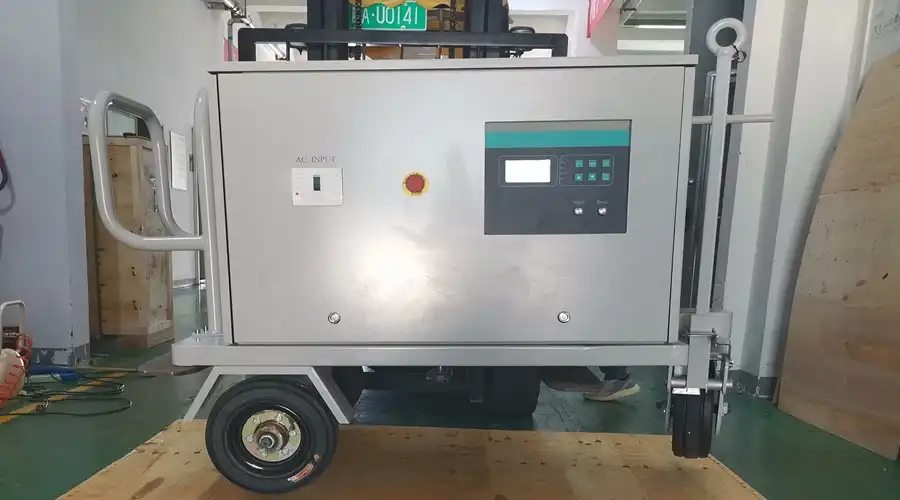
Advanced solid-state GPU technology was used to make the ACSOON AF400W-330100, which is designed to be used for airplane repair without having to turn on any extra power units. This fixed-mounted device takes in standard three-phase 208-480V utility inputs and turns them into a clean 200/208V three-phase output that meets the electrical needs of airplanes. It produces 100kVA of regulated 400Hz power. Even though it has a large capacity, it weighs less than 600kg, and its small size makes it easier to place in both fixed facilities and semi-mobile maintenance setups. IP54 ingress protection makes sure that devices work reliably in tough repair areas that are exposed to dust, water, and changing temperatures. Installations close to noise-sensitive areas are allowed as long as operational noise levels are below 65dB. This also keeps repair workers comfortable while they work. The easy-to-use control panel lets techs operate it even if they don't have specialized electrical training. This speeds up work during planned repair periods and lowers the amount of training that all workforce teams need.
How to Choose and Procure the Right Avionics Power Supply for Critical Flight Systems
When businesses buy air power tools from each other, they do a lot more than just compare specification sheets. The total cost of ownership for an avionics power supply includes the price paid at the start, how hard it is to install, how much energy it uses over its lifetime, how often it needs to be maintained, and how well the provider can help.
Evaluating Vendor Credentials and Certifications
Manufacturers that sell to the aircraft industry must show that they meet standards specific to that field. DO-160 approval makes sure that the equipment can handle the harsh conditions of aircraft operations, such as high and low temperatures, vibration, effects of altitude, electromagnetic interference, and more. MIL-STD-704 compliance makes sure that the quality of the output power meets the needs of military aircraft for controlling voltage, keeping frequency stable, and responding quickly to changes. Check the quality management systems of the vendors you're considering, not just the certifications of their products. For example, ISO 9001 certification means that the vendors have established quality control procedures, and AS9100 especially meets the needs of aerospace manufacturing. Check the testing records, quality records, and traceability methods of the maker to make sure that output standards are being met consistently. Customers are more likely to trust vendors that have been in the flight business for a long time and have long-term field performance data than they are to trust newbies that haven't been in demanding aerospace applications before.
Key Performance Metrics for Procurement Decisions
Ratings for efficiency have a direct effect on how much it costs to run an item over its lifetime, which is measured in decades. A 95% efficient unit only loses 5% of its input energy as heat, while an 85% efficient model loses twice as much. This means that enclosed buildings need more cooling, and power bills will be higher. The electrical noise specs tell you how cleanly the unit sends power without adding any overtones or interference that could harm nearby equipment. In harsh settings, the reliability of operations depends on how well thermal management is handled. Units with oversized cooling systems and conservative thermal designs last longer than those whose parts are going close to their maximum temperature ratings. Specifications for load regulation show how well the unit keeps the output voltage stable when airplane systems turn on and off, while line regulation shows how stable the unit is when the voltage from the power source changes. Power factor correction lowers the amount of power that seems to be needed from utility lines. This could mean that demand charges on business energy bills go down. Don't just look at one of these metrics; look at them all together. In the real world, success rests on well-balanced design across all of these factors.
Customization Options and OEM Partnership Opportunities
Standard stock items can be used in a lot of different situations, but sometimes unique business needs call for custom solutions. The ACSOON brand is owned by Xi'an Jerrystar Instrument Co., Ltd., and they offer a lot of customization options for testing in flight, the military, the marine industry, and factories. Custom output voltages and frequencies can be used with non-standard airplanes or test tools. Changes to form factors allow them to work with the current infrastructure without having to make expensive changes to the building. Better security features, like more surge reduction, stronger EMI filtering, and wider temperature ranges, deal with problems that are specific to the environment. OEM relationships let equipment makers and installers choose power supplies with their own brand names on them, while also using tried-and-true designs and production methods. Bulk purchasing agreements make sure that there is enough inventory for projects that need it quickly and offer price breaks for large setups. Jerrystar can quickly adapt to changing customer needs across a wide range of market groups thanks to its manufacturing skills and trading company flexibility.
Maintaining and Optimizing Avionics Power Supplies in Flight Systems
Systematic upkeep is needed for even the toughest avionics power supply to keep working at its best for decades upon decades.
Scheduled Inspection and Preventive Maintenance
Thermal tracking finds problems as they start to form before they become major problems. Regular infrared scanning finds hot spots that mean links aren't working right, parts are breaking down, or breathing isn't good enough. By checking the internal temperatures while the system is working, you can be sure that it stays within safe running limits. EMI research shows that shielding and filters are still effective at keeping electromagnetic interference within the acceptable range. Redundancy validation tests backup systems and failover methods to make sure they work right away if a main component fails. Checks for connection quality include making sure that the terminals are tight and that the wires are free of damage, wear, or corrosion that could lower their ability to carry power. Cleaning dust and other waste out of air paths keeps them working well and stops problems that can happen because of too much heat.
Performance Optimization Through Equipment Upgrades
Power systems technology has come a long way, and equipment put ten years ago is now much more efficient. Upgrading old units to new ones with higher efficiency cuts power use by 10–15% in most installs, and the money saved on energy alone pays for the upgrades in 3–5 years. Modern compact designs have made mobile ground power units easier to use and lighter, so tools that used to need small teams can now be set up by one person. Better power factor correction drops the amount of power that seems to be needed, which could lead to lower energy demand charges. Better digital controls let you watch over multiple units from afar, do automatic checks, and connect to building management systems, which makes activities run more smoothly. When planning upgrades, look at the total lifecycle costs instead of the original purchase price. Savings on energy, less upkeep, and longer operating lifespans often make it worth the extra money to buy cutting-edge technology.
Real-World Performance in Commercial and Military Operations
Major foreign airlines have seen 40% drops in the runtime of their auxiliary power units after installing current ground power equipment. This means that they use less fuel, keep their engines in better shape, and put out fewer carbon emissions. Military airbases in rural areas say their mission success rates have gone up significantly since they switched to redundant solid-state power systems with field-serviceable modular designs. Using power sources with better voltage control and less electrical noise has helped research institutions testing aircraft systems get more accurate measurements and shorter test cycles. These case studies show that investing strategically in good power conversion equipment has clear practical benefits that go beyond just meeting technical requirements.
Regulatory Standards and Compliance Impacting Avionics Power Supply Selection
The certification standards for aerospace electrical tools are very strict. This is because flight operations are very important, and any avionics power supply failure can have very bad effects.
Understanding DO-160 Environmental Testing Requirements
The RTCA DO-160G sets strict environmental requirements for equipment that is used in the air. Even though ground power units don't fly, using DO-160 test methods makes sure that equipment can handle the conditions in an aircraft maintenance setting. Temperature testing confirms operation in temperatures ranging from -40°C to +71°C, which are common in aircraft activities around the world. At low elevations, like those found at high-elevation airports, altitude testing confirms function. In coastal and tropical settings, corrosion protection is tested by how much humidity present. Vibration testing mimics the mechanical stresses that come from close aircraft activities and mobile work platforms. Testing for electromagnetic interference makes sure that switching power sources doesn't send out emissions that mess up tracking or communication gear. It also makes sure that they are immune to electromagnetic fields from the outside. Being exposed to sand and dust proves that sealed shelters keep their safety scores in desert working conditions. These tough tests give objective proof that the equipment meets the high standards for dependability in the aircraft business.
MIL-STD-704 Power Quality Requirements
Electrical equipment in military aircraft must meet the requirements set by MIL-STD-704F, which governs power quality. Stable voltage control within narrow ranges makes sure that machinery always works the same way. Frequency stability standards stop time mistakes in digital systems and changes in motor speeds. Transient voltage limits keep sensitive electronics from getting hurt when the load changes quickly or when the power goes out. Harmonic distortion limits keep sinusoidal waves clean, which keeps transformers and motors from burning and breaking down. Unbalanced limits between three-phase outputs make sure that multi-phase loads work correctly. To keep things safe and prevent damage to equipment, ground support equipment that feeds military planes must give power that meets these standards. Instead of depending only on claimed conformance, procurement teams should use independent test results and verification paperwork to make sure that manufacturers are following the rules.
Risk Mitigation Through Verified Compliance
Technical and operational risks are greatly reduced when you buy certified tools from well-known makers. Compliance that is documented gives objective proof for quality management systems, regulatory checks, and liability probes in case something goes wrong. Certification testing done by approved labs provides additional independent confirmation beyond what the maker says. In-depth test records show performance gaps, which show whether the equipment just meets the bare minimum standards or includes important safety features. Equipment with large performance gaps can handle wear and tear, changing parts, and working situations that aren't normal for a long time. Manufacturers who follow strict certification programs show that they care about quality and customer happiness in a way that goes beyond just delivering a product. This commitment includes long-term support, accurate paperwork, and efforts to keep improving.
Conclusion
When it comes to key flight systems that depend on power, choosing the right tools, making sure the vendor is qualified, and doing regular upkeep are all very important. Modern aviation-grade avionics power supply units with advanced switching technology, redundant designs, and full environmental protection give planes the power they need to fly safely and efficiently. Technical specifications should be weighed against lifecycle costs, seller support skills, and proof of legal compliance when making procurement choices. Organizations that work with well-known makers that offer customization options, enough inventory, and quick technical help set themselves up for long-term business success as flight needs change.
FAQ
What makes redundancy important in aviation power systems?
Single-point breakdowns can't stop important aircraft repair tasks when there are redundant power architectures in place. Automatic load sharing in parallel supply units makes sure that the system keeps running even if one of its parts fails. Techs can repair broken modules without having to shut down the whole system, which keeps operations running smoothly and keeps airplanes from having to be shut down for long periods of time, which costs a lot of money.
Do switching power supplies interfere with avionics equipment?
A lot of EMI filtering and shielding is built into modern switching avionics power supply units to keep electromagnetic interference well below the limits required by flight. When installation is done correctly and grounding is done correctly, sensitive tracking and communication tools will work with the system. To make sure they are following the rules, good makers test pollution levels using DO-160 methods.
Why are DO-160 and MIL-STD certifications necessary for ground power equipment?
These rules make sure that tools can work in aviation settings and provide the right amount of power. Compliance testing gives concrete proof of dependability, durability in harsh environments, and electromagnetic compatibility. Certified equipment lowers technical risks, makes it easier to justify buying something, and shows that care was taken in safety-critical situations.
Partner With JERRYSTAR for Reliable Aviation Power Solutions
Our ACSOON brand, which is sold by Xi'an Jerrystar Instrument Co., Ltd., is trusted by military bases, commercial planes, and aircraft makers all over the world for its approved flight power conversion equipment. Our solid-state frequency converters and ground power units support mission-critical operations by combining cutting-edge technology with a track record of dependability. As both a producer and a trade business, we keep a large stock of standard units and can make a lot of changes to meet the specific needs of each application. Our engineering team has a lot of experience testing power systems in the military, on ships, in the lab, and in airplanes. They help customers from the beginning of the design process all the way through installation, approval, and continued technical support. We can get you a single unit for specialized testing or large amounts for major building upgrades quickly, without lowering the quality standards. Get in touch with our expert sales team at acpower@acsoonpower.com to talk about your unique needs and get accurate quotes. Our goal as a top avionics power supply maker is to help your business succeed by giving you the best goods and fastest service.
References
1. Aircraft Electrical Power Systems Engineering Standards and Practices, Society of Automotive Engineers International Aerospace Standards Division, 2021.
2. Ground Support Equipment Design Guidelines for Commercial Aviation Maintenance Facilities, International Air Transport Association Technical Publications, 2020.
3. Power Quality Requirements for Military Aviation Electrical Systems, United States Department of Defence Standards and Specifications, 2019.
4. Environmental Conditions and Test Procedures for Airborne Equipment, Radio Technical Commission for Aeronautics, 2018.
5. Electromagnetic Interference Control in Aviation Ground Support Operations, Aerospace Industries Association Quality Assurance Committee, 2020.
6. Reliability Engineering Practices for Mission-Critical Power Conversion Systems, Institute of Electrical and Electronics Engineers Reliability Society, 2019.