




How to Install a 60 to 50Hz Frequency Converter Properly?
Before you can properly install a 60 to 50hz frequency converter, you need to make sure that your power source and the converter's input specs are electrically compatible. You'll need to make sure there is good grounding, connect the input and output wires according to the manufacturer's instructions, and make sure there is enough air flow around the unit. The process includes putting the converter in a safe place, connecting the power lines securely with the right circuit protection, and running thorough pre-startup checks on all attached devices before turning them on. When installed correctly, both people and machines are kept safe, and conversion efficiency is increased.
Understanding 60Hz to 50Hz Frequency Converters
What Is a Frequency Converter and How Does It Work?
A 60 to 50hz frequency converter changes the frequency of the AC power coming in from one standard to another while keeping the voltage stable and the quality of the waveforms. Instead of just changing the voltage, these complex devices use power electronics to do two things: first, they rectify AC to DC, and then they reverse DC back to AC at the desired output frequency. This double-conversion design lets you precisely control the frequency while getting rid of harmonic distortion that could hurt sensitive equipment. This technology is especially important for machines that spin. When driven by 60Hz energy, motors that were made to work at 50Hz will spin about 20% faster, which will change how they work and could lead to premature wear. When used outside of their intended range, laboratory tools that were tuned for certain frequencies may give wrong readings. To work safely, aviation ground support equipment that is built to international standards needs to be matched to the frequencies exactly.
Key Differences Between Frequency Converters, Inverters, and Transformers
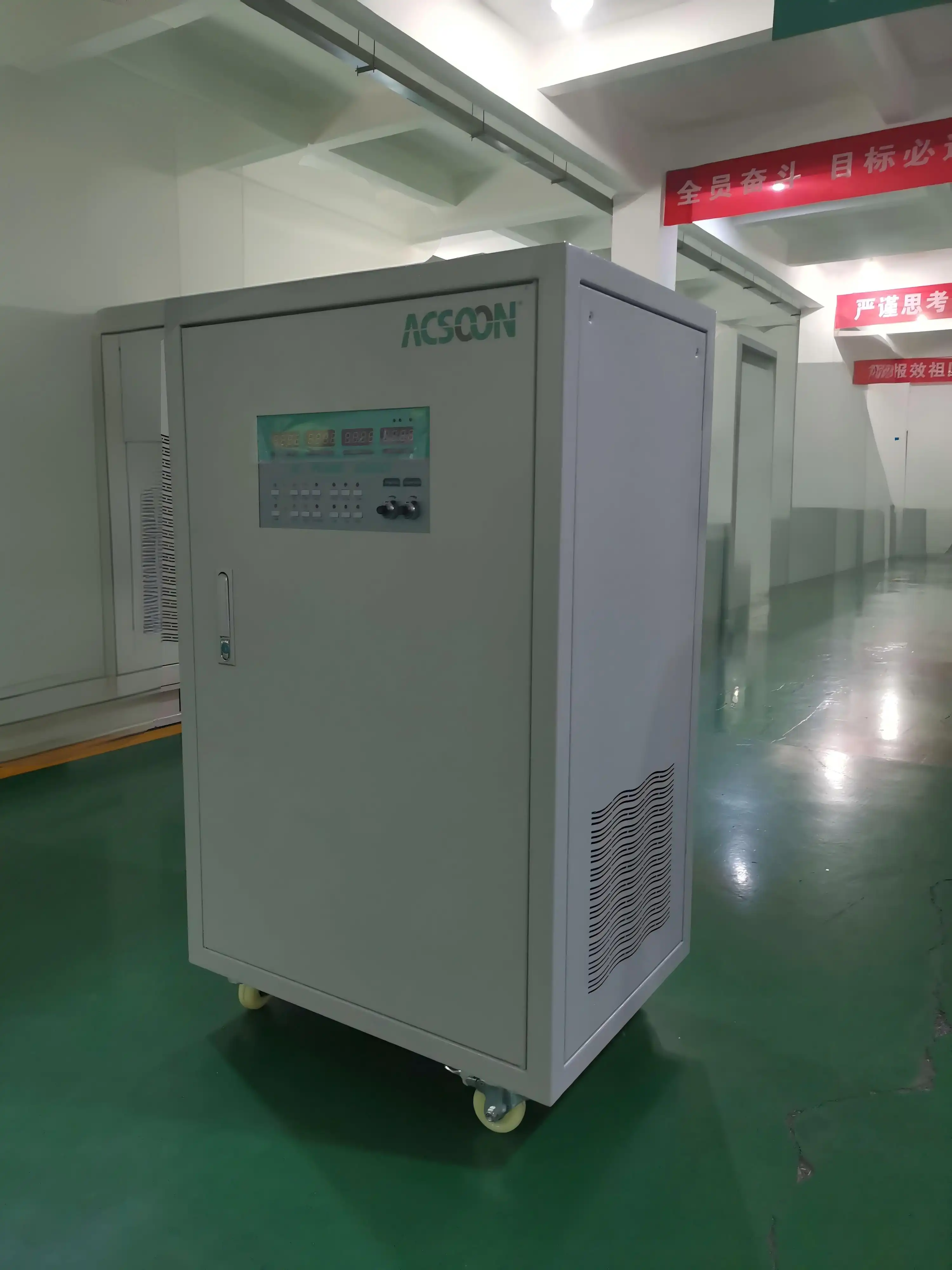
A lot of buying managers get confused when they have to choose power conversion tools. Standard inverters change DC to AC, but they don't usually change the frequency. They're made for things like solar power systems and backup power supplies. Through electromagnetic induction, transformers can change voltage, but they can't change frequency at all. Variable frequency drives (VFDs) can change the output frequency, but they are best at controlling motor speed rather than giving stable power to a wide range of loads. True frequency converters send out stable, clean power at a different frequency than the source that sends it. Our 5,000–10,000-square-meter factory in Xi'an makes the ACSOON AF60W line, which is an example of static frequency converter technology. The three-phase input range for these units is 208V to 480V at 60Hz, and the output range is exactly 50Hz across the same voltage range. Total harmonic distortion stays below 3% with the pure sine wave output, which protects even the most sensitive electrical loads.
Benefits and Common Industrial Applications
Technology that changes frequencies solves real, practical problems in many fields. To keep the temperature and humidity under control, data centers in North America that use cooling devices made in Europe need a stable 60 to 50hz frequency converter. Frequency conversion is needed to connect systems made in different countries on marine boats with foreign equipment packages. When checking foreign aircraft parts, aviation repair centers must create the exact electrical conditions that the systems will face when they are in use. The performance benefits go beyond just being compatible. By keeping motors and engines from running too fast, proper frequency matching increases the life of the equipment. When electrical devices work at their intended frequency, they use less power and heat, which makes them more energy efficient. When test equipment gets power that matches its testing standards, it works more accurately in the lab. These advantages directly lead to lower total cost of ownership and higher operating reliability, which are important factors when making choices about what to buy.
Step-by-Step Guide to Installing a 60Hz to 50Hz Frequency Converter Properly
Pre-Installation Planning and Safety Assessment
Do a thorough load study before you start any hard work. Write down how much power all the related devices need, including starting surge currents that can be 300% or more of the running loads. The ACSOON AF60W-330030 model can give 30kVA of constant power, making it ideal for data center cooling systems and other uses that need stable, clean power. When you figure out how much load you need, add 20 to 25 percent extra to make sure you don't overload during times of high demand. The environment has a big effect on how well and how long a conversion works. These units need to have enough air flow to get rid of the heat that is generated when they convert power. Our static frequency converters have an IP21 security grade, which means they can handle solid items bigger than 12 mm and water dripping vertically. This means they can be used in most indoor industrial settings. But they need to be kept safe from direct moisture, too much dust, and temperatures that aren't what the maker says they should be. Check the area where the work will happen to make sure these conditions are met before you start. You can't break the rules for safety. Make sure that all wiring work is done by trained electricians who follow the National Electrical Code (NEC) and any local rules. Before making any connections, turn off the source circuits and use the right test tools to make sure there is no power. Set up lockout/tagout processes to keep power from being accidentally turned on during installation. These safety measures keep people and things safe from the dangers that could be very bad.
Positioning and Mounting the Converter Unit
Models like the AF60W-330030 are upright-mounted and have wheels, which makes placement more flexible while keeping the unit stable while it's in use. Place the unit on a stable, level surface that can hold its weight plus any earthquake or vibration loads in your building. Keep a minimum of 24 inches of space around all sides, as recommended by the maker, to allow enough wind for cooling. When placing, think about how serviceable it is. Technicians need to have easy access to repair spots, control panels, and connection ports. Operators should be able to see the LED or LCD digital displays that show voltage, current, power factor, and operating state without any problems. Cables should be routed in a way that makes sense and reduces electromagnetic radiation while still allowing for changes or repairs to be made in the future. Grounding is an important part of keeping electrical equipment safe. Use wires that meet the standards of NEC Article 250 to connect the converter chassis to your building's ground system. When you don't ground something properly, voltage potential differences can happen. These can hurt sensitive electronics, add noise to control circuits, or even cause shocks. In some places, equipment has broken down on and off because it wasn't properly grounded. This is a problem that could have been avoided by installing everything correctly the first time.
Electrical Connections and Wiring Best Practices
The three-phase requirements of the converter must be met by the input wire. The AF60W-330030 can handle voltage changes that happen a lot in North American factories because it can handle 208–480V at 60Hz. Use wires that are the right size for the full load current plus any weather and conduit fill derating factors that apply. Securely break the connections at both the input ends of the converter and the upstream disconnect or circuit breaker box. The device that needs 50Hz power is connected to the output wire. The converter gives you a three-phase output that matches the voltage you choose for the input, so it can work with a wide range of loads. If you can, run the output wires away from the input wires so that electromagnetic interaction is kept to a minimum. Use the right pipe or cable tray systems that meet the needs of the construction area and the electrical code. Circuit protection needs careful planning and organization. On both the input and output sides of the converter, put in circuit breakers or fuses with the right rating. Damage from upstream faults or overload situations can't happen because of input security. Output safety keeps the converter safe from short circuits or equipment problems further down the line. The safety devices should work with the converter's built-in safety systems to offer extra protection against electricity problems.
System Integration and Pre-Startup Testing
Control wire lets you operate and keep an eye on things from afar. Adding converter state signals to control networks or building management systems is useful for many tasks. Digital interfaces let you see important operational information like run/stop features, alarm outputs, and operational factors. Instead of adding these links after the fact, plan them during installation. Do thorough continuity and insulation resistance tests before adding input power. Check that all of the connections match the wire diagrams and the directions for installation. Use the right test tools to make sure the phase rotation is correct. Check the insulation resistance between the wires and the ground to make sure there is no damaged insulation or water getting in. They only take a minute or two, but they can save you hours of fixing or damage to your tools. The initial energization process should be done in a planned way. Apply input power without a load linked and make sure the adapter is working correctly. Keep an eye on the frequency, input and output volts, and any problem messages on the screen. Once the converter is working properly, connect the load equipment one piece at a time, starting with systems that aren't very important. This step-by-step method lets you find any compatibility problems or strange behavior with the converter before it's fully loaded.
Troubleshooting Common Installation Issues
Noises or vibrations that don't seem normal are often signs of mechanical or electrical problems. Make sure the unit is securely mounted and that it sits level on its support. Make sure that all of the electrical connections are tight and torqued correctly according to the instructions. Arcing, which is caused by loose connections, makes noise and heat, and could cause the link to fail. Unstable voltage or frequency at the output could mean that there are problems with the loading or the setup of the converter. Make sure that the total load you have connected does not go over the converter's rated capacity. This includes motor starting currents and other short-term needs. Check the settings for the translator that you can get to through the control interface to make sure they are set up correctly for your program. A good 60 to 50hz frequency converter will produce a clean sine wave with a total harmonic distortion (THD) of less than 3%. This relies on the converter being set up correctly and working in the right way.If the overheating safety goes off too soon, it means that there isn't enough airflow or the temperature is too high. Make sure that the tracks for cooling flows aren't blocked and that the conditions inside are within the acceptable range. If the surroundings can't be changed, you might want to think about adding extra cooling. Overheating shortens the life and dependability of equipment, so it's important to control temperatures properly for long-term performance.
Choosing the Best 60Hz to 50Hz Frequency Converter for Your Business
Evaluating Technical Specifications and Performance Parameters
The most important characteristic is the power level. Models like the ACSOON AF60W-330030, which have a 30kVA capacity, are good for mid-sized tasks like cooling systems in data centers, lab equipment groups, or small industrial cells. Carefully figure out your overall load, taking into account that not all of your tools will be running at full capacity at the same time. Too little of a size leads to problems with operations, and too much of a size costs money and time. Voltage freedom is important for businesses that have more than one location or are looking to grow in the future. Three-phase converters that can take 208–480V input and give off a voltage that matches the input voltage can work with the different power distribution systems that are popular in military and commercial installations in North America. This adaptability means that extra transformers aren't needed in many situations. This makes the system design simpler and lowers the number of places where it could fail. The quality of the output pattern has a direct effect on how well and how long the load equipment works. When the result is a pure sine wave with total harmonic distortion below 3%, it keeps sensitive electronics, motors, and control systems from breaking down too soon, which can happen when waveforms are warped. When lab equipment is driven by clean frequency-converted electricity, the tuning stays accurate, variable speed drives don't trip for no reason, and electronic controls work reliably. This level of quality tells the difference between industrial-grade converters and consumer or light business products that aren't good enough for important tasks.
Balancing Cost, Quality, and Supplier Reliability
The initial buying price is only one part of the total cost of owning. Energy economy affects how much it costs to run the technology over its entire life. How much maintenance costs and how unexpected downtime affects a business depend on how reliable the system is. During the important early operational time, risk exposure is affected by things like warranty coverage and the availability of technical help. Smart buying teams look at all of these factors together instead of just looking at the cost of acquisition. The skills of the supplier are especially important for military, aircraft, and other important uses. At Xi'an Jerrystar Instrument Co., Ltd., we focus on flight and defense power systems because we know the specific needs of these fields. We keep enough in stock so that we can serve quickly and meet the pressing needs that come up in military procurement and aerospace repair. When you can both make things and trade them, you have more options, whether you need standard goods right away or custom solutions for unique needs. Certification and compliance paperwork are becoming more and more important in purchasing choices, especially for military and government uses. Before you choose a 60 to 50hz frequency converter provider, make sure they can give you test results, compliance certifications, and technical documentation that meet your company's needs. Traceability and quality system compliance for products used in flight, marine, or military uses often go beyond what is required by business industry standards.
Evaluating Established Brands and Emerging Manufacturers
Power systems have been improved for decades, which is why global names like Siemens, ABB, and Schneider Electric have built strong reputations. Their goods usually come with large global help networks, lots of detailed instructions, and a track record of working well in tough situations. These benefits come at a higher cost that might be out of reach for some projects' budgets. Companies like ACSOON that specialize in certain areas of application offer focused knowledge in those areas. Because we focus on power systems for flight, the military, ships, and labs, we have a deep understanding of the specific problems these areas face. Being able to build solutions and offer OEM support gives small makers options that big generalist manufacturers might not provide. The real problems that procurement teams face are competitive pricing and having enough supplies for quick rollout. Your needs will determine whether you choose well-known global names or specialized companies. Large international sites may like that parts and service from major brands are easy to find everywhere. Manufacturers who know about the needs and security standards of the defense industry may be able to help with specialized military or aerospace uses. Instead of just looking at a supplier's brand name, you should also look at how well they've met your real business needs.
Ensuring Long-Term Performance and Safety After Installation
Establishing Preventive Maintenance Routines
Scheduling regular inspections keeps small problems from growing into big problems. Visual checks are done once a month to find any weak connections, strange wear patterns, or changes in the surroundings that could affect how the converter works. Every three months, thermal imaging scans look for hot spots that are growing and could mean problems with electrical resistance before they become failures. Electrical testing, calibration verification, and full recording of unit state should all be part of yearly thorough checks. Modern converters have diagnostic features that give operators useful information. Units like the AF60W-330030 have volt meters, current meters, power factor displays, and operational state markers that help workers spot changes in performance before they affect operations. By adding these signs to building management systems, automated tracking can be set up to warn maintenance teams of problems as they arise, so they can take preventative action instead of waiting for an emergency to happen. Calibration keeps the accuracy that is needed for uses that need to control frequencies precisely. Exact frequency matching is especially important for lab testing tools to keep measurements accurate. Set up regular checks of the calibration using known reference standards, and make sure that the full recalibration is done the way the maker says to. Keeping track of the past calibrations helps quality management systems and makes sure that controlled businesses follow the rules.
Protecting Equipment from Common Operational Risks
The quality of the input power has a big effect on how well and how long a converter works. Voltage drops, rises, and changes caused by problems in the electrical system upstream can put stress on converter parts. You might want to put surge protectors and voltage monitors at the input of the adapter. These safety steps make the system more reliable generally and make the equipment last longer. Environmental control keeps things from breaking down too soon. When dust builds up on cooling surfaces, it makes them less effective at removing heat, which could lead to thermal protection or faster component damage. Extremes of humidity can cause rust or the breakdown of insulation. Electronic parts are put under stress by heat cycling when temperatures change. Keeping the climate steady and within the manufacturer's guidelines greatly increases the service life. Operational problems can be avoided with load control. Inrush current stress on converter parts is lessened by gradually adding more load during starting. Thermal and electrical stress are kept to a minimum by avoiding frequent on-off cycles. System speed can be improved by learning about load power factor and how it changes how converters work. These operating techniques don't cost anything but make things much more reliable.
Future-Proofing Through Technology Integration
The development of smart tracking features shows how industrial power systems have changed over time. Remote tracking lets one place keep an eye on all the spread converter setups in many different buildings. Predictive repair algorithms look at working data to figure out when parts will break down before they do. By connecting to building or facility management tools, the whole power grid can be managed from one place. As running costs and environmental concerns affect buying choices, energy efficiency keeps growing in importance. Modern static 60 to 50Hz frequency converters can change frequencies more efficiently than 90% of the time, which means that very little energy is lost as heat. This efficiency cuts down on the need for cooling in the installation room and on the cost of running the electricity. When buying something, looking at how much energy it will use over its whole life can help you save money in the long run, which is why you should buy more expensive tools at first. Digital processors with modern power electronics make it possible to do things that were not possible with older technology. Because the output features can be programmed, a single machine can be used for a number of different tasks. Better safety features keep the converter and any loads that are linked safe from electrical problems. Communication standards make it possible to connect to production settings that use Industry 4.0. These features make sites ready for future changes in working needs.
Conclusion
To install a frequency converter correctly, you need to pay close attention to electrical basics, the surroundings, and the unique operational needs of your application. From the initial planning stages to long-term upkeep, this process lays the groundwork for the safe and effective running of important power conversion equipment. We've seen how proper installation safeguards delicate electronics, makes sure that rules are followed, and extends the useful life of equipment in military, naval, aviation, and industry settings. Whether you're supporting cooling systems in a data center that need an exact 60 to 50hz frequency converter or connecting foreign equipment to domestic power grids, the basics stay the same: careful planning, careful execution, and ongoing maintenance. Investing in high-quality frequency conversion equipment and having a professional install it pays off in the form of less downtime, longer equipment life, and increased operating trust in mission-critical applications. The choices you make today about purchases will affect how things work for years to come.
FAQ
Can a frequency converter handle variable motor loads?
Static frequency converters of good quality, like the ACSOON AF60W line, can handle different loads up to their maximum capacity. Motors that have starting surge currents need converters that can handle these short-term needs, which are usually two to three times the running current. The converter is always making changes to keep the output frequency and voltage fixed, even if the load changes within the limits of what was planned.
What distinguishes 50Hz from 60Hz power systems operationally?
The change in frequency of 10Hz affects technology that was made to meet certain standards. Motors run about 20% faster on 60Hz power than on 50Hz power, which changes how well they work and how much stress they are under. When calibrated for one frequency, timing circuits, testing tools, and precise instruments may give wrong results when used on a different frequency. These problems with compatibility are fixed by frequency change.
How do you verify correct installation before operational use?
Verification includes checking the input and output voltages, making sure the frequency is correct at no load and with different loads, making sure the phase rotation is correct, and making sure all the safety systems work properly. Load testing with real tools in controlled steps makes sure that the system works reliably across the whole range of operations before it is made available for general use.
Get Expert Frequency Conversion Solutions from JERRYSTAR
Since reliability is very important in flight, the military, the marine industry, and factories, JERRYSTAR specializes in providing tried-and-true 60 to 50hz frequency converter options. Our ACSOON brand converters, which are made at a special factory in Xi'an, China, give your important systems the stable, pure sine wave output they need. We keep a large inventory on hand to meet pressing release plans, and we can also fully customize our products to meet specific needs. Our tech team has a lot of experience with power systems for defense and aircraft, and they know how to solve the problems that come up in those fields. Get in touch with us right away at acpower@acsoonpower.com to talk about your unique needs with experienced frequency converter makers who offer quality, dependability, and quick support.
References
1. Institute of Electrical and Electronics Engineers (IEEE). "IEEE Standard for Static Power Converters for Defense Applications." IEEE Std 1478-2019, 2019.
2. National Electrical Manufacturers Association (NEMA). "Application Guide for AC Adjustable Speed Drive Systems." NEMA Standards Publication ICS 7.1-2020.
3. U.S. Department of Defense. "Power Conversion Equipment for Military Ground Support Applications: Technical Requirements and Test Procedures." MIL-STD-704F, 2016.
4. International Electrotechnical Commission (IEC). "Rotating Electrical Machines—Part 1: Rating and Performance." IEC 60034-1:2017.
5. American Society of Heating, Refrigerating and Air-Conditioning Engineers (ASHRAE). "Method of Testing for Rating Computer and Data Processing Room Air Conditioners." ASHRAE Standard 127-2012.
6. Society of Automotive Engineers (SAE). "Aircraft Ground Support Equipment—AC Power, 50 Hz and 60 Hz." SAE Aerospace Standard AS6026, 2018.
