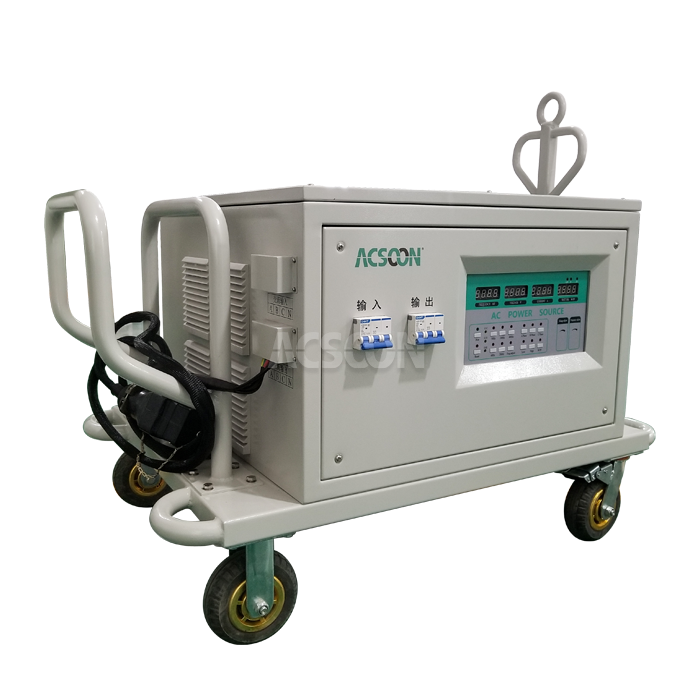




What Safety Measures Are Needed for a 50Hz to 60Hz Inverter?
Safety steps must be taken when using an inverter 50Hz to 60Hz. Some important safety measures are using the right electrical grounding to avoid electric shocks, installing circuit breakers and surge protectors to protect against strange power patterns, using thermal management systems to keep things from getting too hot, and making sure the system meets international safety standards like UL, CE, and IEC. Frequency conversion equipment works consistently in important aircraft, military, marine, and laboratory settings where equipment failure is not acceptable. This is made possible by professional installation, regular checks, and following the manufacturer's instructions.


Understanding the Safety Challenges of 50Hz to 60Hz Inverters
Frequency conversion technology fills in the gaps between different regions' power standards. However, this change comes with its own operating risks that need close monitoring. When electrical systems made to work with 50Hz power are exposed to 60Hz power, or the other way around, the effects are more than just not working right.
How Frequency Mismatch Impacts Equipment Safety
Electronics that are made to work with certain frequencies depend on accurate electromagnetic time. When driven by 60Hz sources, motors, transformers, and sensitive electronics that are set up to work at 50Hz have different magnetic flux levels. This mismatch speeds up the breakdown of insulation, makes transformer cores too hot, and makes motors run at speeds that weren't meant to be there. Even small changes in frequency can ruin data security in testing labs where accuracy of measurements is important. Running 60Hz equipment on 50Hz power, on the other hand, wastes time and can cause safety relay failures in industrial control systems.
Regulatory Compliance Requirements for Frequency Converters
International markets have strict approval rules that have a direct effect on choices about what to buy. The IEC 61000 series sets rules for electromagnetic compatibility, which makes sure that frequency translators don't cause dangerous interference that affects systems nearby. In North American markets, UL approval proves that the product is safe from fire and electrical hazards, while CE marking shows that it meets safety standards set by the European Union. For military and aircraft uses, MIL-STD standards include the ability to withstand vibrations, electromagnetic pulses, and high and low temperatures. It's not just a formality that these certificates are needed; they actually show that the engineering answers to known failure modes in power conversion systems work.
Electrical Disturbances in Power Conversion Systems
Harmonic distortion is created during frequency transfer and spreads through electricity distribution networks. When total harmonic distortion goes over 5%, it trips sensitive safety devices, speeds up the failure of capacitor banks, and causes bearing currents in big motors. Disturbances on the input side show up as voltage notches during commutation events. The quality of the output side relies on the topology of the inverter and the design of the filters. For example, medical device testers use static frequency converters with separated output stages. These provide galvanic separation, which stops common-mode noise and keeps sensitive equipment safe from ground loops and transient coupling.
Core Safety Measures to Implement When Using a 50Hz to 60Hz Inverter
Setting up strong safety rules starts a long time before any frequency conversion equipment is turned on. Your power transfer infrastructure will either work consistently or become a risk depending on the working environment, the quality of the installation, and the safety systems in place.
Professional Installation and Grounding Protocols
For frequency conversion systems to be safe, they need to have the right grounding design. A special grounding wire for equipment that is the right size according to NEC Article 250 gives safety devices the low-impedance fault current path they need to work properly. Isolated ground systems stop currents from flowing between sources that are different from each other in sites that serve more than one load center. Potential differences that cause stray currents can be stopped by bonding the inverter 50Hz to 60Hz frame to building steel and setting up a single-point ground reference. It's important to follow the torque specs for terminal connections. Loose connections cause resistive heating that wears down over time, eventually creating arc flash dangers during regular maintenance.
Essential Protection Devices and Systems
Layered security methods keep the frequency converter and any loads that are attached safe from known failure modes. Here are the basic safety features that every placement needs:
• Circuit Breakers and Overcurrent Protection: Magnetic circuit breakers that are made at 125% of full-load current protect against thermal overload and respond right away to short-circuit problems. Coordination studies make sure that upstream devices don't trip for no reason during inrush events, but faults downstream are still quickly fixed.
• Surge Protection Devices: Type 2 SPDs that are connected to the input ports of the transformer stop short-term overvoltages caused by lightning surges and switching events. Varistor-based devices with energy values above 10kA can handle more than one strike in open industrial areas.
• Input and Output Filtering: EMI filters lower the high-frequency switching noise that would otherwise connect to control circuits next to it. Multistage filtering made up of common-mode chokes and differential-mode capacitors keeps things within the limits set by CISPR 11 Class A in industrial settings.
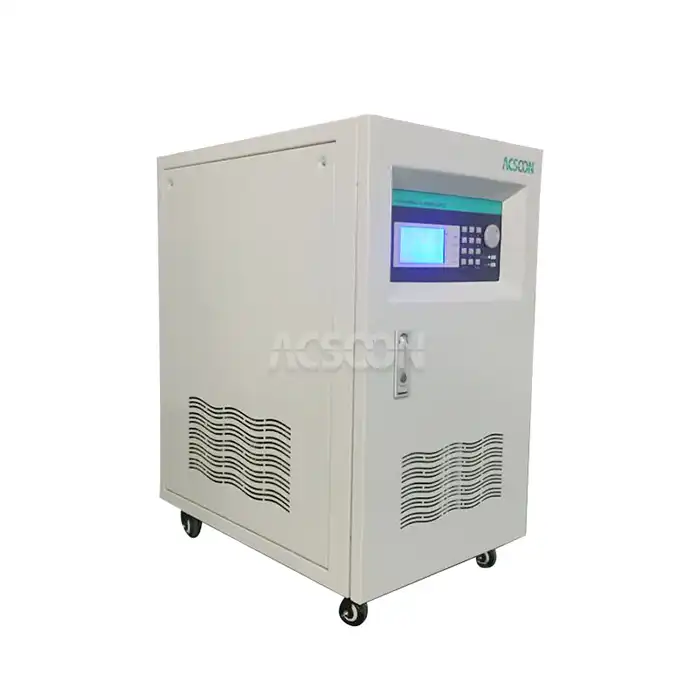
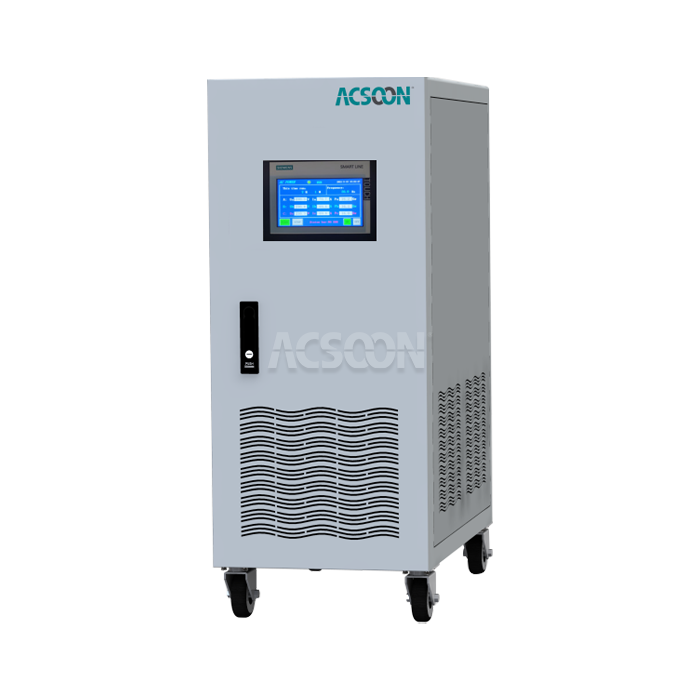
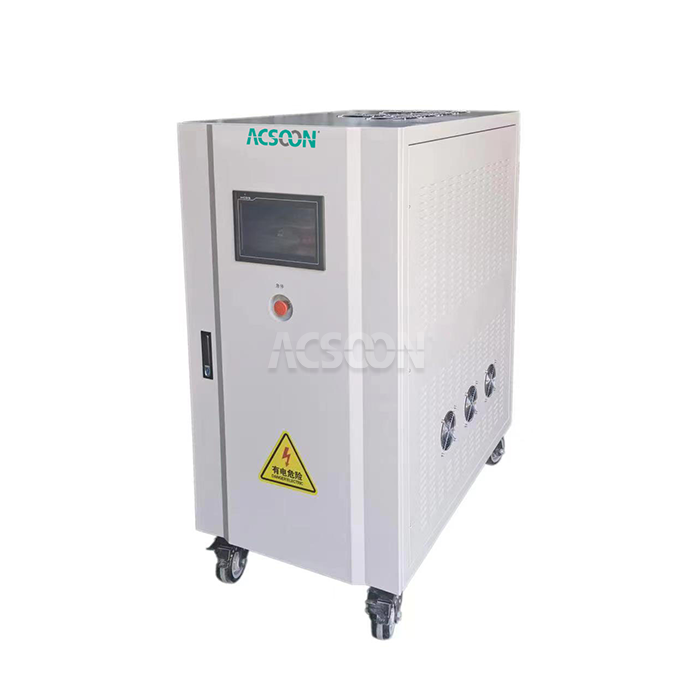
These layers of defense work together instead of against each other. The ACSOON AF60W-310003 static frequency converter has a lot of safety features built in, such as monitoring for input overvoltage and undervoltage, limiting output current, and shutting down when it gets too hot. These features work together to keep sensitive medical equipment safe during frequency conversion tests.
Thermal Management and Cooling Strategies
Heat is the main thing that can go wrong with power electronics. During normal function, every semiconductor junction, magnetic core, and current-carrying wire makes heat. In continuous-duty uses, proper cooling can increase the life of a part from months to decades. Rack-mounted inverters like the AF60W-310003 use temperature-controlled forced-air cooling to balance the need for low noise with the need for high temperature. The IP21 grade for ingress protection lets enough air flow through while keeping people from touching live parts by mistake. Installation clearances of at least 150 mm on the intake and exit sides stop recirculation, which can cause hot spots inside equipment shelters.
Maintenance Protocols and Inspection Schedules
Preventive maintenance finds wear and tear before it leads to unexpected downtime. Inspections every three months make sure that the cooling fans are working right, the air screens aren't blocked, and the port connections are still tight enough. Every year, thermographic scans find hot spots in power connections and bus bars before they get too hot to handle. Voltage and current readings at the rated load show that the inverter stays within the allowed ranges of control. Keeping track of these measures sets performance baselines that show how components are slowly breaking down and needing to be replaced.
Choosing the Right 50Hz to 60Hz Inverter for Safety and Efficiency
It's not enough to match voltage and power rates when making a purchase choice. The frequency conversion technology you choose will have a big impact on how reliable, easy to keep, and cost-effective it is over its entire lifecycle in your unique application.
Evaluating Inverter Types and Technologies
Static frequency converters use solid-state power electronics instead of moving parts, so they don't need to be serviced for things like brush wear and bearing upkeep. They also offer millisecond-level output regulation. In testing situations where load changes must not cause frequency changes, this technology is very useful. Rotary converters, also known as motor-generator sets, provide good separation and uniform output quality, but they need to have their bearings serviced regularly and make noise that isn't suitable for labs. Variable frequency drives can change frequencies, but their outputs aren't always precisely controlled, which is needed for calibration-grade power sources used in measurement applications.
Critical Technical Specifications for Safe Operation
When you match the inverter's powers to the needs of the application, you avoid both wasteful over-specification and risky under-specification. Installation freedom is based on the input voltage range. The AF60W-310003 can accept three-phase input from 208V to 480V, so it can work with a variety of building power systems without the need for separate transformers. Being able to change the output voltage lets testing tools made for different regional standards work without having to keep separate power sources. Specifications for frequency consistency are very important in situations where motor speed directly affects the result of the process. When equipment is turned on, there are inrush currents that must be taken into account in load capacity ratings. For example, a 3kVA inverter can handle about 25A of steady-state current at 120V output, but motors that are connected may draw 6–8 times the quoted current during direct-online starting processes.
Manufacturer Certifications and Warranty Considerations
Certification marks show that the design of the equipment was checked by a third party against established safety standards. This evaluation process finds flaws in the design before they lead to failures in the field. UL listing lets you sell your product in North American markets and shows that you follow NFPA 70 rules. Even though CE marking is self-certified, it needs to be checked against the standards of the Low Voltage Directive and the EMC Directive. Customers in the military and aircraft industry need more testing records, such as MTBF estimates, derating analyses, and qualification test results that show how well the product works in situations like vibration, temperature cycling, and high altitudes. Inverter 50Hz to 60Hz. The warranty terms show that the maker is confident in the strength of the design. Standard one-year guarantees cover problems with the way the product was made, but not problems caused by bad fitting or environmental conditions that are too harsh. When problems happen in important applications, extended warranties and advanced replacement programs keep operations running as smoothly as possible. The ACSOON brand allows OEM agreements that let system designers rebrand frequency converters while still getting technical help from the factory. This is a useful feature when making custom test systems for government contracts.

Application-Specific Safety Considerations in Frequency Conversion
There are different safety needs that come up in different operating situations that aren't covered by general standards. Knowing these details helps you avoid making mistakes that cost a lot of money during purchase and operation.
Industrial Environment Safety Requirements
There are worries about contamination in manufacturing sites that make electrical tools less reliable. When metallic dust from grinding builds up on circuit boards, it makes conductive paths between phases. Copper bus bars and metal heat sinks are corroded by chemical fumes, which raises the thermal resistance and lowers the current capacity. The IP21 rating only protects against solid items bigger than 12 mm and water drops coming straight down. It's good for clean installations inside, but not for areas that get dirty or outside. Higher levels of security, like IP54 or IP65 containers, cost a lot more but are needed when there is a chance of contamination from the environment. When making choices about bulk purchases, people need to think about whether standardizing on higher safety grades gives operations more freedom and is worth the extra cost.
Portable versus Fixed Installation Safety Protocols
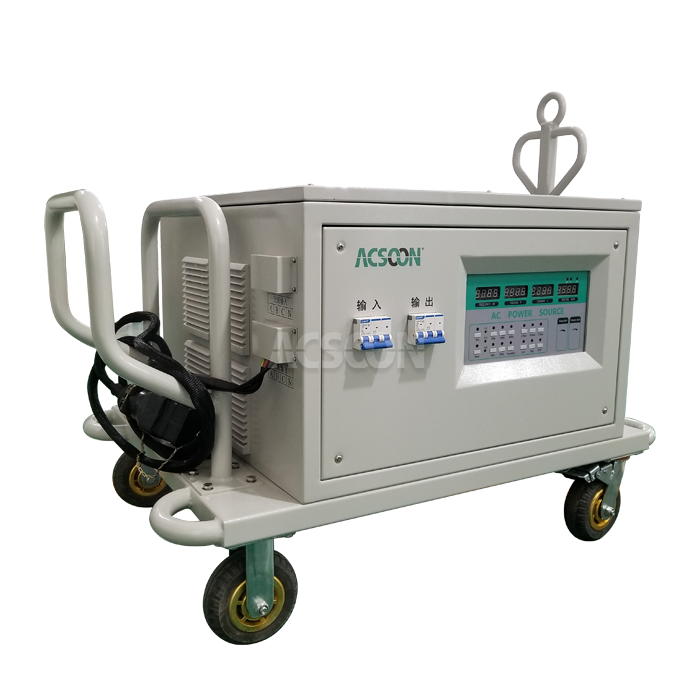
Mobile test equipment has to deal with mechanical forces that aren't present in fixed setups. Transport vibrations can break solder joints and loosen circuit connections if the equipment wasn't designed with mobile job cycles in mind. Rack-mounted inverters have mounting rings that hold the units in place on normal 19-inch racks, so they don't move around while they're being moved. The AF60W-310003's small size and 3kVA power level strike a good mix between portability and capability. It's powerful enough for most medical device testing needs while still being doable for two people to use. Ground fault safety is especially important for movable devices with broken power lines that could cause electrocution. Portable frequency converters should either have GFCI protection built in or be able to connect to portable distribution equipment that has GFCI protection.
Protecting Sensitive Electronic Equipment During Frequency Conversion
A lot of medical gadgets, lab instruments, and precision manufacturing tools have sensitive electronics that act in strange ways when the power goes out. When the source voltage drops below the working limits during inverter switching phases, microprocessor-controlled devices may reset. When linked equipment's switch-mode power sources combine with the inverter's output impedance, it can cause oscillations or problems with the control. The isolated output design keeps the input and output circuits galvanically separated, which stops common-mode noise from getting into sensitive measurement circuits. The AF60W-310003 has a separate output that is designed to deal with these issues in medical device testing situations where patient safety depends on the equipment working correctly. The optimal cooling design and acoustic damping make the operation silent, which stops noticeable noise interference with medical testing equipment that is sensitive to acoustic coupling.
Building a Long-Term Safety Strategy for Your 50Hz to 60Hz Inverter Investments
The initial purchase is only the start of the total cost situation. Quality of execution and continued support systems have a big impact on operational safety and lifecycle value.
Operator Training and Emergency Procedures
Most electricity accidents in workplace settings are caused by people. Full training makes sure that workers know how to do both normal operations and what to do in an emergency. As part of training, people should learn how to properly use emergency stop circuits and recognize when something isn't working right, like when there is a strange noise or a smell of heat that could mean a failure is about to happen. Lockout-tagout methods for maintenance work stop the power from being turned on while workers reach internal parts. Arc flash danger analysis tells us what kind of personal safety equipment we need to work on powered systems. Even low-voltage equipment can burn you if the short-circuit current is more than a few thousand amperes.
Leveraging Manufacturer Support and Warranty Programs
How quickly you fix practical problems depends on how easy it is to get in touch with technical help. Manufacturers with application engineers in the United States can help with fixing more quickly than manufacturers with support staff in other countries, where language hurdles and time zone delays can make things take longer. Quality of documentation is very important—detailed user guides, schematic diagrams, and troubleshooting flowcharts let in-house support staff fix common problems without help from the factory. ACSOON backs up their frequency converter products with full technical support and engineering knowledge gained in flight and military power systems, where dependability cannot be compromised. System designers can get help from factory engineers through OEM support deals while still keeping their relationships with customers.
Integrating Safety with Energy Efficiency Practices
Most of the time, safety and economy goals are in line with each other. When frequency converters are the right size, they work at their most efficient, reducing the amount of extra heat that stresses cooling systems and damages parts. Inverter 50Hz to 60Hz. Power factor adjustment at the input lowers losses in the distribution system, and you may be able to get utility rebates that cover the cost of the initial equipment. Maintaining the cleanliness of the heat sink through regular care improves thermal efficiency, extends the life of components, and lowers energy use. The ACSOON AF60W-310003's high-efficiency topology and separated output design cut down on no-load losses, which is important when equipment stays powered on during idle times between test runs.
Continuous Monitoring and Performance Optimization
Monitoring power use sets baselines that show a decline that needs to be fixed through upkeep. There are tracking features built into modern frequency converters that let you see how they're working. Accurate measures of output voltage and frequency, input power quality, and temperature allow for planned repair plans. Setting acceptable working ranges and alarm thresholds alerts personnel to developing issues before they cause failures. Data logging makes audit trails that show how the tools should be used, which is useful proof for quality system compliance in businesses that are regulated. Through network interfaces, remote monitoring makes it possible to keep an eye on sites that are spread out. This is especially useful for military and aerospace uses where equipment is spread out in different buildings or operating theaters.
Conclusion
Putting in place full safety measures for inverter 50Hz to 60Hz uses saves people, keeps equipment in good shape, and keeps operations running in dangerous places. Safe frequency conversion is based on proper grounding, stacked safety devices, thermal control, and following the rules. For certain needs in medical device testing and lab work, choosing the right tools like the ACSOON AF60W-310003 static frequency converter with its isolated output, full safety features, and small rack-mounted design is key. For safety to last after the initial installation, people need to be trained regularly, do preventative maintenance, and use the manufacturer's help tools. When companies use these methods in their purchasing and operating planning, they lower risks and get the most out of their investments in power exchange.
FAQ
Can I use a standard VFD as a 50Hz to 60Hz frequency converter?
Variable frequency drives can change frequencies, but they don't have the accurate output control that testing needs. VFDs make pulse-width modulated output with a lot of harmonics, which is bad for electronics that are easily damaged. Static frequency converters give off a true sinusoidal signal with precise voltage and frequency control. This makes them ideal for checking lab and medical equipment, where power quality directly impacts the accuracy of measurements.
What happens if I connect 60Hz equipment directly to 50Hz power?
The equipment works at about 83% of its stated speed and power output. Transformers get more magnetically saturated, which makes them draw more magnetizing current and generate more heat. Electronics with switch-mode power sources can usually handle the change in frequency, but timing-dependent circuits and motor-driven devices don't work. These problems can be avoided with proper frequency conversion.
How do I size an inverter for equipment with motor loads?
When you start the motor, you need to account for the inrush current, which is usually 6 to 8 times the full-load current for direct-on-line starting. Either choose an inverter whose surge capacity is higher than its peak inrush capacity, or use soft-start controls to lower the initial current demand. The AF60W-310003 can handle up to 3.6kVA of peak power, which means it can be used with motors up to 0.5kVA that have direct starting or bigger motors that have current-limiting starters.
Partner with JERRYSTAR for Reliable Frequency Conversion Solutions
JERRYSTAR specializes in providing mission-critical power conversion systems to customers in the military, at sea, in the lab, and in aviation who expect the utmost dependability. Our frequency converters from the ACSOON brand use advanced static conversion technology and application-specific engineering to meet your particular needs. As a business that both makes things and sells them, we keep enough stock on hand to be able to deploy quickly and also offer custom designs to meet particular needs. The AF60W-310003 shows how much we care about safety and performance. It has an isolated output to protect sensitive equipment, a small rack-mounted design for setups with limited space, and quiet operation that is good for labs. If you are a buyer looking for a reliable 50Hz to 60Hz inverter provider, our engineering knowledge in aircraft and military power systems directly translates to more reliable products and quick technical support. Email our team at acpower@acsoonpower.com to talk about your frequency conversion needs and find out how our quick delivery and ability to customize solutions can help you with your toughest power problems.
References
1. IEEE Std 519-2014, "IEEE Recommended Practice and Requirements for Harmonic Control in Electric Power Systems," Institute of Electrical and Electronics Engineers, 2014.
2. National Fire Protection Association, "NFPA 70: National Electrical Code," 2023 Edition, Quincy, MA: NFPA, 2022.
3. International Electrotechnical Commission, "IEC 61000-6-4: Electromagnetic Compatibility (EMC) - Part 6-4: Generic Standards - Emission Standard for Industrial Environments," Geneva: IEC, 2018.
4. Underwriters Laboratories, "UL 508: Standard for Safety Industrial Control Equipment," Northbrook, IL: UL LLC, 2020.
5. Department of Defense, "MIL-STD-461G: Requirements for the Control of Electromagnetic Interference Characteristics of Subsystems and Equipment," Washington, DC: U.S. Government Printing Office, 2015.
6. Mohan, Ned, Tore M. Undeland, and William P. Robbins, "Power Electronics: Converters, Applications, and Design," 3rd Edition, Hoboken, NJ: John Wiley & Sons, 2003.