



What Makes a 270V Aircraft Power Supply More Reliable and Safe?
A 270V aircraft power supply is more reliable and safe because it meets military standards like MIL-STD-704F, has advanced security circuits that can identify overvoltage and arc faults, and has voltage control that is accurate to within ±1%. It also has strong thermal management systems. Wide Bandgap semiconductors, such as Silicon Carbide, are used in these high-voltage DC power systems to make them more efficient by more than 95%. Redundancy protocols and strict quality control processes make sure that they work without interruption in mission-critical aerospace environments where failure is not an option.
Understanding the Fundamentals of 270V Aircraft Power Supplies
Higher voltage direct current systems have changed the aerospace industry in big ways. Procurement workers can make better choices when they understand what's behind this change. The electrical systems in modern airplanes are getting more complicated, and simple 28V DC or 115V AC systems can't handle them well.
The Engineering Rationale Behind 270V DC Architecture
High-voltage DC power distribution at 270V is a smart engineering answer that can help next-generation airplanes deal with problems related to weight and power. Using the basic equation P=VI (power = voltage times current), we can see that increasing the transfer voltage to 270V greatly lowers the amount of current that is needed for loads with the same amount of power. Because of this decrease, airframe makers can use thinner gauge wire harnesses throughout the structure of the plane. This saves a lot of weight, which directly leads to a longer operating range and more cargo space. The 270V aircraft power supply gets rid of the need for multiple conversion steps that were needed in older electrical systems. Modern weather control systems, electro-hydrostatic actuators, and avionic parts all work better when they are supplied straight from a high-voltage DC bus. This simplified design gets rid of the heavy transformer-rectifier units that are spread out across the body. Instead, power conversion is done by a few fixed, more reliable systems.
Core Components Defining Performance
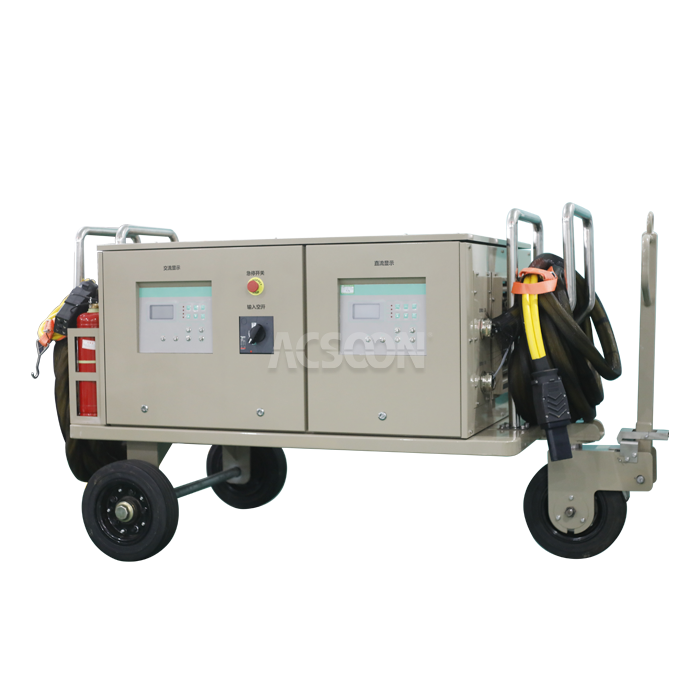
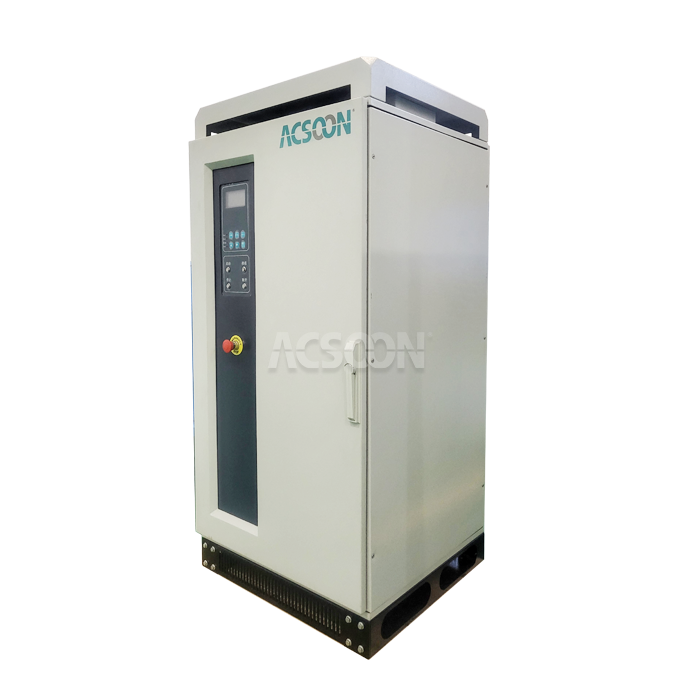
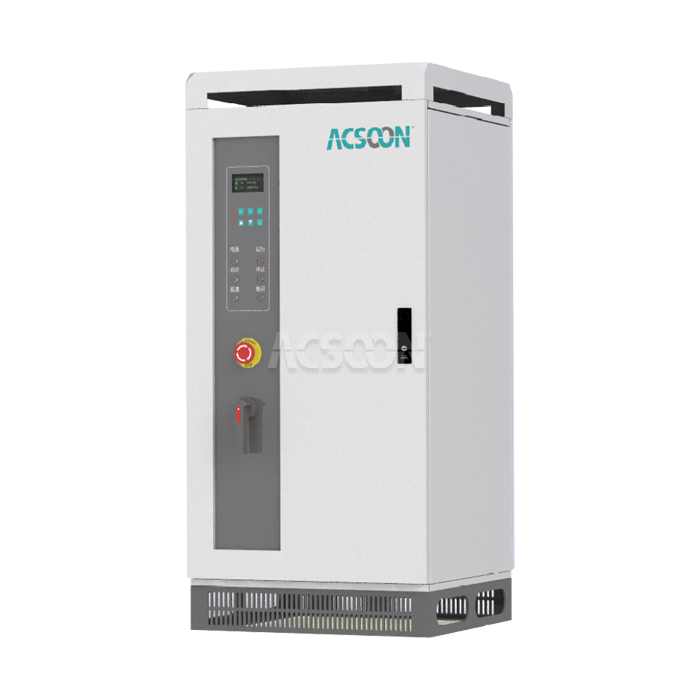
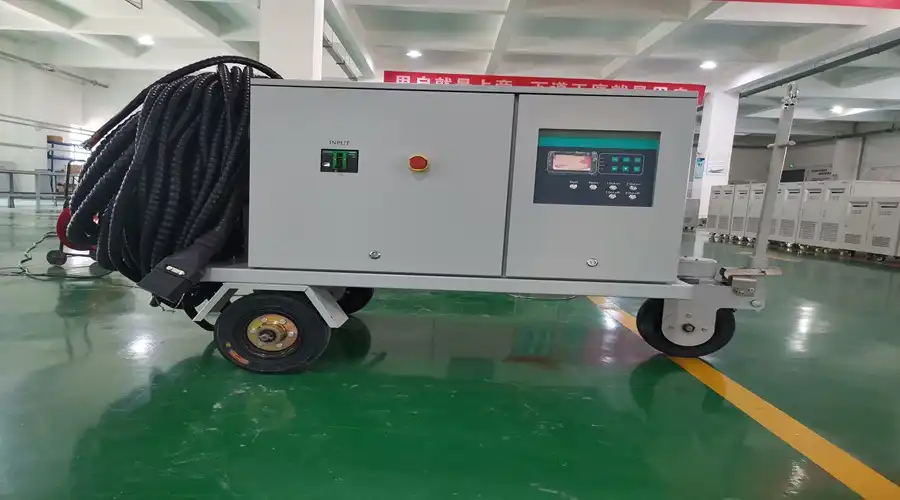
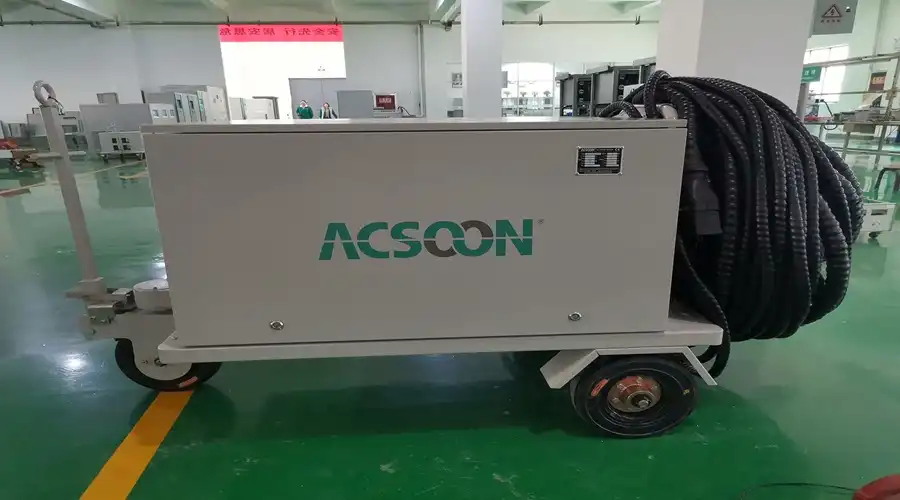
Every high-performance aircraft power system is made up of several elements that work together. Through carefully designed semiconductor bridges, the rectification stage changes the three-phase AC input, which is usually 380V at 50/60Hz, into a stable DC output. Advanced filtering networks keep ripple voltage below 3V peak-to-peak. This keeps sensitive electronics safe from electrical noise that could make tracking less accurate or communication less clear. Control circuits keep an eye on the output parameters all the time, changing the duty cycles and switching speeds to keep the voltage stable even when the load changes. This way of thinking about engineering is shown by our GPU-270300 model, which delivers 300A at exactly controlled 270V DC through complex closed-loop feedback systems. The unit can be set up permanently or moved around on a trolley, which gives operators a choice of how to support ground operations in a variety of hangar settings.
Protection systems are the most important safety feature of power sources that work well. Overvoltage safety stops damaging voltage spikes that could harm electronics in an airplane, and undervoltage detection makes sure that equipment turns off safely instead of working in potentially dangerous brownout situations. Short-circuit safety acts in microseconds to separate problems before thermal damage spreads through electrical paths.
Key Factors Enhancing Reliability in 270V Aircraft Power Supplies
In 270V aircraft power supply systems, reliability means more than just working properly. It also means being able to perform reliably even when the environment is very stressful, lasting for decades, and not breaking down when something goes wrong. We've been making high-reliability power systems for 15 years and have learned the technical methods that make the difference between average equipment and mission-critical solutions.
Design Standards and Certification Compliance
The performance standards for flight power tools are set by the military. MIL-STD-704F specifies the electric power characteristics of airplanes, including the exact voltage ranges for regular, abnormal, and emergency operation modes. Compliant power sources must keep their output within certain limits during load transients that mimic radar activation, actuator engagement, or weapon system discharge. These are events that can cause instantaneous current demands that are higher than 150% of their maximum capacity. Standards for electromagnetic compatibility, such as MIL-STD-461, control both conducted and radiated emissions. This makes sure that power sources don't cause interference that affects guidance or communication systems. During the whole process of making a product, we put it through a lot of EMI tests. We use multi-stage filtering and protection methods that block noise across the whole frequency range, from radio ranges to microwave bands.
Material Selection and Thermal Management
The quality of a part directly affects how long it will work in harsh aircraft settings. We ask for military-grade capacitors with high equivalent series resistance and extended temperature values. This way, they will work reliably from -40°C in the Arctic to +55°C in the desert. Wide Bandgap semiconductors, such as Silicon Carbide, are better at switching and transferring heat than regular silicon devices. They make power exchange more efficient than 95% while producing less heat. Forced-air cooling with backup fans, smart temperature tracking, and automated derating procedures are all parts of thermal management systems. When the environment gets close to the design limits, the control algorithms slowly lower the output current, putting continuous operation ahead of delivering the most power possible. This method stops terrible heat failures that could leave planes stuck on remote airfields without backup power.
Built-in Protection Mechanisms
Arc-fault detection is an important safety trait that only high-voltage DC circuits have. Unlike alternating current, which puts out arcs twice a cycle at zero-crossing points, direct current keeps dangerous plasma channels going that can spread along wire lines. Our safety electronics look at current signatures every microsecond to find the patterns of arcing that is about to happen and turn off the power before insulation damage happens. Line drop compensation solves a problem that comes up when long lines are used to connect power units to airplanes during ground support operations. Normally, the lack of voltage at the airplane connection point would be caused by voltage losses across the wire resistance. Dedicated sense lines measure the voltage directly at the load, and feedback loops raise the source voltage to make up for it. This makes sure that the airplane always gets 270V, no matter how long the cables are or how much current they draw.
Maintenance Protocols Supporting Longevity
Instead of being based on random calendar dates, preventive maintenance plans should be based on how busy the operations are. Facilities that use a lot of power equipment and cycle it several times a day need to be inspected more often than sites that are only used sometimes. We suggest eye reviews every three months to check for dust buildup on the cooling fins, make sure the connectors are still in good shape, and test the emergency shutdown circuits. Every year, the calibration is checked to make sure that the voltage control stays within the limits as the parts age. Load bank testing confirms performance in real-world situations and shows degradation that can't be seen when the system isn't under load. We use stepped loads that range from 25% to 100% of the maximum capacity while keeping an eye on the voltage stability, ripple qualities, and thermal reaction. If equipment shows a regulation drift of more than ±2% or too much temperature rise, it needs to be analyzed at the component level before it can be put back into service to serve important airplanes and the 270V aircraft power supplies supporting them.
Comparing 270V Aircraft Power Supply with Other Voltage Systems
Choosing the right voltage design has a big effect on the weight, efficiency, and complexity of an aircraft's electrical system. When looking at power options, procurement teams need to know what the pros and cons of each standard are so that technical requirements can be met.
Performance Advantages Over Legacy Systems
Traditional 28V DC systems are still used in general flight and older military planes because they are easy to use and work with existing equipment. When electrical loads get bigger, the voltage limit becomes a problem. Modern fighter and passenger planes use hundreds of kilowatts, which means they need a huge amount of power at 28V. It's no longer possible to use heavy cables, and voltage drops in distribution networks mean that each load point needs to be regulated in a complicated way.
When you switch to a 270V aircraft power supply architecture, you need ten times less electricity to get the same amount of power. A 50kW electronics set that needs 1,785A at 28V only needs 185A at 270V. This means that the cross-sectional area of the cables can be greatly reduced, which saves weight. This increase in efficiency adds up across the whole electricity distribution network, which saves hundreds of kilograms of weight on big platforms.
Variable frequency 115V AC systems at 400Hz have been used successfully in business aviation for many years, and they are compatible with international standards for ground power. There are still conversion losses because modern digital electronics and electromechanical tools need DC power in the end, which means that there needs to be a rectification step at each load. The 270V DC method gets rid of these extra conversion steps, which makes the whole electrical system 8–12% more efficient while lowering the number of parts and upkeep needed.
Ground Power Units Versus Onboard Systems
When it comes to needs, ground power uses are different from airborne installations. Our GPU-270300 unit is an example of purpose-built ground support equipment. It can accept standard three-phase 380V industrial power and send out a perfectly controlled 270V DC output. The IP21 grade for flood protection works well in hangars to keep people safe, and trolley-mounted designs let you place them next to different types of planes on the flight line.
In military uses, onboard power generation systems must work consistently even when they are vibrating, the temperature is changing, or they could be damaged in battle. In most cases, these systems work with engine-driven generators or auxiliary power units to add extra layers of problem tolerance and resilience. Ground units put an emphasis on being easy to reach for repair, monitoring, and working with a variety of aircraft systems that share support infrastructure.
Procurement Considerations for 270V Aircraft Power Supplies
To get effective power equipment, you have to deal with technical specs, evaluate suppliers, and plan how to get the equipment to you. Government buying teams and flight engineering groups have to find a balance between performance needs and price limits, all while making sure they follow the rules set by regulators.
Evaluating Manufacturer Credentials
When choosing a supplier, aircraft knowledge should be given more weight than general industrial power system skills. Companies that make things for the aircraft industry know that aviation equipment is different from regular goods in terms of quality standards, strict documentation rules, and the need to be able to track its origins. As required by aircraft quality systems, we keep detailed records of every step of the manufacturing process, from the initial review of each part to its final test.
Technical Specifications Alignment
Matching the 270V aircraft power supply capabilities to what the airplane needs stops wasteful over-specification and failures caused by inadequate under-specification. With a constant current rating of 300A, the GPU-270300 model is good for fighter planes, unmanned aerial vehicles, and business jet ground support. Larger transportation platforms might need more than one unit to work at the same time, or they might need models with more space that are designed to meet their power needs. We work with buying teams to look at electricity load profiles, job cycles, and growth margins. Then, we suggest setups that meet current needs and can also grow with future needs.
Lead Times and Inventory Strategy
Volume purchasing lets you get the best deals on prices and make changes to the specifications that fit your needs. When companies order a lot of units, they can save money on production costs. We also meet OEM needs by custom branding under the ACSOON label, changing the enclosures to match the look of the facility, and adding monitoring systems that work with existing infrastructure management platforms. Blanket purchase agreements set prices for planned purchases that will happen over several years. This makes budgeting easier and makes sure that output is prioritized when supplies are low.
Future Trends and Innovations Improving 270V Aircraft Power Supply Safety and Reliability
The landscape of aircraft power systems is always changing as material science improves, semiconductor technology gets better, and digitization makes tracking possible in ways that have never been possible before. Keeping up with new trends helps procurement groups make investments that will still be useful in the future and keep up with technology changes.
Advanced Semiconductor Integration
Wide Bandgap materials, like Gallium Nitride and Silicon Carbide, make switching frequencies possible that silicon devices couldn't reach before. When the frequency goes up, the magnetic parts get smaller, which makes the whole system lighter and smaller. We're using these technologies in next-generation designs to get power levels higher than 15kW per liter while keeping thermal performance gaps that make parts last longer.
Digital control platforms take the place of analog regulation circuits because they allow for diagnostics, customizable voltage profiles, and adaptable load management that aren't possible with older designs. Microcontroller-based designs use complex algorithms to keep an eye on hundreds of factors at the same time. These algorithms can spot small changes in performance that point to impending failures long before they become major problems.
Predictive Maintenance Through Smart Monitoring
Integrated sensor networks keep an eye on the working conditions all the time, keeping an eye on things like output voltage ripple, thermal profiles across important parts, and power stage efficiency measures. During setup, machine learning algorithms set standard performance signatures. They then look for changes that could mean the capacitors are getting old, the cooling system is breaking down, or the semiconductor junctions are getting worn out. This proactive method changes upkeep from fixing problems when they happen to planned actions during planned downtime, which increases the availability of equipment.
Remote tracking lets businesses that are spread out handle their fleets from one place. Facility managers can get real-time performance data from various power units through secure network connections. This lets them find equipment that isn't working right and make the best use of repair resources. We're working on cloud-connected monitoring tools that will work with current building management systems and give you a single view of all of your 270V aircraft power supply inventories.
Regulatory Evolution and Compliance
As aerospace systems move toward networked architectures, new rules are being made to meet worries about security. Power sources that can be monitored from afar must have security measures like authentication procedures, encrypted communications, and breach detection to stop people from getting in without permission or taking control. We are adding these security layers to our product roadmaps to make sure we stay in line with the rules as they become official. These rules will be based on best practices and customer needs.
Environmental laws are looking more closely at dangerous materials in computer systems. RoHS rules limit the amount of lead, mercury, and other chemicals that can be used in our products, and conflict mineral policies make sure that all parts of the supply chain are ethically sourced. These promises are in line with requirements for buying things for the defense sector and business environmental rules that affect buying decisions in the aircraft sector.
Conclusion
270V aircraft power supply systems are safe and reliable because engineers follow strict rules, make sure the systems are well-made, and keep improving technology. Military-standard compliance, advanced security mechanisms, and proven component selection work together to give the performance needed in aircraft applications, where failure can cost a lot of money and put people's safety at risk. High-voltage DC power distribution is becoming more and more important to platform features as the industry moves toward more electric airplane designs. When procurement groups work with experienced manufacturers, they get access to tried-and-true technology, quick expert support, and the peace of mind that comes from knowing that ground support infrastructure will safely serve aircraft for as long as they are in use.
FAQ
What safety features distinguish high-quality 270V power supplies?
Premium units have multiple layers of security, such as an overvoltage stop that works quickly to keep aircraft electronics from being damaged, thermal monitoring with automatic derating in the worst conditions, and arc-fault detection that handles the unique risks of high-voltage DC systems. Line drop compensation makes sure that the right power is delivered even if the wire loses some of it, and interlocked connections keep them from disconnecting by accident when the load is high.
How often should repairs be done on 270V ground power units?
Maintenance times depend on how often they are used and the weather. Facilities that cycle equipment every day can benefit from reviews every three months that check the performance of the cooling system and the integrity of the connections. Calibration validations, once a year, make sure that the voltage control stays within specifications. For systems that are only used sometimes, inspections may be done every six months instead of once a year, but performance must still be checked every year with load bank testing.
Which manufacturers offer the most reliable 270V aircraft power systems?
The most reliable providers of 270V aircraft power supplies are those that have been around for a long time, have military certifications, and have service records that can be checked. Organizations that can show they follow the AS9100 quality system, provide full technical help, and offer customization choices for unique needs are the best partners. JERRYSTAR has been serving defense and aerospace users for 15 years, which shows that their manufacturing is mature enough for mission-critical power uses.
Partner with JERRYSTAR for Certified 270V Aircraft Power Supply Solutions
With 15 years of experience making specific products, JERRYSTAR is ready to help you with your aircraft power needs. Our GPU-270300 model gives military planes, unmanned aerial vehicles (UAVs), and specialized platforms that work in harsh settings the precise control and strong protection they need. We know that choices about what to buy aren't just based on technical specs; things like how reliable the delivery is, how quickly engineers can help, and how long parts will be available all affect the total ownership value. Because our manufacturing plant keeps a large inventory, we can quickly meet pressing needs, and our customization options make sure that solutions are perfect for each operation's needs. Whether you need a single unit for testing in the lab or a group of units to support operations on an aircraft carrier, our team will help you through the whole process of developing specifications and buying a 270V aircraft power supply. Contact our aerospace power experts at acpower@acsoonpower.com to talk about your needs and find out how working with a well-known manufacturer can improve your supply chain and guarantee the highest quality.
References
1. "Aircraft Electric Power Characteristics, MIL-STD-704F," Department of Defense Interface Standard, 2016.
2. Anderson, R.M., and Patterson, D.J., "High Voltage DC Power Distribution in Aircraft: Benefits and Design Considerations," IEEE Transactions on Aerospace and Electronic Systems, Vol. 54, No. 3, 2018, pp. 1452-1465.
3. "Requirements for the Control of Electromagnetic Interference Characteristics of Subsystems and Equipment, MIL-STD-461G," Department of Defense Interface Standard, 2015.
4. Brombach, J., Lücken, A., Nya, B., Johannsen, M., and Schulz, D., "Comparison of Different Electrical HVDC-Architectures for Aircraft Application," Electrical Systems for Aircraft, Railway and Ship Propulsion Conference Proceedings, 2012.
5. Rosero, J.A., Ortega, J.A., Aldabas, E., and Romeral, L., "Moving Towards a More Electric Aircraft," IEEE Aerospace and Electronic Systems Magazine, Vol. 22, No. 3, 2007, pp. 3-9.
6. Sarlioglu, B., and Morris, C.T., "More Electric Aircraft: Review, Challenges, and Opportunities for Commercial Transport Aircraft," IEEE Transactions on Transportation Electrification, Vol. 1, No. 1, 2015, pp. 54-64.