




What Makes a Reliable 400Hz Power Supply Aircraft System?
A reliable 400Hz power supply aircraft system uses modern solid-state technology, precise frequency conversion, and sturdy construction to provide aviation power. Its capacity to convert 50Hz or 60Hz electricity to 400Hz for aircraft systems while retaining voltage stability, electromagnetic compatibility, and environmental durability for safe flight operations makes it reliable.
Understanding the Importance of 400Hz Power Supply in Aircraft Systems
In airplane electrical systems, 400Hz frequency signifies a major movement toward efficiency and weight optimization. High-frequency power systems allow transformer size and weight to be reduced, which is important in airplane design as every pound affects fuel consumption and cargo capacity.
Technical Rationale Behind 400Hz Frequency Selection
Aircraft electrical systems employ a 400Hz power supply aircraft because transformers and motors can produce the same power with smaller magnetic cores. Given that a commercial aircraft may need dozens of transformers for its electrical distribution network, these weight savings are considerable. According to electromagnetic principles, higher frequencies allow smaller magnetic components without losing performance.
Operational Efficiency and Design Compactness
In increasingly complicated avionics suites, modern aircraft electrical systems must balance power supply and space. Engineers can develop power conversion equipment that fits in compact airplane compartments and provides reliable electricity to navigation, communication, and flight control computers at 400Hz. Compactness simplifies aircraft manufacturing, installation, and maintenance.
Electrical Standards and Compliance Requirements
Aviation power systems must meet strict international standards like DO-160 for environmental testing and MIL-STD-704 for electrical power characteristics. These standards protecta 400Hz power supply from aviation-related temperature, vibration, altitude, and electromagnetic interference. Equipment performance under simulated flight conditions must be tested extensively for compliance.
Core Components and Working Principles of a Reliable 400Hz Aircraft Power Supply
Learning how 400Hz aviation power conversion systems work helps procurement experts evaluate technical specifications and assure compatibility with aircraft electrical infrastructure. These systems use numerous specialized components to provide stable, clean electricity regardless of input or load.
Generator and Frequency Conversion Technology
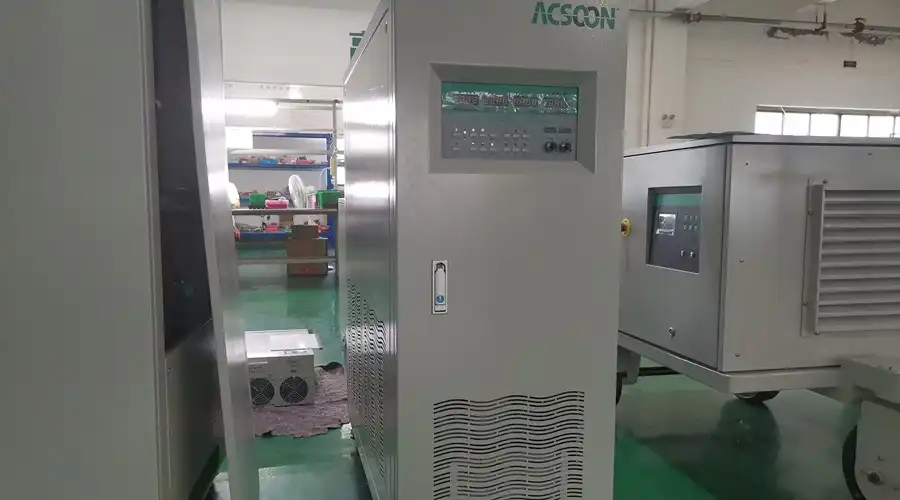
Any reliable 400Hz power supply aircraft relies on frequency conversion technology. Modern solid-state converters rectify and invert AC electricity using modern power electronics. The AF400M-330030 model accurately converts three-phase 380V, 50Hz input power to three-phase 115V/200V, 400Hz output. This conversion procedure maintains a crest factor of 1.414±3%, ensuring compatibility with sensitive avionics equipment requiring clean sinusoidal waveforms.
The solid-state architecture eliminates rotating machinery in conventional conversion systems, improving dependability and reducing maintenance. Adjustable input and output allow the system to adapt to varied aircraft and regional power grids, making it appropriate for worldwide airport operations.
Power Conditioning and Protection Systems
Advanced power conditioning circuits manage voltage, filter harmonics, and prevent electrical problems in 400Hz aviation power supplies. These systems continuously monitor output characteristics and react promptly to short circuits, overcurrent, and voltage variations that could destroy expensive airplane electronics.
The IP54 ingress protection certification protects internal components from dust and moisture in ground support settings. Environmental protection extends equipment lifespan and preserves performance in airport weather conditions worldwide.
Real-World Integration Examples
Aircraft power supplies are used beyond maintenance. Under realistic electrical conditions, avionics production facilities test navigation equipment, communication radios, and flight management computers. To assess radar equipment performance, consistent 400Hz power is needed. Military applications require powerful power sources to sustain mission-critical electronics in harsh operational situations.
Comparing 400Hz Power Supplies: What to Consider for Optimal Procurement Decisions
Procurement teams must evaluate multiple factors when selecting 400Hz power conversion equipment to ensure optimal performance and cost-effectiveness throughout the equipment lifecycle. Understanding these comparison criteria enables informed decision-making that aligns with organizational requirements and budget constraints.
Frequency Comparison Analysis
The choice between 400Hz and traditional 50Hz/60Hz systems involves trade-offs in efficiency, weight, and operational characteristics. Here are the primary advantages of 400Hz systems in aerospace applications:
- Weight Reduction: Transformers operating at 400Hz weigh approximately 80% less than equivalent 50Hz units due to reduced magnetic core requirements
- Size Optimization: Higher frequency enables compact designs that fit within aircraft space constraints while maintaining power density
- Motor Efficiency: Aircraft motors achieve higher power-to-weight ratios at 400Hz, improving overall system efficiency
- Reduced Harmonics: Properly designed 400Hz systems exhibit lower harmonic distortion compared to standard frequency alternatives
These advantages translate into measurable benefits for aircraft operators, including reduced fuel consumption, increased payload capacity, and simplified maintenance procedures. The weight savings alone can justify the investment in specialized 400Hz ground support equipment over traditional alternatives.
Manufacturer Evaluation Criteria
Aerospace and power conversion firms lead the 400Hz power supply industry. Evaluation criteria should include technical specs, production quality, delivery, and after-sales assistance. Aviation systems are unique; aerospace companies can advise on system integration and regulatory compliance.
ACSOON power converters are superior engineering that offer configurable solutions with OEM support for individual application requirements. Over 15 years of manufacturing experience assures a comprehensive understanding of aviation power conversion difficulties and reliable solutions for aerospace customers globally.
Reliability, Maintenance, and Troubleshooting of 400Hz Power Supply Systems
Maintaining the continuous operation of aircraft electrical systems requires proactive maintenance strategies and a comprehensive understanding of potential failure modes. Reliable 400Hz power supplies incorporate design features that maximize uptime while providing clear diagnostic information when issues arise.
Design Robustness and Environmental Resilience
Environmental conditions greatly affect airplane power conversion equipment longevity and reliability. Aircraft operations cause temperature cycling, humidity changes, and vibration, requiring robust technical solutions. Solid-state designs have fewer moving parts and better heat management than electromechanical ones, making them more environmentally resilient.
Critical internal components are protected from environmental pollutants and allowed appropriate cooling airflow with IP54 protection. Balanced protection and thermal management enhance equipment lifespan and ensure performance consistency across operational situations.
Preventive Maintenance Best Practices
Effective 400Hz aviation power supply maintenance plans emphasize predictive monitoring and regular inspections over reactive fixes. Checking output voltage stability, cooling system efficiency, and protection circuit operation are important maintenance tasks. Regular inspections should match aircraft maintenance schedules to reduce downtime.
Power quality monitoring detects faults before they damage aircraft. Voltage regulation, harmonic content, and temperature trends assist maintenance personnel in discovering degrading components and arranging replacements during planned downtime rather than emergency repairs.
Common Troubleshooting Challenges
Systematic procedures that consider equipment-specific and external aspects are needed to fix 400Hz power supply challenges. Voltage regulation, frequency stability, and protection system false tripping are common issues. Before replacing equipment, diagnostics should check input power quality, load characteristics, and environmental conditions.
Modern 400Hz power supplies have advanced diagnostic systems that display fault information on digital displays and communication interfaces. These features speed up troubleshooting and assist maintenance technicians in finding root causes.
JERRYSTAR: Customized Solutions for Aerospace Power Supply Needs
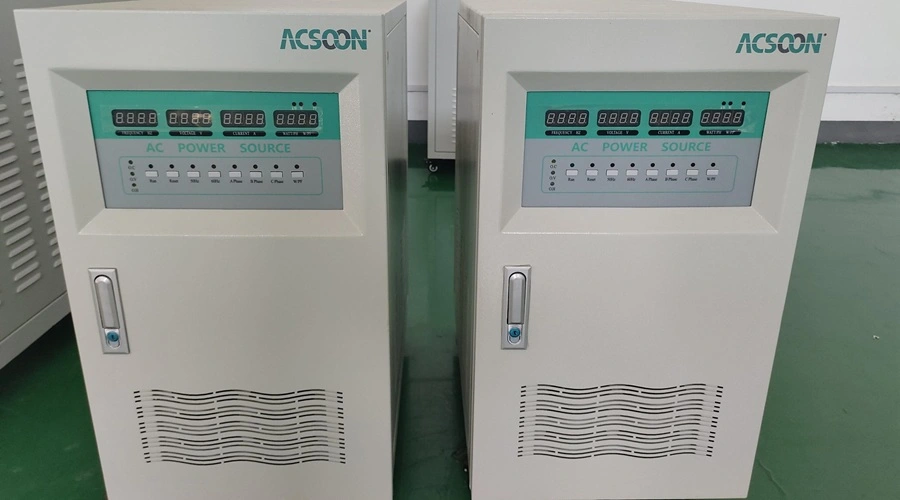
Xi'an Jerrystar Instrument Co., Ltd. has established itself as a leading manufacturer of specialized power conversion equipment serving the global aerospace industry. Our comprehensive portfolio of ACSOON brand 400Hz power supplies addresses diverse applications from aircraft ground support to avionics testing and military systems.
Engineering Expertise and Product Portfolio
Systematic procedures that consider equipment-specific and external aspects are needed to fix 400Hz power supply challenges. Voltage regulation, frequency stability, and protection system false tripping are common issues. Before replacing equipment, diagnostics should check input power quality, load characteristics, and environmental conditions.
Modern 400Hz power supplies have advanced diagnostic systems that display fault information on digital displays and communication interfaces. These features speed up troubleshooting and assist maintenance technicians in finding root causes.
Customization and Manufacturing Capabilities
Recognizing that aerospace applications often require specialized solutions, we maintain flexible manufacturing capabilities that support custom engineering modifications and OEM partnerships. Our 5,000-10,000 square meter manufacturing facility enables rapid prototyping and production scaling to meet urgent delivery requirements common in aerospace procurement.
Adequate inventory management ensures the availability of standard models while supporting quick customization turnaround times. This approach helps procurement teams maintain operational readiness while accessing tailored solutions that optimize performance for specific aircraft types or testing requirements.
Partnership Benefits and Support Services
We see customers as long-term partners, not transactions. From specification formulation to installation, commissioning, and lifecycle maintenance, our technical support staff helps. This cooperative strategy maximises power supply investment value and minimises operating risk.
International aviation standards and client criteria are met by quality assurance processes throughout our manufacturing activities. We maintain our dependability and performance in challenging aerospace applications through quality audits and ongoing improvement.
Conclusion
Reliable 400Hz power supply aircraft systems represent critical infrastructure components that enable safe and efficient aviation operations worldwide. The combination of advanced solid-state technology, precise frequency conversion, and robust environmental protection ensures consistent electrical power delivery for increasingly sophisticated aircraft electronics. Understanding the technical requirements, maintenance considerations, and procurement criteria outlined in this guide enables aerospace professionals to make informed decisions that optimize operational performance while managing lifecycle costs effectively.
FAQ
Why is 400Hz frequency preferred in aviation applications?
Aircraft systems utilize 400Hz frequency primarily for weight and size reduction compared to standard 50Hz or 60Hz alternatives. The higher frequency enables transformers and motors to achieve equivalent power output with approximately 80% less weight, which directly impacts fuel efficiency and payload capacity. Additionally, 400Hz systems provide better power density and reduced electromagnetic interference, making them ideal for the space-constrained environment of modern aircraft.
What maintenance protocols are essential for reliable 400Hz power supply operation?
Essential maintenance protocols include regular monitoring of output voltage stability, frequency accuracy, and harmonic content to detect early signs of component degradation. Scheduled inspections should verify cooling system efficiency, protection circuit functionality, and connection integrity. Temperature monitoring and trending analysis help predict component failures before they affect system operation, enabling proactive maintenance scheduling aligned with aircraft downtime requirements.
What criteria should be used when evaluating 400Hz power equipment suppliers?
Key evaluation criteria include technical expertise in aerospace applications, compliance with aviation standards such as DO-160 and MIL-STD-704, manufacturing quality systems, and a proven track record with similar customers. Additional considerations should encompass customization capabilities, delivery performance, after-sales support quality, and financial stability. Suppliers with extensive aerospace experience understand unique industry requirements and can provide valuable guidance on system integration and regulatory compliance.
Partner with JERRYSTAR for Superior Aircraft Power Solutions
Aerospace procurement professionals seeking reliable 400hz power supply aircraft solutions can depend on JERRYSTAR's proven expertise and comprehensive product portfolio. As a trusted 400hz power supply aircraft manufacturer, we deliver customized power conversion systems that meet the stringent requirements of aviation, military, and industrial applications. Our ACSOON brand products combine advanced solid-state technology with robust environmental protection to ensure consistent performance in demanding operational environments. Contact our technical team at acpower@acsoonpower.com to discuss your specific requirements and discover how our tailored solutions can enhance your aircraft electrical system reliability while optimizing operational efficiency.
References
1. Aircraft Electrical Power Systems: Design and Operation Principles, Society of Automotive Engineers International, Aerospace Engineering Standards Committee, 2023.
2. DO-160G Environmental Conditions and Test Procedures for Airborne Equipment, RTCA Inc., Aviation Electronics Standards Board, 2022.
3. MIL-STD-704F Aircraft Electric Power Characteristics, Department of Defense Interface Standards, Military Specifications and Standards Office, 2021.
4. Power Electronics in Aircraft Systems: Frequency Conversion and Conditioning Technologies, Institute of Electrical and Electronics Engineers Aerospace and Electronic Systems Society, 2023.
5. Aerospace Ground Support Equipment: Design Standards and Best Practices, International Air Transport Association Technical Publications, 2022.
6. Solid-State Power Conversion Systems for Military and Commercial Aviation Applications, American Institute of Aeronautics and Astronautics Power Systems Technical Committee, 2023.