




What Power Ratings Are Needed for Ground Aircraft Power?
Ground aircraft power systems require power ratings ranging from 30kVA to 180kVA, depending on aircraft size and operational requirements. Small general aviation aircraft typically need 30-60kVA, while commercial airliners require 90-180kVA. The standard output for ground aircraft power units is 115V AC at 400Hz frequency, matching aircraft electrical system specifications. Military and cargo aircraft often demand higher power ratings due to complex avionics and environmental control systems.
Understanding Ground Aircraft Power and Its Importance
Ground aircraft power, or GAP, is an important resource for keeping planes running while they're parked at gates, repair hangars, or remote stands. This outside power source gets rid of the need to run the plane's auxiliary power unit (APU), which saves a lot of fuel and lowers emissions while the plane is on the ground.
Core Functions of Aircraft Ground Power Units
Ground Control Units (GPUs) convey steady electrical control through specialized associations that interface directly with an aircraft's electrical systems. These units change over standard ground-based electrical supply into the exact voltage and frequency requirements requested by aircraft flying, lighting, and natural systems. The association includes prepared ground faculty utilizing standardized airship control cables that guarantee secure electrical exchange without compromising flying machine frameworks.
Operational Benefits and Cost Reduction
Putting in place external ground power systems has real operational benefits that go beyond protecting the environment. Airlines say that reducing the number of hours that APUs are used saves them a lot of money because it means less upkeep and longer component life cycles. Noise pollution around airport terminals is also kept to a minimum by ground power, making the area nicer for both passengers and ground workers. In order to meet environmental goals and lower their carbon footprints, modern airports are requiring more and more ground power use.
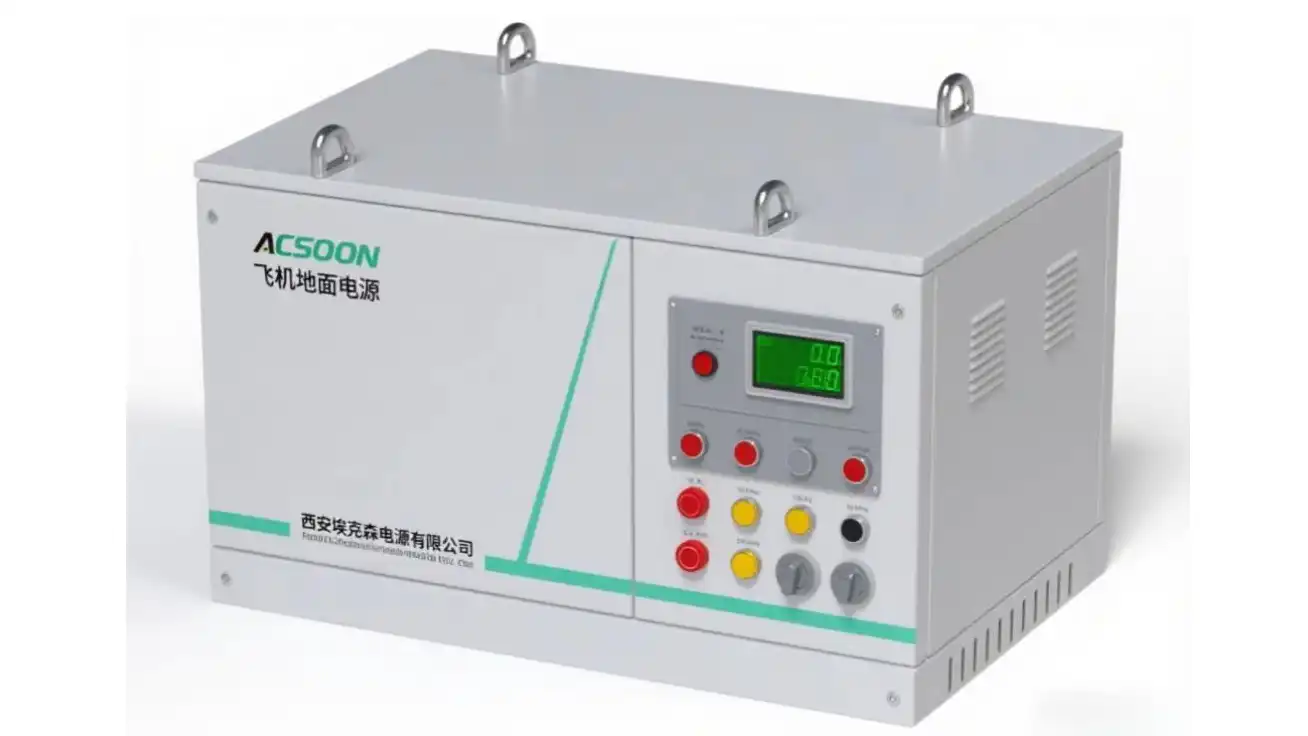
Power Ratings and Voltage Specifications for Ground Aircraft Power
Aircraft electrical requirements vary significantly based on size, mission profile, and onboard systems complexity. Understanding these power demands enables procurement professionals to select appropriate ground support equipment that ensures reliable aircraft servicing without system overloads or inadequate power supply.
Aircraft Category Power Requirements
Business jets and turboprops typically have 30kVA to 60kVA electrical loads. These aircraft have basic electrical systems for avionics, lighting, and environmental control. Regional and narrow-body commercial jets need 60kVA to 90kVA to power their upgraded passenger systems and avionics suites.
Wide-body jets and cargo planes require the most power, generally over 90kVA and up to 180kVA at peak operations. Aircraft with complicated environmental control systems, large galley equipment, and advanced flight management computers maintain power draw during land operations.
Aviation Electrical Standards and Frequency Requirements
Aircraft electrical systems have different standards from industrial uses. The aviation sector employs 115V AC at 400Hz, unlike commercial power grids that use 50Hz or 60Hz. This higher frequency makes airplane electrical components lighter and power transfer more efficient.
The ACSOON GPU400L-330090 model meets these specifications, producing 90kVA at 3×115VAC, 400Hz from a typical 3-phase 380V input. The unit ensures steady power delivery for sensitive avionics equipment by maintaining phase angle symmetry of 120°±1° for balanced loads and 120°±2° for 30% unbalanced loads.
Comparing Ground Aircraft Power Solutions: Choosing the Right Power Rating
Selecting appropriate ground power solutions requires careful evaluation of operational requirements, deployment flexibility, and long-term cost considerations. Different ground power configurations offer distinct advantages depending on specific airport operations and aircraft servicing needs.
Portable Versus Fixed Ground Power Units
Airports with changing gate assignments or remote aircraft parking can use portable GPUs. Mobile units can serve several aircraft locations but have less power than stationary installations. Mobility and 90kVA power output are combined in the ACSOON GPU400L-330090's 26-meter power wire coil for passenger boarding bridges.
Fixed ground power installations provide more power and reduce the requirement for aircraft-specific mobility equipment. These technologies instantly power airplanes at allocated gates by integrating into gate infrastructure. Fixed installations can reduce ground congestion and aircraft damage from equipment relocation.
Electric Versus Diesel-Powered Ground Support
Electric ground power units are greener and cheaper than diesel ones. Electric units have minimal direct emissions and low noise, making them perfect for passenger terminals. Electric GPUs have fewer moving components and no internal combustion engines, reducing maintenance.
Electric ground support equipment meets airport sustainability goals and emission reduction regulations. Many airports require electric ground support equipment in certain operational locations to meet environmental standards and improve passenger facility air quality.
Safely Connecting and Operating Ground Power Units
Proper connection procedures and safety protocols are essential for reliable ground power operations. Incorrect connections or inadequate safety measures can result in equipment damage, aircraft system failures, or personnel injury during ground handling operations.
Pre-Connection Safety Procedures
Ground crew must perform thorough safety checks before connecting aircraft systems to external power. These procedures involve checking aircraft electrical system status, GPU voltage and frequency settings, and staff clearance of connecting sites. Before connecting power, secure the aircraft with wheel chocks and other safety gear.
Protecting sensitive aircraft electronics with power quality verification is essential. Ground power units must meet connection approval standards for voltage, frequency, and harmonic distortion. ACSOON units fulfill strict airplane electrical standards with precise frequency regulation at 400Hz and outstanding phase balance.
Troubleshooting Common Operational Issues
Power fluctuations during aircraft ground operations may signify various urgent issues. Poor GPU capacity, electrical connections, or aircraft electrical failures can cause voltage instability. Ground crews must learn to identify these indications and take corrective action to avoid equipment damage.
Ground power equipment is regularly maintained to prevent unexpected failures during important aircraft turnaround periods. Professional ground power units include IP54 ingress protection for durability and safe operation in varied weather conditions.
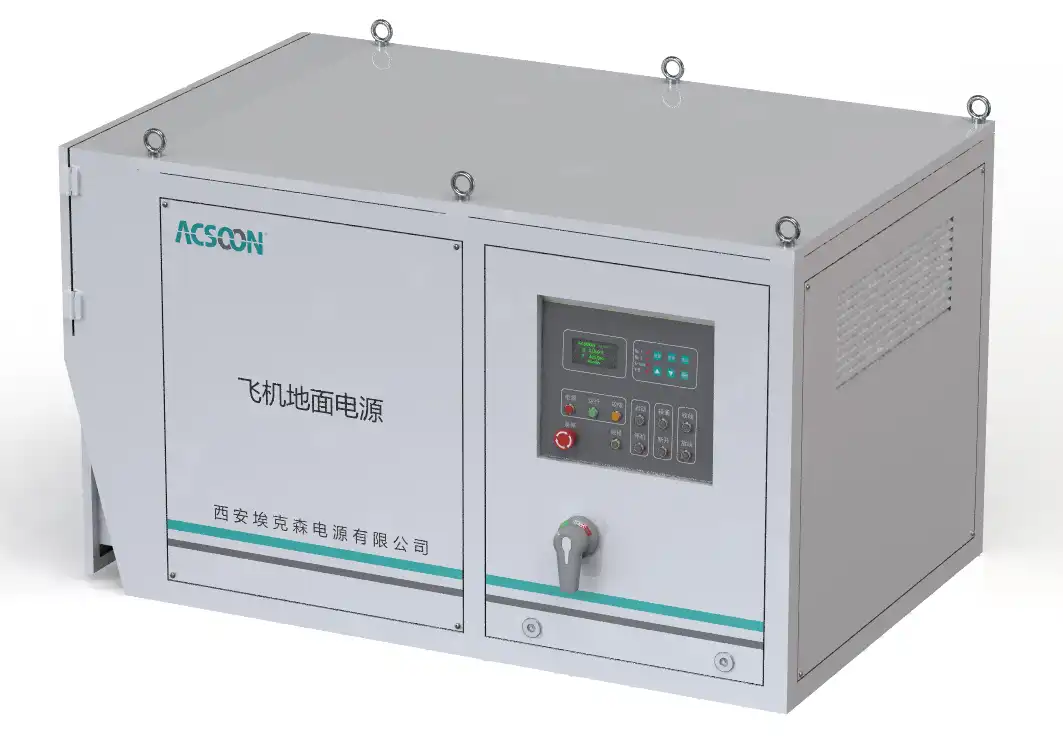
Procurement Insights: Selecting and Buying Ground Aircraft Power Units
Professional procurement decisions require a comprehensive evaluation of technical specifications, supplier capabilities, and long-term operational support. The investment in quality ground power equipment delivers measurable returns through improved operational reliability and reduced maintenance costs over equipment lifecycles.
Technical Specification Evaluation
Power capacity alignment with aircraft requirements is the main ground power purchase technical consideration. Power reserves must exceed operational demands to support peak loads during aviation system start-up or environmental control activation. Our 90kVA advanced ground power units support most commercial aircraft and provide safety margins for reliable operation.
In harsh airport settings, environmental durability and protection regulations prolong equipment life. Weatherproof enclosures, corrosion-resistant materials, and dust and moisture protection are standard on professional equipment. These features improve operational life and reduce maintenance in harsh outdoor situations.
Supplier Evaluation and Partnership Development
Aviation-experienced manufacturers offer excellent technical support and regulatory compliance. Since 2007, Xi'an JERRYSTAR Instrument Co., Ltd. has provided ACSOON power converters for aircraft, military, marine, and laboratory applications. Our ISO 9001 and CE approval indicate our commitment to aircraft ground support equipment quality.
Customization lets vendors meet operational needs that standard products cannot. JERRYSTAR meets aviation's urgent needs with unique engineering and ample inventory. Ground power solutions can be integrated into airport infrastructure projects with OEM cooperation.
JERRYSTAR's Advanced Ground Aircraft Power Solutions
Xi'an JERRYSTAR Instrument Co., Ltd. delivers comprehensive ground power solutions tailored to diverse aviation operational requirements. Our expertise in power conversion technology, combined with a deep understanding of aviation electrical standards, enables us to provide reliable equipment that meets the demanding performance requirements of modern aircraft ground support operations.
Comprehensive Product Portfolio
Our ACSOON ground power units meet general aviation and heavy commercial aircraft power requirements. We supply high-performance solutions with 90kVA output capacity, accurate 400Hz frequency management, and sturdy construction for passenger boarding bridge applications with the GPU400L-330090 model. Each unit is rigorously tested for aircraft electrical requirements and operating reliability.
Our ground power units use innovative power conversion technology to produce clean electrical output that protects sensitive aircraft avionics and provides reliable power for complicated aviation systems. Our power units enable current commercial and military aircraft's complex electronic equipment with low harmonic distortion.
Engineering Support and Customization Services
JERRYSTAR offers engineering consulting to help clients choose the best ground aircraft power for their operations. Our technical team analyzes aircraft types, operational patterns, and infrastructure constraints to offer regulatory-compliant solutions that enhance operational efficiency. We have a broad inventory for fast deployment and offer custom engineering for particular applications.
Our installation support, operator training, and technical support go beyond equipment delivery to ensure customer success. This guarantees that ground power investments produce projected operational advantages while ensuring aviation safety and reliability.
Conclusion
Selecting appropriate power ratings for ground aircraft power requires careful consideration of aircraft electrical demands, operational requirements, and safety standards. Power ratings typically range from 30kVA for small aircraft to 180kVA for large commercial jets, with 400Hz frequency output essential for aviation applications. The investment in quality ground power equipment delivers significant operational benefits through reduced fuel consumption, lower emissions, and improved aircraft system reliability. Professional-grade units like the ACSOON GPU400L-330090 provide the robust performance and precise electrical control required for demanding aviation operations while ensuring long-term reliability and safety.
FAQ
What determines the appropriate power rating for different aircraft types?
Aircraft power requirements depend on the electrical load profile, which includes avionics systems, environmental controls, lighting, and auxiliary equipment. Small general aviation aircraft typically require 30-60kVA, while commercial airliners need 90-180kVA. The power rating must exceed normal operational demands to accommodate startup loads and provide adequate safety margins.
How important is frequency stability in aircraft ground power systems?
Frequency stability at 400Hz is critical for aircraft avionics reliability and proper system operation. Variations in frequency can cause malfunction of flight computers, navigation systems, and other sensitive electronics. Professional ground power units maintain precise frequency control within tight tolerances to protect aircraft electrical systems.
What maintenance requirements should be expected for ground power units?
Regular maintenance includes electrical connection inspections, power quality verification, and environmental protection system checks. Professional units with IP54 protection require less frequent maintenance due to superior weather resistance. Preventive maintenance schedules typically involve quarterly inspections and annual comprehensive testing to ensure continued reliability.
Can ground power units be used across different aircraft manufacturers?
Modern ground power units use standardized aviation electrical connections and specifications, enabling compatibility across different aircraft manufacturers. The standard 115V/200V AC at 400Hz output matches requirements for Boeing, Airbus, and other major aircraft manufacturers, though specific connection adapters may be required for different aircraft models.
Ready to Optimize Your Aviation Ground Power Operations?
JERRYSTAR stands ready to support your aviation ground power requirements with proven ACSOON solutions designed for reliability and performance. Our experienced engineering team provides comprehensive consultation to identify optimal power configurations for your specific aircraft and operational needs. Contact our specialists at acpower@acsoonpower.com to discuss custom ground aircraft power solutions, request detailed specifications, or schedule equipment demonstrations. As a trusted ground aircraft power manufacturer, we maintain an extensive inventory for immediate delivery and offer complete support throughout your equipment lifecycle.
References
1. Federal Aviation Administration. "Aircraft Electrical Systems and Ground Power Requirements." Aviation Maintenance Technician Handbook, Chapter 12: Aircraft Electrical Systems, 2018.
2. International Air Transport Association. "Ground Support Equipment Standards and Specifications." IATA Ground Operations Manual, Section 4.3: Electrical Power Systems, 2021.
3. Society of Automotive Engineers. "Aerospace Standard AS6081: Ground Power Unit Performance Requirements." SAE International Aerospace Standards, 2019.
4. European Aviation Safety Agency. "Certification Specifications for Ground Support Equipment." CS-GSE Amendment 3: Electrical Safety Requirements, 2020.
5. Aircraft Electronics Association. "Power Quality Standards for Aviation Ground Support Equipment." AEA Technical Publication 115: Ground Power Systems, 2022.
6. Airport Council International. "Best Practices for Airport Ground Power Infrastructure." ACI Ground Support Equipment Guidelines, Environmental and Technical Standards, 2021.
