




What Power Specs Matter in DC Ground Power Units?
Operations depend on understanding crucial power characteristics when choosing a DC ground power unit for aviation, military, or industrial purposes. Voltage ratings, current capacity, power stability, efficiency measures, and thermal control are crucial. These criteria affect equipment compatibility, operational safety, and long-term dependability in mission-critical environments where failure is unacceptable.
Understanding the Basics of DC Ground Power Units
Aviation ground operations depend on DC ground power units to power aircraft and aerospace equipment. These advanced power conversion devices eliminate the need to run aircraft engines for electrical power, decreasing ground fuel use and maintenance expenses.
Core Functionality and Power Requirements
Aircraft ground power equipment converts grid-supplied alternating electricity into steady direct current. Modern aviation applications require 28.5V DC output with various current capabilities based on aircraft size and electrical needs. The ACSOON GPU-28700 type delivers 28.5V DC with 700A continuous current from a three-phase 380V input.
Aviation electrical systems need accurate voltage management to protect sensitive avionics and navigation equipment. Unacceptable voltage swings can damage pricey electronics or trigger important system failures. High-quality ground power equipment maintains voltage stability within ±1% of normal output under diverse loads.
Portable vs. Stationary Unit Configurations
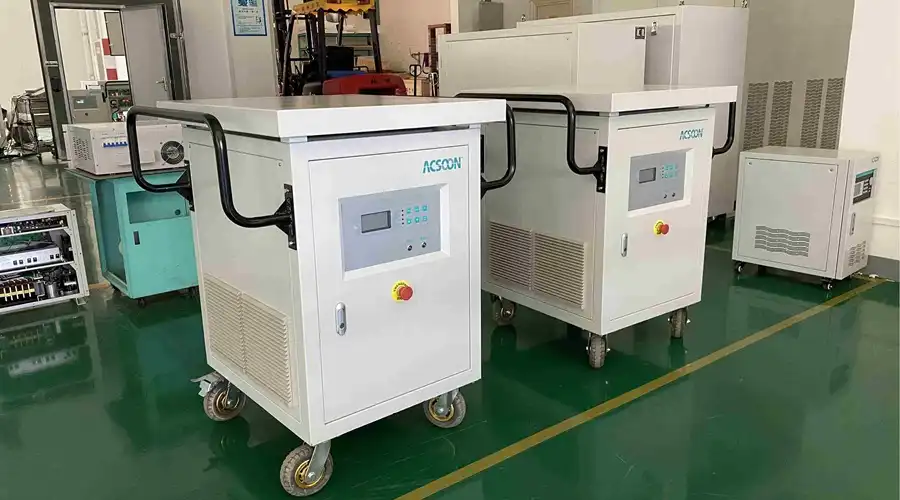
Portable vs. fixed ground power solutions affect operational flexibility and power capacity. Mobile trolley-mounted modules are versatile for many aircraft types and locations. These devices provide IP54 ingress protection ratings for reliable operation in harsh outside conditions and mobility for rapid deployment across aircraft stations.
Fixed-location operations benefit from stationary systems' increased power capacity and efficiency. However, portable solutions like the GPU-28700 accommodate small private planes to big commercial aircraft without compromising performance or dependability by combining mobility with high power output.

Critical Power Specifications That Impact Performance
Power specifications form the foundation of reliable ground support equipment, directly influencing operational safety, equipment compatibility, and long-term performance. Understanding these specifications enables procurement professionals to make informed decisions that align with their specific operational requirements.
Voltage and Current Rating Considerations
Voltage precision is the most important airplane ground power standard. To satisfy aircraft electrical systems, aviation requirements need a 28.5V DC output with strict regulation tolerances. Current ratings must handle peak demands during aircraft startup and onboard system operation.
System dependability depends on voltage stability and current capacity. Higher current ratings accommodate unexpected load increases while regulating voltage dynamically. Professional-grade units use powerful feedback control systems to monitor and change output parameters to meet specifications regardless of load.
Power Capacity and Output Stability
Output stability includes voltage regulation and current supply uniformity throughout operational situations. Without correct design, temperature, input voltage, and load changes can affect power quality. For consistent output, quality ground power units use complex control algorithms and strong power conversion topologies.
Power capacity estimations must include intermittent and continuous loads. Startup procedures and activating high-power equipment like air conditioning systems cause power surges in aircraft. Critical aircraft systems operate uninterrupted due to capacity margins that avoid voltage sag during transient situations.
Efficiency Metrics and Thermal Management
Power conversion efficiency affects large-scale operational expenses and the environment. Higher efficiency ratings minimize energy use, operating temperatures, and cooling needs. Compared to linear power supplies, modern solid-state rectifiers save energy with efficiency ratings of 85%.
Operating reliability and equipment lifespan depend on thermal management. Effective heat dissipation systems preserve component performance in different environmental conditions. Intelligent fan control and heat sink optimization balance cooling efficiency and acoustics for staff comfort in advanced cooling solutions.
Comparing DC Ground Power Units: Making an Informed Choice
The decision between different ground power technologies requires careful evaluation of power specifications, operational requirements, and long-term cost considerations. Each technology offers distinct advantages depending on specific application demands and operational constraints.
DC vs. AC Ground Power Applications
DC ground power units are directly compatible with aircraft electrical systems, avoiding inefficiencies and failure spots from conversion stages. Direct current delivery provides superior power quality for sensitive avionics and simplifies installation and maintenance compared to AC systems needing onboard rectification.
Applications with high electrical demands benefit from AC ground power systems. However, aircraft conversion complexity can affect power quality and maintenance. DC ground power units like the ACSOON series offer the best power delivery efficiency and system simplicity for most aviation applications.
Portable vs. Stationary Performance Trade-offs
For operating flexibility and deployment variety, portable ground power units reduce power capacity. The GPU-28700's moveable trolley allows quick placement and relocation while maintaining 700A continuous output. For operations supporting several aircraft types and parking spots, this design is excellent.
Due to better cooling and solid electrical connections, stationary installations have higher power ratings and efficiency. In dynamic operational circumstances where aircraft placement changes often, portable units' operational flexibility sometimes outweighs fixed installations' power capacity.
High-Capacity and Energy-Efficient Options
Power density and energy efficiency are the goals of modern ground power technology. Solid-state power conversion topologies allow compact designs with high power outputs, as the GPU-28700's 700A continuous current in a mobile mode. These innovations reduce equipment footprint while preserving performance.
Besides power conversion, energy efficiency includes standby power consumption, start-up, and load response times. Advanced units enhance efficiency from modest standby loads to full-capacity aircraft support operations with intelligent power control.
Maintenance and Safety Guidelines to Maximize Power Unit Efficiency
Proper maintenance protocols ensure sustained performance and prevent costly equipment failures in critical operational environments. Establishing comprehensive maintenance schedules protects significant equipment investments while maintaining operational readiness.
Regular Inspection and Preventive Maintenance
Systematic inspections target components that affect power output quality and equipment reliability. Regular voltage accuracy, current capacity, and thermal performance checks detect flaws before they influence operation. Scheduled calibration maintains aircraft power quality.
Preventive maintenance includes component replacement plans based on operational hours and environmental exposure, not just inspections. Power conversion components degrade over time, affecting voltage regulation and efficiency. Proactive replacement optimises equipment performance throughout its lifespan.
Common Issues and Preventive Solutions
Power quality degradation often results from component aging, environmental contamination, or inadequate cooling system maintenance. Regular cleaning of cooling systems prevents thermal-related performance issues while protecting sensitive electronic components from environmental contaminants. Proper storage and handling procedures preserve equipment integrity during periods of non-operation.
Electrical connection integrity requires regular inspection and maintenance to prevent voltage drops and potential safety hazards. Loose connections create resistance that generates heat and degrades power quality. Systematic torque verification and connection inspection protocols maintain electrical system integrity and prevent catastrophic failures.
Industry Safety Standards and Protocols
Aviation ground power equipment must comply with stringent safety standards, including MIL-STD-704F and EN61000-6-2:2005 to ensure personnel safety and equipment protection. These standards establish requirements for electrical isolation, fault protection, and electromagnetic compatibility that protect both operators and aircraft systems.
Safety protocols encompass proper grounding procedures, lockout/tagout requirements, and emergency shutdown capabilities. Personnel training ensures safe operation and maintenance practices while minimizing risks associated with high-current electrical systems. Regular safety audits verify continued compliance with evolving industry standards and regulations.
Procurement Considerations for DC Ground Power Units
Strategic procurement decisions require a comprehensive evaluation of technical specifications, vendor capabilities, and long-term support requirements. Successful acquisitions balance immediate operational needs with future expansion requirements and total cost of ownership considerations.
Specification Verification and Comparison
Detailed specification analysis ensures equipment compatibility with existing systems and future operational requirements. Voltage accuracy, current capacity, and environmental ratings must align with actual operational conditions and safety margins. Procurement professionals should verify compliance with relevant military and aviation standards through independent testing documentation.
Performance verification extends beyond nameplate specifications to encompass dynamic response characteristics, load regulation, and environmental performance. Real-world testing data provides insight into actual operational performance under varying conditions that may not be apparent from basic specification sheets.
Customization Options and Logistics
Customization capabilities enable optimization for specific operational requirements while maintaining standardization benefits. The ACSOON brand supports OEM configurations that address unique operational needs without compromising proven design foundations. Custom solutions balance performance optimization with manufacturing efficiency and support considerations.
Logistics planning encompasses delivery schedules, installation requirements, and spare parts availability. Adequate inventory management ensures operational continuity while minimizing carrying costs. Strategic partnerships with qualified suppliers provide access to technical expertise and rapid response capabilities for urgent operational needs.
Working with Certified Dealers and Support
Established supplier relationships provide access to technical expertise, warranty support, and ongoing maintenance capabilities. JERRYSTAR's extensive experience since 2007 in aviation power systems ensures a deep understanding of operational requirements and industry standards. Comprehensive support services include installation assistance, operator training, and responsive technical support.
Warranty coverage and after-sales support significantly impact the total cost of ownership and operational risk management. Qualified suppliers provide extended warranty options, preventive maintenance programs, and rapid response capabilities that minimize operational disruptions and protect equipment investments.
Our Commitment to Power and Performance
Jerrystar is a trusted manufacturer of high-performance ground power solutions for aviation, military, and industrial applications. Over 15 years of mission-critical power conversion system engineering and operation under the ACSOON brand.
Our extensive product line includes tiny portable devices and sturdy high-capacity systems for varied operational needs. As a transportable device with IP54 environmental protection, the ACSOON GPU-28700 combines modern technology with operational pragmatism to offer 700A continuous output.
We know aerospace and military applications require uncompromising dependability and performance. Our engineers use cutting-edge power conversion technology and strict quality control to assure consistent performance in difficult operational settings. To ensure MIL-STD-704F and EN61000-6-2:2005 conformity, each item is tested extensively.
Customization lets us meet unique operating needs while keeping the established design. Customized power solutions for integrators and OEMs are available through our OEM support services. We use our experience and reliability to optimize performance for specific applications.
Conclusion
Selecting appropriate power specifications for ground power applications requires careful consideration of voltage accuracy, current capacity, efficiency metrics, and environmental requirements. The critical specifications include precise 28.5V DC output regulation, adequate current capacity for peak demands, and robust thermal management for sustained operation. Modern units like the ACSOON GPU-28700 demonstrate how advanced engineering combines substantial power capacity with operational flexibility. Successful procurement decisions balance technical requirements with long-term support considerations, ensuring reliable operation throughout equipment service life while maintaining compliance with stringent aviation standards.
FAQ
What voltage specifications should I prioritize for aircraft applications?
Aircraft ground power applications typically require 28.5V DC output with regulation tolerance within ±1% of nominal voltage. This specification ensures compatibility with standard aircraft electrical systems while protecting sensitive avionics equipment from voltage fluctuations that could cause damage or operational issues.
How often should I perform maintenance to preserve power specifications?
Recommended maintenance intervals include monthly visual inspections, quarterly performance verification, and annual comprehensive calibration. Environmental conditions and operational intensity may require more frequent maintenance schedules to ensure continued specification compliance and optimal performance.
What distinguishes portable from stationary unit power outputs?
Portable units like the GPU-28700 provide substantial power capacity (700A continuous) with mobility advantages, while stationary units typically offer higher maximum capacity but lack deployment flexibility. Modern portable designs bridge this performance gap while maintaining operational versatility for diverse aircraft support requirements.
Contact JERRYSTAR for Professional DC Ground Power Unit Solutions
JERRYSTAR delivers proven ground power solutions engineered for demanding aviation and military applications. Our ACSOON GPU-28700 represents the latest advancement in mobile ground power technology, combining 700A continuous capacity with IP54 environmental protection and universal aircraft compatibility. As an experienced DC ground power unit manufacturer, we provide comprehensive support from initial consultation through ongoing maintenance services. Contact our technical specialists at acpower@acsoonpower.com to discuss your specific power requirements and discover how our certified solutions optimize operational efficiency and reliability.
References
1. Military Standard MIL-STD-704F: Aircraft Electric Power Characteristics, Department of Defense Interface Standard, 2016.
2. Society of Automotive Engineers Aerospace Standard AS50881: Installation of Electrical Wiring Interconnection Systems in Aircraft, SAE International, 2018.
3. Federal Aviation Administration Advisory Circular AC 43.13-2B: Acceptable Methods, Techniques, and Practices for Aircraft Alterations, Chapter 11: Electrical Systems, 2017.
4. International Electrotechnical Commission Standard IEC 61000-6-2: Electromagnetic Compatibility Generic Standards for Industrial Environments, 2016.
5. Institute of Electrical and Electronics Engineers Standard IEEE 519: Recommended Practice for Harmonic Control in Electric Power Systems, 2014.
6. Aviation Ground Equipment Manufacturers Association Technical Publication AGEMA-TP-001: Ground Power Unit Performance Standards and Testing Procedures, 2019.