




How Does an Airport Ground Power Unit Improve Efficiency?
By giving stable external electrical power to airplanes while they are on the ground, an airport ground power unit basically improves efficiency by getting rid of the need to run energy-intensive auxiliary power units (APUs). During return processes, this technology cuts fuel use by up to 85%, keeps airplane repair costs low, and shortens ground operation times by a large amount. By sending stable 400Hz power directly to stopped planes, these systems speed up the pre-flight process and lower the amount of noise and pollution that affects airports around the world.
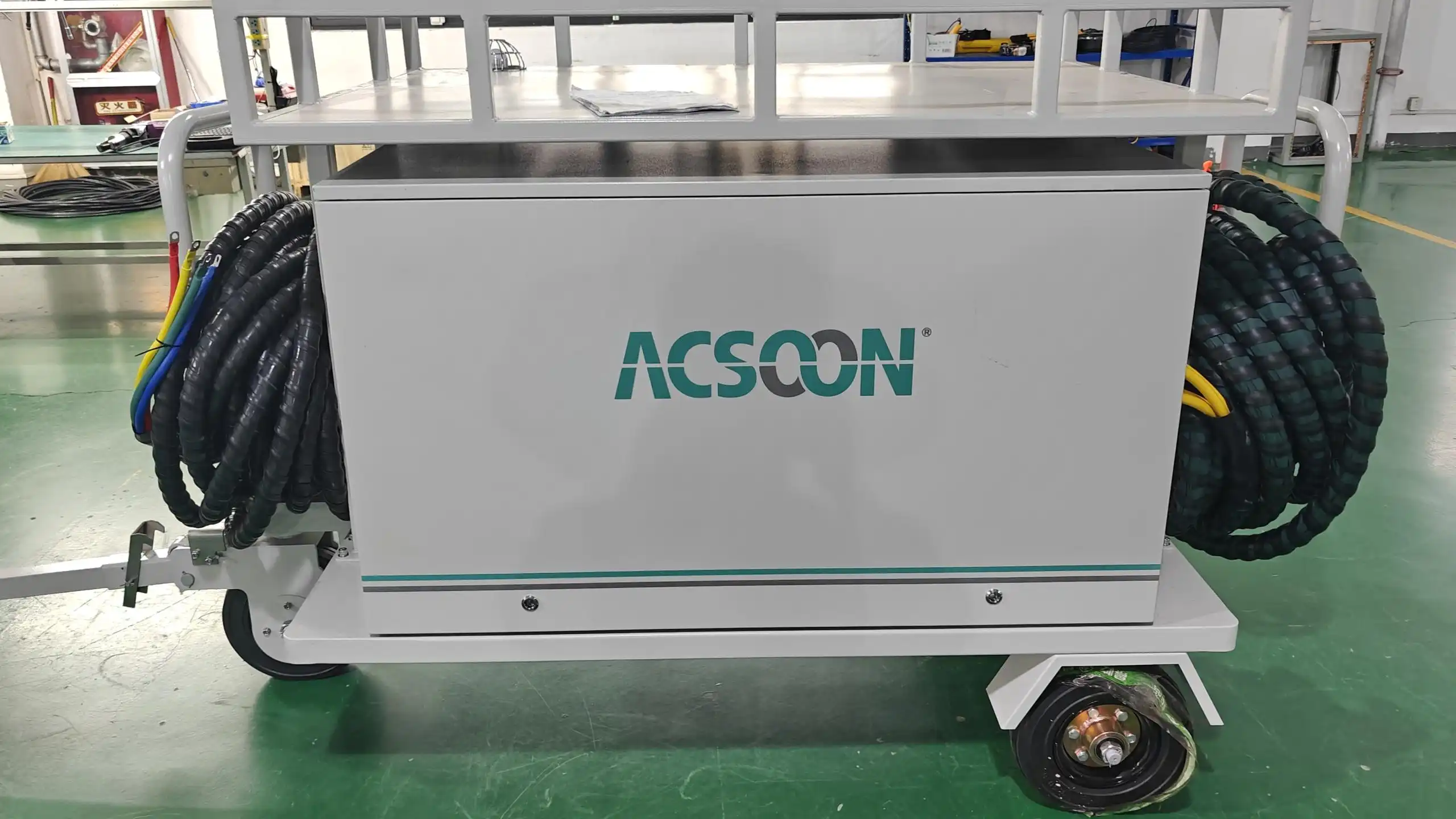
Understanding Airport Ground Power Units (GPUs)
Airport Ground Power Units are important pieces of infrastructure that change the way airports handle service activities for planes. Instead of using internal backup power units, which use a lot of jet fuel, these advanced power conversion systems bring electricity from outside sources to airplanes while they are on the ground.
Core Components and Functionality
These days, ground power systems combine cutting-edge frequency transfer technology with strong power delivery abilities. Power input units, frequency conversion circuits, voltage control systems, and special airplane link ports are all part of the basic design. These parts work together to change regular electricity into the exact 400Hz alternating current that aircraft electrical systems need. The process starts with regular three-phase input power, which is usually 380V at 50/60Hz, and goes through a series of complex electronic changes. Power semiconductor technology is used by advanced static frequency converters to make 400Hz output power that is clean, stable, and meets strict aircraft electrical standards. This process makes sure that it works with sensitive airplane operating and avionic systems.
Integration with Aircraft Electrical Systems
For ground power tools and airplane electrical networks to work together smoothly, the electrical features must be exact, and safety rules must be strong. Electrical systems in airplanes need very high-quality power, with tight voltage control, low harmonic distortion, and phase angle symmetry that stays within very tight limits. Modern GPUs can achieve phase angle symmetry of 120°±1° for balanced loads and 120°±2° for uneven situations up to 30%. Safety interlocks and safety systems stop electrical problems from happening when the GPU is being connected and disconnected. Some of these safety features are overcurrent protection, ground fault recognition, and emergency stop, all of which keep ground equipment and airplane electrical systems from getting damaged.
Types and Applications
Ground power options come in a variety of forms that are made to meet specific operating needs. Portable units give you options for fixing planes while they're parked far away, and set systems give you constant power at airport gates. Electric systems are better for the environment because they don't release any pollution locally, while diesel systems don't need to be connected to the power grid. The GPU400-330120 is an example of modern static frequency converter technology that includes wire management. This 120KVA device has both power conversion and cable coil functions in a single IP54-rated housing. It was designed to work on passenger boarding bridges where space efficiency and weather protection are important.

Key Efficiency Benefits of Airport Ground Power Units
Airport ground power unit technology delivers measurable efficiency improvements across multiple operational dimensions, from direct cost savings to environmental sustainability enhancements. These benefits compound over time, creating substantial value for airport operators and airlines seeking operational optimization.
Fuel Consumption Reduction and Cost Savings
During ground activities, airplane auxiliary power units use about 200 to 300 gallons of jet fuel an hour, based on the size of the aircraft and the amount of electricity it needs. External ground power gets rid of this use completely, which lowers operating costs right away. When airlines consistently use GPUs, they can save thousands of dollars per day on fuel costs for wide-body aircraft. Not only do they save money on fuel, but using GPUs also extends the time between engine repairs and lowers the total cost of airplane maintenance. The parts of an APU wear out and heat up, and cool down less often, so they last longer and need fewer replacements. This delay in servicing produces other cost benefits that often go beyond the original fuel savings.
Environmental Impact and Sustainability
Modern airports care about the environment, which is why ground power systems are important for tactics to cut down on emissions. Electric ground power units don't release any carbon dioxide, nitrogen fumes, or particulate matter into the air, which is different from when an APU is running. This decrease in emissions directly helps airports meet their goals to improve air quality and lower their carbon footprint. Reducing noise pollution is another important environmental benefit. APUs on airplanes make a lot of noise, which adds to worries about the airport's noise footprint. Ground power systems make a lot less noise when they're running, which makes it easier for people to work on the ground and lessens the effect on the neighborhood. Compared to diesel-powered APUs, electric units are almost completely quiet.
Operational Efficiency and Turnaround Time Optimization
Ground power units make it possible for planes to be turned around faster by providing stable, instant power. When the plane arrives, ground workers can turn on the power systems right away, without having to wait for the APU to start up. This ability cuts down on return times, makes schedules more reliable, and boosts the number of times an aircraft is used. Systems like the GPU400-330120's 26-meter reach cable length give operators more options for stopping aircraft in different ways. Thanks to this longer range, planes don't have to move around to get to power hookups, which saves time during busy times.
Making the Right GPU Choice for Your Operations
Selecting appropriate ground power equipment requires careful evaluation of technical specifications, operational requirements, and long-term cost considerations. The decision-making process involves analyzing power capacity needs, environmental constraints, and integration requirements with existing airport infrastructure.
Power Capacity and Technical Specifications
The amount of electricity an airplane needs depends a lot on the type of airplane, how it is used, and the weather. Modern wide-body planes may need at least 120KVA of power when they are on the ground, especially when the lights, air conditioning, and navigation systems are all being used at the same time. The GPU400-330120 has a 120KVA capacity and a three-phase 200VAC output at 400Hz, which is enough for most commercial flight uses. The amount of harmonic distortion and the accuracy of voltage control have a direct effect on how well airplane electrical systems work together. Poor power quality can make electronics not work, instruments not read correctly, and raise safety issues. Good ground power systems keep voltage control within ±1% and overall harmonic distortion below 3%, which makes sure that airplane systems work reliably.
Environmental Compliance and Protection Requirements
Airport ground power unit has to work in tough situations, like high temperatures, being exposed to wetness, and the possibility of chemical pollution. According to the IP54 rating, the system is safe from dust and water spray from all directions, so it can work reliably in most airport ground environments. Working in cold weather can be tricky for ground power systems, so they need strong heating systems and control algorithms that adjust to the temperature. In temperatures ranging from -20°C to +50°C, quality systems keep working at full capacity, meeting the needs of airports around the world.
Supplier Assessment and Partnership Criteria
To build trusting relationships with suppliers, you need to look at their professional knowledge, the quality of their products, and their ability to provide long-term help. Xi'an Jerrystar Instrument Co., Ltd. has more than 15 years of experience in aviation power systems and is an expert in 400Hz frequency converter technology and making airport ground equipment. Quality suppliers offer detailed technical documentation, certification compliance verification, and warranties that cover everything. The ACSOON name lets OEMs customize it, which lets them make solutions that fit particular business needs or address merging problems. This adaptability is very important for airports that have specific building problems or needs for handling airplanes.
Optimizing GPU Performance for Business Efficiency
Maximizing return on investment from ground power equipment requires systematic performance optimization strategies that address operational challenges and enhance system utilization. These strategies encompass preventive maintenance protocols, operational scheduling optimization, and continuous performance monitoring.
Maintenance Best Practices and Reliability Enhancement
Preventive repair programs make ground power units last a lot longer while keeping them working at their best. Power quality checks, link security checks, and control system operation checks should all be part of regular review plans. These preventative steps stop sudden failures that could stop airport operations at crucial times. Monitoring at the component level shows possible problems early on, before they affect operating availability. These days, systems have built-in monitoring tools that keep track of working hours, heat cycle events, and electrical stress factors. This information lets you plan maintenance in a way that reduces downtime and makes the best use of maintenance resources.
Strategic Energy Management and Load Optimization
Energy management methods that work well balance the need for good power quality with the cost of running the business. Peak demand management lowers the cost of energy by planning high-power tasks for times when rates are lower, or "off-peak." Smart load management systems can change the power delivery automatically based on how much electricity an airplane actually needs. This makes the whole system more efficient. Power factor optimization methods lower the costs of using electricity while making the system work better. Modern ground power units have automatic power factor adjustment built in, which keeps the electrical qualities at their best even when the airplane load changes. This feature lowers energy costs and makes sure that power quality is always delivered.
Performance Monitoring and Continuous Improvement
Monitoring performance in real time lets you make choices based on facts that lead to better business efficiency over time. Key success factors include how often the system is available, how good the power is, and how much energy is used. By looking at these measures, you can find ways to make operations better and see what training ground staff need. Case studies from large international airports show that thorough GPU optimization can lead to real changes in efficiency. When airlines use improved ground power processes, return times drop by 10 to 15 minutes per airplane run. This saves time, which directly leads to more reliable schedules and more efficient use of airplanes.
JERRYSTAR: Your Trusted Airport Ground Power Solutions Partner
Xi'an Jerrystar Instrument Co., Ltd. has stood as a premier manufacturer specializing in advanced airport ground power technology since 2007. Our expertise centers on the ACSOON brand of power conversion equipment, delivering reliable solutions for aviation, military, marine, and industrial applications worldwide.
Manufacturing Excellence and Product Portfolio
Our state-of-the-art factory in Xi'an, China, is between 5,000 and 10,000 square meters and has modern production tools and full quality control systems. We are experts in making 400Hz static frequency converters, variable frequency converters, and combined ground power solutions that are perfect for harsh aircraft settings. The GPU400-330120 is a great example of our dedication to new ideas and dependability. This system has a 26-meter wire coil and the ability to convert 120KVA of power all in one waterproof box. The IP54 grade makes sure that it will work reliably in tough airport settings, and the small size makes installation more flexible for use on passenger entry bridges.
Customization Capabilities and OEM Support
Our tech team offers a wide range of customization options to meet the needs of different operations. We provide custom solutions that solve specific application problems, whether it's changing the physical dimensions, adapting the power output, or adding specialized control systems. Full OEM partnerships are available for the ACSOON brand, which allows for private marking and the creation of unique features. Technical support and system integration advice are also available in addition to standard product options. Our engineers work with airport planners, flight repair teams, and people who run ground equipment to make sure that methods for deploying ground power are the most effective for operations.
Global Support Network and Service Excellence
We keep a large network of approved dealers and service specialists in many foreign markets. This makes sure that we can provide quick technical help, and parts are always available. We want our customers to be successful, so we offer full installation consultations, maintenance training programs, and flexible financing options that make it easy to buy and use equipment. Our regular attendance at major industry events like Inter Airport Expo, Dubai Airshow, and Singapore Airshow shows our dedication to working with the industry and advancing technology. Procurement workers from all over the world can get straight expert advice and test products in real life at these events.
Conclusion
Modern flight operations can't happen without airport ground power units. These units make operations much more efficient by reducing the amount of fuel used, protecting the environment, and improving return times. The new technology gets rid of the need for expensive APUs and gives better power quality and more operating freedom. Airport and flight owners around the world get the most out of their investments and operating benefits by carefully choosing the right equipment based on power needs, environmental concerns, and the supplier's capabilities.
FAQ
What safety standards must ground power units meet for airport operations?
Ground power equipment must comply with aviation electrical standards, including DO-160 environmental qualification and MIL-STD-704 power quality requirements. These standards ensure electromagnetic compatibility, environmental durability, and electrical safety for aircraft integration. Additional certifications may include CE marking for European operations and FCC compliance for electromagnetic emission control.
How do electric and diesel ground power units compare for long-term cost savings?
Electric ground power units typically offer lower operating costs due to reduced maintenance requirements and stable electricity pricing compared to diesel fuel volatility. Electric systems eliminate engine maintenance, oil changes, and emission system servicing while providing quieter operation and zero local emissions. However, diesel units offer grid independence and may be more cost-effective in locations with high electricity rates or limited electrical infrastructure.
Can ground power units be customized for specific aircraft types or airport layouts?
Modern ground power manufacturers offer extensive customization capabilities, including modified power output specifications, specialized connection interfaces, and adapted physical configurations. Custom cable lengths, weatherproof enclosures, and integration with airport management systems can be accommodated. The GPU400-330120 demonstrates this flexibility with its integrated design specifically optimized for passenger boarding bridge installations.
What maintenance intervals are recommended for optimal ground power unit performance?
Preventive maintenance schedules typically include weekly visual inspections, monthly electrical testing, and comprehensive annual servicing. Critical components such as power semiconductors, cooling systems, and electrical connections require regular monitoring to prevent unexpected failures. Manufacturer-recommended maintenance protocols ensure warranty compliance and optimal system reliability throughout the equipment lifecycle.
Partner with JERRYSTAR for Advanced Airport Ground Power Solutions
Leading airports and airlines worldwide trust JERRYSTAR as their preferred airport ground power unit supplier for mission-critical applications. Our ACSOON brand delivers proven reliability and performance excellence backed by comprehensive technical support and rapid delivery capabilities. As a specialized manufacturer with extensive aviation industry experience, we provide customized solutions that address your specific operational requirements while ensuring regulatory compliance and optimal total cost of ownership. Contact our technical specialists at acpower@acsoonpower.com to discuss your ground power needs and discover how our advanced 400Hz frequency conversion technology can enhance your operational efficiency and sustainability goals.
References
1. International Air Transport Association. "Airport Ground Power Equipment Standards and Best Practices for Commercial Aviation." IATA Technical Manual Series, 2023.
2. Federal Aviation Administration. "Advisory Circular AC 150/5220-14: Ground Power Equipment Design and Safety Requirements." U.S. Department of Transportation, 2022.
3. European Aviation Safety Agency. "Certification Specifications for Airport Ground Support Equipment Power Systems." EASA Technical Publication, 2023.
4. Airport Council International. "Sustainability Guidelines for Airport Ground Operations Equipment and Energy Management." ACI Environmental Technical Report, 2022.
5. Society of Automotive Engineers. "ARP 1179: Aircraft Ground Power Interface Specifications and Performance Standards." SAE International Aerospace Standards, 2023.
6. International Civil Aviation Organization. "Annex 14: Aerodrome Ground Power Systems Design and Operation Standards." ICAO Technical Publications, 2022.