




Benefits of Using 115VAC 400Hz AC Power Supply in Aviation
A significant amount of reliance is placed on specialized electrical systems that are capable of meeting the specific power requirements of the aviation industry. When it comes to current aircraft operations, an AC power supply with 115 VAC and 400 Hz is an essential component. This type of power supply is capable of delivering precise electrical power that is in accordance with the intricate requirements of aerospace applications. High-frequency power systems provide higher performance in comparison to normal power supplies operating at 60Hz. These systems offer lower weight, enhanced efficiency, and improved electromagnetic compatibility for sensitive aircraft electronics.
Why Aviation Systems Require 400Hz Power Frequency?
Ground-based electrical installations and aircraft power systems operate in a manner that is distinct from one another. There are compelling technological reasons that directly affect aircraft performance and safety, which led to the establishment of the 400 Hz frequency standard in the aviation industry.
When it comes to transformers and other electrical components, higher frequency power makes it possible to significantly reduce their weight. In comparison to their counterparts operating at 60Hz, transformers operating at 400 Hz use around 85 percent less iron core material. The reduction in weight results in an improvement in fuel efficiency as well as an increase in the cargo capacity of aircraft operational capabilities.
In addition, the space-constrained airplane environments can benefit from the compact design choices that are available with high-frequency power, such as the AC power supply 115 VAC 400 Hz. These smaller electrical components make it possible to design aircraft layouts that are more efficient and lower the difficulty of installation. Because of these benefits, power systems operating at 400 Hz are an absolute necessity for various current aircraft applications.
When power conditioning is performed at a frequency of 400 Hz, increased voltage regulation and less electromagnetic interference are achieved. When operating in demanding flight settings, aircraft avionics systems require power that is both clean and reliable in order to perform successfully. The higher frequency makes it possible to achieve stronger filtering capabilities and offers enhanced electrical isolation between systems that are sensitive.
Key Technical Parameters and Performance Indicators
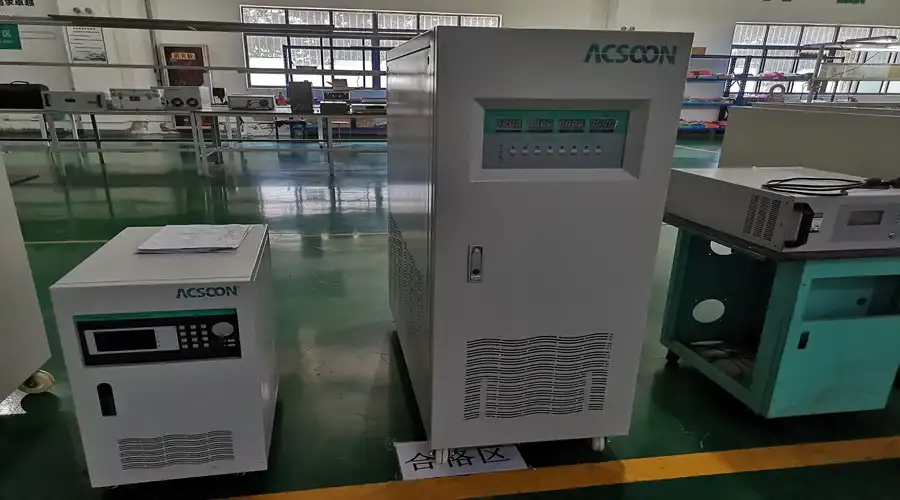
Engineers are better able to select acceptable power solutions for their applications when they have a thorough understanding of the technical parameters. In the realm of aircraft power systems, our ACSOON AF400M-33035 model is a prime example of the precision engineering that is necessary.
A large capacity for aviation training systems and ground support equipment is provided by the power rating of 35 kVA. This particular power level is capable of supporting numerous avionics systems simultaneously while preserving voltage stability under a wide range of load circumstances.
A wide range of facility power configurations can be accommodated by the input voltage flexibility, which ranges from 208V to 480V. Through the utilization of a three-phase input design, balanced loading, and enhanced power factor performance are guaranteed. This versatility makes the installation procedures easier to perform in a variety of different operational contexts.
The parameters of the output give 115 volts of regulated electricity at a frequency of 400 hertz, provided by the AC power supply 115 VAC 400 Hz. Typically, voltage regulation is able to maintain an accuracy of ±1% when operating under full load conditions. The frequency stability is maintained within a range of ±0.1% throughout the span of usual working ranges, hence guaranteeing constant performance for sensitive aircraft electronics.
The ingress protection rating of IP21 offers sufficient environmental protection for installations that are managed inside residential buildings. Given this rating, it is suitable for usage in hangars and maintenance facilities since it offers protection from falling water droplets while also preventing access to potentially hazardous equipment.
Core Benefits of 400Hz Power Systems in Aviation
Engineers working in the aerospace and military industries select 400Hz power systems on a continuous basis because of the advantages they have demonstrated in essential applications. Not only do these advantages extend beyond the fundamental power conversion, but they also include operational efficiency and mission reliability.
The most significant advantage in aviation applications may be the optimization of weight. In airplane electrical systems, every pound that is saved immediately contributes to an improvement in operating efficiency. It is important to note that high-frequency transformers weigh far less than their equivalents operating at 60Hz, which contributes to overall gains in aircraft performance.
The reduction of electromagnetic interference improves the compatibility of systems across sophisticated avionics installations that are sophisticated. The 400 Hz frequency allows for better separation from communication frequencies, which in turn minimizes interference with systems that are used for navigation and transfer of information. It turns out that electromagnetic compatibility is necessary for military applications, where the integrity of the signal is a factor in the success of the operation.
It is possible to have more compact installations in areas with limited space, thanks to increased power density. The lower footprint that 400Hz equipment has is advantageous for a number of different applications, including aircraft hangars, mobile maintenance units, and onboard power systems. Because of its compactness, the installation and maintenance operations are simplified.
Electronic equipment that is sensitive and requires consistent power conditions can benefit from improved voltage regulation. Avionics systems of today integrate cutting-edge digital components, which necessitate the use of electrical power that is both clean and consistent. Because of their improved regulation properties, power supplies operating at 400Hz ensure that these essential systems continue to function reliably.
JERRYSTAR's Superior 400Hz Power Solutions
JERRYSTAR's engineering team has more than 15 years of specialized knowledge in aviation power systems, and they bring that experience to the table. The enhanced product performance and reliability that this expertise provides for challenging applications is a direct result of this expertise.
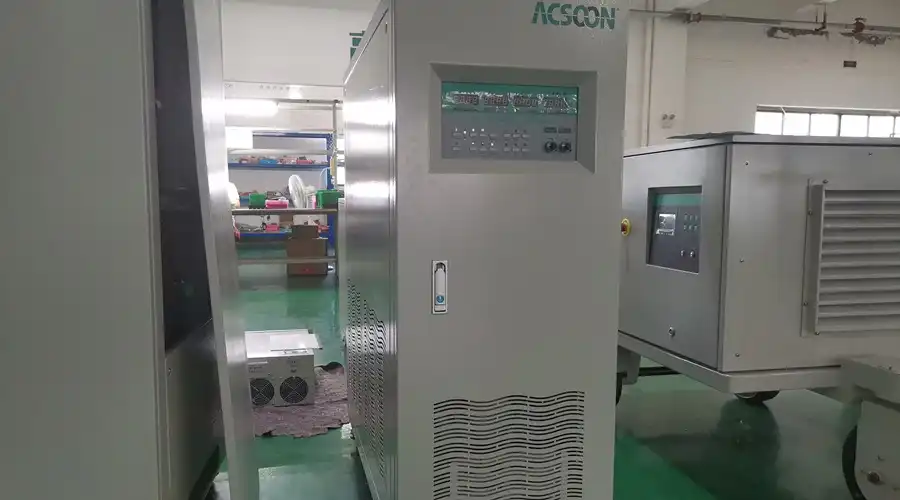
Through the ACSOON brand, we are able to demonstrate our dedication to quality and innovation in the field of frequency converter technology. The static frequency converters that we manufacture are equipped with cutting-edge semiconductor technology and complex control mathematical algorithms. The use of these design aspects guarantees accurate output regulation and a longer operational life.
Throughout the entirety of our production process, we adhere to the norms of ISO 9001 for manufacturing quality control. A complete testing method is performed on each unit, which includes full-load burn-in procedures and environmental stress assessment. By implementing such stringent quality assurance measures, important applications can have trust in their long-term dependability.
Our solutions are distinguished from ordinary commercial offerings by the fact that they can be customized. Our output configurations are modified, unique monitoring systems are added, and we include the requirements that are specific to the customer. This adaptability guarantees the highest possible performance across a wide range of application needs.
Comprehensive pre-sale consulting and continuous operational assistance are both included in the scope of technical support provisions. When it comes to optimizing system integration and troubleshooting operational concerns, our engineers coordinate their efforts directly with customers. This commitment to assisting is maintained throughout the whole product lifecycle.
Optimal Implementation and Usage Guidelines
In order to successfully deploy 400Hz power systems, it is necessary to pay great attention to the installation and operational factors. Effective planning guarantees the greatest possible benefits and dependable performance over the long run.
Temperature regulation, ventilation requirements, and electromagnetic compatibility should all be taken into consideration when environmental factors are taken into account. Having sufficient cooling helps to keep component temperatures at their ideal levels and prolongs the life of the equipment. It is important to have adequate ventilation in order to avoid the accumulation of moisture and to provide dependable operation in a variety of climate conditions.
The optimization of system efficiency and the prevention of overloading conditions are both helped by load planning. Installations that are undersized can be avoided by doing calculations to determine the total connected load, diversity factors, and future expansion requirements. It is also possible to identify chances for improving system efficiency through the use of proper load analysis.
Inspections of control circuits, electrical connections, and cooling systems must be included in the maintenance schedule regularly. Performing preventative maintenance helps to extend the life of equipment and prevents unanticipated breakdowns. Procedures for maintenance that are documented guarantee a constant level of service quality and compliance with regulations.
The reliability of the system is improved through training programs for operating workers, which also reduces the expenses of maintenance. The entire performance of the system can be improved by having a better understanding of the correct operating methods, troubleshooting approaches, and safety standards. A well-trained operator can spot possible problems before they have an impact on operations that are mission-critical.
Conclusion
The benefits of using power systems that operate at 115 volts air current and 400 hertz, such as the AC power supply 115 VAC 400 Hz, in aviation applications go well beyond simple electrical conversion. These specialized power solutions offer a number of important advantages, including a reduction in weight, an improvement in electromagnetic compatibility, and an increase in reliability for crucial aeronautical activities. Because of JERRYSTAR's dedication to technical excellence and excellent production, we are able to guarantee that our customers will obtain power systems that are capable of satisfying the stringent criteria of contemporary aviation applications. Because of our all-encompassing approach to customisation, quality control, and technical assistance, we have established ourselves as the partner of choice for aircraft power system requirements.
FAQ
Q: What makes 400Hz power superior to standard 60Hz for aviation applications?
A: The higher frequency enables significant weight reduction in transformers and electrical components, which is crucial for aircraft efficiency. Additionally, 400Hz power provides better electromagnetic compatibility with aviation electronics and allows for more compact system designs in space-limited aircraft environments.
Q: How does the AF400M-33035 model ensure reliable operation in critical applications?
A: Our AF400M-33035 incorporates advanced static frequency converter technology with precise voltage regulation (±1%) and frequency stability (±0.1%). The unit undergoes rigorous quality testing following ISO 9001 standards and includes comprehensive protection systems for reliable operation in demanding environments.
3: Can JERRYSTAR customize 400Hz power supplies for specific aviation requirements?
A: Yes, we offer extensive customization capabilities, including modified output configurations, specialized monitoring systems, and customer-specific requirements. Our engineering team works directly with customers to develop tailored solutions that meet unique application demands while maintaining regulatory compliance.
Partner with JERRYSTAR for Your Aviation Power Needs
JERRYSTAR stands as your trusted AC power supply 115 VAC 400 Hz manufacturer, delivering precision power solutions that meet the exacting standards of aerospace and defense applications. Our ACSOON brand combines proven reliability with innovative engineering to support your critical operations. With comprehensive customization capabilities, rigorous quality standards, and responsive technical support, we ensure your power systems perform flawlessly when mission success depends on it. Ready to enhance your aviation power infrastructure? Contact us at acpower@acsoonpower.com">acpower@acsoonpower.com to discuss your specific requirements.
References
1. Federal Aviation Administration. "Aircraft Electrical Power Systems: Design and Installation Guidelines." Aviation Safety Standards Manual, 2023.
2. Society of Automotive Engineers. "Aerospace Standard AS400: Aircraft Electrical Power Characteristics and Utilization." SAE International Publications, 2022.
3. Institute of Electrical and Electronics Engineers. "IEEE Standard 519: Recommended Practices for Electrical Power Quality in Aerospace Applications." IEEE Power Engineering Society, 2023.
4. Military Standard Committee. "MIL-STD-704F: Aircraft Electric Power Characteristics." Department of Defense Interface Standards, 2022.
5. International Civil Aviation Organization. "Annex 8: Airworthiness of Aircraft - Electrical Power Systems." ICAO Technical Manual, 2023.
6. Aerospace Industries Association. "Power Systems Integration Guidelines for Commercial and Military Aircraft." AIA Technical Report Series, 2022.
