




Can a 415v Voltage Stabilizer Prevent Voltage Fluctuation Damage?
Absolutely, a 415V voltage stabilizer can prevent voltage fluctuation damage by regulating an inconsistent power supply to sensitive industrial equipment. These three-phase stabilizers actively monitor incoming voltage and adjust it to maintain output within ±2% tolerance, shielding machinery from the harmful effects of surges, sags, and transient spikes. By providing consistent voltage regardless of grid instability, the device protects critical assets like CNC machines, robotic arms, and data center infrastructure from premature failure, thermal stress, and operational disruptions.
Understanding 415V Voltage Stabilizers and Voltage Fluctuation Problems
Voltage fluctuations jeopardize equipment integrity and operational continuity, remaining a constant concern in industrial environments. To safeguard capital investments, procurement teams should be knowledgeable about the operation of three-phase stabilizers.
What Is a 415V voltage stabilizer, and How Does It Differ from 220V Models?
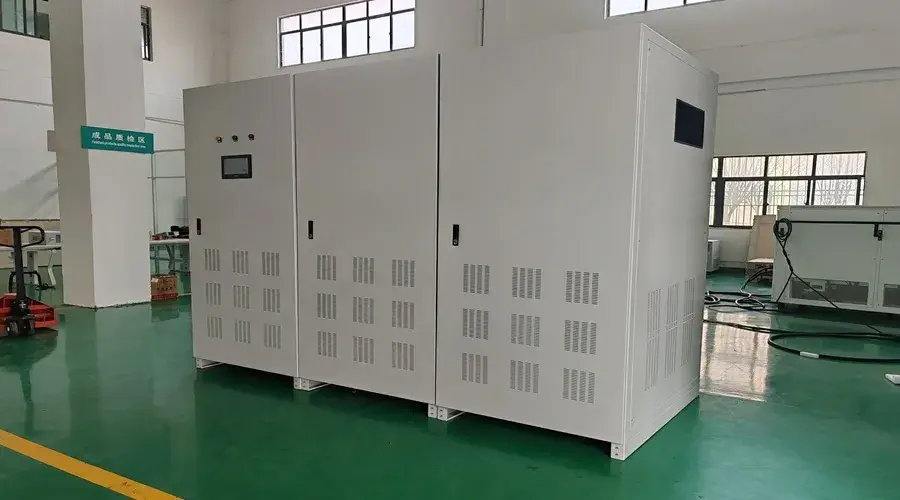
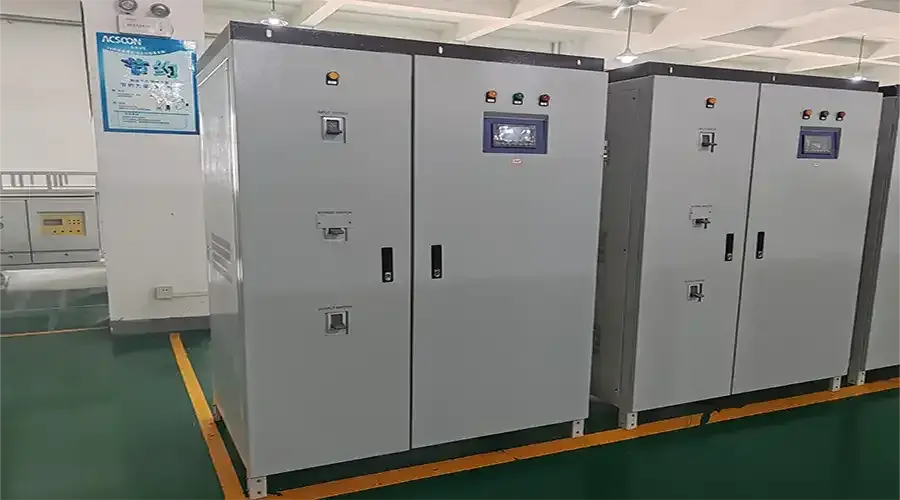
A 415-volt voltage stabilizer is a three-phase power conditioning device commonly used in commercial and industrial applications that require a consistent and balanced voltage distribution over all three phases. In contrast to the single-phase 220V systems commonly found in residential and small commercial areas, these stabilizers are designed for industrial applications and have the capability to simultaneously regulate all three phases. These stabilizers can handle much larger power needs. A model that falls into this category is our ACSOON AF30-330200. It has a power rating of 200kVA, is capable of handling input voltage variations of ±20%, and maintains output stability within ±2%. This three-phase design is essential for mission-critical infrastructure, automated production lines, and heavy machinery because it keeps components from wearing out too quickly or malfunctioning due to phase imbalance.
Common Causes of Industrial Voltage Fluctuations
Industrial facilities face voltage instability from multiple sources. Grid-level issues arise when utility infrastructure struggles to meet peak demand or experiences equipment failure at substations. Heavy machinery operations create significant load variations—when large motors start or arc welders activate, they draw massive inrush currents that temporarily depress voltage levels. Environmental factors such as lightning strikes, severe weather events, and temperature extremes affect transmission line performance. Additionally, power quality degradation occurs when multiple facilities share transformer capacity, causing voltage to drop during simultaneous high-demand periods. We have observed voltage swings ranging from 330V to 480V in manufacturing plants operating near capacity, well beyond the tolerance threshold of precision equipment.
Detrimental Effects on Equipment, Productivity, and Safety
Unregulated voltage fluctuations accelerate equipment deterioration through multiple failure mechanisms. Undervoltage conditions force motors to draw excessive current to maintain torque, generating heat that degrades insulation and shortens winding lifespan. Overvoltage stresses electronic components, causing dielectric breakdown in capacitors and premature failure in control circuits. Productivity suffers when CNC machines lose positioning accuracy, robotic arms malfunction mid-cycle, or PLC systems reset unexpectedly. Safety hazards emerge when protective relays trip unnecessarily or fail to activate when genuinely needed. Research conducted by the Electric Power Research Institute indicates that voltage variations exceeding 10% reduce equipment lifespan by 30-50%, while production downtime costs manufacturers an average of $260,000 per hour across industries.
Internal Mechanisms: How Stabilizers Maintain Consistent Voltage
Static SCR-controlled 415V voltage stabilizers employ thyristor-based switching technology to provide continuous, stepless voltage regulation. The control circuit continuously samples input voltage at microsecond intervals, comparing measured values against reference setpoints. When deviation exceeds preset thresholds, the microprocessor-controlled system adjusts the firing angle of silicon-controlled rectifiers (SCRs), effectively modulating transformer tap positions without mechanical movement. This solid-state approach delivers response times under 20 milliseconds, fast enough to counteract most transient events before sensitive equipment registers disturbance. The three-phase automatic balancing feature redistributes load across phases, preventing single-phase overload scenarios. With 200% overload capacity sustained for 10 seconds, the stabilizer absorbs motor starting surges without voltage sag, maintaining clean power delivery throughout the acceleration period.
Key Benefits and Applications of 415V Voltage Stabilizers in B2B Settings
Industrial clients selecting voltage stabilization equipment prioritize reliability, efficiency, and total cost of ownership. Understanding these operational advantages helps engineers justify capital expenditure and secure management approval.
Core Advantages for Industrial Operations
The strategic deployment of three-phase stabilizers delivers measurable operational improvements. Equipment protected from voltage stress operates within design parameters, reducing unplanned maintenance interventions and extending service intervals. Energy efficiency improves when motors run at optimal voltage—both overvoltage and undervoltage conditions increase power consumption and reduce power factors. The protection circuitry embedded in quality stabilizers guards against short circuits, overtemperature conditions, and phase loss scenarios. Manufacturing facilities report a 40-60% reduction in equipment failure rates after installing proper voltage regulation, translating directly to lower maintenance budgets and reduced spare parts inventory requirements.
Here are the specific benefits demonstrated by the ACSOON AF30-330200 model:
- Surge Protection: Complete protection suite guards against voltage spikes, transient surges, and phase imbalance conditions that damage sensitive electronics and control systems
- Energy Optimization: Maintaining voltage within ±2% tolerance ensures motors operate at peak efficiency, reducing electricity consumption by 8-12% compared to an unregulated supply
- Extended Equipment Life: Consistent voltage eliminates thermal cycling stress on transformers, contactors, and electronic components, extending mean time between failures by 3-5 years
- Reduced Downtime: Fast response time and automatic phase balancing prevent nuisance tripping and production interruptions, improving overall equipment effectiveness (OEE) metrics
These advantages translate into quantifiable return on investment. Facilities managers calculating payback periods typically see equipment costs recovered within 18-24 months through reduced maintenance expenses and avoided production losses.
Typical Industrial Applications
Many different types of industries rely on three-phase stabilizers since their power quality is so important. Where voltage fluctuations endanger dimensional accuracy and surface smoothness, manufacturing facilities use these units to safeguard CNC machining centers. Stabilizers are essential in data centers and telecommunications infrastructure for preventing data corruption and ensuring that servers operate uninterrupted. Stable voltage is essential for accurate and repeatable measurements in laboratory testing conditions. In marine applications, the use of generator-supplied power is especially problematic due to load changes caused by equipment cycling on and off. In order to maintain aircraft systems safely, ground support equipment for aviation requires clean, regulated power. Our ACSOON stabilizer types are designed to withstand a wide variety of installation situations, from climate-controlled control rooms to harsh outdoor enclosures, thanks to their IP20 and IP54 exterior protection classes, respectively.
Essential Maintenance and Care Strategies
Maximizing stabilizer reliability requires implementing structured maintenance protocols. Visual inspection conducted quarterly identifies loose terminal connections, dust accumulation on cooling fans, and signs of thermal stress on components. Thermal imaging performed annually detects hotspots indicating failing contactors or corroded bus bars before catastrophic failure occurs. Voltage measurements at input and output terminals verify regulation accuracy remains within specification. Cleaning air filters monthly prevents cooling system degradation that could trigger overtemperature shutdowns. Recording operational parameters establishes performance baselines that help identify gradual degradation trends. Facilities implementing these maintenance practices report stabilizer uptime exceeding 99.7%, with mean time between failures extending beyond 15 years.
Comparing 415v Voltage Stabilizers: Choosing the Right Solution for Your Needs
Procurement teams evaluating stabilizer options must weigh multiple technical and commercial factors. Understanding key differentiators enables informed decisions aligned with operational requirements and budget constraints.
Voltage Capacity Considerations: 415v vs. 220v Models
The fundamental distinction between single-phase and three-phase stabilizers extends beyond voltage level. Three-phase 415V systems distribute power more efficiently across industrial loads, reducing conductor size requirements and minimizing transmission losses. Single-phase 220V stabilizers suit light commercial applications with modest power demands—office equipment, retail lighting, and small HVAC units. Industrial environments requiring power levels above 50kVA universally specify three-phase equipment due to superior load-handling capability and balanced power delivery. Attempting to use multiple single-phase units instead of a properly sized three-phase stabilizer creates phase imbalance issues and increases system complexity. The 200kVA capacity of our AF30-330200 model supports substantial manufacturing cells, entire building power distribution systems, or multiple smaller machines operating simultaneously.
Digital vs. Analog Technology Trade-offs
Modern stabilizers use either digital SCR-based regulation or analog servomotor control. Using motorized variable transformers with carbon brush contacts, analog servo systems offer smooth voltage control. However, mechanical maintenance and periodic brush replacement are necessary for these systems. Our ACSOON model and other digital SCR-controlled stabilizers do away with moving parts altogether, which increases reliability and decreases maintenance needs. Compared to analog systems, solid-state switching provides more complex protective features and faster responses to transitory occurrences. Digital versions function with 97-98% efficiency across the load range, in contrast to analog systems that can show lower initial efficiency owing to continuous motor activity. There is a cost-benefit analysis based on lifecycle expenses, with digital units being more cost-effective due to lower maintenance needs and greater reliability compared to analog designs, which are 20-30% cheaper initially.
Evaluating Manufacturers: Quality Indicators and Certifications
Examining many credibility indicators beyond marketing promises is necessary for distinguishing quality firms. Demonstrating a dedication to established quality management systems and continuous improvement methods, ISO 9001 certification is a mark of excellence. Products that have received CE approval have been shown to meet the stringent technical requirements set out by the European Union in terms of safety and electromagnetic compatibility. Our 5,000-10,000 square meter plant keeps enough inventory for rapid delivery even during demand surges, thanks to its large production capacity and manufacturing facility size. We are able to produce on schedule. Our expertise in the aviation and military power systems industries, where we have worked for over a decade, proves that we can meet stringent requirements in fields where mistakes have dire repercussions. Having the ability to assist OEMs shows that production can adapt to meet specific needs. Manufacturers confident in their products stand out from those trying to minimize post-sale responsibilities.
Procurement Guide: How to Buy a 415V Voltage Stabilizer with Confidence
Navigating the procurement process requires understanding pricing structures, identifying reputable suppliers, and evaluating total value beyond the initial purchase price.
Pricing Structures and Cost Optimization Strategies
Power rating, regulation technology, protective features, and customization needs all play a role in the pricing of three-phase stabilizers. Depending on the specifics of the order and the quantity, a standard model like the AF30-330200 with 200kVA can cost anywhere from $8,000 to $15,000. Prices tend to be higher for custom designs that include features like integrated monitoring systems, enhanced temperature ratings, or specialized enclosures. Volume purchasers routinely negotiate discounts of 15-25% relative to the single-unit price in multi-unit contracts. Shipping and production durations can affect the final price tag; typical lead times increase by 10–20% for expedited services. By evaluating warranty terms, verified reliability indicators, and included service provisions, savvy procurement teams balance upfront cost against lifecycle value. When comparing values, it's better to factor in the whole cost of ownership, which includes installation, commissioning, maintenance, and estimated lifespan, rather than just the purchase price.
Identifying Reliable Manufacturers and Technical Support
One example of a manufacturer-trader hybrid that takes into account both production control and market reactivity is Xi'an Jerrystar Instrument Co., Ltd. Across a wide range of challenging areas, our expertise in ACSOON brand power converters has proven itself, with applications in aircraft, industrial, marine, and laboratory testing. Our factory in Xixian New District's Jinghe New Town uses rigorous quality control measures at every stage of manufacturing. Thorough testing is conducted on component selection prior to authorization for assembly. To catch errors before final testing, multi-stage quality checks are used during assembly. Before being shipped out, every device is thoroughly tested to make sure it matches all of the specified standards. Products are guaranteed to perform reliably in various operational settings when they adhere to international standards. Precision and dependability are essential in our work with aviation and military power systems, which are also advantageous in commercial applications. Manufacturing on demand satisfies specific demands not met by off-the-shelf catalog items, and having a sufficient inventory allows for the quick turnaround times typical in mission-critical applications.
Installation, Troubleshooting & Risk Mitigation for 415v Voltage Stabilizers
Proper installation and ongoing operational support ensure stabilizers deliver expected performance throughout their service life.
Step-by-Step Installation Process and Common Pitfalls
Safe stabilizer installation begins with site preparation and equipment verification. Confirm the foundation or mounting surface supports the equipment's weight—the AF30-330200 model weighs approximately 850 kg and requires structural support adequate for point loads. Verify adequate clearance for ventilation—maintain a minimum 500mm spacing on sides with cooling fans. Check that incoming power characteristics match stabilizer input specifications, using calibrated test equipment. Connect input and output conductors using properly sized cables based on full load current plus 25% margin. Torque terminal connections to manufacturer specifications using calibrated tools. Connect protective earth grounding using conductors sized per electrical code requirements. Program control parameters, including target output voltage and protection thresholds. Common installation errors include undersized input conductors causing voltage drop under load, inadequate grounding creating shock hazards, and insufficient ventilation triggering thermal shutdowns. Commissioning procedures verify that all phases are regulated correctly under varying load conditions before energizing the protected equipment.
Troubleshooting Typical Operational Issues
Most operational problems stem from environmental conditions or application mismatches rather than equipment defects. Nuisance tripping typically indicates undersized capacity relative to actual load—the stabilizer correctly protects itself from overload damage. Output voltage remaining outside tolerance suggests input voltage exceeding the ±20% adjustment range or failed control components requiring professional service. Unusual acoustic noise may indicate loose laminations in the transformer core or failing cooling fans. Temperature alarms during normal operation signal inadequate ventilation, excessive ambient temperature, or accumulated dust blocking cooling airflow. When troubleshooting, always verify input power quality meets equipment specifications before suspecting stabilizer malfunction. Document operating conditions when problems occur—load levels, ambient temperature, and input voltage measurements—to facilitate diagnosis. While routine adjustments and cleaning fall within facility maintenance capability, internal repairs require qualified technicians with appropriate test equipment and genuine replacement components.
Comprehensive Voltage Protection Strategy
A 415V voltage stabilizer is one element of holistic power quality management. Facilities handling truly critical loads implement layered protection combining stabilizers, surge protection devices, and uninterruptible power supplies. Continuous monitoring using power quality analyzers identifies degrading conditions before equipment damage occurs. Scheduled maintenance following manufacturer recommendations prevents reliability degradation. Emergency response procedures minimize downtime when equipment failures do occur. Risk assessment identifies which loads justify premium protection levels versus standard utility supply. This strategic approach balances protection investment against the consequences of failure, allocating resources where they generate maximum risk reduction.
Conclusion
415V voltage stabilizers pose genuine threats to industrial equipment reliability, productivity, and operational safety. Three-phase stabilizers effectively mitigate these risks through rapid, continuous voltage regulation that shields sensitive machinery from damaging power quality events. The combination of surge protection, phase balancing, and precision regulation extends equipment lifespan while reducing maintenance expenses and unplanned downtime. Choosing the right stabilizer capacity, technology platform, and quality level means carefully evaluating operational requirements and supplier capabilities. Proper installation, routine maintenance, and integration within comprehensive power protection strategies maximize reliability and return on investment.
FAQ
Can a 415V voltage stabilizer handle sudden voltage spikes effectively?
Modern SCR-controlled stabilizers respond to voltage transients within 20 milliseconds, fast enough to protect most industrial equipment from damage. The regulation circuitry continuously monitors input voltage and adjusts output accordingly. Built-in surge protection components absorb high-energy transients that exceed the normal regulation range. The 200% overload capacity sustained for 10 seconds in quality units like the ACSOON AF30-330200 handles motor starting surges without output voltage sag, preventing nuisance trips and equipment resets.
How frequently should industrial voltage stabilizers undergo professional servicing?
Annual professional inspection suffices for most industrial environments with controlled conditions. Harsh environments with extreme temperatures, dust exposure, or corrosive atmospheres warrant semi-annual service. Routine maintenance includes thermal imaging, connection torque verification, cooling system inspection, and regulation accuracy testing. Facilities staff can perform quarterly visual inspections and monthly filter cleaning. Documenting service history establishes performance baselines that identify degradation trends requiring intervention.
What factors most significantly influence stabilizer lifespan and reliability?
Operating temperature represents the primary lifespan determinant—each 10°C temperature increase above rated conditions halves expected component life. Adequate ventilation and climate control prove essential. Load cycling severity matters as well; constant moderate loads cause less stress than frequent heavy surge events. Component quality in the original design determines baseline reliability. Routine maintenance addressing minor issues before they cascade into major failures extends service life substantially beyond minimum specifications.
Partner with JERRYSTAR for Reliable Industrial Voltage Stabilization Solutions
Xi'an Jerrystar Instrument Co., Ltd. delivers proven three-phase stabilization technology engineered for demanding industrial applications. Our ACSOON AF30-330200 415V voltage stabilizer manufacturer expertise combines static SCR control, comprehensive protection features, and robust construction meeting IP20 indoor and IP54 outdoor standards. Aviation and military sector experience ensures reliability standards appropriate for mission-critical applications. Custom OEM capabilities accommodate unique specifications while maintaining adequate inventory for expedited delivery when urgent needs arise. Contact our technical team at acpower@acsoonpower.com to discuss your specific voltage regulation requirements and receive detailed technical specifications matched to your operational environment.
References
1. Electric Power Research Institute. (2019). "Impact of Voltage Quality on the Reliability and Energy Efficiency of Industrial Equipment." Technical Report Series on Power Quality Management.
2. International Electrotechnical Commission. (2020). "IEC 61378: Voltage Stabilizers for Industrial Applications - Performance Standards and Testing Protocols."
3. Institute of Electrical and Electronics Engineers. (2021). "IEEE Standard 1250: Guide for Service to Equipment Sensitive to Momentary Voltage Disturbances."
4. National Electrical Manufacturers Association. (2022). "NEMA Standards Publication PE 1: Voltage Ratings for Electrical Power Systems and Equipment."
5. Copper Development Association. (2020). "Power Quality Application Guide: Voltage Fluctuation Effects on Industrial Motors and Control Systems."
6. American Society of Heating, Refrigerating, and Air-Conditioning Engineers. (2021). "ASHRAE Technical Committee 9.9: Mission Critical Facilities and Power Quality Requirements."
