




Can a 400hz Power Supply Aircraft Lower Ground Support Costs?
A 400 Hz power supply aircraft system can substantially lower ground support costs by reducing equipment weight, streamlining maintenance schedules, and eliminating compatibility issues that plague conventional power systems. Modern aviation ground power units operating at 400Hz deliver measurable savings across infrastructure investment, operational efficiency, and long-term reliability. These specialized systems reduce the physical footprint of ground support equipment while cutting energy waste, leading to direct cost reductions that impact your bottom line immediately.
Understanding 400Hz Power Supply in Aircraft
Why Does Aviation Rely on 400 Hz Frequency Standards?
As a result of the significant size and weight reductions made possible by operating at 400Hz rather than the more conventional 50Hz or 60Hz utilized in utility grids, this frequency has become the de facto norm in the aviation industry for electrical equipment. The size of the transformer's magnetic core decreases as the frequency increases; this phenomenon allows a 400Hz transformer to be as much as 70% lighter than a 60Hz transformer of the same power output. Reduced weight means more payload capacity and less fuel consumption while in flight.
Core saturation rates and magnetic flux density are the physical building blocks of this benefit. To attain the same level of power conversion efficiency with higher-frequency alternating current, smaller core volumes and fewer winding turns are necessary. The 400Hz standard has been the gold standard for decades in aeronautical engineering when it comes to matching equipment performance with weight limits.
Operational Principles of High-Frequency Power Conversion
The use of solid-state frequency converters, which accurately control the output voltage and frequency, is necessary to transform regular utility power into aviation-grade 400Hz. These converters meet the precise requirements of aircraft electrical systems by converting three-phase 380V, 50Hz input to three-phase 115V/200V, 400Hz output. Using state-of-the-art semiconductor switching technology, the incoming AC power is rectified to DC and then inverted to AC at the target frequency to complete the conversion process.
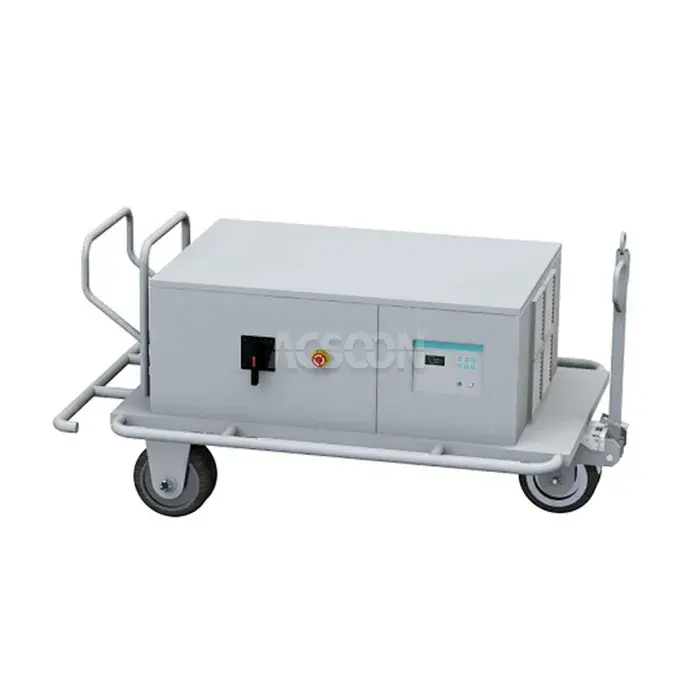
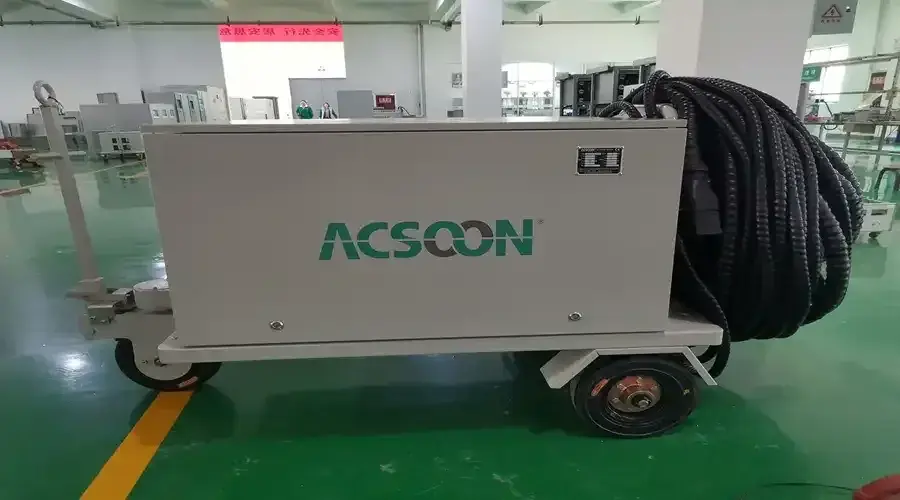
The ACSOON GPU-330030 is a state-of-the-art ground power unit that delivers 30kVA of power and maintains very stable voltage. Ensuring pure sinusoidal waveforms that safeguard sensitive avionics from harmonic distortion, the device maintains a crest factor of 1.414±3%. These systems ensure reliable outdoor operation and easy transportability in various situations, thanks to their IP54 ingress protection and mobile trolley design.
Advantages in Aviation Ground Support Environments
Adopting 400Hz ground power infrastructure creates multiple operational advantages. Reduced equipment mass means ground crews can reposition power carts with less effort and smaller towing vehicles. Compact dimensions allow tighter storage configurations and more efficient use of limited ramp space. The inherent efficiency of 400Hz systems reduces cooling requirements, extending component lifespan and decreasing maintenance intervals.
Electrical compatibility with onboard aircraft systems eliminates the need for multiple adapter types and reduces connection errors during ground servicing. This standardization accelerates turnaround times and minimizes the risk of equipment damage from incorrect power application. Airlines report measurable decreases in ground delay incidents when using properly specified 400Hz ground power equipment.
Ground Support Challenges and the Role of Aircraft Power Systems
Cost Pressures Facing Modern Ground Handling Operations
Ground support operations face relentless pressure to reduce costs while maintaining safety and service quality. Equipment procurement represents significant capital expenditure, while ongoing maintenance, energy consumption, and staffing costs create continuous operational expenses. Any technology that addresses multiple cost categories simultaneously delivers compounding benefits across the operational budget.
Legacy ground power systems often require extensive cabling infrastructure, multiple voltage transformation stages, and redundant safety equipment to bridge compatibility gaps between utility power and aircraft requirements. These workarounds add complexity, increase failure points, and demand specialized technical knowledge from maintenance personnel.
How Do 400Hz Systems Simplify Ground Infrastructure?
Designed specifically for 400Hz ground power units, these integrated devices streamline numerous processes into one. Operations can use integrated systems that handle all power conditioning needs, so separate transformers, frequency converters, and voltage regulators are no longer needed. By merging these functions, we were able to lower our spare parts inventory, streamline technician training, and cut down on the overall number of units that needed calibration and inspection on a regular basis.
With JERRYSTAR's ACSOON brand systems, you can run them in various power grid circumstances without any extra conditioning gear thanks to their flexible input voltage tolerance. Output voltage control prevents voltage dips or surges that could cause malfunction codes or damage delicate electronics, keeping tolerances tight even under changing load conditions and protecting aircraft systems.
Reliability Benefits That Reduce Reactive Maintenance
Solid-state power conversion technology eliminates the rotating machinery found in older motor-generator sets, removing wear-prone bearings, brushes, and mechanical couplings. This transition from electromechanical to electronic systems dramatically reduces unscheduled maintenance events. Well-designed 400Hz converters operate for thousands of hours between service intervals, with most maintenance limited to filter cleaning and connection inspection.
Enhanced reliability translates into improved aircraft dispatch rates and fewer ground delays attributable to power equipment failures. When ground power units consistently perform as expected, operations can maintain tighter turnaround schedules and reduce the buffer time traditionally allocated to equipment troubleshooting.
Technical Considerations and Cost Impacts of 400Hz Power Supplies
Engineering Principles Behind Durable 400Hz Systems
The quality 400 Hz power supply aircraft incorporates multiple design features that ensure long-term durability under demanding operational conditions. Thermal management systems prevent component overheating during extended high-load operation. Robust input filtering protects internal circuits from utility power disturbances. Comprehensive output protection circuits immediately detect and respond to short circuits, overloads, and phase imbalances before damage occurs.
The GPU-330030 model features integrated short-circuit protection at the output stage, automatically disconnecting power when fault conditions are detected. This protection mechanism prevents damage to both the ground power unit and the connected aircraft, avoiding costly repair scenarios. Variable frequency capability allows the same unit to serve testing applications beyond standard ground support, maximizing equipment utilization.
Common Technical Challenges and Mitigation Strategies
In comparison to more traditional utility frequency gear, high-frequency power systems have their own set of difficulties. Careful cable sizing is required to avoid voltage reductions over long cable lengths due to the skin effect, which increases conductor resistance at 400Hz. The inductive reactance, which increases proportionally with frequency, impacts motor starting characteristics and transformer behavior. Proper component selection and circuit design enable equipment designers to account for these physical phenomena.
By monitoring the voltage at the point of connection to the aircraft instead of the converter's output terminals, remote voltage sensing is possible to correct for cable losses. This feedback loop ensures that the voltage at the place of use remains constant, independent of the length of the cable or the current flowing through the load. The precision of the regulation depends on the sensing circuit, so it is important to verify its integrity on a frequent basis during installation.
Preventive Maintenance Practices That Control Lifecycle Costs
Establishing structured maintenance schedules prevents small issues from escalating into major failures. Regular inspections should verify connection tightness, cooling system cleanliness, and control system calibration accuracy. Most solid-state converters require minimal intervention beyond periodic filter replacement and environmental protection verification. Detailed service records help identify patterns that might indicate developing problems before operational impact occurs.
Testing protocols should include output waveform analysis to detect harmonic distortion or frequency drift that might affect aircraft systems. Voltage regulation under load confirms proper control circuit operation. Ground fault protection circuits require functional verification to ensure personnel safety systems remain effective.
Comparison of 400Hz Power Supply Solutions for Aviation Ground Support
Fixed Frequency Versus Variable Frequency Technologies
Most ground support applications for commercial aircraft may be accommodated by standard 400 Hz power supply aircraft, which give a set output frequency. For fleets with consistent power needs, these units provide simplicity and cost efficiency. Adaptable to "wild frequency" power systems that function across greater frequency ranges, variable frequency converters allow for flexible output from 360Hz to 800Hz, making them suitable for use by specialist military aircraft and advanced commercial platforms.
The future needs and makeup of the fleet will dictate whether variable frequency or fixed frequency technology is preferred. Because of its flexible frequency capability, operations that service a wide variety of aircraft types can do away with the requirement for a plethora of specialist ground power units. For certain types of operations, the acquisition cost of fixed-frequency units may be cheaper than what is needed to ensure appropriate capability.
Evaluating Supplier Options for B2B Procurement
Several established manufacturers supply aviation ground power equipment with varying feature sets and support capabilities. Evaluation criteria should emphasize technical specifications, reliability history, spare parts availabmeet or exceed the maximum electrical load requirements of the aircraft, with enough margin to match or exceed maximum aircraft electrical load requirements with adequate margin for motor starting transients and load growth.
JERRYSTAR has specialized in power conversion technology for over 15 years, focusing specifically on aviation, military, marine, and industrial testing applications. The company's ACSOON brand products meet international aviation standards while offering customization capability for unique operational requirements. Manufacturing facilities spanning 5,000-10,000 square meters support both standard production and custom engineering projects, with adequate inventory maintained for rapid deployment when urgent requirements arise.
Total Cost of Ownership Analysis
The purchase price represents only one component of the total ownership cost. Energy efficiency affects ongoing operational expenses throughout a piece of equipment's lifespan. Maintenance requirements determine technician labor costs and spare parts consumption. Reliability influences indirect costs, including aircraft delays and alternative power source rental during equipment downtime.
Here are the core advantages of the GPU-330030 that impact total ownership cost:
- Power Efficiency: Solid-state conversion technology minimizes energy waste compared to legacy motor-generator sets, reducing electricity costs over thousands of operating hours.
- Mobility: Integrated trolley design with robust casters enables single-person repositioning, reducing ground crew labor requirements and equipment damage from handling.
- Environmental Protection: IP54 rating ensures reliable outdoor operation across temperature extremes and weather conditions without requiring protective enclosures that add cost and complexity.
- Application Flexibility: Beyond standard ground support, the unit serves avionics production testing and radar equipment evaluation, maximizing utilization across facility operations.
- Voltage Regulation: Precise control minimizes voltage error regardless of load variations, protecting aircraft systems from power quality issues that could trigger maintenance actions.
These advantages directly address operational pain points that drive hidden costs in ground support operations. Reduced energy consumption lowers utility expenses. Enhanced mobility decreases equipment damage and speeds aircraft servicing. Environmental durability extends replacement cycles. Multi-application capability improves capital equipment return on investment.
Strategic Procurement and Integration for Ground Support Cost Efficiency
Selecting Equipment Matched to Operational Requirements
Effective procurement begins with thorough analysis of fleet electrical characteristics and ground support operational patterns. Power rating must accommodate the highest-demand aircraft in your fleet with margin for simultaneous accessory loads. Voltage output specifications must precisely match aircraft system requirements to prevent compatibility issues. Physical configuration should suit your ramp layout and equipment storage facilities.
Consider growth scenarios when specifying capacity. Aircraft fleet changes over five to ten-year planning horizons may introduce higher power requirements than current operations demand. Modular or scalable power systems provide cost-effective adaptation capability as operational needs evolve.
Integration Best Practices for Seamless Operational Adoption
Successful integration extends beyond equipment installation to encompass personnel training, operational documentation, and safety protocol updates. Ground crews require hands-on familiarization with connection procedures, startup sequences, and fault indication interpretation. Maintenance technicians need detailed technical documentation covering troubleshooting procedures, component replacement instructions, and calibration requirements.
Documentation should include aircraft-specific connection procedures that account for variations in receptacle locations and power system configurations across different aircraft types. Standardized checklists reduce errors during high-tempo operations when time pressure increases the likelihood.
Building Supplier Partnerships That Support Long-Term Success
Supplier relationships should extend beyond transactional equipment purchases to encompass ongoing technical support, spare parts supply, and future capability development. Manufacturers with deep domain expertise can provide application guidance that optimizes equipment selection and operational procedures. Responsive technical support minimizes downtime when unexpected issues arise.
JERRYSTAR maintains comprehensive engineering capabilities supporting custom solutions when standard products don't fully address unique operational challenges. The company's manufacturing and trading business model combines production flexibility with market responsiveness, supporting both immediate inventory availability and specialized engineering projects. Direct communication channels through acpower@acsoonpower.com enable rapid response to technical inquiries and procurement requests.
Conclusion
Investing in properly specified 400 Hz power supply aircraft ground support equipment delivers measurable cost reductions across multiple operational categories. Reduced equipment weight and size, lower capital costs while simplifying logistics. Enhanced reliability decreases maintenance expenses and improves aircraft dispatch rates. Energy efficiency cuts ongoing operational expenses throughout the equipment's lifespan. The aviation industry's proven standardization on 400Hz power provides confidence that these systems will remain relevant throughout extended service lives. Procurement teams should evaluate total ownership costs rather than focusing exclusively on acquisition price, ensuring selections deliver optimal long-term value for demanding ground support environments.
FAQ
What makes 400Hz better than standard 60Hz for aircraft?
The higher frequency allows electromagnetic components like transformers and motors to achieve the same power capacity with dramatically smaller core sizes and reduced weight. Aircraft systems prioritize weight reduction to maximize fuel efficiency and payload capacity, making 400Hz the optimal balance between performance and mass.
Can ground power units damage aircraft electrical systems?
Properly designed units with accurate voltage regulation and output protection prevent damage. The GPU-330030 has short-circuit protection and keeps voltage errors within tight tolerances, protecting sensitive avionics. Regular calibration verification ensures continued protection throughout the equipment's lifespan.
How long do solid-state 400Hz converters typically last?
Quality solid-state units routinely operate for 15-20 years with appropriate maintenance. Absence of rotating machinery eliminates major wear mechanisms, with most component degradation limited to capacitors and cooling fans that are readily replaceable during scheduled service intervals.
What training do ground crews need for 400Hz systems?
Operators require familiarization with connection procedures, startup sequences, and fault indication recognition. Most systems feature intuitive controls that minimize training requirements. Detailed operational checklists support consistent procedures across crew rotations.
Partner with JERRYSTAR for Reliable 400Hz Power Supply Aircraft Solutions
JERRYSTAR stands ready to support your aviation ground power requirements with a proven 400 Hz power supply aircraft technology. Our ACSOON brand GPU-330030 delivers 30kVA capacity with exceptional reliability, backed by over 15 years of power conversion expertise. We maintain adequate inventory for rapid deployment when urgent operational needs arise, while our engineering team provides customization capability for specialized applications. As an experienced manufacturer of 400 Hz power supplies for aircraft, we understand the critical importance of reliable power equipment in aviation operations. Contact our team at acpower@acsoonpower.com to discuss your specific requirements and discover how our solutions can reduce your ground support costs while enhancing operational reliability.
References
1. Anderson, R.T. (2019). "Aircraft Electrical Systems: Design and Operation Principles for Modern Aviation." Aerospace Engineering Publications, 3rd Edition.
2. International Air Transport Association (2021). "Ground Support Equipment Efficiency Standards and Best Practices." IATA Technical Manual Series.
3. Carter, J.M. & Williams, D.S. (2020). "High-Frequency Power Conversion in Aviation Applications: Technical Analysis and Operational Benefits." Journal of Aerospace Technology and Management, Vol. 12, Issue 3, pp. 287-304.
4. Society of Automotive Engineers (2018). "ARP 1534: Aircraft Ground Power Interface Standards." SAE Aerospace Standard, Revision F.
5. Thompson, K.L. (2022). "Total Cost of Ownership Analysis for Aviation Ground Support Equipment." Airport Operations Quarterly, Vol. 45, No. 2, pp. 112-129.
6. Martinez, E.A. & Chen, H. (2021). "Reliability Engineering for Solid-State Power Conversion Systems in Military and Commercial Aviation." Defense Technology Review, Vol. 18, pp. 56-73.