




Can an Aircraft Power Supply Extend Equipment Service Life?
A high-quality aircraft power supply can significantly extend equipment service life by delivering stable voltage, precise frequency output, and strong transient suppression. In aviation and ground support environments, clean electrical power directly reduces premature wear of avionics, navigation systems, and flight control electronics. In airports and maintenance hubs across Southeast Asia—especially in Vietnam, Singapore, and Malaysia—equipment often operates under high humidity, heavy workload cycles, and mixed international standards. In such conditions, power quality becomes a decisive factor affecting reliability and maintenance cost. When ground power systems such as static frequency converters deliver stable 400Hz output with low harmonic distortion and balanced phases, sensitive electronic systems experience less thermal stress and electrical fatigue. Over time, this translates into longer service life and fewer unexpected failures.
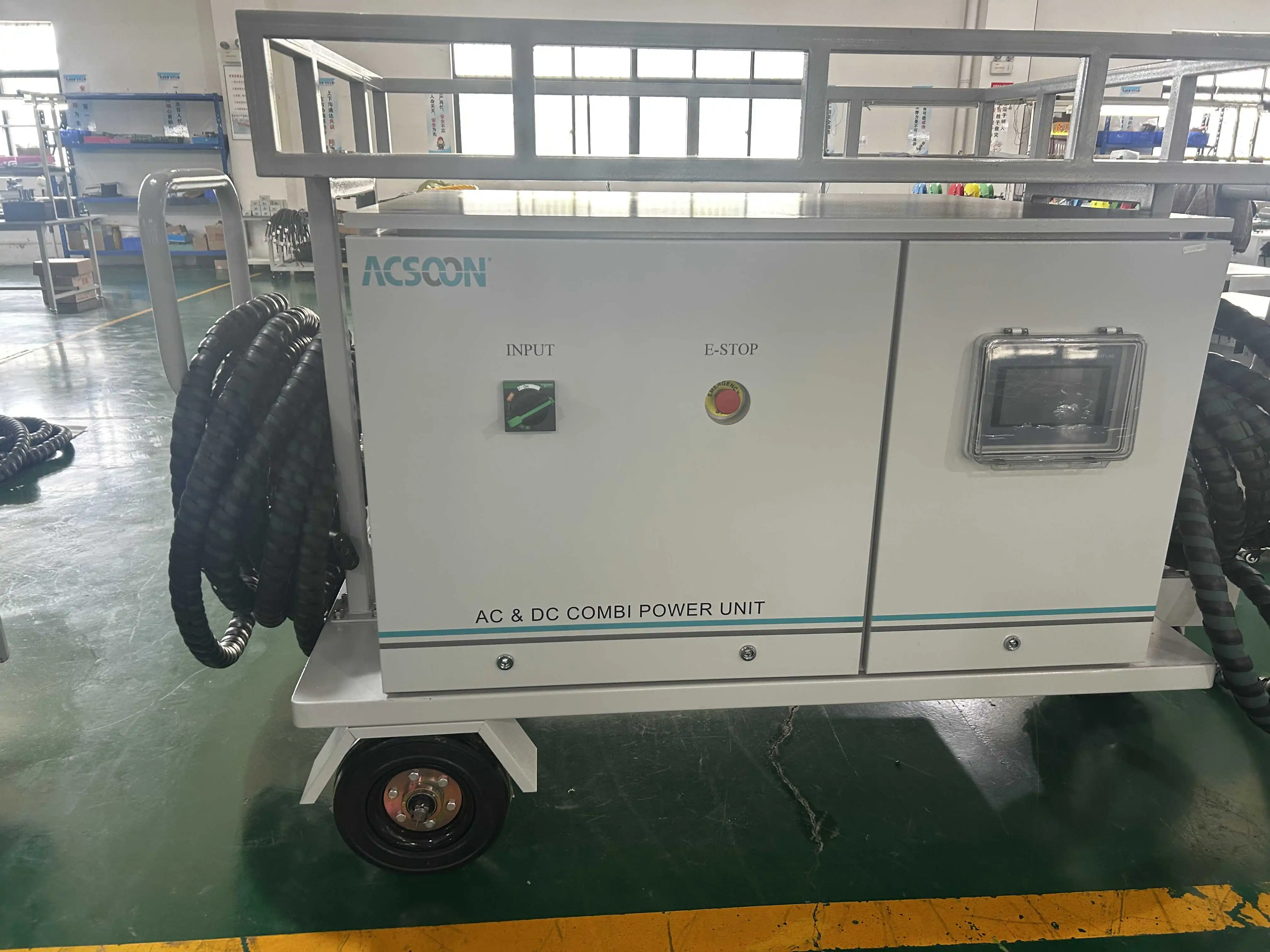
Understanding Aircraft Power Supply and Its Role in Equipment Protection
Aircraft power systems are designed to support mission-critical avionics and onboard electronics. Their role extends beyond simple power delivery—they ensure electrical stability under all operating conditions.
Modern aviation typically uses:
- 115V / 400Hz AC systems for avionics and high-density power loads
- 28V DC systems for control, backup, and emergency circuits
- Ground power units that convert industrial grid power into aviation-grade output
Static frequency converters are now widely used in airports and military bases to bridge this gap. A typical system such as a 90kVA GPU unit can deliver stable 400Hz aircraft power supply docking and maintenance operations, ensuring compatibility with sensitive onboard systems.
Power Quality Parameters That Directly Affect Equipment Lifespan
Equipment lifespan is strongly influenced by several electrical performance indicators. Even small deviations can accumulate long-term damage in sensitive avionics systems.
Stable voltage prevents uneven heating inside electronic components. Precise frequency control ensures motor-driven systems and digital timing circuits remain synchronized. Phase balance reduces stress across three-phase loads, preventing localized overheating.
Transient suppression is especially critical during connection and disconnection events, where sudden voltage spikes can damage semiconductor components. Harmonic control also plays a key role in minimizing electromagnetic interference and reducing internal circuit stress.
Key Power Quality Factors and Their Impact on Equipment Life
| Power Parameter | Recommended Range | Equipment Impact | Failure Risk if Poor |
|---|---|---|---|
| Voltage Stability | ±2% | Prevents thermal stress | Capacitor aging, overheating |
| Frequency Accuracy | ±0.5Hz | Ensures timing precision | Motor drift, system errors |
| Harmonic Distortion (THD) | <3% | Reduces EMI and heating | Signal interference, insulation stress |
| Phase Balance | 120° ±1° | Stabilizes 3-phase load | Uneven load damage |
| Transient Protection | Microsecond response | Protects sensitive electronics | Semiconductor failure |
How Poor Power Quality Shortens Equipment Lifespan
In aviation maintenance studies, a significant portion of avionics failures is linked to unstable power conditions rather than mechanical defects.
Undervoltage conditions force systems to draw excessive current, increasing internal heat and accelerating capacitor degradation. Overvoltage events stress semiconductor junctions, reducing their expected lifespan dramatically.
Frequency instability introduces additional risk, particularly for systems calibrated to operate precisely at 400Hz. Even small deviations can lead to overheating in motors and timing errors in navigation systems.
Harmonic distortion further increases internal losses, causing cumulative thermal stress across circuits. Over time, this leads to reduced reliability and higher maintenance frequency.
Common Electrical Issues and Their Effects on Equipment
| Electrical Issue | Cause | Immediate Effect | Long-Term Damage |
|---|---|---|---|
| Overvoltage | Load switching surge | Component stress | Semiconductor breakdown |
| Undervoltage | Power supply instability | System resets | Capacitor aging |
| Frequency Drift | Poor regulation | Timing errors | Motor overheating |
| High Harmonics | Nonlinear loads | EMI interference | Insulation fatigue |
| Voltage Ripple | Weak filtering | Heat increase | Reduced component lifespan |
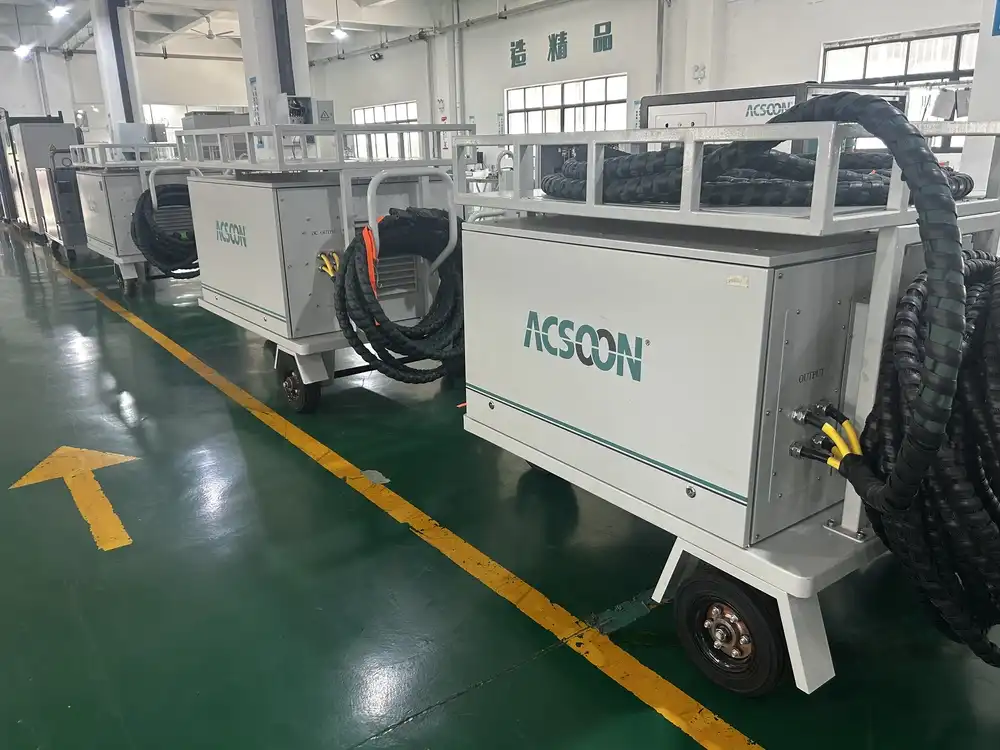
Aircraft Power Supply Technologies That Improve Durability
Modern aircraft power supply systems use advanced semiconductor technologies such as SiC and GaN to improve efficiency and reduce heat generation. Lower thermal output directly reduces stress on internal components and extends operational lifespan.
Smart thermal management systems adjust cooling performance dynamically based on load conditions. This prevents overheating during peak demand while improving energy efficiency during low-load operation.
Digital control systems also enhance stability by continuously sampling output signals and correcting deviations in real time. This ensures consistent power quality even under fluctuating load conditions common in airport environments.
Traditional vs Modern Aircraft Power Supply Performance
| Feature | Traditional Systems | Modern Static Frequency Converters |
|---|---|---|
| Efficiency | 80–85% | 92–95% |
| Maintenance | Frequent mechanical servicing | Minimal maintenance |
| Output Stability | Moderate | High precision |
| Size & Weight | Large and heavy | Compact design |
| Monitoring Capability | Limited | Real-time digital diagnostics |
Real-World Benefits in Southeast Asia Aviation Operations
Airports and maintenance facilities in Singapore, Malaysia, and Vietnam increasingly rely on high-quality ground power systems to support growing air traffic and mixed fleet operations.
In Singapore’s Changi aviation ecosystem, stable power reduces avionics maintenance intervals. In Malaysia’s industrial aviation hubs, improved power quality enhances the reliability of imported aircraft systems. In Vietnam, expanding airport infrastructure benefits from reduced downtime and improved operational stability.
Field data from aviation maintenance operations shows that high-quality power systems can significantly reduce avionics repair frequency and extend maintenance intervals.
Conclusion
A reliable aircraft power supply plays a critical role in extending equipment service life by ensuring stable voltage, precise frequency control, and strong protection against electrical disturbances. In demanding aviation environments across Southeast Asia, where operational intensity and environmental stress are high, investing in high-quality static frequency converters is not only a technical choice but also a long-term cost optimization strategy.
By improving power quality at the ground level, airlines and maintenance operators can reduce equipment failures, extend avionics lifespan, and achieve more stable operational performance over time.
FAQ
What power specifications are most critical for protecting avionics equipment?
The most critical parameters are voltage regulation within ±2% of nominal values, frequency stability within ±0.5 Hz, and total harmonic distortion below 3%. These specifications prevent thermal cycling and electrical stress that accelerate component aging. Phase angle symmetry, ensuring balanced three-phase loads, also significantly impacts equipment longevity.
How does 400 Hz power differ from standard utility frequency?
The 400Hz standard used in aviation enables smaller, lighter transformers and motors compared to 50/60Hz utility power. This higher frequency reduces magnetic component size while providing equivalent power transfer. Aircraft systems designed for 400 Hz operation cannot safely use standard utility frequency without appropriate conversion equipment.
What maintenance intervals do ground power units typically require?
Professional inspection every 500-1000 operating hours identifies developing issues before failures occur. Annual comprehensive servicing includes connection testing, cooling system cleaning, and power quality verification. Cable assemblies require visual inspection before each use, with detailed resistance measurements quarterly to detect conductor degradation.
Can ground power units operate in extreme weather conditions?
Units with appropriate environmental ratings handle challenging conditions. IP54-rated equipment functions reliably in light rain and dusty environments typical of airport ramps. Extreme cold may require block heaters for reliable starting, while desert operations benefit from enhanced cooling capacity. Consult manufacturer specifications for exact environmental limits.
Partner with JERRYSTAR for Superior Aircraft Power Supply Solutions
Xi'an Jerrystar Instrument Co., Ltd. stands ready to support your aviation power requirements with proven ACSOON technology. Our GPU400L-330090 static frequency converter delivers 90kVA of clean 400Hz power with exceptional phase balance and IP54 environmental protection. With comprehensive ISO 9001 and AS9100 quality certifications, adequate inventory for rapid deployment, and customization capabilities tailored to your specifications, we serve as your trusted aircraft power supply manufacturer. Reach out to our engineering team at acpower@acsoonpower.com to discuss how our solutions extend your equipment service life while reducing operational costs.
References
1. Smith, R. J., and Williams, K. A. (2019). Electrical Power Systems for Modern Aircraft: Design, Analysis, and Performance Optimization. Aerospace Engineering Press.
2. Johnson, M. T. (2020). "The Impact of Power Quality on Avionics Reliability: A Ten-Year Field Study." Journal of Aviation Maintenance Technology, 34(2), 112-128.
3. International Air Transport Association (IATA). (2021). Ground Support Equipment Standards and Best Practices Manual, 8th Edition. Montreal: IATA Publications.
4. Chen, L., Roberts, D., and Martinez, E. (2022). "Advances in 400Hz Static Frequency Converter Technology for Airport Ground Power Applications." IEEE Transactions on Aerospace and Electronic Systems, 58(4), 3345-3359.
5. U.S. Department of Defense. (2018). MIL-STD-704F: Aircraft Electric Power Characteristics. Washington, DC: Defense Standardization Program Office.
6. Anderson, P. W., and Thompson, H. L. (2023). Lifecycle Cost Analysis of Aviation Ground Support Equipment: Procurement Strategies for Enhanced Reliability. Oxford: Blackwell Aviation Publishers.