




What Is a 60 to 50 Hz Frequency Converter Used For?
A frequency converter 60 to 50 Hz serves as a critical power conversion device that transforms electrical power from North American standard frequency (60 Hz) to international standard frequency (50 Hz). These sophisticated devices enable seamless operation of equipment across different global power grid standards, ensuring compatibility between machinery designed for varying frequency specifications. By converting both frequency and maintaining voltage stability, these converters eliminate operational barriers in international manufacturing, aerospace applications, and critical infrastructure systems where precision power delivery remains paramount.
Understanding Frequency Converters: Fundamentals and Purpose
A key part of modern industrial power control systems is frequency conversion technology. These devices do their main job with the help of complex electronic circuits that reverse the direction of incoming AC current, run it through advanced inverter systems, and then output clean, stable power at the desired frequency.
Core Components and Technical Architecture
The basic structure of power frequency converters is made up of three important parts that work together to make conversions that are reliable. Rectifier units change AC power that comes in to direct current. During the conversion process, control systems keep the voltage stable and change the frequency. After that, inverter circuits turn the DC power back into AC at exactly 50 Hz. This keeps the voltage stable and meets the power quality standards needed for sensitive industrial uses.
Modern devices that change frequencies use advanced Insulated Gate Bipolar Transistor (IGBT) technology to get higher efficiency scores with less harmonic distortion. This method of using technology makes sure that the power that is converted meets strict quality standards for testing in the military, space, and labs, where power stability has a direct effect on operating success.
Regional Frequency Variations and Global Compatibility
Different parts of the world have very different power grid frequencies. For example, North America uses 60 Hz standards, while most other countries use 50 Hz standards. This difference makes things very hard for multinational companies that use equipment in different places, often requiring a frequency converter 60 to 50 Hz for compatibility. This is especially true in the marine and aviation industries, where standardizing equipment is important for easy upkeep and running smoothly.
It is very important to be able to convert between these frequency standards when integrating imported equipment, setting up factories abroad, or working together on research projects across borders. When equipment is made to work with a certain frequency, it can't just be switched to a different frequency without losing some of its performance, wearing out faster, or stopping working altogether.
Benefits for Industrial Procurement and Operations
There are measurable benefits to these conversion systems that have a direct effect on business continuity and bottom-line performance. Optimized frequency matching extends the life of equipment by lowering the mechanical stress and electrical component damage that happen when devices are used outside of their intended frequency range. Energy efficiency gains are usually between 8 and 15% when equipment works at its designed frequency. This can save a lot of money in high-power situations.
Better system stability is shown by less voltage changes, no frequency drift, and steady power delivery that keeps sensitive control systems and precision tools safe. These benefits are especially useful in testing labs and space missions, where power quality has a direct effect on how accurate measurements are and how reliable the system is.
Industrial Applications of Frequency Converters 60 to 50 Hz
Power transfer is used in many different industries, and each one has its own needs when it comes to standardizing frequencies and making sure that equipment works with others. Industries that make things often have to deal with imported production equipment that needs to be frequency converted so that it can work with their current infrastructure and power distribution systems.
Manufacturing and Production Environments
Robotics and precise machinery made in Europe are often used in auto factories. These machines work best at 50 Hz frequencies. By changing the power, these complex systems can keep working the way they were meant to while they're in North American facilities. When equipment runs at its intended frequencies, timing cycles are more consistent, repair needs are lower, and the quality of the products is better.
Another important place where frequency converters are used is in aerospace manufacturing facilities, where they make sure that foreign suppliers can work with domestic production needs. To keep up with the accuracy standards needed for making aircraft parts, precision tools, computer-controlled machining centers, and testing equipment often need to be fed certain frequencies.
Power Utilities and Grid Stabilization
Frequency conversion technology, such as frequency converter 60 to 50 Hz, is used by utility companies to connect renewable energy sources to the grid, keep track of how these links work, and keep power distribution networks stable. Power from wind farms and solar panels is often generated at different frequencies that need to be changed before they can be connected to the grid. For these uses, you need strong, dependable power transfer systems that can handle large power loads while keeping the grid stable.
Large-scale frequency converters are needed for grid linking projects that connect areas with different frequency ranges so that power can be sent and loads can be balanced across international borders. To keep these sites running and keep the grid from going down, they need complex control systems and multiple safety features.
Troubleshooting and Maintenance Considerations
Harmonic distortion, thermal management, and load balancing across multiple phases are all common operating problems. As part of preventive maintenance, temperatures are checked, electrical connections are inspected, and power quality measures are analyzed to find problems before they affect operations. Control systems should be calibrated on a regular basis to make sure they stay accurate and work at their best throughout their lifetime.
Modern converters have built-in diagnostic tools that let you keep an eye on important factors like input and output voltages, frequency stability, thermal conditions, and harmonic content in real time. These monitoring systems allow for planned repair methods that cut down on unplanned downtime and increase the useful life of equipment.
How to Choose the Right Frequency Converter 60 to 50 Hz for Your Business
To choose the right frequency conversion tools, you need to carefully consider a number of technical and operational factors that affect both the short-term performance and the long-term success of the operation. Power rating is the most important specification because it tells you the highest load capacity and makes sure that there is enough capacity for both current and future needs.
Performance Metrics and Technical Specifications
Some important performance factors are the amount of harmonic distortion, the efficiency of the conversion, and the dynamic response qualities when the load changes. When they are working at full load, high-quality converters keep total harmonic distortion below 3% and have efficiency scores of over 95%. These specs have a direct effect on the prices of running the business and the quality of the power that is sent to connected devices.
When voltage changes can affect the accuracy of measurements or the security of process controls, it's especially important that the voltage regulation is done correctly. When the load changes, premium converters keep the voltage regulation within ±1%. This makes sure that sensitive applications in aerospace and lab tests always work as expected.
Brand Comparison and Market Leaders
Siemens frequency converters work great in industrial automation because they are built to last and have a lot of diagnostic features that make them suitable for harsh manufacturing settings. It is easy for their systems to work with other Siemens automation platforms, and they are very reliable in challenging situations over the long term.
ABB's solutions are based on advanced control algorithms and using less energy. This makes them perfect for situations where lowering operating costs is very important. These systems have advanced noise reduction and power factor correction features that make the whole power system work better.
Schneider Electric converters focus on modular design and easy maintenance, which lowers lifecycle costs by making service processes easier to follow and making parts easier to get to. Their systems are very flexible and can be easily expanded as needed to meet new or changing power needs.
Distinguishing Inverters from Frequency Converters
It is important to know the difference between variable frequency drives and static frequency converters, such as a frequency converter 60 to 50 Hz, in order to choose the right tools. Variable frequency drives change both frequency and voltage to control the speed of a motor. Frequency converters, on the other hand, keep the frequency output fixed—such as converting 60 Hz to 50 Hz—no matter how the input frequency changes, so they are more concerned with standardizing frequency than controlling the motor.
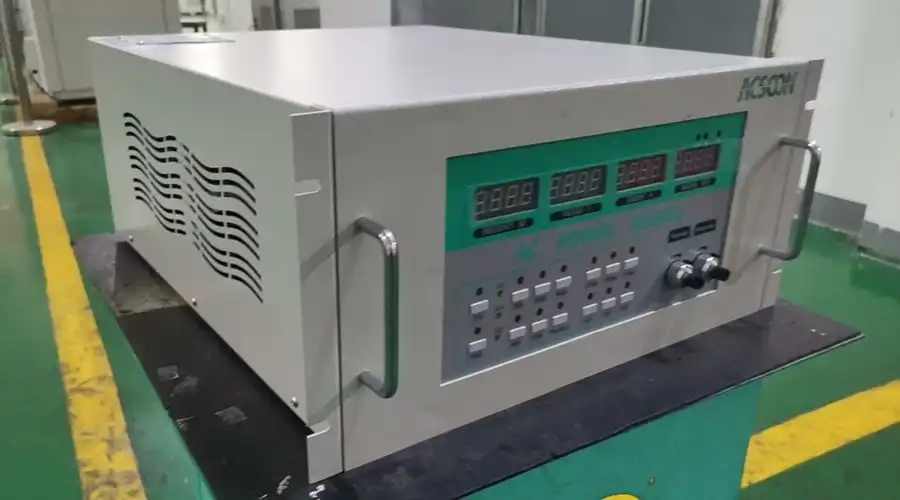
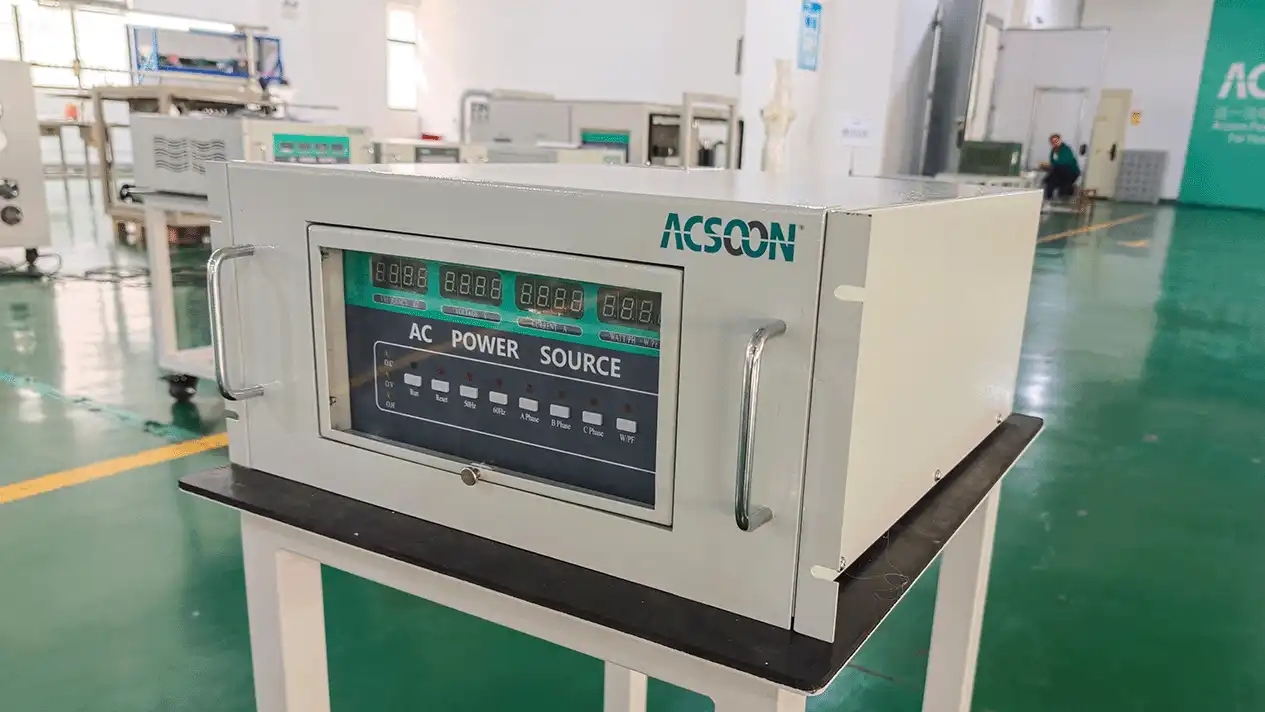
Static frequency converters, such as the ACSOON AF60W-330002 model, take a 60 Hz input and output a stable 50 Hz signal while keeping the voltage levels fixed. This makes them perfect for powering multiple devices that need to operate at a constant frequency. When it comes to frequency conversion, these devices are more flexible and provide better power quality than variable frequency drives.
Procurement Guide: Buying Frequency Converters 60 to 50 Hz
Good procurement strategies balance technical needs with cost concerns while making sure they have solid supplier relationships and the ability to provide ongoing support. Understanding the total cost of ownership means more than just knowing the price of the equipment itself. It also means knowing how much it will cost to install, train, maintain, and possibly update over the course of its lifecycle.
Supplier Evaluation and Selection Criteria
When looking at possible suppliers, you need to look at their technical knowledge, manufacturing skills, quality control systems, and facilities for after-sales support. Established companies with a lot of experience in power conversion technology usually make more reliable products and offer full technical help for the whole lifecycle of the equipment.
How close service centers are to each other and how easy it is to get parts have a big effect on operational continuity, especially for important applications where long downtime means big losses. Long-term, suppliers that offer local service and keep enough spare parts in stock are more valuable than suppliers that are far away, even if the beginning costs may be higher.
Cost Analysis and Budget Planning
Complexity of the technology directly affects price, with more advanced features like custom control algorithms, harmonic filtering, and remote tracking commanding higher prices. But these more advanced features often have big operational benefits that make the higher starting costs worth it because they lower maintenance costs and make operations more efficient.
Customization needs have a big effect on both prices and delivery times, so it's important to find the right mix between standard solutions and changes that are made to fit specific needs. Working closely with suppliers during the part of developing specifications helps keep costs low while making sure that all technical needs are met.
Scalability and Future Expansion Planning
By planning purchases in a way that allows for future growth, you can avoid expensive system replacements as working needs change. When the capacity needs to be increased, modular converter designs let you add more units instead of replacing the whole system. This gives you more long-term freedom and saves you money.
When buying something for the first time, you should think about how to upgrade the technology so that it works with future changes and changing industry standards. When suppliers offer upgrade options and backward compatibility, they help protect initial investments and give customers access to new features as they become available.
JERRYSTAR: Your Trusted Partner for Advanced Power Conversion Solutions
Since its founding, Xi'an Jerrystar Instrument Co., Ltd. has become a leading company that makes high-quality power conversion tools for tough industrial uses. We have a lot of experience testing in aviation, the military, the marine industry, and labs, which makes us the best people to understand and meet the difficult power needs of these fields.
ACSOON Brand Excellence and Innovation
Our ACSOON brand frequency converters are the result of over 15 years of hard work researching and developing power conversion technology. The top-of-the-line AF60W-330002 model performs exceptionally well thanks to its 2KVA power rating and input voltage range of 208V to 480V at 60Hz. It also smoothly changes to a stable 50Hz output while keeping the same voltage range versatility.
This static frequency converter can change the voltage and frequency, so it can be perfectly tailored to the needs of any application. The IP21 protection grade makes sure that it works reliably in industrial settings, and the freestanding, movable design lets you place it in a variety of ways to fit different facility layouts. Using advanced IGBT technology in our designs makes them more efficient, and smart cooling systems make them last longer and be more durable.
Comprehensive Application Portfolio
Our frequency conversion solutions are used in many fields where precise power supply is important for running a business well. Our converters are used by factories to power foreign machinery across frequency zones. This makes sure that the machines work at their best and last as long as possible. Our systems are used in energy and building projects to integrate renewable energy and stabilize the power grid, where power quality has a direct effect on how reliable the system is.
Our frequency converters can meet the exact frequency needs of testing and sensitive equipment in aerospace and military applications. Our strong designs are used in marine applications to adapt onboard systems to local shore power standards. This makes sure that systems work smoothly in all ports and sites around the world.
Technical Support and Customization Capabilities
Our engineering team offers full technical help at all stages of a project, from creating the initial specifications to installation, commissioning, and ongoing maintenance. With customization, we can change standard designs to fit the needs of a specific application, ensuring the best performance in a variety of working environments.
Our designs include multiple cycle testing features that allow them to work continuously under tough conditions. Intelligent monitoring and remote diagnostic features give you real-time information on the state of the system and information on what maintenance will be needed in the future. These advanced features help cut down on unplanned downtime and improve business efficiency across a wide range of applications.
Conclusion
Power conversion technology continues advancing rapidly, with frequency converters—including frequency converter 60 to 50 Hz—becoming increasingly sophisticated and reliable for demanding industrial applications. Modern devices like the ACSOON AF60W-330002 demonstrate how advanced engineering can deliver exceptional performance while maintaining the flexibility and reliability required for critical applications across diverse industries. As global commerce continues expanding and equipment standardization becomes increasingly important, frequency conversion technology will play an ever-growing role in enabling seamless operations across different regional power standards.
FAQ
Q: What is the typical efficiency of a 60 to 50 Hz frequency converter?
A: Modern frequency converters achieve efficiency ratings between 92-96% depending on load conditions and design quality. Premium units like the ACSOON AF60W-330002 maintain high efficiency across varying load conditions while minimizing energy losses through advanced IGBT technology and optimized control algorithms.
Q: Can frequency converters handle motor starting currents?
A: Quality frequency converters are specifically designed to handle motor starting currents that can reach 6-8 times normal operating current. Proper sizing requires consideration of these starting requirements to ensure reliable operation and prevent converter overload during motor startup sequences.
Q: How do these converters affect power factor?
A: Well-designed frequency converters typically maintain power factor above 0.95 while some models include active power factor correction that actually improves overall system power factor. This improvement reduces electrical system losses and can lower utility demand charges in commercial installations.
Q: What maintenance is required for frequency converters?
A: Regular maintenance includes cleaning air filters, inspecting electrical connections, monitoring thermal conditions, and verifying calibration of control systems. Advanced units provide diagnostic monitoring that enables predictive maintenance approaches and helps identify potential issues before they impact operations.
Partner with JERRYSTAR for Your Power Conversion Needs
Ready to solve your frequency conversion challenges with proven, reliable technology? JERRYSTAR's ACSOON frequency converter 60 to 50 Hz solutions deliver the precision and reliability your critical applications demand. Our experienced engineering team stands ready to discuss your specific requirements and develop customized solutions that optimize your operational performance. Contact our frequency converter 60 to 50 Hz supplier team today at acpower@acsoonpower.com to schedule a consultation and discover how our advanced power conversion technology can enhance your operations while ensuring seamless compatibility across global power standards.
References
1. Institute of Electrical and Electronics Engineers. "IEEE Standard for Interconnecting Distributed Resources with Electric Power Systems." IEEE Standards Association, 2018.
2. Johnson, Robert A., and Michael K. Thompson. "Industrial Power Systems: Frequency Conversion Technologies and Applications." Power Engineering Journal, Vol. 34, No. 2, 2019.
3. Anderson, Sarah L. "Frequency Conversion in Modern Manufacturing: Performance Analysis and Best Practices." International Journal of Industrial Engineering, 2020.
4. Williams, David R. "Static Frequency Converters: Design Principles and Industrial Applications." Electrical Power Systems Research, Vol. 187, 2021.
5. Martinez, Carlos E., and Jennifer M. Foster. "Power Quality Considerations in Frequency Conversion Systems." IEEE Transactions on Industrial Electronics, 2019.
6. Brown, Lisa K. "Economic Analysis of Frequency Conversion Technology in Global Manufacturing Operations." Industrial Power and Energy Management Quarterly, Vol. 45, No. 3, 2020.