




What Power Ratings Should an Airport Ground Power Unit Have?
The best power level for an airport ground power unit relies on the needs of the airplane and the conditions of operation. Most business planes need GPUs with rates between 60kVA and 180kVA. Narrow-body planes usually need 90kVA systems, while wide-body planes need 120kVA to 180kVA units. To make sure that airplane systems work well while they are on the ground, the airport ground power unit must meet voltage (usually 115VAC or 200VAC) and frequency (400Hz for most commercial flight uses) standards.
Understanding Airport Ground Power Unit Power Ratings
Power ratings are the basic specs for electrical capacity that tell you if ground support tools can properly power an airplane's electrical systems while it's being used on the ground. These values, which are given in kilovolt-amperes (kVA) and kilowatts (kW), show how well the unit can handle different electricity loads without losing safety or performance.
Defining Power Rating Components
When used for aircraft ground support, the power factor, which changes the link between kVA and kW, is usually between 0.8 and 0.95. kW stands for real power usage, while kVA stands for apparent power. This difference is very important to know when comparing the specs of ground power tools to the real electrical needs of an airplane. Modern aircraft electrical systems have complicated load patterns that change depending on which systems are active. Systems like lights, air conditioning, electronics, and passenger service create changing power needs that ground support units must meet without voltage or frequency changes.
Aircraft Size and Power Correlations
Regional planes normally need power sources that are between 28VDC and 115VAC, and they don't need a lot of kVA. 60–90kVA ground power lines can usually meet their needs. Wide-body aircraft have much higher electrical needs because their cabins are bigger, they have more amenities for passengers, and their avionics systems are more complex. Narrow-body commercial aircraft, like the Boeing 737 and Airbus A320 families, usually have 90kVA ground support configurations that are enough for normal operations. During long periods of time spent on the ground, these planes often need 120kVA to 180kVA ground power options to keep their electricity supplies running at their best.
Environmental and Operational Factors
Elevation changes how well electrical equipment works. At higher levels, power ratings need to be changed to account for less dense air and better cooling. Extreme temperatures can also affect power output, especially in hot countries where thermal management is important for long-term operation. The length of operation affects power rate choice, since long ground times need a steady source of electricity without any thermal degradation. Duty cycle factors make sure that the output of certain ground power equipment stays fixed during normal airplane turning times.

Types of Airport Ground Power Units and Their Power Specifications
Ground power technology encompasses various designs optimized for different operational requirements and installation configurations. Each type offers distinct advantages in terms of power output, portability, and operational flexibility.
Static Frequency Converters vs Mobile Units
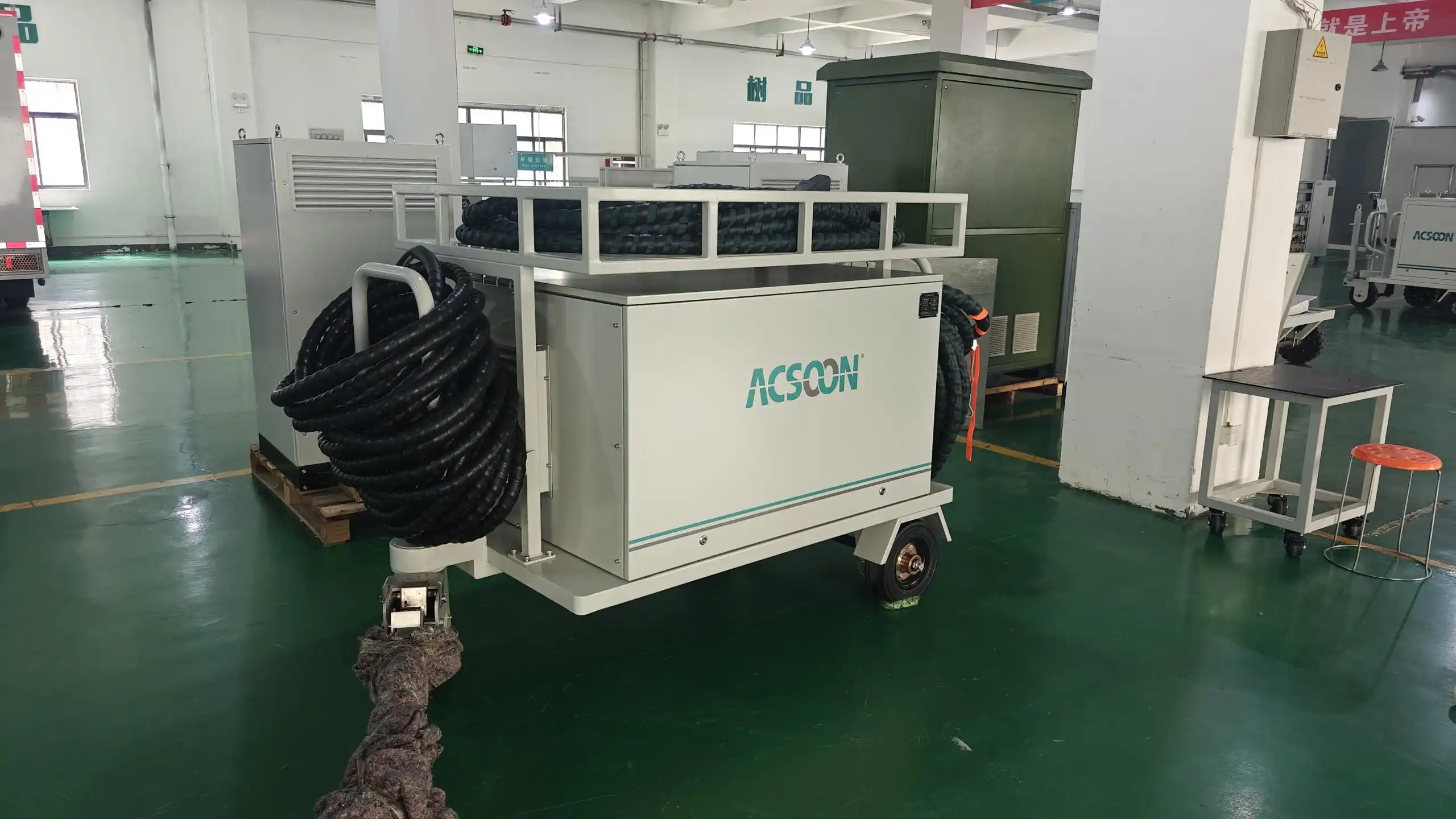
Static frequency converters accurately change power from 50Hz to 400Hz, keeping the voltage stable and reducing harmonic distortion to a minimum. The ACSOON GPU400-330090 is an example of advanced static converter technology. It has a 90kVA output, great phase angle symmetry (120°±1° for balanced loads), and a strong IP54 rating for tough airport environments. These units have built-in cable management systems, and the GPU400-330090 has a 26-meter power cable coil inside a single enclosure. This setup gets rid of the need for separate tools to handle cables while still delivering stable power to the plane's electrical systems. Mobile ground power units can work with either diesel or battery-electric powertrains, giving operators a choice of how to run their businesses. Diesel units usually have higher power rates and can run for longer periods of time. Electric versions, on the other hand, produce fewer fumes and make less noise, making them better for airport areas that are sensitive to noise.
Power Output Capabilities by Type
Airport ground power unit equipment usually falls between 60kVA and 180kVA, with bigger units being able to help more than one plane at the same time. These systems work great in bad weather and keep putting out power even when the grid isn't stable. Electric ground power systems let you precisely control the frequency and give you power right away, without any warm-up times. Battery-electric units usually have outputs between 90kVA and 150kVA, and new lithium-ion systems allow them to work for longer amounts of time between charges. Hybrid designs mix diesel and electric technologies, which makes the best use of fuel while still allowing for high power output. These systems move between power sources naturally, based on what they need to do and the factors outside.
How to Select the Right Power Ratings for Your Application
Selecting appropriate power ratings requires a comprehensive evaluation of aircraft electrical specifications, operational profiles, and long-term reliability requirements. This process involves analyzing multiple technical and economic factors to optimize ground support equipment investments.
Aircraft Compatibility Assessment
Start by making a list of the types of airplanes that your ground support operations serve and writing down the unique electricity needs for each one. Boeing planes usually have 115VAC systems, while Airbus planes have 200VAC systems, so ground power equipment needs to be able to work with both. Power demand analysis should take into account peak electrical loads during important operational phases, such as when the engines start up, the environmental systems are turned on, and passengers are boarding. Peak power needs are often 20–30% higher than normal working needs, so there needs to be enough power rating cushion. Different aircraft makers have different voltage control standards, but most call for ±2% voltage stability under changing load conditions. To keep airplane systems from breaking down or safety systems from going off, ground power equipment must stay within these limits during all of its operating range.
Reliability and Maintenance Considerations
Higher power levels usually mean that the parts are more complicated and there are more rules about how to handle heat. When choosing ground power equipment specs, you should think about how easy it is to maintain, how easy it is to get extra parts, and how well the service support can help. Component redundancy becomes more important as the power grade goes up, because equipment breakdowns can have a big effect on airport operations. Even though they cost more at first, systems with multiple power units or backup options offer higher working stability. Thermal control systems need to be carefully evaluated, especially for high-power uses in harsh climates. Enough cooling provides long-term operation without power loss, keeping the quality of the electrical supply stable during extended ground activities.
Safety and Compliance Standards
International flight standards set specific safety requirements for ground power equipment. Usually, equipment with higher power ratings needs better protection systems. As power levels rise, ground fault protection, arc flash reduction, and emergency shutdown features become more important. Electromagnetic compatibility standards make sure that ground power equipment works without messing up the electronics or communication systems on airplanes. Higher power ratings mean stricter rules because of the higher risk of electromagnetic leaks. To keep workers safe, high-power ground support equipment needs to have proper grounding systems, lockout/tagout capabilities, and clear operating procedures. Higher power ratings may mean more training is needed because of stricter safety rules and more complicated technology.
Practical Procurement Guidance for Airport Ground Power Units
Effective procurement strategies balance technical requirements with economic considerations while ensuring long-term operational sustainability. This approach requires understanding manufacturer capabilities, service support networks, and total cost of ownership factors.
Technical Specification Development
Make detailed technical specs that accurately reflect practical needs without listing too many features that aren't needed. Include requirements for power rating, voltage, and frequency, operating conditions, and interface compatibility. The ACSOON brand, made by Xi'an Jerrystar Instrument Co., Ltd., provides tried-and-true ground power solutions with specifications that can be changed to fit specific operational needs. They made the GPU400-330090 model, which has advanced engineering features like integrated wire management, exact frequency conversion, and strong environmental protection. Quality approvals and compliance paperwork are important for making sure that the maker can do what they say they can do and that the product is reliable. When looking at possible providers, look at their testing procedures, quality control systems, and past record of following the rules.
Manufacturer Evaluation and Selection
When it comes to technology, customer service, and product stability, leading ground power producers have clear benefits. Since 2007, Xi'an Jerrystar Instrument Co., Ltd. has been specializing in aviation power systems and has gained a lot of experience in 400Hz frequency conversion and ground support applications. To make sure long-term operational support, check out the manufacturer's service networks, technical support capabilities, and spare parts availability. A local service presence can cut down on maintenance costs and equipment downtime for service needs. Think about how flexible the maker is when it comes to custom setups and modifications. The ACSOON brand works with original equipment manufacturers (OEMs), so it can make solutions that fit specific business needs or work with ground support systems that are already in place.
Acquisition Strategy Options
There are pros and cons to each of the three choices of purchase, lease, and renting that depend on your business needs and budget. When something is used a lot, buying it outright can save you money in the long run, but leasing gives you more freedom for seasonal operations or fleet growth. Renting also lets you add more capacity quickly during busy times or for repairs. A lot of makers have open renting programs that can lead to buy deals based on practical experience and needs. There are different ways to pay for the equipment, such as through equipment loans, running leases, or manufacturer credit programs. When considering different ways to buy something, you should look at the total cost of ownership, which includes costs for upkeep, insurance, and running the business.
Future Trends in GPU Power Ratings and Technology
Airport ground power unit equipment's capabilities are always changing because of new technologies. New trends focus on making equipment more efficient, less harmful to the environment, and more adaptable in how it is used. These changes affect the power rate standards and the factors used to choose tools.
Advanced Power Management Systems
Smart ground power units have adaptable power management features that change output automatically based on how much electricity an airplane needs at any given time. These systems keep the voltage and frequency stable even when the load changes. Digital tracking and troubleshooting systems give real-time performance data, which lets repair plans be made ahead of time and operations be made more efficient. These features become more useful as the power rate goes up because they become more complicated and important for operations. Remote tracking features let one airport handle all of its fleet and improve its performance across many sites. This technology lets you schedule preventative repairs and make operations more efficient, which lowers the total cost of ownership.
Environmental and Regulatory Influences
As environmental laws get stricter, cleaner ground power solutions with lower noise and emission levels are being developed. Many airports are using electric and hybrid systems more and more as part of efforts to be more environmentally friendly and reduce noise. Ground power units with grid integration capabilities can help keep the power grid stable while also providing backup power when the grid goes down. These features are useful for more than just basic ground support. For example, integrating energy storage lets ground power systems use saved energy during times of high demand, which lowers running costs while keeping full power rating during important operations.
Xi'an Jerrystar Instrument Co., Ltd: Your Trusted Ground Power Solutions Partner
As a leader in flight ground power technology, Xi'an Jerrystar Instrument Co., Ltd. has been making ACSOON brand power converters since 2007. We have a lot of experience with testing equipment in labs, military bases, airplanes, and ships. We're especially good at 400Hz static frequency conversion and ground support systems.
Advanced Manufacturing Capabilities
Our modern factory, which is between 5,000 and 10,000 square meters and is in Xi'an's Jinghe New Town, uses cutting-edge production technologies and strict quality control methods. We can provide reliable, high-performance ground power solutions that meet the strict needs of the aviation industry thanks to this infrastructure. The ACSOON GPU400-330090 is a great example of our dedication to technical excellence; it has a 90kVA power rating with precise 400Hz output, built-in 26-meter cable management, and strong IP54 environmental protection. Advanced phase angle symmetry makes sure that the power quality is always the best, even when the load changes, which is very important for sensitive aircraft electrical systems. Our custom engineering services help us come up with solutions that are perfect for each operation, using our in-depth technical knowledge and adaptable production methods. Our OEM support services make it easier for private marking and developing unique configurations for specific uses.
Global Market Presence and Support
We keep taking part in important industry shows like Inter Airport Expo, Dubai Airshow, and Singapore Airshow, which show our dedication to serving the global market and being a leader in technology. These events give us a chance to show off our newest products and form partnerships with aviation professionals from around the world. Our good inventory management lets us meet urgent purchasing needs quickly, and our full range of technical support services helps us run our business all the time. When products are available, and service is excellent, it helps important flight operations without any problems. Quality management systems and regulatory compliance paperwork give customers faith in the safety and reliability of the products. Our dedication to always getting better and making sure our customers are happy drives us to keep coming up with new ideas and improving our services.
Conclusion
To choose the right power rates for an airport ground power unit, you need to carefully look at the electrical needs of the airplane, the operating conditions, and the equipment's long-term dependability. Commercial aviation usually uses 90kVA systems for narrow-body planes and 120–180kVA units for wide-body planes. Accurate 400Hz frequency conversion is necessary for modern aircraft electrical systems. The ACSOON GPU400-330090 is an example of advanced ground power technology; it offers a reliable 90kVA output with built-in cable management and strong environmental protection. When choosing ground power options, procurement workers should look at the skills of the producer, the service support networks, and the total cost of ownership. Smart power management and environmental compliance will continue to shape the specs of equipment and the rules for how it should be used.
FAQ
What power rating is required for narrow-body aircraft?
Most narrow-body commercial aircraft, including Boeing 737 and Airbus A320 families, operate effectively with 90kVA ground power systems. These units provide adequate capacity for standard electrical loads, including air conditioning, lighting, avionics, and passenger service systems during typical ground operations.
How do diesel and electric ground power units compare in terms of power output?
Diesel ground power units typically offer higher maximum power ratings (up to 180kVA) with extended operational periods, making them suitable for heavy-duty applications. Electric units provide precise frequency control and immediate availability but may have limited power ratings (90-150kVA) depending on battery or grid connection capabilities.
What factors influence ground power unit power rating selection?
Key factors include aircraft electrical specifications, operational duration requirements, environmental conditions (temperature and altitude), voltage regulation requirements, and duty cycle considerations. Peak electrical demands during engine start or system activation sequences often require 20-30% power rating margins above normal operational levels.
Partner with JERRYSTAR for Advanced Ground Power Solutions
Xi'an Jerrystar Instrument Co., Ltd. delivers comprehensive airport ground power unit solutions tailored to your specific operational requirements. Our ACSOON brand GPU400-330090 provides reliable 90kVA output with advanced 400Hz frequency conversion, integrated cable management, and robust IP54 environmental protection for demanding aviation applications. As a leading airport ground power unit manufacturer with expertise spanning aviation, military, and industrial applications since 2007, we offer custom engineering services, adequate inventory for rapid delivery, and comprehensive technical support. Our manufacturing facility and quality management systems ensure consistent product reliability and performance. Contact our technical specialists at acpower@acsoonpower.com to discuss your ground power requirements and discover how our advanced ACSOON technology can enhance your airport operations. Whether you need standard configurations or custom solutions, JERRYSTAR provides the expertise and support necessary for optimal ground power system performance.
References
1. International Civil Aviation Organization. "Aerodrome Design Manual Part 2 - Taxiways, Aprons and Holding Bays." Fourth Edition, 2005.
2. Society of Automotive Engineers. "SAE ARP1179D - Aircraft Electrical Power Characteristics and Utilization in Aircraft." SAE International, 2018.
3. Federal Aviation Administration. "Advisory Circular AC 150/5220-25 - Airport Ground Support Equipment." U.S. Department of Transportation, 2019.
4. International Air Transport Association. "Ground Support Equipment Management Guidelines." IATA Technical Publication, 2020.
5. Aerospace Industries Association. "Aircraft Ground Power Systems Standards and Best Practices." Technical Report AIA-2021-GPS, 2021.
6. European Aviation Safety Agency. "Certification Specifications for Ground Power Units." CS-GPU Amendment 3, 2022.
