




What Safety Measures Are Needed for a 120V DC to AC Inverter?
In order to safely use a 120V DC to AC inverter, you need to make sure it is properly grounded, has enough air flow, and has approved overload safety. These gadgets change direct current to alternating current, which makes them very important in automatic settings in flight, the military, ships, and factories. To keep electrical dangers like shock, fire, or equipment failure from happening, users must make sure that the system meets UL, IEC, and NEC standards and follow the inverter's thermal management and regular inspection procedures for as long as it works.
Understanding the Safety Challenges of 120V DC to AC Inverters
Common Misconceptions About Voltage and Risk
Many people who work in buying don't realize how dangerous DC input systems can be because they think that smaller input voltages mean less risk. This false belief leaves dangerous gaps in planning for safety. Different from alternating current, direct current has very different arcing and prolonged shock potentials. 120VDC may not seem as dangerous as higher voltage systems at first glance. Muscles can tighten up from the constant flow of DC, making it hard for people to remove their hands from charged parts when they accidentally touch them.
Primary Hazards in Power Conversion Systems
When working with inverter devices, the most obvious danger is getting an electrical shock. DC input terminals keep voltage levels steady because they don't have zero-crossing places like AC systems do. This makes the contact stronger. There are several ways that things can go wrong that can cause fires. These include power semiconductors overheating, insulation breaking down under constant stress, and connection point resistance causing localized heating. When the voltage isn't stable, it can damage sensitive equipment further down the line. This is especially true in places like aircraft instrumentation and lab tests, where accuracy is important. These risks come from certain root reasons that need to be dealt with in a planned way. When wire links at the input or output terminals are bad, resistance points form that generate too much heat. When there isn't enough airflow, heat from power components working at high efficiency loads can't escape. This wears down insulator materials and electrical components over time. If you don't ground something properly, fault currents can't go through a safe path. This means that the frame and enclosure surfaces can become charged when internal failures happen. When parts are overloaded beyond their rated capacity, they are stressed beyond what was intended by the designers. This speeds up wear and causes a safe shutdown or catastrophic failure. When engineering teams understand these processes, they can use focused safety measures instead of general safety checklists.
Key Safety Principles to Follow When Using a 120V DC to AC Inverter
Installation and Grounding Requirements
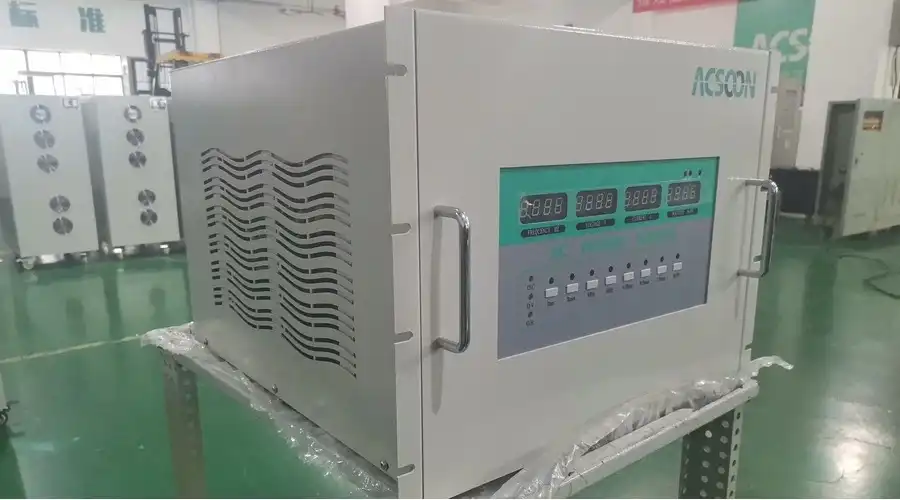
Inverter safety starts with making sure the unit is installed correctly. Mounting locations must keep structures stable while still being easy to get to for upkeep work. The temperature, humidity, and exposure to corrosive substances in the environment all affect the choice of shelter and the security grade that is needed. The 120V DC to AC inverter ACSOON ANDW120-330020 has IP21 ingress protection, which means it can work in indoor industrial settings with low dust and drip protection. However, sea deck installers need to think about the enclosure in more detail. Grounding sets up the most important safety path for fault current. When connecting the inverter frame to the building's grounding systems, the wires must be the right size for the biggest fault current that the device can produce. For fault clearing to work, bonding resistance should stay below 0.1 ohms. In galvanically separated systems like the ANDW120-330020, the input and output circuits stay electrically separate. This lowers ground loop interference while still needing chassis grounding to protect people. Following the rules in NEC Article 250 and IEC 60364 gives installations clear guidelines that can be checked.
Voltage Regulation and Protection Mechanisms
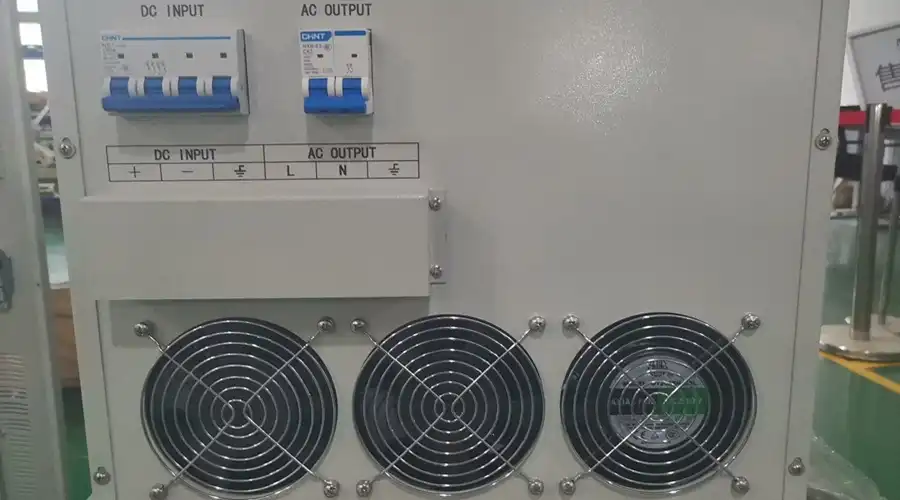
Keeping the output voltage fixed keeps linked loads from getting damaged and keeps inverter parts from getting stressed. Built-in control circuits constantly watch the output and change the pulse-width modulation to account for changes in the input voltage and the load. Dedicated circuit breakers rated for DC outage on the input side and the right AC safety on the output circuits make the system more resilient. With these multiple layers of safety, there is "defense in depth" against fault spread. Overload safety systems have current-sensing circuits that find situations with too much load before they hit the thermal limits. The ANDW120-330020 can handle heavy loads with its 20kVA capacity, but safety circuits need to be able to handle inrush currents from motors and transformers that can briefly be higher than steady-state values. When protection is set up correctly, it strikes a balance between keeping people from tripping and protecting parts. This is especially important in naval and industrial uses that run all the time.
Thermal Management Strategies
It is a fact of physics that power conversion always makes heat. Even when they are fully loaded, high-efficiency inverters like the ANDW120-330020 still give off a few hundred watts of waste heat. Having enough air gets rid of this thermal energy, which keeps parts from heating up and breaking down over time. Installation clearances set by the makers must be carefully followed. These are usually between 6 and 12 inches on ventilated surfaces. When temperature-controlled fans are used for forced air cooling, the thermal area is expanded. This lets more power be used while keeping component temperatures within their stated limits. The ANDW120-330020 has low-noise operation, which means that the fan control methods have been tuned to balance how well they cool with how well they sound. Checking ventilation paths on a regular basis gets rid of dust and other things that get in the way of airflow and cause thermal management to break down before it happens.
Component Quality and Certification
Certified parts from reputable companies have been tested and shown to work properly under normal settings. Inverters that produce pure sine waves have low harmonic distortion in their output patterns. This keeps delicate electronics safe from voltage stress and lowers electromagnetic interference. The ACSOON name focuses on power systems for aviation and the military, where reliability standards are higher than those in the business market. EMC compatibility and galvanic isolation are built in as normal features, not as extras that can be bought separately. Quality assurance includes more than just the original buy. It also includes routine maintenance and inspections. Testing the output waveform quality, the accuracy of the voltage regulator, and the usefulness of the security circuit on a regular basis finds small problems before they become dangerous. Keeping records of repair tasks makes them easier to find, which is very important for military and aviation apps that need to follow strict rules set by regulators.
Choosing the Right 120V DC to AC Inverter with Safety Features in Mind
Waveform Quality and Equipment Protection
Professional-grade inverters are different from modified square wave options because they produce pure sine waves. The 120V DC to AC inverter ANDW120-330020 creates a clean sinusoidal voltage that matches the quality of the utility grid. This gets rid of harmonic distortion, which hurts transformer cores, makes noise in recording equipment, and messes up precision instruments. Marine guidance devices need clean power to keep the compass from getting off course because of magnetic interference and to make sure that radar systems work correctly. Motor drives and programmable logic controls that are responsive to voltage waveform quality cause fewer nuisance trips in industrial automation facilities. To judge waveform specs, you have to look at total harmonic distortion percentages. For important uses, numbers below 3% are thought to be excellent. Low harmonic distortion is an important trait of the 120V DC to AC inverter ANDW120-330020 that directly links to longer equipment life and lower maintenance costs across all linked loads. This standard is especially important for testing in the lab, where the accuracy of measurements relies on the quality of the power.
Efficiency Ratings and Their Safety Implications
Ratings for efficiency show how well an inverter changes input power into useful output, with the difference showing up as lost heat. Models with higher efficiencies create less heat stress, which means they need less cooling and are more reliable in the long run. Professional inverters usually get between 85 and 92% efficiency at full load. The best ones stay very efficient over a wide load range, from 20% to 100% capacity. Making heat has a direct effect on how long parts last and how often they break. Electronic parts fail about twice as often for every 10°C rise in the temperature of a semiconductor joint. Choosing high-efficiency inverters lowers thermal stress, which increases the average time between breakdowns and cuts down on unexpected downtime costs that are much higher than the differences in the original purchase price. Because of this connection, efficiency is more than just a way to save energy. It's also a safety issue.
Durability Indicators and Warranty Terms
The length and terms of the warranty show that the maker trusts the product to work well. Three- to five-year extended warranty packages show strong design margins and good production methods. The insurance should clearly cover both parts and labor, and there should be clear options for field service or early replacement to keep downtime to a minimum when something breaks. Manufacturers that allow OEM modification, like ACSOON, usually keep engineering resources on hand to quickly fix technology problems. The quality of the building itself shows how long something will last. Strong terminal links with hardware that is rated for torque keep them from coming away when the system vibrates. Conformal coating on circuit boards keeps water and other toxins out of marine settings. Working semiconductors below their highest values, which is called "component derating," makes them last longer when they are exposed to thermal cycling and voltage changes that happen a lot in mobile apps.
Supplier Support and Technical Resources
After-sales service is what sets providers that can support important applications apart from vendors of standard products. Technical support teams with experience in the military and flight know how equipment problems affect operations and can offer focused troubleshooting instead of general help. Having enough inventory on hand for quick delivery meets urgent replacement needs without causing buying teams to ship expensive items in an emergency or slow production, which can be expensive. Customization lets you make changes that are safe and fit your specific needs. The ANDW120-330020's variable frequency output, which ranges from 50 to 60 Hz, supports testing standards and foreign equipment compatibility. The variable output voltage of 0V to 300V or 0V to 520V can meet the needs of a wide range of loads, and it does this without the need for external transformers, which add more failure points and reduce efficiency. With these adaptable specs, galvanic separation, and EMC compatibility, you can use a single platform design to meet safety needs in a number of different application areas.
Practical Safety Tips for Operating and Troubleshooting 120V DC to AC Inverters
Pre-Operation Safety Verification
Before turning on an inverter system, it goes through a series of thorough pre-use checks that stop the most common problems. Verifying the wiring makes sure that the input polarity is correct, which is very important for DC systems because a backward link can hurt protection diodes and input filtering parts. Using calibrated torque tools to make sure that the terminals are tight guarantees that electrical links keep their low resistance even when they are vibrating and changing temperatures. Load estimates that fit the total power and inrush current needs of all the connected equipment, with the inverter's capacity, stop overloads from happening during startup. Secure positioning keeps electrical connections from being stressed mechanically and makes sure there are enough airflow gaps. Vibration in naval and mobile settings wears down hardware and electrical connections over time, so retightening them every so often is an important part of regular maintenance. An environmental check makes sure that there are no flammable materials near the ventilation holes and that condensation or water entry has not damaged the structure of the enclosure. These regular checks, which are written down on standard forms, make sure that safety-critical systems are accountable and can be tracked.
Common Issues and Resolution Strategies
Changes in the voltage at the inverter's output show that there are issues with control or unstable input power. By checking the input voltage while the load is on, you can tell if the source batteries or power supplies are dead or need to be upgraded to hold more power. Testing the output voltage with standardized meters proves that the inverter control circuit works. Instability that won't go away could mean that control parts are breaking and need to be serviced or replaced at the source. If you hear buzzing or radio frequency leaks from noise interference, it means that the EMC filtering is breaking down or a ground loop is forming. The ANDW120-330020 is designed to be EMC compatible, but how it is installed has a big effect on how well it works with electromagnetic fields. Coupled interference can be lessened by arranging cables properly so that power lines are kept separate from signal wiring. When the electromagnetic environment in a building goes beyond what was expected during design, ferrite cores on vulnerable wires provide extra suppression. Overheating alerts from lights or thermal shutdown events need to be looked into right away. The most common reason is blocked airflow, which can be fixed by inspecting and cleaning the area. If the temperature inside is too high, the surroundings need to be changed, or the cooling system needs to be upgraded. When there are real overload situations, load monitoring is needed to find new equipment that adds more capacity than planned. Corrective steps need to be different for each situation, so an exact diagnosis is very important.
Emergency Response Procedures
In electrical situations, you need to move quickly and decisively by following set steps. For energized equipment problems, the input power must be cut off right away through emergency shutdown buttons that are placed so they are easy to reach. People should never use water-based fire extinguishers to put out electrical fires. Class C fire extinguishers that are rated for electrical fires should be easy to find and clearly marked near inverter installations. Electrical shocks need to be checked out by a doctor right away, even if the victims say they are feeling fine. DC shock can cause damage inside the body that doesn't show up right away, like heart rhythm problems that show up hours after contact. Established emergency contact methods and written rescue directions make it possible for people who aren't electrical experts to act quickly. Regular safety drills make sure that workers know where to find the emergency shut-downs, fire extinguishers, and how to notify the right people in case of an emergency.
Training and Competency Development
Systematic training programs that cover both technical processes and environmental awareness help build a culture that is safety-conscious. Operators need to know not only how to connect tools, but also what risks those steps are meant to protect against. To fix safely without causing new risks during diagnostic tasks, technicians need to know a lot about how internal circuits work. Training that builds skills that are right for the job, from basic function to advanced fixing, is called progressive training. Verification of qualifications through actual tests makes sure that training works. Watching techs do installation or fixing work shows if they have really learned safe practices or if they have just learned the steps by heart. Refresher training every so often stops people from getting stuck in old habits and brings in new safety information as rules and tools change. Keeping track of who has completed training makes people responsible and shows that safety programs are being carried out properly.
Case Studies: Successful Safety Implementation with 120V DC to AC Inverters
Industrial Automation Facility Integration
A big company that makes car parts puts 120V DC to AC inverters, ACSOON ANDW120-330020, all along their assembly line to power precise testing equipment that needs stable, clean power that doesn't depend on changes in the facility's utility rates. The installation put safety first by double-checking the wiring, using thermal imaging to find hot connections during testing, and giving operators thorough training on how to shut down the system in an emergency. The results showed that there were both measurable gains in safety and practical benefits. In the 18 months of testing, there were no electrical incidents. This is in contrast to the three small shocks that happened in the two years before using commercial-grade power sources. Because of better voltage control and low harmonic distortion, equipment calibration drift went down by 40%. Downtime in production due to power problems dropped by 65%. This was because the inverters' galvanic separation stopped ground loop problems that used to cause random equipment restarts. These results showed that the strategy for buying things that was focused on safety was right, and the higher original investment was worth it because it reduced risk and increased reliability.
Marine Navigation Systems Application
A company that runs business ships added pure sine wave inverters to all of their ships to get rid of interference that was hurting the accuracy of GPS and radar systems. In the past, when square wave inverters were changed, they caused harmonic distortion and electromagnetic interference with navigation electronics. This made them less safe in restricted waters where exact positioning was needed. Because the ACSOON inverters are EMC compatible and operate with low noise, these interference problems were solved while still meeting the needs of naval environments. Safety improvements went beyond making things compatible with electromagnetic fields. Even though IP21 isn't as good as IP65 for naval applications, it worked fine when inverters were put in protected equipment areas instead of weather decks. This placement choice, which was based on a proper estimate of the surroundings, weighed the need for security against the cost. The galvanically separated design stopped ground loops that speed up corrosion, which can happen in marine electrical systems where seawater creates unintentional conductor paths. Over the course of 24 months, the eight-vessel fleet's guidance systems became much more reliable, and there were no reports of interference-related problems.
OEM Supply Chain Safety Compliance
A company that makes aerospace ground support tools worked with ACSOON to make 400Hz frequency converters that are specifically designed for military airplane repair. To meet safety standards, parts had to be EMC-compliant according to MILSTD-461, resistant to shock and pressure according to MIL-STD-810, and all materials had to have recorded component traceability. The partnership showed how OEM support features directly help with safety compliance in businesses with a lot of rules. Custom development used what was learned from mistakes in similar uses in the field to improve input filtering, create temperature-adjusted protection circuits, and speed up validation testing for life. Because the maker supported OEM customization, safety-related changes could be made without having to make whole new product lines. The equipment that was made met all of the military's requirements on time and on budget, so there were no expensive delays that would have put the deal at risk. This case shows how choosing a supplier based on technical skill and a willingness to work together can help with safety in tough situations where regular commercial goods don't work.
Conclusion
Safety measures for equipment that changes 120V DC to AC inverter power include many fields, from electrical engineering to operating processes and the way an organization works. Technical safety measures, like proper installation, full grounding, heat management, and approved security circuits, are very important. Procedure controls like pre-use inspections, systematic upkeep, emergency reaction plans, and competency-based training programs are just as important. To successfully adopt safety measures, you need to look at them as a whole, not just as separate things on a list. In the ACSOON ANDW120-330020, features like pure sine wave output, galvanic isolation, EMC compatibility, and low harmonic distortion show how design elements can directly support safety goals while meeting the performance needs of challenging industrial, aviation, and marine uses. By focusing on these built-in safety features during the procurement process and getting expert help and customization options from suppliers, companies can make sure their power conversion infrastructure meets all regulations and runs at its best.
FAQ
What safety standards should I verify before purchasing a 120V DC to AC inverter?
Check that the building of the inverter meets UL 458 standards for safety, IEC 62040 standards for uninterruptible power systems that apply to many commercial inverters, and NEC Article 690 standards for DC source installations. MIL-STD-461 EMC compliance and MIL-STD-810 environmental tests are needed for military and aircraft uses. Marine installations should follow the rules set by the relevant classification society, like ABS, DNV, or Lloyd's Register, based on the flag state of the vessel and the operating seas.
How often should safety checks be done on inverter systems?
Basic tracking includes eye checks once a month for loose connections, blocked ventilation, and changes in the surroundings. Protection circuits and output voltage control are tested for functionality every three months to make sure they are still working right. Long-term dependability is ensured by full checks once a year that include thermal imaging, insulation resistance testing, and load bank proof. Based on practical experience and maker suggestions, mobile apps with a lot of vibration or harsh sea settings may need to be inspected more often.
What are the consequences of inadequate ventilation on inverter performance and safety?
Power semiconductors and electrolytic capacitors slowly lose their cool when airflow is limited. This speeds up aging and shortens the life of the components. Thermal stress breaks down shielding materials, which raises the risk of electrical breakdown and leaking current. When systems are properly built, overheating causes them to shut down as a safety measure, which interrupts operations. If there isn't enough security or thermal monitoring is turned off, parts can break, and there is a chance of a fire when temperatures inside reach material ignition limits. An easy and inexpensive way to stop these cascading failure modes is to make sure there is enough air.
Partner with JERRYSTAR for Certified 120V DC to AC Inverter Solutions
Applications that need to be safe need more than just any old power equipment. They need specialized technical knowledge and equipment that has been proven to work. Xi'an Jerrystar Instrument Co., Ltd. has decades of experience in power systems for aircraft and the military, which they use in all of their industrial, naval, and lab work. Galvanic isolation, EMC compatibility, and low harmonic distortion are all built into our ACSOON brand inverters, including the ANDW120-330020 pure sine wave type. These features are not extras that cost a lot of money. As a business that both makes things and sells them, we keep enough stock on hand to meet urgent delivery needs and offer full OEM customization for special needs. In Xixian New District, our 5,000–10,000 square meter factory makes voltage controllers, 400Hz ground power units, and variable frequency converters that meet the strictest safety standards. Technical help from engineering teams that know about aerospace certification standards takes into account both product specs and your operational context. Purchasing managers looking for dependable 120V DC to AC inverter sources can benefit from our streamlined approach, which combines high-quality production with quick customer service. Get in touch with our expert team at acpower@acsoonpower.com to talk about your unique safety needs, customization needs, and delivery dates. You can look through our full list of products at www.jrd-instrument.com and ask for specifics on your next important power conversion job.
References
1. National Fire Protection Association. (2020). NFPA 70: National Electrical Code. Quincy, MA: NFPA Publications.
2. Institute of Electrical and Electronics Engineers. (2019). IEEE Standard 1547: Interconnection and Interoperability of Distributed Energy Resources. New York, NY: IEEE Standards Association.
3. International Electrotechnical Commission. (2018). IEC 62040-1: Uninterruptible Power Systems (UPS) – Part 1: General and Safety Requirements. Geneva, Switzerland: IEC Publications.
4. U.S. Department of Defense. (2015). MIL-STD-461G: Requirements for the Control of Electromagnetic Interference Characteristics of Subsystems and Equipment. Washington, DC: Defense Technical Information Center.
5. Rashid, Muhammad H. (2017). Power Electronics: Devices, Circuits, and Applications (4th ed.). Upper Saddle River, NJ: Pearson Education.
6. Maritime and Coastguard Agency. (2021). MGN 539: Electrical Installations on Small Commercial Vessels. Southampton, UK: MCA Publications.