




115VAC 400Hz Power Supply Buying Guide: What to Consider?
When buying, workers choose a 115VAC 400Hz power supply; they need to look at more than just the basic specs. These specialized power conversion systems provide electricity at frequencies that are much higher than regular mains power. This is very helpful in testing areas for aircraft, military, marine, and industrial products. The best choice strikes a balance between technical performance, legal compliance, the ability to customize, and the dependability of the provider. Learning about voltage-frequency relationships, output capacity needs, environmental durability, and safety standards will help you make sure that your investment meets practical needs and supports important goal profiles. This guide goes over important things that engineers and buying specialists need to think about in order to find the best answers for tough situations.
Understanding 115VAC 400Hz Power Supply Fundamentals
Why 400Hz Frequency Matters in Critical Applications
Power distribution at 400Hz was first used in flight many years ago and is still used in aerospace, the military, and specialized tests. Higher frequency power makes it possible to drastically reduce the size of the transformer and motor. For example, 400Hz equipment can be up to 80% lighter than 50Hz equipment of the same type. This edge becomes mission-critical when an airplane's weight directly affects how much fuel it uses and how much it can carry. Military ground support tools and shipboard systems both use the same benefits, but the designs are different because of weight and space limits. In addition to being smaller, 400Hz systems work better than other systems. At higher frequencies, electromagnetic parts work better, which lowers core losses and raises power density. To make sure that electronics, instruments, and onboard systems work properly in real-life situations, testing labs that mimic the electrical environments of airplanes need real 400Hz sources. The frequency standard makes sure that military and civilian aircraft systems around the world can work together.
Core Technical Specifications You Cannot Ignore
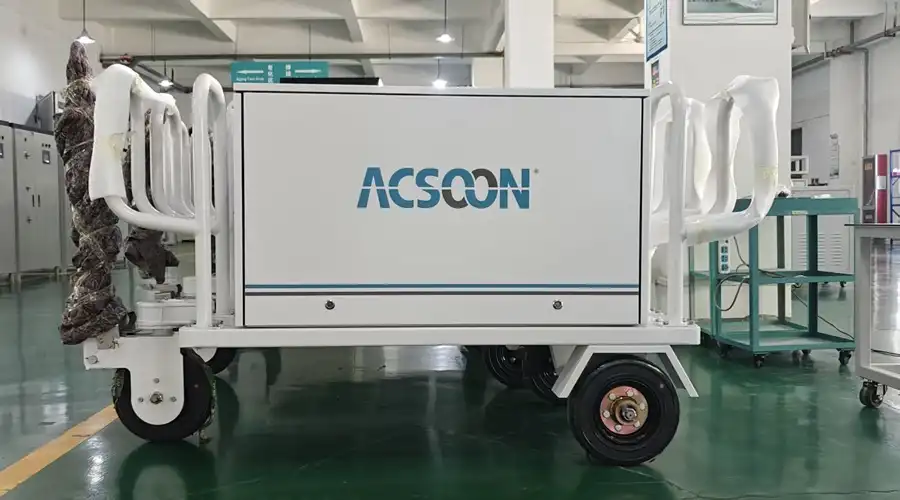
Knowing about key factors makes it easier to match tools to the needs of an application. In kVA or kW, the power rating tells you the biggest amount that the source can constantly handle. The ACSOON GPU-330030 model, which has a 30kVA rating and a three-phase 115V output at 400Hz, is an example of a model that can be used for business aircraft ground power uses. The type of input is also important. This unit can accept three-phase 380V at 60Hz, which means it can work with normal industrial power infrastructure. The precision of output regulation decides how stable the voltage is when the load changes. Quality units keep the voltage within ±1% of the set point even when the load changes. This keeps sensitive electronics from getting damaged. Stable frequency is also very important, because changes bigger than ±0.1Hz can mess up synchronous motors and digital systems. Specifications for harmonic distortion show how pure the output pattern is; overall harmonic distortion below 3% makes sure that it works with precision electronics. Environmental scores set the limits of what can be done. The IP21 ingress protection grade means that solid items bigger than 12.5 mm and water falling vertically are safe. This level of protection is good for hangars but not enough for outdoor aprons. Specifications for temperature ranges show whether units can handle very cold airfields at high altitudes or very hot deserts during summer activities.
Comparing 115VAC and 230VAC Systems
Both 115VAC and 230VAC work at 400Hz in flight, but 115VAC systems are more common in military and business aircraft in North America, and 230VAC systems are more common in modern wide-body aircraft in Europe. Most electronics, lights, and small motors are powered by single-phase 115VAC circuits. Three-phase 115VAC systems, on the other hand, are used for heavier loads like galley equipment and environmental control units. When it comes to ground support, 115VAC power sources are easier to connect to older fleets of airplanes and military platforms' current electrical systems. Parts are easier to find, and upkeep is easier with 115VAC in places where a lot of older airplanes are still in use. When built correctly, there isn't much difference in conversion efficiency between voltage standards. However, higher voltages lower the circuit current needs and the resistive losses that come with them. Voltage choice is affected by safety concerns. Lower volts mean there are fewer chances of getting shocked, which could make training operators and following safety rules easier. However, for the same amount of power to be delivered, 115VAC systems need larger gauge wires than 230VAC systems. This affects the weight of the cables and their usability in portable ground power units.
Comparing 115VAC 400Hz Power Supply Options
Frequency Differences: 400Hz vs. 50Hz and 60Hz
Commercial power usually runs at 115VAC 400Hz power supply, based on the infrastructure in the area. However, some uses need 400Hz for reasons other than making parts smaller. Motors and generators made to work at 400Hz spin at much higher speeds for similar pole layouts. This lets designers make small, powerful machines. On the other hand, trying to power 400Hz equipment with normal frequency sources severely lowers its performance—motors produce only one-eighth of their usual force at 50Hz, and transformers experience core saturation and overheating. This gap is filled by frequency conversion technology. Power electronics are used by modern solid-state converters like the GPU-330030 to make a clean 400Hz output from normal grid frequency sources. Unlike older motor-generator sets that made noise and needed a lot of maintenance, static converters don't make noise and don't need much maintenance. Quality units have conversion efficiencies of more than 90%, which means they waste less energy and need less cooling. To make sure that equipment works well across a wide range of frequencies, testing labs need to be able to use varied frequencies. Variable frequency power sources can change the output from DC to 1000Hz or higher, which makes them useful for trying new systems in development. These units are very expensive, but they offer the most freedom for R&D settings.
Portable vs. Fixed Installation Considerations
Mobility needs are set by the application context. Fixed systems are used in places like production test cells, repair hangars, and shipboards, where the cost of installation is justified by the need for constant infrastructure. Floor-mounted units like the GPU-330030 are built to last and have easy-to-use cooling systems. They can handle power levels of up to 180kVA or more, which means they can service multiple airplanes at the same time. Flexible apron operations are made possible by portable ground power units on wheeled carts or trailers. These units can support airplanes parked far away from the set ground power infrastructure. These units weigh the amount of power they can provide against how easy they are to move. Most movable units are between 10kVA and 90kVA. Aviation companies like movable options because they are more flexible, even though they cost more per unit and need more upkeep because they are exposed to the environment and move around a lot. For industrial and scientific uses, fixed systems that work with the building's power distribution are usually best. Permanent placement keeps parts from wearing out from vibrations and lets the cooling system work better. Rack-mounted frequency converters are useful for manufacturing test units because they combine multiple power sources into a small area on the floor.
Evaluating Brands and Supplier Reliability
Technical specs aren't very useful without good manufacturing quality and help from the provider. Established aircraft power brands charge higher prices because they have been reliable for decades, have a lot of certifications, and have service networks around the world. Specialized makers, on the other hand, like ACSOON, offer competitive performance at reasonable prices, especially for buyers who need customization or are on a tight budget. When evaluating a supplier, you should look at their production skills and quality control methods. ISO 9001 certification is a basic level of quality security, while AS9100 certification is specific to the needs of the aircraft business. Delivery schedules are directly affected by production capacity and inventory availability. Suppliers who keep popular configurations in stock help meet urgent buying needs that ground airplanes cause. Technical help skills are what set good partners apart from good sellers. Before the sale, engineering help is available to help you choose the best options, and after the delivery, operational support makes sure the installation goes smoothly. Quick fixing when practical problems happen cuts down on expensive downtime. The length of the warranty shows how confident the maker is in the product. Full coverage for three to five years with quick claim handling shows a commitment to product quality.
Procurement Considerations for B2B Buyers
Quality Certifications and Compliance Standards
Applications in aviation and the military are closely watched by regulators who require certain certifications. Most of the time, ground power equipment that serves business airplanes needs to show that it meets certain parts of the SAE Aerospace Standards. For example, AS907 for ground power units is one of these standards. When the military buys things, they often look at the MIL-STD-704 specifications for airplane electric power and need proof that they work together. All fields must follow the same electricity safety rules. IEC 61010-1 sets safety standards for measuring and controlling tools used in business and professional settings. Units that are going to be sold in Europe have to have a CE mark on them to show that they follow the EU's rules on electrical safety and electromagnetic compatibility. For sites in North America, UL certification or a known equivalent adds another layer of security. Environmental compliance is becoming a bigger factor in purchasing choices. The REACH rules deal with chemical safety, while the RoHS guidelines limit the use of dangerous materials in electrical equipment. Buyers should check compliance documents, especially for global applications where different regions have different rules.
Customization Capabilities and Technical Requirements
Standard store items work well for most uses, but sometimes specific needs mean that they need to be customized. Changes in output voltage, different input configurations (such as 115VAC 400Hz power supply), better environmental protection, or built-in tracking systems are all common calls for changes. Manufacturers who offer engineering design show flexibility, which is useful when the project needs change as the project progresses. The ACSOON name clearly supports OEM agreements, which let system designers put power conversion solutions into bigger equipment packages and sell them under their own brands. This feature is especially useful for flight companies making their own ground support tools or for military contractors putting together integrated test systems. System-level interaction is made easy with custom front panel layouts, specific connectors, and protocol integration. Depending on how complicated the changes are, lead times for personalized units are usually three to eight weeks longer than normal product availability. To allow for engineering review processes and prototype proof, buyers should involve suppliers early on in the planning stages of a project. Technical talks that go into great detail help avoid mistakes that cause delivery delays or cost a lot of money to fix.
Cost Factors and Warranty Provisions
There are big differences in how clear prices are across the frequency converter market. Some sellers post list prices with clear schedules for big discounts, while others need a formal quote for every request. People who agree to buy in bulk can often save a lot of money. For example, buyers who set annual sales goals may be able to get discounts of more than 20% off the price of a single unit. But minimum order amounts and payment terms need to be carefully weighed against how they will affect cash flow. The total cost of ownership is more than just the price of the car. Energy efficiency has an effect on running costs. For example, a 30kVA unit that runs at 90% efficiency instead of 85% efficiency saves about 1,500 kWh per year at normal usage rates, which adds up to big changes in costs over the course of ten years. Lifecycle costs are affected by how much maintenance is needed. Solid-state converters need less maintenance than motor-generator options, which need brushes to be replaced and lubrication to be done on a frequent basis. Coverage under a warranty should be carefully reviewed. Normal warranties cover flaws in the manufacturing process for one to two years. Premium guarantees cover all failures for five years. Buying an extended guarantee at the time of delivery can save you 10 to 15 percent of the price of the equipment, but it also protects you from the unknown costs of repairs. Make it clear if the warranty only covers parts or also covers time and trip costs for on-site service.
Supplier Verification and Logistics Planning
Checking the legitimacy of a source shields you from fakes and unreliable sellers. Proof of business registration, tours of the factory (either virtually or in person), and checks of customer references all add up to trustworthiness. Membership in industry groups and attendance at well-known trade shows show a stable market presence. Risk should be balanced in terms of payment. For example, paying a supplier in full up front is risky, but established lines of credit protect both parties. International purchasing adds a level of complexity to the processes that needs to be carefully coordinated. There are different ways to ship things that balance speed and cost. For example, ocean freight uses less equipment, so it costs less, and air freight gets things to people quickly. Incoterms make it clear who is responsible for things like shipping, insurance, and clearing customs. Buyers should know what they have to do to escape being charged extra or having their arrival times pushed back. The way customs classifies goods and figures out duties has a big effect on landing costs. Harmonized System codes determine the tariff rates that apply. For frequency converters, the suitable tariff rate is 8504.40, but exact duty amounts depend on the specific subclassifications. Different countries have different standards for import papers. Not having all the paperwork can cause delays at customs, which can throw off project schedules. Expert sellers help with the right paperwork to make customs clearance go more quickly.
Maintenance and Safety Best Practices
Routine Maintenance Requirements
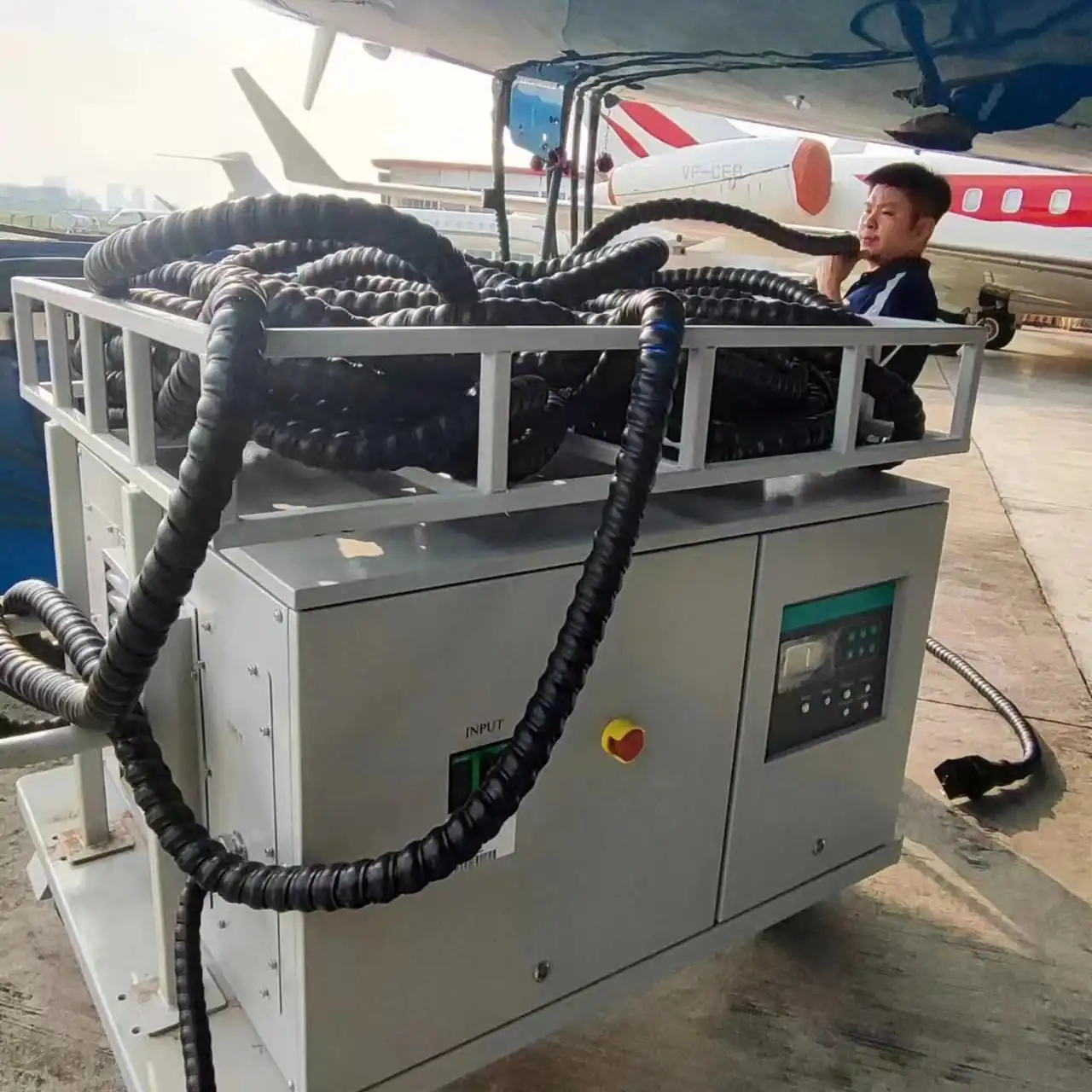
Solid-state frequency converters don't need as much care as spinning machinery, but regular inspections keep them working longer and stop problems from happening out of the blue. Visual checks should be done once a month to make sure the cooling fan is working, that the warning lights are working properly, and that there are no loose electrical connections. Maintenance on the cooling system is very important because dust that builds up blocks airflow, which leads to heat stress that breaks down computer parts. Using filtered compressed air to clean the intake filters and other internal parts every three months keeps the temperature performance at its best. Every year, full checkups should include precise electrical tests to check the accuracy of the output voltage, the stability of the frequency, and the harmonic content against the specs. Thermal imaging finds hot spots that are growing, which means that links are breaking down or parts are failing, before a major failure happens. In static converters, capacitor aging is the main cause of wear. To keep performance at a high level, makers usually recommend replacing capacitors every 40,000 to 60,000 working hours. Environmental factors speed up the breakdown. The coastal environment's high temperatures, extreme humidity, and toxic atmospheres mean that inspections need to be done more often. When installing along the coast, you need to pay extra attention to the state of the connectors and the rust inside the parts. Keeping thorough service logs that record check results, measurements, and corrective actions creates a maintenance record that helps with troubleshooting and shows that you are following the rules.
Built-in Safety Features and Standards Compliance
Modern frequency converters have many safety features that protect both the technology and the people using it. Overload safety stops the output from staying above its rated level. When too much load is recognized, electronic current limiting lowers output, and circuit breakers disconnect the power completely if the limits are pushed too far. Short-circuit safety finds faults right away and stops output to avoid damage. Once the faults are gone, the system resets itself automatically. Thermal tracking checks the temperatures of internal parts and lowers output or starts the stop process before damaging temperatures are reached. The ACSOON GPU-330030 has a self-diagnostic system that constantly checks important factors and lets users know when problems are starting to form before they become major. Automatic voltage compensation keeps the output fixed even if the input voltage changes. This keeps linked equipment from getting damaged by too little or too much voltage. Ground fault detection finds insulation problems that could lead to shocks and turns off the power right away when dangerous leaking currents show up. Input and output isolation transformers keep grid power and machine loads electrically separate, which stops fault currents from spreading. The emergency stop settings must be easy to get to and cut off all power right away when they are triggered. The safety features must meet the standards that apply, such as the ones in IEC 61010-1 for protective earth connections, insulation coordination, and available circuit protection.
Operator Training and Supplier Support Services
Even automated systems need trained workers who know how they should work, how to spot when something is wrong, and how to fix the problem. Complete training programs should cover how to start up and shut down, do regular tracking chores, read status signs, and know what to do when an alarm goes off. Documentation alone doesn't work nearly as well as hands-on training using real tools. Troubleshooting training helps workers figure out what's wrong and fix it when they can't get help from a technician. Figuring out which faults workers can safely fix and which ones need factory service keeps them from improvising, which could be dangerous, and keeps downtime to a minimum. There should be clear explanations of fault codes in the documentation, along with specific debugging steps and suggested actions. Supplier support services have a big effect on how well operations go. Technical support that is quick to respond—by phone, email, or online connection—helps solve problems quickly when they happen. Repairs can be done faster when suppliers keep extra parts in stock instead of having to wait weeks for parts to be ordered. Factory refresher training keeps workers up to date as equipment changes and new features are added. Some manufacturers offer predictive maintenance programs that look at performance data to plan repairs before they happen, so that key processes can run as smoothly as possible.
Why Choose JERRYSTAR 115VAC 400Hz Power Supply Solutions
Tailored Solutions for Demanding Applications
Xi'an Jerrystar Instrument Co., Ltd. is an expert in 115VAC 400Hz power supply and ACSOON brand power converters that are designed to work in flight, the military, ships, and labs. Our experience in these tough fields makes sure that the goods we make meet the high standards of dependability that mission-critical operations require. The GPU-330030 model is a great example of our design philosophy: it's built to last and can be used in both hangars and yard areas, and it has smart features like automatic voltage adjustment and self-diagnosis that make it easier to use. Customization is not a rare convenience; it is a core skill. Our engineering team works directly with clients to change standard designs or create completely new ones that meet specific needs. We can provide solutions that exactly match your needs, whether you need different input voltages to work with the power grid in your area, better environmental protection for harsh working conditions, or custom monitoring interfaces that work with facility management systems. We have the technical know-how and manufacturing flexibility to make these happen. Our factory in Xi'an is between 5,000 and 10,000 square meters and has both new production tools and skilled expert staff. This framework supports both making prototypes and mass production, making sure that the process goes smoothly from the first design to full-scale rollout. System integrators and equipment makers can use our power conversion technology in their products with the help of OEM partnership possibilities. We also provide engineering support during the creation process.
Quality Assurance and Proven Performance
Quality starts with choosing the right parts and goes through strict testing procedures. We only buy important parts from reputable companies that have a history of trustworthiness. We don't try to save money by doing things that hurt long-term performance. Before being shipped, production testing makes sure that every unit meets the requirements. This includes checking the accuracy of the output voltage, the stability of the frequency, the regulation of the load, and the functioning of the safety system. Because we work with the military and aircraft industries, we have to meet very high quality standards. Different product lines and markets have different certifications, but our quality control methods are based on standards set by the aircraft industry. This organized method for checking designs, managing production, and keeping track of materials makes sure that the quality of the output stays the same, no matter how big the order is or when it needs to be delivered. Performance data from sites in the field shows how reliable they are in real-world settings. Customers say the product has worked perfectly for years in a wide range of settings, from harsh military air bases to busy business repair shops that get a lot of use every day. Individual results rely on how well the product is installed and maintained, but the positive feedback we keep getting back supports the way we create and make our products.
Comprehensive Service Ecosystem and Responsive Support
We know that technical specs are only one part of the buying process. Throughout the buying process, responsive contact makes sure that your needs are fully known and met. Our team is happy to have in-depth technical conversations. We'd rather spend time making sure everyone understands the requirements up front than fixing mistakes after the fact. Email us at acpower@acsoonpower.com to talk about your unique application needs. Transparency in quotations gets rid of buying shocks. We give you full pricing information, including any extra features you may want, shipping costs, and guarantee terms that apply. Volume savings and flexible payment plans make it easy to buy things in a range of situations, from single evaluation units to programs that standardize all of a company's tools. We keep a good supply of common setups on hand so that we can deliver quickly when urgent operating needs arise—often within days instead of weeks."After-sales" help doesn't end when the product is delivered. Installation instructions help get systems up and running correctly, and expert support answers questions about how they work as they come up. Our extended warranty choices protect you against sudden failures for a long time, and our spare parts supply cuts down on downtime when service is needed. With this all-around method, working with vendors turns into real partnerships, where our goal is the success of your operations.
Conclusion
To choose the best 115VAC 400Hz power supply, you have to weigh technical specs, quality concerns, the need for customization, and the supplier's abilities. Understanding basic ideas, like why 400Hz power is better for military and aircraft uses in terms of size and performance, is the first step in making smart choices. By comparing different frequency standards, portability needs, and company offers, it's easier to see which solutions work best in different operating situations. Procurement experts need to look at more than just the original price. They also need to consider the total costs of ownership, the stability of the provider, and compliance with any standards that apply. Good repair habits and built-in safety features make sure that operations run smoothly for a long time and keep people and equipment safe. JERRYSTAR combines technical know-how, manufacturing skills, and customer-focused service to provide power conversion solutions that meet the strict needs of testing, flight, military, and marine environments where dependability cannot be compromised.
FAQ
What makes 400Hz power supplies necessary for aviation applications?
Years ago, 400Hz became the standard for aircraft electrical systems. This is because higher frequency power makes transformers, motors, and engines much smaller and lighter—equipment can be up to 80% lighter than 50Hz versions. Getting rid of this extra weight directly makes fuel economy and payload ability better. Ground support equipment must be compatible with airplane frequency standards so that it can be used during maintenance.
Can standard 60Hz equipment operate on 400Hz power supplies?
Things that were made to work with 60Hz power won't work right with 400Hz power. Motors run about seven times faster than their normal speed, which breaks down parts and makes them too hot. Core saturation in transformers causes too much current to flow and damage from heat. These specialized power sources should only be used with equipment that is built and rated to work at 400Hz.
How do I determine the correct power rating for my application?
Add up all the power needs of all the linked devices to get the total connected load. Then, leave 20 to 30 percent extra for inrush currents and future growth. When you have three-phase loads, you need to pay close attention to phase balance. High-power loads that come and go, like motors, may have a different effect on size than loads that are always on. Talk to providers who offer detailed load analysis to help make sure you get enough capacity without over-specification that drives up costs needlessly.
What differentiates solid-state converters from motor-generator sets?
Solid-state converters use power circuits to create the output frequency. They are quiet, don't need much upkeep, are small, and have a high efficiency rate of over 90%. Motor-generator sets change frequency physically by using rotating parts. They need to be maintained regularly, make noise, take up more room, and are only about 70–80% efficient. Solid-state technology is mostly preferred in modern applications, unless current infrastructure or specific needs say otherwise.
Partner with a Trusted 115VAC 400Hz Power Supply Manufacturer
JERRYSTAR makes specialized power transfer tools for testing in the military, at sea, in space, and in factories, where dependability is very important. The ACSOON brand GPU-330030 and similar types are built to last and have smart features like self-diagnostic systems and automatic voltage adjustment. As a business that both makes and sells things and has production facilities spanning 5,000 to 10,000 square meters, we keep enough stock on hand to be able to deliver quickly when urgent operating needs arise. Customization options allow for voltage setups, environmental safety needs, and integration needs that standard goods can't meet. Because we have a lot of experience with flight and military power systems, we can make sure that our solutions meet the highest standards of dependability. At the same time, our low prices and flexible payment options make them a great value. Whether you need a single test unit or to standardize your whole fleet, our engineering team is available to help you with technical questions during the planning, purchasing, and installation stages. Contact JERRYSTAR today at acpower@acsoonpower.com to talk about your 115VAC 400Hz power supply needs with experts who know how to handle difficult situations and offer tried-and-true solutions backed by full guarantee coverage and ongoing technical support.
References
1. Smith, J.R., & Anderson, M.K. (2021). Aircraft Electrical Systems and Ground Support Equipment: Design Principles and Operational Standards. Aerospace Technology Press.
2. Military Standards Group. (2019). MIL-STD-704F: Aircraft Electric Power Characteristics. Department of Defense Interface Standard.
3. Thompson, R.L. (2020). "Frequency Conversion Technology for Aviation Ground Support: Comparative Analysis of Solid-State and Rotating Systems." Journal of Aerospace Engineering and Technology, 45(3), 127-145.
4. International Electrotechnical Commission. (2018). IEC 61010-1: Safety Requirements for Electrical Equipment for Measurement, Control, and Laboratory Use. IEC Standards Publication.
5. Harrison, D.P., & Chen, W. (2022). Industrial Power Conversion Systems: Specification, Procurement, and Lifecycle Management. Technical Publications International.
6. SAE International. (2017). AS907D: Aerospace Ground Equipment—General Requirements for Design, Performance, and Maintainability. SAE Aerospace Standard.