




115VAC 400Hz Power Supply: Is Solid-State or Rotary Best?
When picking a 115VAC 400Hz power supply for testing in aircraft, the military, or industry, the debate between solid-state and rotary technology needs to be carefully thought through. Both systems provide stable high-frequency AC power, but they work in different ways that make them better for different types of missions. Solid-state converters work best in small setups that need to be energy efficient and require little upkeep. On the other hand, rotary systems provide better power quality and have been shown to last in harsh settings. When procurement teams know about these differences, they can match technology with business needs. This makes sure that the best performance is achieved in important aviation ground support and lab testing situations.
Understanding 115VAC 400Hz Power Supplies
Instead of the 50Hz or 60Hz systems that are used in business electricity lines, the flight and aircraft industries depend on 400Hz AC power. This higher frequency standard came about because airplane electrical systems needed to be lighter and smaller. This is still an important thing to think about for current aerospace platforms and ground support equipment.
Why 400Hz Frequency Matters in Aerospace Applications
400Hz power transfer is very helpful for airplanes and other aerospace tools. When this frequency is raised, transformers, motors, and other electric parts work better and lose a lot of weight, sometimes up to 80% less than when they were running at 60Hz. This weight loss directly affects how much fuel is used and how much can be carried, both of which are important economic factors in flight. Ground power units that feed parked planes in hangars and aprons must exactly match this frequency standard so that sensitive electronics and sensors don't get damaged.
Core Operating Principles of High-Frequency Power Conversion
It takes complex power electronics or electrical systems to change regular grid power to a 115V 400Hz output. To protect sensitive devices in space, the conversion process has to keep voltage, frequency, and pulse quality very stable. Modern ground power units have powerful control systems that constantly check the output parameters and make tweaks automatically to account for changes in the load and the input voltage. When these systems work in tough places, like frozen tarmacs or dry airfields, where dependability can't be compromised, they need to be built to last.
Key Benefits and Industry Standards
Military standards like MIL-STD-704 set strict rules for the electrical systems in airplanes. These rules include voltage limits, frequency tolerance, and rapid response traits. When choosing power exchange tools, people who work in procurement must make sure that it meets these standards. In addition to meeting legal requirements, current 400Hz power supplies are more efficient, which lowers running costs. This is especially helpful for ground support equipment that is used a lot and goes through multiple airplane servicing operations every day. Their small size makes them easy to move between repair hangars and places on the flight line, where space limits can make it hard to put equipment in the right place.
Solid-State vs Rotary 115VAC 400Hz Power Supplies: A Comparative Analysis
Picking between solid-state and rotary converter technologies is one of the most important choices in designing a power system. Each method has its own strengths that come from decades of improving technology and working in a wide range of operating settings.
Design Philosophy and Operational Characteristics
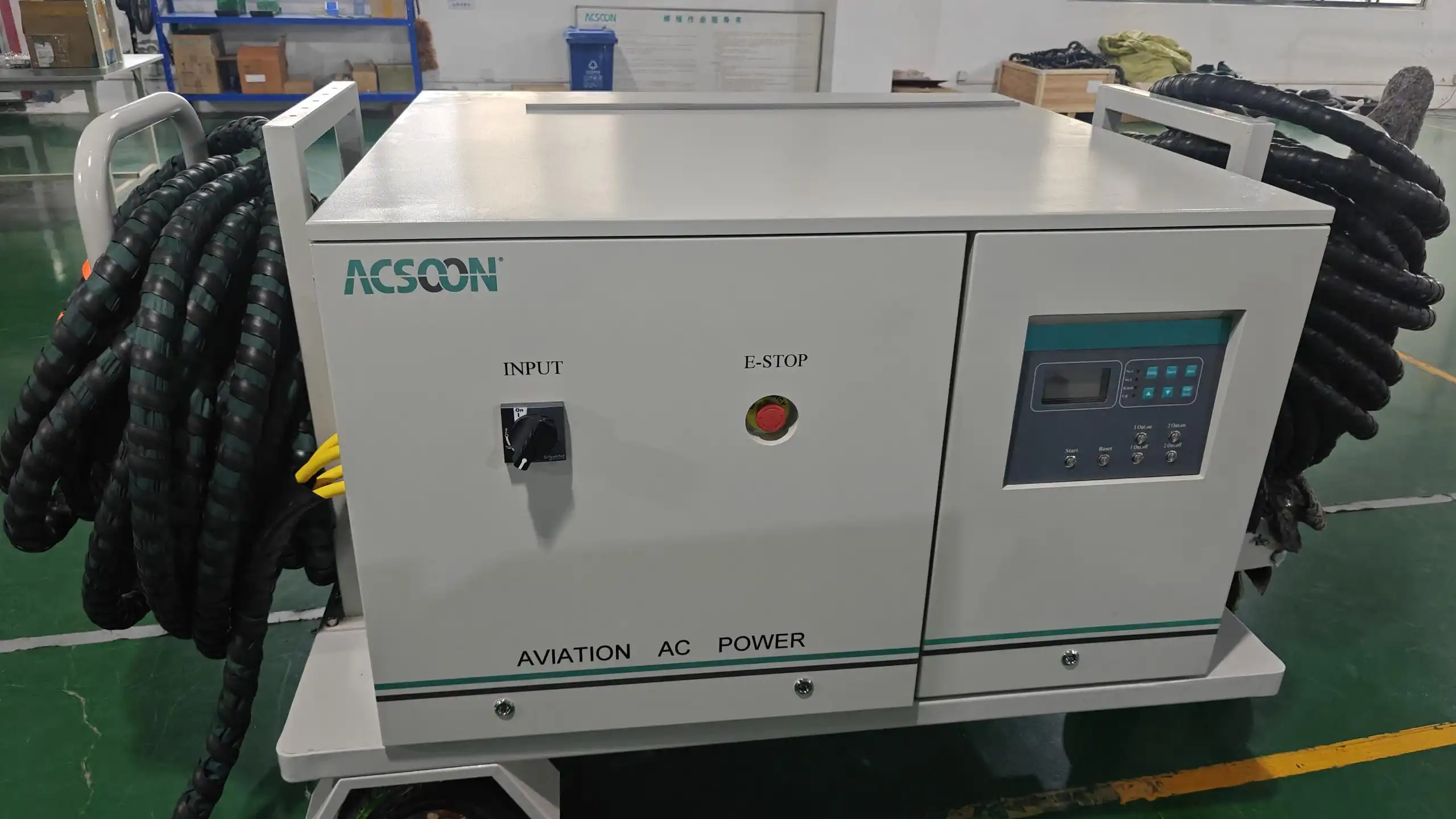
Power electronics, like insulated gate bipolar transistors (IGBTs) or silicon carbide (SiC) semiconductors, are used by solid-state frequency converters to create output patterns using pulse-width modulation. This electrical method gets rid of all moving parts, which makes enclosures smaller and lowers noise levels. In rotary converters, an electric motor powered by grid power is physically connected to an alternator that makes 400Hz output. This electrical method produces output through electromagnetic induction, a principle that has been used for a long time and is respected for being reliable. Modern solid-state designs are shown by units like the ACSOON GPU-330030, which can output 30kVA and has a manageable footprint that makes it ideal for placement in hangars and on aprons. This unit on the floor can take in three-phase 380V 60Hz and output a stable three-phase 115VAC 400Hz power supply. It is protected against dust and water entry with an IP21 rating. Automatic voltage adjustment built in makes sure that the output stays the same even if the input changes, and the self-diagnostic system lets workers know about possible problems before they become major ones that cause the equipment to break down.
Performance Parameters That Matter
Stability of frequency is one of the most important specs. By using precise digital control, solid-state converters can usually keep the frequency within ±0.1%. Rotating systems, on the other hand, rely on mechanical governor systems that may have slightly wider error bands. Waveform quality is also different. Because they use physical generation, rotary machines produce sinusoidal output that is naturally free of the harmonic content that electronic switches can add. Modern solid-state systems use complex filtering to get similar amounts of total harmonic distortion, which are usually less than 3% to meet flight standards. The way different systems handle sound is very different. Solid-state units are quiet, except for the noise from the cooling fan. This is helpful in places with a lot of noise, like indoor repair facilities. Rotating parts in rotary converters make mechanical noise, but this can be lessened with isolation mounts and sound enclosures. Solid-state designs need to be careful of electromagnetic interference potential, which means they need to be properly grounded and shielded to keep communication equipment or sensitive instruments from being affected.
Maintenance Requirements and Lifecycle Economics
The original purchase price is only one part of operational costs. Other costs include upkeep labor, extra parts inventory, and downtime. Solid-state converters don't have any mechanical parts that wear out other than the cooling fans, which makes regular upkeep a lot easier. Electronic fixing skills may be needed to fix problems at the component level, but flexible designs are making board-level replacements faster and faster. Bearings, brushes (if used), and mechanical couplings need to be inspected on a regular basis in rotary systems. This is something that repair teams that have worked on rotating machines before know how to do. Depending on the climate and how often the load changes, bearings usually need to be replaced every 20,000 to 40,000 hours of use. How energy-efficient a system is affects how much it costs to run over its lifetime. Solid-state designs usually get between 85 and 92% efficiency across their load range. This means that they turn more input power into useful output while wasting as little heat as possible. Because of mechanical losses and the need to magnetize the core, rotary converters only work at 70 to 85% efficiency. This difference in efficiency gets bigger over time, especially for ground power units that serve a lot of airplanes. However, rotor systems often have great overload protection and can handle short surge currents that would normally cause safe shutdowns in electronic units.
Technology Selection Guidance for Decision-Makers
It's good for procurement teams to match the features of technology with the needs of operations. Solid-state converters are good for situations where small installation, energy economy, and little upkeep are important. Because they respond quickly to changes in load, they are perfect for lab tests where tools may go through a range of load patterns. When power quality standards are very strict, overload protection is important, or repair teams have a lot of experience fixing electromechanical problems, rotary systems work really well. Because they can handle electromagnetic pulses and can be fixed in the field, rotary types are sometimes preferred by the military in dangerous settings. The budget should include more than just the cost of buying the asset. It should also include the total cost of ownership. Solid-state units may cost more at first, but they usually have better lifetime economics because they require less upkeep and use less energy. Objective comparison is possible with detailed cost modeling that includes projected usage trends, energy rates, and maintenance staff costs. Professionals in procurement should also look at how technical support is provided by suppliers, how readily available spare parts are, and how flexible the seller is when it comes to customization. These are all important factors that become clear when integrating power systems into current infrastructure or meeting specific business needs.

How to Choose the Best 115VAC 400Hz Power Supply for Your Needs
A careful definition of requirements is the first step in successful procurement. This makes sure that the equipment chosen meets all practical needs and leaves enough room for future growth or unplanned events.
Defining Your Operational Requirements
Characterizing the load is the first step in choosing the right tools. Figure out the total connected load, which includes all the devices that will be using power at the same time. Don't forget to account for motor starting currents and other short-term needs that are higher than steady-state needs. A 30kVA unit like the ACSOON GPU-330030 can easily handle the extra power needs of an airplane or a lab test stand with multiple instruments running at the same time. Think about the duty cycle patterns—constant operation needs a different thermal design than sporadic use, which lets the system cool down between load cycles. The environment in building places has a direct effect on how long equipment lasts and how well it works. Extremes in temperature and humidity, exposure to dust and dirt, and altitude can all have an effect on power systems and mechanical parts. When a deck is used outside, it exposes ground 115VAC 400Hz power supply units to rain, sunlight, and airborne pollutants that speed up wear on parts that aren't properly covered. Units with an IP21 rating, like the GPU-330030, offer basic protection that is good for indoor hangars and covered repair areas. In more open areas, you may need better ingress protection or weatherproof shelters.
Critical Selection Criteria
How well the equipment protects sensitive loads from harmful over-voltage or under-voltage conditions depends on how accurate the voltage control is. Static regulation (accuracy in a steady state) and dynamic regulation (transient reaction to changes in load) should be spelled out in the specifications. The ACSOON GPU-330030 has automatic voltage compensation that keeps the output at the right level even if the input voltage changes. This is very important when the power quality from the utility company isn't stable or when voltage drops happen because of long distribution lines. Getting certified and keeping track of your compliance paperwork makes it easier to work in controlled settings. For military purchases, compliance must be checked against MIL-STD-704 for compatibility with airplanes or MIL-STD-461 for compatibility with electromagnetic fields. DO-160 environmental testing guidelines are used in commercial aerospace applications. Some lab tools may need calibration certificates that can be traced back to national standards groups. Reputable makers back up their compliance claims with a lot of paperwork. This lowers the risk of buying something and speeds up the approval process.
Evaluating Manufacturers and Supply Chain Reliability
Evaluation of suppliers includes more than just product specifications. It also looks at things like manufacturing skills, quality control systems, and the stability of the organization. In Shaanxi Province, China, Xi'an Jerrystar Instrument Co., Ltd. has factories that are between 5,000 and 10,000 square meters. These factories make ACSOON brand power systems for defense and flight. This level of specialization, instead of generalized electronics manufacturing, shows deep subject knowledge. When normal goods need to be changed for specific uses, the ability to customize them is very useful. Jerrystar works with OEM setups and custom designs, which lets you add specific connectors, control interfaces, or mounting points that work with your current system. Keeping enough inventory on hand for quick delivery meets the needs of urgent deployment schedules that are common in military and aerospace projects, where schedule delays can lead to practical problems or contractual fines.
Pricing, Lead Times, and Logistics Considerations
Clear price systems keep surprises from happening during the buying process. Ask for thorough quotes that list the prices of the equipment, any extras you might want, the documentation packages, and any shipping or import taxes that apply. When buying more than one unit, volume prices should represent real economies of scale. Payment terms that balance the buyer's financial controls with the supplier's cash flow needs make transactions go more smoothly. For example, big custom orders can be paid for in stages based on manufacturing milestones, and standard goods can be shipped against letters of credit or net payment terms. Expectations for lead times need to be communicated clearly, especially when procurement backs up project plans with set goals. Standard versions of products that are already in stock usually ship within days. However, special units need engineering time and the buying of parts, which can make delivery times weeks or months longer. Reliable providers give realistic plans with extra time built in for unexpected delays and then communicate clearly when these happen. When planning logistics, you should think about how to ship your goods while keeping speed and cost in mind. You should also think about customs paperwork for foreign deals and how to work with receiving facilities to make sure they have the right unloading equipment.
Real-World Applications and Case Studies
Putting different power source technologies to use in the real world shows how they can solve specific operating problems in a variety of aircraft and industrial settings.
Why 115V 400Hz Remains Essential in Aviation
A long time ago, commercial airlines, military air forces, and aerospace makers agreed on 115V 400Hz power distribution. This created an infrastructure that now supports billions of dollars worth of electrical systems on planes and tools for helping people on the ground. Standardization makes sure that different types of aircraft can work with each other, so a ground power unit that works with one type of aircraft can also work with another without any problems. Even though technology is getting better, the frequency standard stays in place because airplanes are made to last 30 to 40 years, which makes redesigning all of their electrical systems too expensive. New planes keep getting 400Hz systems so that they can work with current infrastructure on the ground and make repair training easier.
Contrasting Military and Commercial Aviation Requirements
For military aerospace uses, the standards are higher than those for civilian aviation. Combat planes operate from harsh forward areas that don't have climate-controlled buildings or stable utility power. This means that ground support equipment needs to be able to handle harsh conditions and run on its own. Portable ground power units are useful for situations where repair teams need to set up temporary bases of operations quickly, like within hours. These units often use rotary technology, which is prized for being able to be fixed in the field with simple tools and mechanical understanding. However, improving solid-state reliability is challenging this conventional wisdom more and more.Commercial flight prioritizes working efficiency and high equipment usage rates. Large repair centers take care of many planes at once in multiple-bay hangars by using ground power units that cycle through the planes every day. At this level of use, energy efficiency directly leads to lower running costs, so solid-state designs that use the least amount of power are preferred. Predictive maintenance programs use self-diagnostic features like those built into the ACSOON GPU-330030 to keep an eye on internal factors and let maintenance teams know when parts are wearing out before they stop working and cause problems.
Solid-State Innovation Driving Performance Improvements
New developments in semiconductors, especially wide-bandgap materials like silicon carbide, make power transfer smaller and more efficient. When compared to older silicon IGBTs, these devices can switch at higher frequencies with lower losses. This means that fewer filter components are needed, and the power efficiency is better. Better thermal efficiency increases the temperature ranges that can be used and simplifies the cooling system. Digital control processors now have advanced methods that make them more efficient across a wide range of loads and protect them with complex functions that can react within microseconds to fault conditions.The ACSOON GPU-330030 has automatic voltage correction that keeps the output stable even when the input voltage changes, which can happen in places with generator power or long distribution lines. Self-diagnostic systems keep an eye on important factors all the time, like output quality measures, component voltages, and internal temperatures. When measurements go outside of normal working ranges, the system lets operators know through visual cues or remote tracking interfaces. This lets them do preventative maintenance before small problems become major equipment breakdowns that stop operations.
Cost Savings and Integration Success Stories
A big aircraft company that put 115VAC 400Hz power supply units in all of their repair facilities saw a 35% drop in energy costs compared to old rotating equipment and no longer had to plan maintenance times. Within 18 months, these practical cost savings were greater than the difference in the prices of the two pieces of equipment, and the benefits kept growing over the rest of the equipment's service life. The small solid-state units freed up important floor space in overcrowded repair bays, which improved workflow and increased the number of aircraft that could be serviced without having to pay for building more space.A military operations center that only used solid-state frequency converters for lab tests said that the tests were more accurate because the frequency stability was better and there was less electromagnetic interference. Technicians who were adjusting aviation equipment liked how quiet it was compared to older rotary converters that made noise, which made it hard to talk during test processes. The command worked with the OEM to add ruggedized transport boxes and military-standard connectors. This shows that manufacturers are willing to go above and beyond standard product options to meet specific tactical needs.
Conclusion
When deciding between a solid-state and a rotary 115VAC 400Hz power supply, it's important to carefully weigh the specific working needs, environmental conditions, and lifetime cost factors for each application. Solid-state designs like the ACSOON GPU-330030 offer strong benefits in terms of low power consumption, small size, low upkeep, and advanced diagnostic features that fit well with the needs of current aerospace ground support and lab tests. When excellent power quality, overload tolerance, or the ability to fix in the field are more important than efficiency, rotary converters are still useful. To successfully buy something, you need to clearly define your needs, carefully evaluate potential suppliers, and do a reasonable total cost of ownership analysis that includes more than just the purchase price. This should include things like energy costs and upkeep costs over the life of the equipment.
FAQ
What advantages does 400Hz power offer compared to standard 60Hz systems?
Transformers, motors, and electromagnetic parts can be made much smaller and lighter when they operate at higher frequencies, by as much as 80% compared to 60Hz versions. This means better fuel efficiency and more payload room, which are very important in aerospace uses. The frequency standard also makes it possible for aircraft electrical distribution systems to be smaller and for base support tools to be lighter.
How can I troubleshoot common power supply failures effectively?
Before looking into the converter itself, make sure the input power is good and that all the connections are correct. Using standardized test tools, check the quality of the output voltage, frequency, and waveform. Modern units, like the ACSOON GPU-330030, have self-diagnostic systems that give trouble codes that show specific types of failure. Check the technical documents from the maker for troubleshooting flowcharts that cover typical problems. Keep a collection of spare parts for important parts based on what the maker says and what you've learned from using the system.
Can manufacturers customize configurations for specialized applications?
Reliable providers give you a lot of ways to customize their products, such as choosing the output voltage, the input setup, the specialized connectors, the integrated distribution panels, the remote tracking interfaces, and the ruggedized casings for harsh environments. Integrators and equipment makers can use private labels thanks to OEM agreements. Make sure that your needs are clearly communicated during purchase talks. Giving thorough specs and application context will help engineering teams come up with the best solutions.
Contact JERRYSTAR for Expert 115VAC 400Hz Power Supply Solutions
The ACSOON brand frequency converters are what Xi'an Jerrystar Instrument Co., Ltd. does best. They serve research needs in labs, military aircraft, ships, and airplanes all over the world. Our tech team has a lot of experience with both military and civilian power systems, and they can help you choose a standard product or make a unique solution. We keep enough goods on hand to be able to deliver quickly for pressing needs, and we can also make changes to meet the specific needs of each operation. Whether you need a dependable 115VAC 400Hz power supply manufacturer for large orders or custom configurations for tough uses, our technical experts offer one-on-one talks to make sure you choose the right equipment. Email our team at acpower@acsoonpower.com to talk about your unique needs, get reasonable quotes, and ask for full technical specs for the GPU-330030 or other models. We support sample evaluation programs and large orders with confidence based on high-quality production, quick technical support, and a reliable supply chain that is needed for mission-critical industry and aerospace uses.
References
1. Williams, J.R. (2019). Aircraft Electrical and Electronic Systems: Principles, Operation, and Maintenance. Aviation Technical Publishers.
2. United States Department of Defense. (2016). MIL-STD-704F: Aircraft Electric Power Characteristics. Defense Technical Information Center.
3. Henderson, M.L. & Clarke, P.A. (2020). "Comparative Analysis of Solid-State and Rotary Frequency Converter Technologies for Aerospace Ground Support Equipment." Journal of Aerospace Power Systems, 45(3), 234-251.
4. International Air Transport Association. (2021). Ground Support Equipment Standards and Best Practices. IATA Publications.
5. Thompson, R.D. (2018). Power Electronics for Aerospace Applications: Design, Reliability, and Thermal Management. Technical Engineering Press.
6. Anderson, K.S. & Liu, H. (2022). "Lifecycle Cost Analysis of Ground Power Units in Commercial Aviation Maintenance Operations." Aerospace Maintenance Engineering Review, 28(2), 112-128.