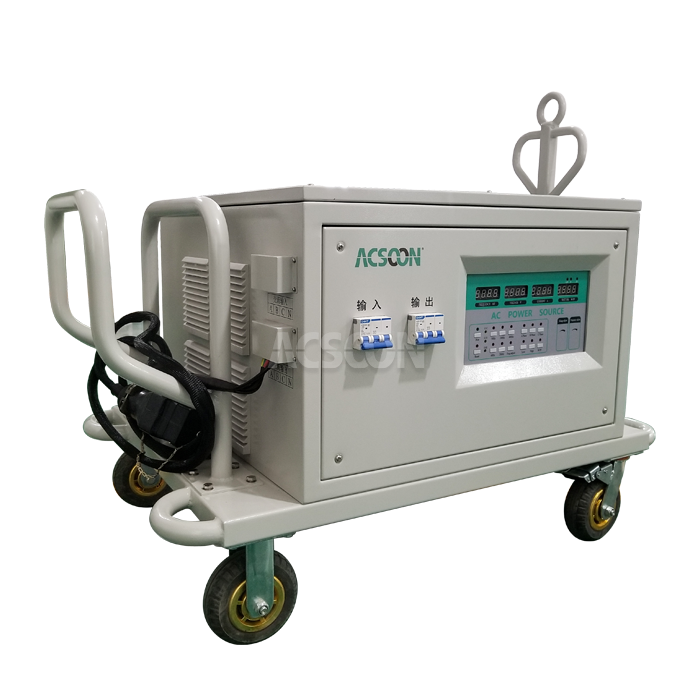




Can a 3 Phase 400Hz Frequency Converter Improve Power Quality?
A 3-phase 400Hz frequency converter can make power quality much better by regulating voltage accurately, screening out harmonics better, and maintaining a stable frequency output. These converters keep voltage changes to a minimum and lower total harmonic distortion (THD). These are important factors in military, aircraft, and industry testing settings where sensitive equipment needs clean, steady power. These systems make operations more reliable by changing a normal 50Hz or 60Hz input to a stable 400Hz output. They also protect sensitive electronics from power fluctuations.
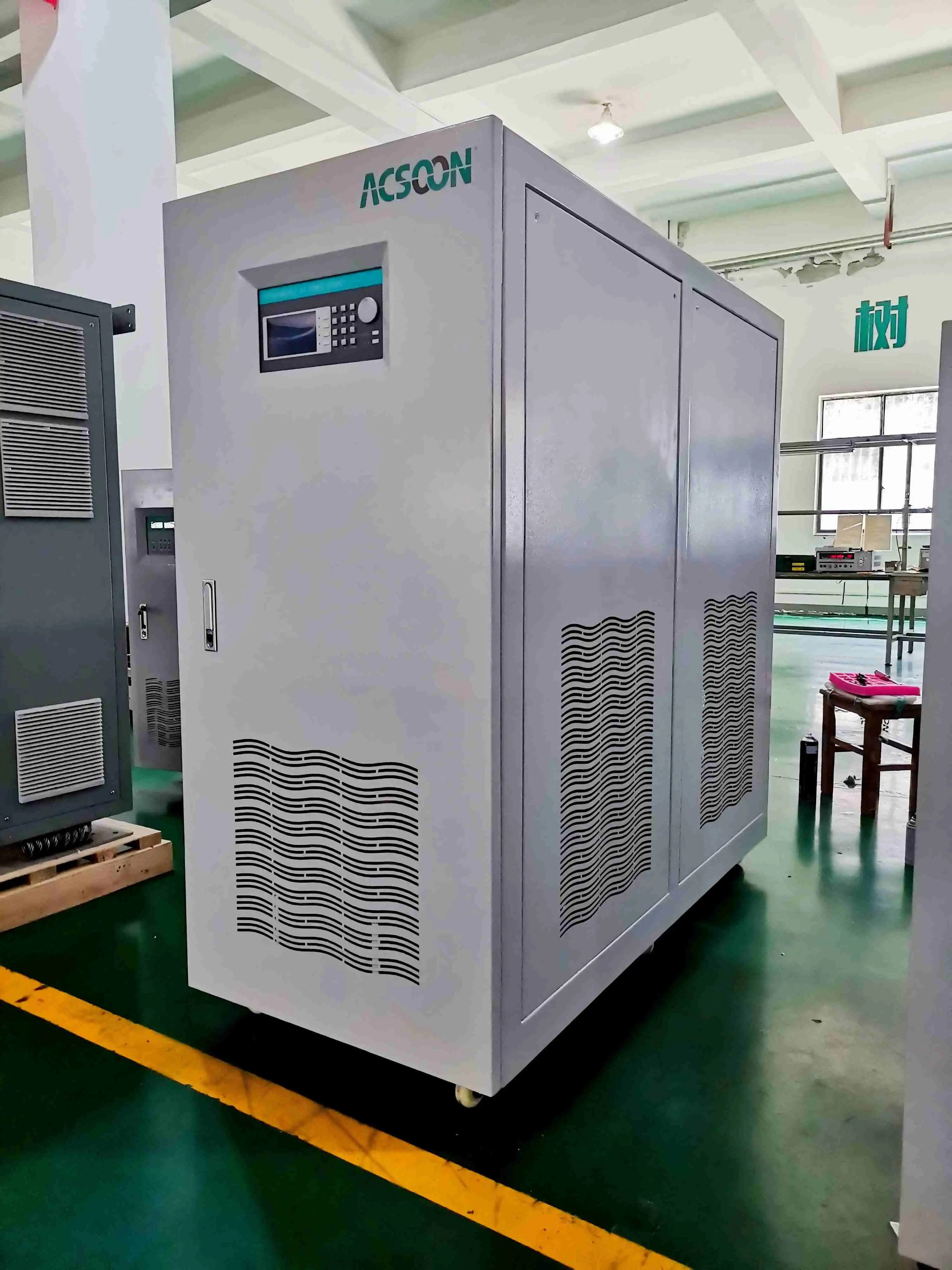
Understanding 3 Phase 400Hz Frequency Converters and Power Quality
Problems with power quality affect important activities in the aerospace, defense, and industrial production sectors. Before you can understand how specialized frequency conversion equipment helps with these issues, you need to know what the main differences are between regular power systems and high-frequency power systems.
What Makes 400Hz Frequency Conversion Different
Most business buildings use 50Hz or 60Hz power systems. 400Hz systems, on the other hand, deliver electricity at eight times the rate of normal 50Hz infrastructure. Because of this higher frequency, transformers and motors can work with a lot less core material, which cuts weight and space by about 70% compared to 50Hz equivalents. This weight decrease is especially helpful for aircraft ground support equipment and mobile military power units that need to be set up quickly. Power electronics like insulated gate bipolar transistors (IGBTs) and complex pulse-width modulation (PWM) control methods make up the main structure of these converters. These parts create clean sinusoidal output waves from incoming electric power, even if the quality of the input power changes.
Defining Power Quality Parameters
Power quality includes a number of measured factors that show how reliable an electricity system is. Voltage stability means keeping the output voltage within certain limits, which for aircraft uses are usually ±3%. Harmonic distortion, shown as a THD percentage, counts unwanted frequency components that mess up the basic pattern. To protect critical communication and avionics systems, military guidelines often say that THD must be less than 5%. Stable frequency is also very important, especially for systems in airplanes, where sensors sync up with the power frequency. In precision testing labs, deviations greater than ±0.5Hz can cause equipment to stop working or cause mistakes in the calibration process. Together, these factors show if the electrical infrastructure can support mission-critical activities without causing system breakdowns or early component wear.
Can 3 Phase 400Hz Frequency Converters Enhance Power Quality?
There is measurable proof that power quality improves when high-frequency conversion tools are used in the real world. Facilities that maintain aircraft, military installations, and industry test labs all say that their equipment works better after switching to specialized frequency conversion infrastructure.
Addressing Voltage Instability and Fluctuations
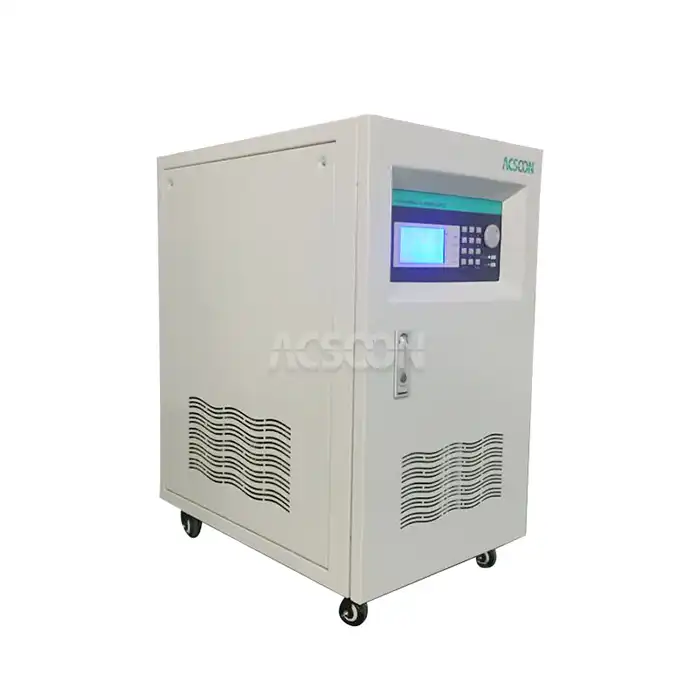
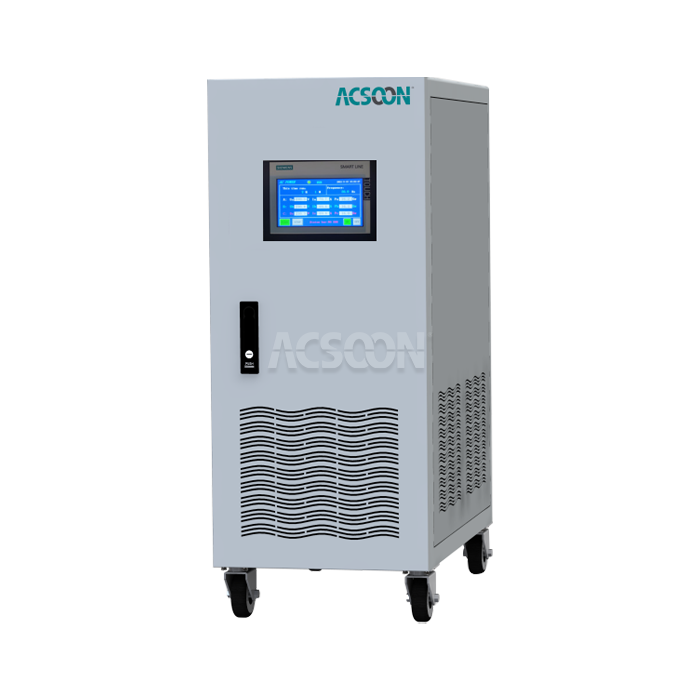
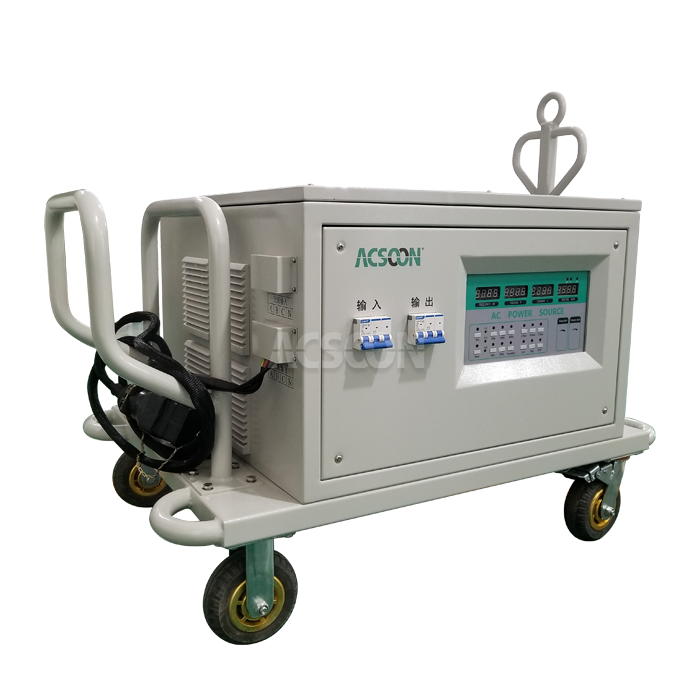
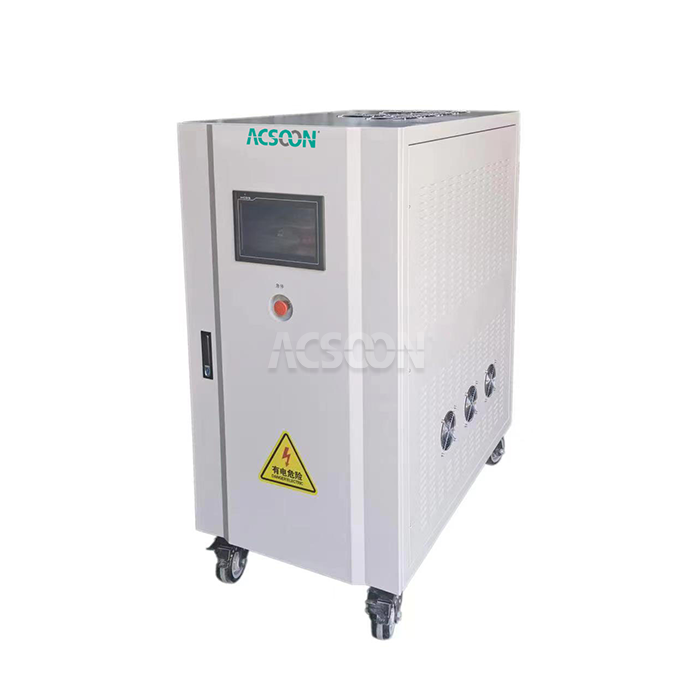
Voltage drops, rises, and transient events happen a lot in industrial settings. These can be caused by big motor starts, cutting equipment, or problems with the power grid. These problems put sensitive instruments at risk and shorten the life of equipment. Good 3-phase 400Hz frequency converters have voltage control hardware that keeps the output stable within ±1% even when the input voltage changes from 208V to 480V. The ACSOON AF400M-330100 type is a good example of this because it can handle a wide range of input voltages and output a steady 200–208V at a carefully controlled 400Hz frequency. This rule protects linked devices from source power problems that would normally spread through systems that use transformers.
Harmonic Filtering and Waveform Purity
Harmonic currents are put into power distribution systems by nonlinear loads like electronic ballasts, variable frequency drives, and switching power sources. These harmonics make transformers get too hot, neutral conductors get too full, and transmission lines get messed up. Modern static frequency converters use active filtering to stop harmonics at the production point. This keeps both the input and output power networks from getting messed up. After installing dedicated 400Hz ground power units, THD dropped from 15-20% (normal utility grid values) to below 3%, according to testing done at aerospace repair sites. This improvement is directly linked to fewer problems with the electronics and longer periods of time between servicing different parts.
Real Applications Demonstrating Quality Improvements
A U.S. Navy aircraft carrier repair center reported a 40% drop in electronics faults that couldn't be explained after replacing motor-generator sets with static frequency converters with IP54-rated casings that are suitable for harsh marine environments. By getting rid of mechanical parts, power changes caused by vibration were eliminated, and the mean time between failures (MTBF) went from 5,000 to over 25,000 working hours. Defense communication centers say that using special frequency conversion to power RF equipment instead of sources that come from the utility grid improves signal clarity and lowers bit error rates. Crystal-controlled converters provide a stable frequency reference that gets rid of timing problems in secure communication systems caused by drift.
Comparing 3 Phase 400Hz Frequency Converters with Traditional 50Hz Systems
When procurement workers are looking at different power conversion choices, it's helpful to know the technical trade-offs between high-frequency and traditional methods. Even though 400Hz systems are mostly used in aerospace, they are also useful in some industry situations that need small, high-performance power options.
Component Size and Weight Advantages
The fact that frequency and magnetic component size go down as size goes up is very helpful for packing. A 100kVA transformer that works at 400Hz weighs about 80 kg, while a 50Hz version weighs 300 kg. This 73% weight loss is very useful for mobile uses like moving test equipment, military activities in the field, and aircraft ground support. Similar amounts of room are needed for volume reduction: 400Hz systems take up about 30% of the space needed by 50Hz systems with the same power levels. Shipboard installations take advantage of this small size to make the most of valuable deck room while still meeting strict standards for weight distribution.
Efficiency and Thermal Characteristics
When working frequencies are higher, core losses in magnetic parts go down, but switching losses in power systems go up. Modern IGBT technology and better heat control make it possible for static converters to be 90–93% efficient at loads ranging from 25 to 1000% of their maximum capacity. This performance is as good as or better than a rotating converter's, and it doesn't need any mechanical care. Thermal efficiency is more than just figuring out how much heat a component loses. 400Hz transformers have less mass, which lowers thermal inertia. This lets them respond faster to changes in load while making the design of cooling systems easier. Fixed units with IP54 water protection keep working at temperatures ranging from -20°C to +50°C without losing performance.
Maintenance Requirements and Operational Reliability
Motor-generator sets that are part of rotary converters need to have their bearings, brushes, and balance checked on a regular basis. These maintenance processes cause problems with operations and transportation. With static converters, there are no moving parts at all, so routine upkeep is limited to checking the electrical connections and cleaning the cooling system every so often. Results show that static designs are more reliable, with MTBF reaching 50,000 hours compared to 10,000 to 15,000 hours for motor-generator options. This five-fold improvement lowers lifetime costs, even though the starting costs may be higher, especially in situations where downtime has big effects on operations.
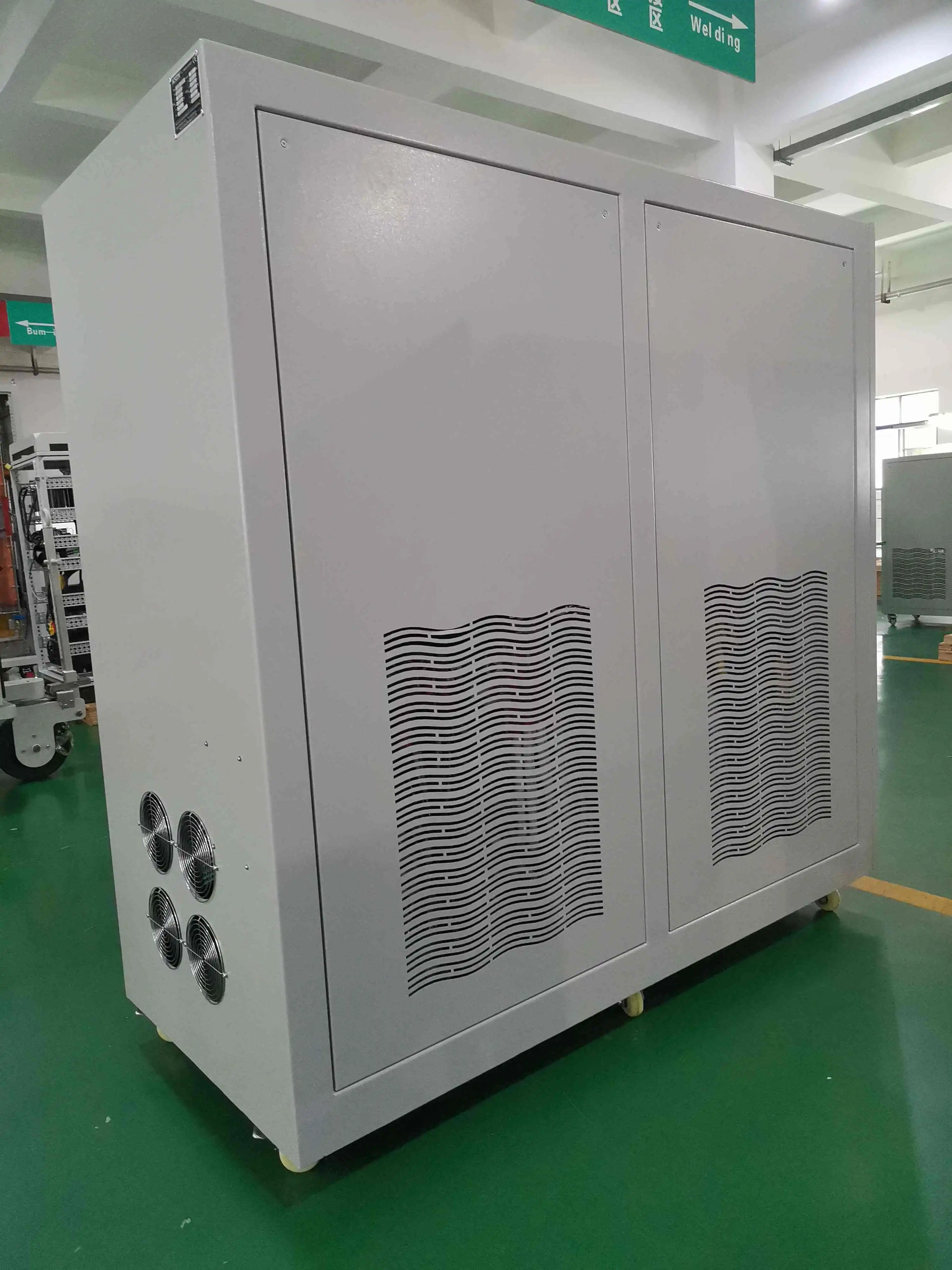
Procurement Considerations for 3 Phase 400Hz Frequency Converters
To choose the right 3-phase 400Hz frequency converter tools, you need to look at a lot of technical and business factors. When converter specifications are matched to application needs, both over-specification costs and performance limitations caused by not having enough capacity are avoided.
Critical Technical Specifications
Power output, which is usually given in kVA, is the most important parameter. The 100kVA rating of models like the AF400M-330100 makes them good for aircraft repair jobs that need to connect medium- to large business aircraft or several smaller aircraft at the same time. To figure out the needed capacity, you need to add up the ratings of all the related equipment and add 1.25 to account for motor starting inrush currents.
Input Voltage Compatibility
Installation freedom is based on how well the input power works with the system. Converters that accept 208V to 480V three-phase sources can work with a wide range of building electrical systems without the need for separate utility service transformers. Standard business voltages in North America are 208/230V, industrial voltages are 480V, and foreign voltages are 380/400V.
Output Voltage Accuracy
The accuracy of the output voltage affects how well the equipment works together. 115/200V three-phase systems are normal in aerospace uses, which need 200-208V line-to-line converter outputs. To make sure it works with airplane electrical system requirements, tolerance standards usually say that the regulation must be within ±2V at all load levels.
Environmental Durability and Protection Standards
The operating climate has a direct effect on the enclosure needs. IP54 ingress protection keeps dust and water out and is good for airplane hangars, marine installations, and covered industry areas. Applications that need to be used outside or in wet areas need IP65 grades or higher, which increases the cost and makes thermal control more difficult.
Temperature Specifications
Temperature specs should be carefully looked over. Extreme weather conditions are used for military and space activities, ranging from the cold of the Arctic to the heat of the desert. Most installations can work with converters that are rated for ambient operation between -20°C and +50°C without derating. However, some uses may need higher temperature values, which come with lower performance.
Manufacturer Capabilities and Support Infrastructure
Customization is what sets makers that work with specific defense and aircraft markets apart. It's helpful to be able to change standard products to meet specific voltage needs, frequency outputs above 400Hz, or built-in tracking systems when changing commercial equipment to secret military uses or secret industrial processes. This is shown by Xi'an Jerrystar Instrument Co., Ltd.'s ACSOON brand, which lets customers fully customize the frequency and voltage settings. Their factory, which is between 5,000 and 10,000 square meters, keeps an inventory to meet the fast shipping needs that are common in military procurement and aerospace repair, where the cost of downtime quickly rises.
Troubleshooting and Maintaining Optimal Power Quality with 3 Phase 400Hz Frequency Converters
For long-term gains in power quality to last, careful tracking and systematic maintenance methods are needed. Knowing about common operational problems helps you figure them out quickly and fix them before they get worse and cause equipment breakdowns or power outages that threaten the goal.
Diagnosing Frequency Instability Issues
Frequency drift is usually caused by a problem with the control circuit or the reference oscillator. Modern converters use crystal-controlled timing references that are more stable than ±0.01Hz. This means that a big change in frequency right away means a part is broken and needs expert help from the maker. Frequency changes that happen quickly when the load changes mean that the control loop isn't tuned properly or the output filter doesn't have enough capacitance. These problems don't usually happen on their own in equipment that is working fine. They could be caused by mechanical stress damage to capacitor banks or control board wear and tear from being exposed to the environment.
Addressing Harmonic Distortion Increases
When THD readings go up, it's usually because an output filter component is getting old or breaking. As capacitors work longer, their equivalent series resistance (ESR) goes up, which makes high-frequency filtering less effective. Replacement of capacitors on a regular basis, every 5 to 7 years, keeps output quality standards.
Preventative Maintenance Protocols
Checking electrical connections every three months stops high-resistance points that cause heat and power drop. Thermal imaging can find connection problems before they break, which is especially helpful in places with a lot of shaking, like marine installations, where mechanical stress can loosen terminals. An annual internal checkup checks for dust buildup that could block cooling flows and electrical clearances. Even though IP54 shelters keep out most contaminants, facilities with rough dust or conductive particles should clean more often to keep them from moving and wearing out parts.
Conclusion
Power quality has a direct effect on operational readiness in industries like aircraft, military, and manufacturing, where equipment dependability is very important for mission-critical tasks. 3-phase 400Hz frequency converters solve basic problems with power quality by regulating voltage precisely, removing harmonics better, and producing a stable frequency output that can't be matched by utility sources or other conversion equipment. The technical benefits of smaller parts, higher efficiency, and higher stability make it worth using in a wide range of situations, from maintaining airplanes to trying things in the lab. To pick the right equipment, you have to weigh the prices over its lifetime, the environment, the ability to be customized, and the power it can provide against the supplier's support system.
FAQ
Why does aerospace prefer 400Hz frequency?
In the 1940s, 400Hz guidelines were put in place for aircraft electrical systems to cut down on the weight of the engine and transformer. When the frequency is higher, magnetic components can use a lot less core material while still being able to send power. Modern planes still use this standard to make sure they can work with current electronics and ground support systems around the world.
How do these converters enhance industrial power quality?
Industrial facilities benefit from voltage stabilization and harmonic filtering to keep sensitive equipment safe from changes in the power grid. For calibration equipment that needs exact time signals, testing labs value the stable frequency reference provided by a 3-phase 400Hz frequency converter the most.
What should buyers prioritize when selecting suppliers?
Reliable providers show they can make technical changes, keep enough stock on hand to deliver quickly, and offer full after-sales support, such as help with fixing problems and access to extra parts. Having certification files that show compliance with environmental tests and quality management lowers the risk of buying something.
Partner with JERRYSTAR for Superior Power Conversion Solutions
JERRYSTAR focuses on ACSOON brand frequency converters that are designed to work in tough aircraft, military, and industrial settings. Our 3-phase 400Hz frequency converters can handle 100kVA of power and output voltage and frequency that can be fully customized. It also has IP54 protection against the elements, making it perfect for aircraft repair work that doesn't depend on an APU. As a business that both makes and sells goods, we keep a lot of stock on hand so that we can deliver quickly to meet pressing operational needs and offer low prices that you can't get through distributor channels. Our expert team has a lot of experience with power systems in both civilian and military settings, and they can help you come up with custom solutions that fit your specific needs. JERRYSTAR has the knowledge and production flexibility to help you get the most out of your power conversion infrastructure. Email our team at acpower@acsoonpower.com to talk about your unique needs with engineers who are skilled and understand what important applications need. As a top 3-phase 400Hz frequency converter maker, we offer products that are known to be reliable and come with full warranties and quick expert support.
References
1. Smith, J.R. & Anderson, M.K. (2021). Aerospace Electrical Systems: Design and Performance Standards. Aviation Technical Publishers.
2. Department of Defense. (2019). MIL-STD-704F: Aircraft Electric Power Characteristics. U.S. Government Publishing Office.
3. Williams, T.E. (2020). "Power Quality Impacts on Industrial Equipment Reliability," IEEE Transactions on Industry Applications, 56(4), 3342-3351.
4. Harrison, P.L. (2022). Frequency Conversion Technology for Military Applications. Defense Technical Information Center.
5. Chen, X. & Rodriguez, M. (2021). "Comparative Analysis of Static vs. Rotary Frequency Converters," Journal of Power Electronics, 21(3), 567-578.
6. International Electrotechnical Commission. (2020). IEC 61000-4-7: Electromagnetic Compatibility Testing and Measurement Techniques. IEC Standards Publications.