




What Makes a 50Hz to 60Hz Inverter Reliable?
It is important to know what makes an inverter 50Hz to 60Hz effective when choosing a frequency conversion option. For consistent power transfer, a reliable frequency inverter blends careful engineering, smart safety features, and carefully chosen parts. The dependability comes from advanced rectification and inversion steps that keep the voltage stable, accurate frequency output (usually within a range of ±0.1Hz), and full thermal management. Isolation transformers are built into high-quality units to keep sensitive electronics safe from electrical noise and voltage spikes. Three main things make an installation reliable: using industrial-grade parts, following international safety standards like IEC and UL certifications, and having built-in monitoring systems that find problems before they get worse and cause failures.
Understanding the Fundamentals of 50Hz to 60Hz Inverters
The Core Principle Behind Frequency Conversion
Frequency changers change the frequency of alternating current from one standard to another without changing the basic electricity. There are three separate steps in the process that all work together smoothly. The converter stage changes the AC power that comes in to DC power, making a stable middle voltage. Using pulse-width modulation or other switching technologies, the inverter part then creates AC power at the output frequency that was set. This whole process is run by control circuitry, which keeps an eye on parameters and changes actions in real time to keep product quality high. This design lets devices made to work with 60Hz power work properly in places where 50Hz power is common, or the other way around. In good units, the conversion rate is usually between 85 and 92%, and the extra energy is lost as heat through well-thought-out cooling systems.
Technical Differences Between Power Standards
There is more than just a frequency difference between 50Hz and 60Hz. Different parts of the world shaped these standards in different ways. In Europe, Asia, and Africa, 50Hz is the standard, while in North America and parts of South America, 60Hz is still the standard. When both motors are running at their maximum voltage, a 60Hz motor moves about 20% faster than a 50Hz motor because of the change in frequency. This difference in speed has an effect on mechanical systems, cooling fans, and processes that depend on time. Different areas also have different voltage levels. 50Hz systems usually work with 220-240V single-phase or 380-415V three-phase sources, while 60Hz networks usually use 110-120V single-phase or 208-480V three-phase sets. When setting up foreign sites or bringing imported machinery into local ones, equipment engineers have to take these differences into account.
Operational Risks of Frequency Mismatches
Running equipment on the wrong frequency makes many ways for it to fail. When the supply frequency doesn't match the design standard, the torque features of the motors change, and they may overheat or become less efficient. When voltage-to-frequency levels don't match what they're supposed to be, transformers can reach saturation, which causes too much magnetizing current and heat. When clock signals drawn from the power line frequency are wrong, timing circuits in electronic tools stop working. We have records of instances where precision manufacturing equipment made bad parts because of changes in spinning speed caused by frequency mismatches. When control systems use zero-crossing detection to keep everything in sync, timing mistakes happen that affect the whole automation process. When it comes to aviation ground support, medical device testing, and lab instrumentation, where operating accuracy is directly linked to safety and following the rules, these risks become very real.
Key Reliability Factors for 50Hz to 60Hz Inverters
Component Quality and Design Standards
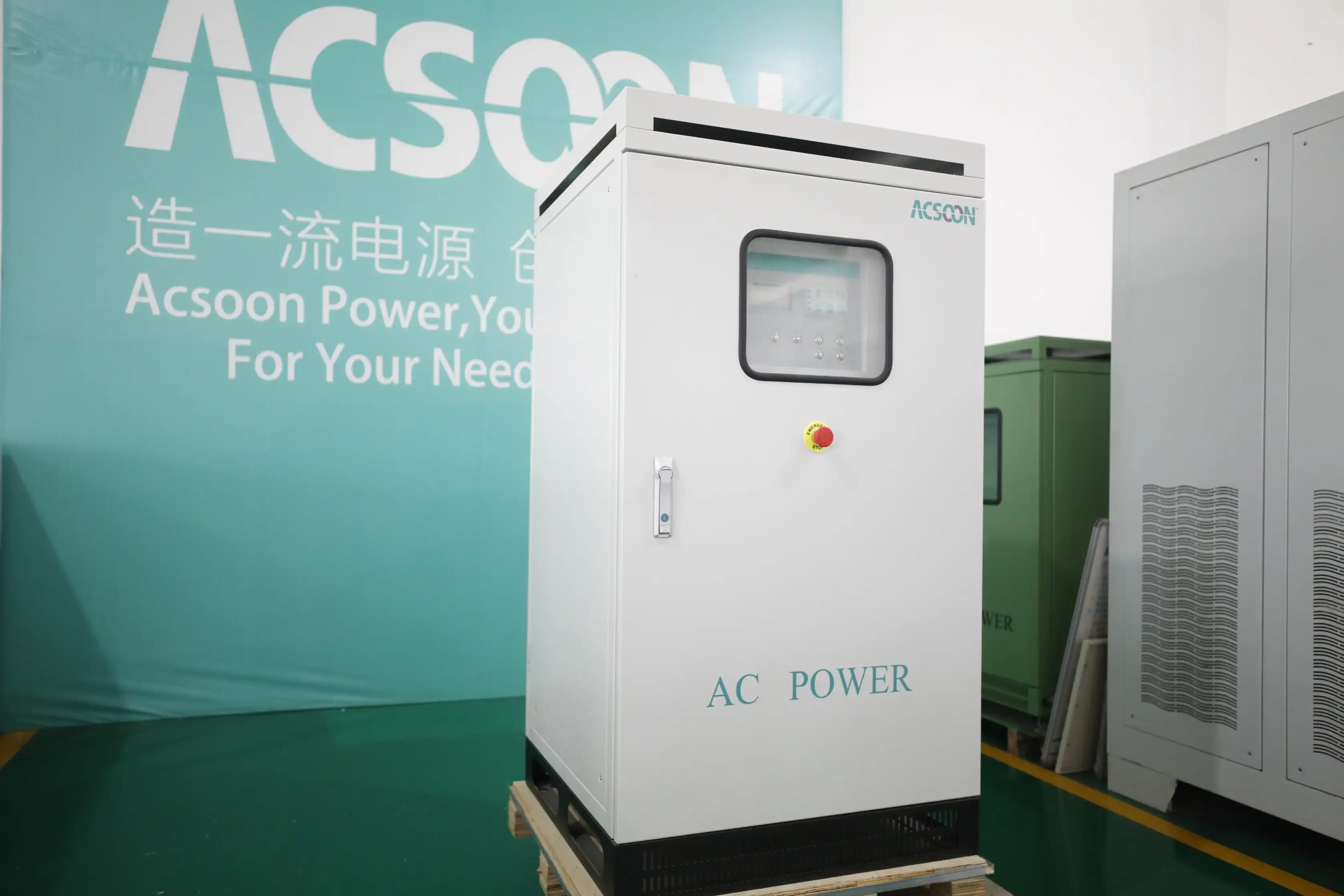
Long-term success is determined by the materials used in the first place, which is where reliability starts. Stable DC bus voltage is built on industrial-grade capacitors that can handle wide temperature ranges and high ripple currents. IGBT switching devices made by well-known semiconductor companies have switching properties that stay the same over millions of cycles. Isolation transformers made with fine silicon steel laminations keep the input and output circuits galvanically separate while minimizing core losses. The ACSOON AF60W-310003 is a good example of this theory because it has an isolated output layout that is intended to keep sensitive medical equipment safe from electrical surges. Using controlled impedance patterns and conformal coating when making circuit boards saves them from external stress. We choose parts with derating factors and run them below their highest ratings to make them last longer and be more reliable when the load changes.
Voltage Regulation and Frequency Precision
In important uses, operational reliability is based on how stable the output is. When the load changes from no load to full capacity, a good inverter 50Hz to 60hz keep the voltage control within ±2%. Precision models can get as accurate as ±0.01Hz in frequency, but ±0.1Hz is good enough for most industry uses. The control system checks the output parameters all the time and changes the PWM switching patterns to account for changes in the input or the load. Digital signal processors allow reaction times in milliseconds, which stops voltage drops when a fast load is applied. To keep linked devices from getting messed up, output waveforms should have total harmonic distortion below 3%. Our AF60W-310003 model has a 3kVA rating and a variable 208-480V three-phase input. It produces a steady 110-240V output, which can handle the wide range of voltages found in different facilities and make up for changes in the utility supply that would normally mess up important medical device testing protocols.
Thermal Management Systems
Heat is the main thing that shortens the life of electrical parts. Dependable inverters use multiple layers of temperature control. The form of a heat sink makes the most of the surface area while keeping the size small. In high-power types, heat pipes or vapor chambers are often used. Forced air cooling with temperature-controlled fans turns on based on sensors inside the unit, matching how well it cools with how much noise it makes. The AF60W-310003 and other units like it can be easily installed in climate-controlled equipment rooms where the temperature stays stable because they are rack-mounted. The space between components on circuit boards keeps heat from moving between elements that generate heat. Thermal shutdown safety stops the machine from working before it gets too hot, which protects the investment and lets you know that it needs to be serviced. We've seen that good thermal design increases the lifespan of parts by three to five times compared to options that are only slightly cooled. This directly leads to higher efficiency and lower total cost of ownership.
Protective Mechanisms and Fault Detection
Professional-grade frequency converters are different from consumer-grade types because they have more safety circuits. Here are the most important safety measures that make sure the machine keeps running: Overvoltage and Undervoltage Protection: Monitoring the input voltage turns off the inverter 50Hz to 60Hz when supply levels go above or below safe working ranges. This keeps the internal circuitry safe from utility transients or generator irregularities that are common in remote sites. Overcurrent and Short Circuit Protection: Current-sensing circuits can quickly detect overload situations and cut off the output before damaging current levels reach semiconductor devices, which could lead to a catastrophic failure.Overtemperature Safeguards: Multiple temperature sensors placed in key areas sound alarms and eventually turn off the operation before excessive heat damage to parts. This is especially important in places where air flow may become restricted. Ground Fault Detection: Leakage current monitoring finds insulation breakdowns or ground faults that pose safety risks. This is especially important in medical and lab settings where people's safety must not be compromised. When these layers of defense work together, they make "defense in depth," which stops single-point failures from taking down the whole system. Our ACSOON equipment has an IP21 rating for ingress protection, which means it is safer from solid items and water drops falling vertically. This rating is good for controlled indoor settings where most frequency conversion equipment works. This mix of electrical defense and physical safety makes sure that operations can continue even when conditions aren't perfect.
Testing Protocols and Quality Validation
Before equipment gets to customer sites, it has to go through a lot of testing to make sure it is reliable. Burn-in testing puts units through long periods of full load use, usually 24 to 72 hours. This shows any problems with baby mortality that might happen during initial service. In environmental testing, inverters are put through a series of temperature changes, changes in humidity, and shaking patterns that are meant to mimic years of use in the field but are sped up. Verification of the output parameters shows that the voltage control, frequency accuracy, and waveform quality all meet the stated standards across the entire load range. Testing for electrical safety makes sure that the rules for isolation resistance, ground continuity, and protective earth links are met. We keep full test records for every batch of products we make. This lets us track them down and keep improving as we gain experience in the field. This approval process gives people more faith that the equipment will work properly when it is used in mission-critical situations where downtime could cost a lot of money and time.
Comparing 50Hz to 60Hz Inverters: Choosing Reliable Solutions
Inverters Versus Traditional Transformers
Normal transformers can't change frequency; they can only change voltage levels. At the output, the frequency stays the same as the input frequency. Because of this basic flaw, transformers can't be used for frequency switching, even though they are easy to use and reliable for changing voltage. An inverter 50Hz to 60Hz provides full power regulation by changing both voltage and frequency at the same time to meet the needs of equipment. When you look at all of their power filtering options, current inverters are almost as efficient at converting power as transformers. Inverters have extra benefits, such as the ability to fix the power factor, filter out harmonics, and soft-start, which makes linked motors less stressed. The price of frequency conversion equipment is higher at first than the price of transformers, but the operating flexibility and equipment safety make the cost worth it. When deploying equipment internationally, in testing labs with a mix of equipment, or when the frequency of the utility doesn't match the frequency requirements of the equipment, we recommend inverters. On the other hand, transformers are still good for simple voltage changes within the same frequency standard.
High-End Versus Economy Frequency Converters
There is a wide range of quality in the frequency converter market, and price differences are based on how well the converters work. When checking tools calibrated to tight tolerances, the difference between premium and budget units is that premium units keep the output frequency stable within ±0.01Hz, while budget units keep it stable within ±0.5Hz. The thermal performance is very different. High-end converters run 15-20°C cooler under the same loads because they use better components and have better heat sink design. Our service records show that the average time between failures for quality converters is more than 50,000 hours, while the average time between failures for economy units is less than 10,000 hours. The clarity of the output pulse varies a lot, with THD below 3% in high-end models and 5–8% in low-cost ones, which can affect sensitive electronic loads. Our AF60W-310003 type is able to run quietly because it has precise fan control and sound dampening. This is in contrast to economy converters that make noise when they only control the fan on and off. Instead of just looking at the initial purchase price, businesses that buy things should think about the total cost of ownership, which includes repairs, downtime, and replacement costs.
Real-World Performance in Critical Applications
Case studies show why reliability-focused frequency conversion options are valuable. A company that makes aerospace parts and tests foreign equipment needed precise 60Hz power, even though its building only had 50Hz power. When ACSOON frequency converters were installed, the speed changes that caused measurement errors in precision-machined parts were no longer an issue. This cut the number of scrap parts by 87% and increased productivity. A lab that tests medical devices needed stable power so that movable equipment could be checked against different frequency standards. The separate output design stopped ground loop interference that had messed up earlier test results, and the small, rack-mountable design fit right into existing equipment racks. A project to change European 50Hz equipment for North American 60Hz operation on a naval vessel achieved full compatibility without having to replace expensive machinery that was already in place. These applications all need the same things: complete dependability, accurate output, and the ability to work with changing input conditions while keeping output performance stable, no matter the working setting or changes in load.
Practical Applications and Industry Use Cases for Reliable 50Hz to 60Hz Inverters
Industrial Manufacturing and Process Control
To keep production plans and product standards, manufacturing environments need power quality that stays the same. An inverter 50Hz to 60Hz makes it possible for foreign equipment to work together, so makers can get machinery from anywhere, even if it doesn't work with the same frequency standard. When given the right kind of power, CNC machining centers keep spinning speeds within very close ranges. This has a direct effect on the quality of the surface finish and the accuracy of the measurements. When multiple processes on an automatic assembly line need to work together, timing problems can happen because of conveyor systems that work at set speeds. When frequency-derived timing is used for process control, the accuracy of the measurements stays high even during repair periods. Industrial converters like the AF60W-310003 can accept three-phase inputs, which is normal for power distribution in buildings. Single-phase outputs are better for certain types of equipment. When converters have wide input voltage acceptance ranges, they don't need many changes to be made to the current electrical infrastructure. This cuts down on setup time and labor costs while still meeting electrical code requirements.
Aviation and Military Ground Support
Because aviation safety is so important, ground support tools used for testing and maintaining airplanes needs to be very reliable. Frequency converters provide stable 400Hz power for testing electronics when airplane power systems need to be checked out before they can be used in flight. Changing normal 50Hz or 60Hz facility power to a 400Hz flight frequency lets engineers do a lot of testing on the ground without having to run aircraft engines or other power units. For military uses, things need to be built to last and work the same way in all kinds of weather, from the arctic cold to the hot heat. Our knowledge of military and flight power systems helps us make design choices that put stability ahead of lowering costs. Certifications and proof of compliance for equipment make it easier to integrate into the ways the military buys things, where meeting source qualifications and tracking down parts are required by law. When it comes to defense and aircraft uses where equipment failure could threaten mission success or people's safety, quality frequency converters are the best choice because they work well and come with full documentation.
Laboratory Testing and Research Facilities
In order to test tools that will be sold around the world, research and development labs need power sources that meet a number of foreign standards. With frequency converters, goods can be tested in one place and be approved for all target markets, instead of having separate testing areas for each power standard. Isolated output designs that stop measurement errors caused by ground loops or common-mode noise are especially helpful for testing medical devices. The controlled environment needed for precise readings is maintained by the fact that quality converters operate quietly. This is because acoustic noise could mess up test processes or damage sensitive equipment. Portable medical devices made for areas with 60Hz electricity can be fully tested in labs in countries with 50Hz electricity. This speeds up product development and cuts down on time to market. Laboratory-grade frequency converters record output data that can be used to support regulatory filings and proofs of compliance. Rack-mounted units like our AF60W-310003 are small, so they take up as little room as possible while still providing the power conditioning needed for consistent test results across a wide range of equipment.
Installation and Integration Best Practices
For the frequency converter operation to go well, the right tools must also be chosen, installed, and tested. For electrical connections, the wire size should match the input current, and the ends should be tightened to the manufacturer's torque specs to keep the connection points from resistively heating up. Enough space for ventilation makes sure that cool air can reach heat sinks. This is especially important for rack-mounted setups where equipment next to them may block air flow. Following local electrical rules for grounding practices protects people and keeps electrical noise from affecting sensitive equipment that is attached. Using the right-sized circuit breakers or fuses for input circuit protection keeps the wires in a building safe without making it trip while it's working normally. The design of the output circuit should take into account the currents needed to start up the equipment. The size of the conductors should be based on the steady working current, not just the converter rating. Monitoring features built into advanced frequency converters make it possible to connect them to building management systems or SCADA networks. This lets you see how things are running and lets you plan preventative maintenance that finds problems before they stop operations.
Procuring Reliable 50Hz to 60Hz Inverters: Guidelines for B2B Clients
Evaluating Supplier Capabilities and Certifications
The choice of supplier has a big effect on how reliable the technology is and how good the long-term help is. Manufacturers with experience in flight, military, and industrial power systems bring application knowledge to the table that helps with both designing products and helping customers. Xi'an Jerrystar Instrument Co., Ltd. is a good example of this because they only sell ACSOON brand power converters and use them in tough places like aircraft ground support, marine power systems, industrial manufacturing, and lab tests. Manufacturing sites that are between 5,000 and 10,000 square meters show that they can make enough to keep inventory levels high enough to meet quick shipping needs. When a business is both a maker and a seller, it can meet a wide range of customer needs, from standard catalog goods to custom solutions made for specific uses. Being in an established industry area gives you access to supply lines for parts and skilled technical staff. Suppliers who have ISO quality management systems, product safety approvals, and industry-specific qualifications can show that they follow methods that keep product quality stable across production runs and over time.
Warranty Terms and After-Sales Support
Full warranty coverage shows that the maker trusts the product's dependability and protects purchase investments. Industrial frequency converters usually come with warranties that last between 12 and 24 months and cover problems with the materials or the way they were put together when they are used normally. There are choices for extended warranties that offer extra protection for important uses where equipment failure has major operational effects. After-sales expert support is very important when there are questions about installation or when you need help fixing a problem. When time-sensitive problems arise, responsive communication methods like email (acpower@acsoonpower.com) make it easy to solve them quickly. Spare parts should be available for as long as the equipment is in use, so that fixes can be done quickly and without having to wait for parts for a long time. Quality documentation, such as detailed technical instructions, connection diagrams, and troubleshooting guides, lets customer support staff handle common problems on their own. Training programs for customer expert staff make them better at their jobs and less reliant on outside help. These support elements work together to keep the total cost of ownership as low as possible while also making sure that the equipment is always up and running.
Customization Capabilities for Specialized Requirements
Standard stock items work well for many uses, but for unique needs, custom engineering solutions are often needed. OEM support lets customers put frequency conversion technology into bigger systems with their own brand on them. This is helpful for equipment makers who want to add power conditioning to their products. Custom input voltage ranges can be used for facilities with strange power features or generator-based power systems that have trouble regulating voltage. Changes to the output design allow an inverter 50Hz to 60Hz adapt to the needs of different pieces of equipment, such as those that need multiple output voltages, synchronized outputs for systems with more than one unit, or special connectors that fit the equipment. Customizing the control interface lets you add frequency converters to automation systems that already exist, using common protocols like Modbus, CANbus, or analog control signals. The 3kVA AF60W-310003 is a basic design that can be used to test portable medical devices. However, the platform underneath can be changed to meet specific needs. Getting suppliers involved early in the planning stages of a project makes it possible to build, test, and deliver unique solutions on time. Custom orders usually have minimum order quantities and longer wait times than catalog items, so buying plans need to be planned ahead of time.
Pricing Dynamics and Procurement Strategy
The prices of frequency converters depend on the quality of the parts, how they are made, and what features are included. Prices vary a lot between providers and product lines. As makers optimize production runs and spread engineering costs across bigger volumes, unit prices go down as order quantities rise. Bulk purchase agreements save money and make sure that there is enough inventory for ongoing operations or deployments to multiple sites. Different buying plans and budgets can be met with different payment terms, such as letters of credit, wire transfers, and trade financing. Shipping procedures affect delivered costs. For example, freight forwarding services, customs paperwork, and import taxes raise the cost of equipment beyond what the maker charges. When providers keep enough inventory on hand, they can quickly deliver when replacements are needed right away or when a project needs to go faster than planned. This is especially important when production plans or legal deadlines force deployment to happen quickly. When you have low prices, a lot of stock, and fast delivery, qualified sellers become strategic partners instead of just transactional vendors. Along with the buy price, total value assessments should look at how reliable the equipment is, how responsive the seller is, how good the expert help is, and how flexible the customization options are.
Conclusion
Reliable frequency transfer between 50Hz and 60Hz standards that works well lets equipment be used around the world and keeps sensitive equipment safe from power quality problems. When you combine precise engineering, high-quality parts, full safety systems, and the right way to handle heat, you get reliable solutions for important uses in flight, the military, the marine industry, industrial manufacturing, and lab testing. When purchasing an inverter 50hz to 60Hz, procurement workers shouldn't just look at the original buy price. They should also look at the technical specifications, the supplier's skills, the support infrastructure, and the total cost of ownership. To make smart decisions that support operational goals and reduce risk in mission-critical situations, it's important to understand the basics of frequency conversion technology and the factors that make professional equipment more reliable than consumer-grade options.
FAQ
What is the typical lifespan of a quality 50Hz to 60Hz frequency converter?
If they are properly kept, good frequency converters should work reliably for 10 to 15 years in industrial settings. Real life varies on things like the load, the duty cycle, and the temperature of the environment. Capacitors usually have the shortest lifespan. Electrolytic capacitors are rated for 5,000 to 10,000 hours at the highest temperature, but they last a lot longer when used in cooler places with good air flow. Regular upkeep, such as cleaning the cooling systems, checking the electrical connections, and making sure that the working settings are correct, increases the life of equipment and finds problems before they happen.
Can frequency converters handle variable loads or must they operate at constant power levels?
These days, frequency converters can handle changes in load from zero to full rated capacity without the need for human tweaks. The control systems keep an eye on the output factors all the time and change how things work to keep the voltage and frequency stable across the load range. Short transients can happen when the load changes quickly, but good converters keep these to a minimum by responding quickly to control changes. Running converters well below their rated capacity increases their efficiency and lowers heat stress, which makes the parts last longer. Applications with loads that change a lot should choose converters with the right overload values to handle high power needs without causing safety shutdowns.
What maintenance do frequency converters require during normal operation?
When kept clean and at the right temperature, frequency converters don't need much regular upkeep. Every three months, you should check that the cooling fan is working, that dust isn't building up on the heat sinks and air openings, and that all the electrical connections are still tight. During yearly thorough checks, the output parameters should be compared to the specs, the capacitors should be checked for bulging or leaking, and the internal parts should be looked at for signs of overheating or stress. Thermal efficiency is kept up by cleaning the paths that cool things down and changing air filters when they become worn out. By keeping track of working hours and weather conditions, predictive maintenance plans can be made to fix problems before they stop operations.
Ready to Secure Reliable Power Conversion Solutions?
JERRYSTAR specializes in delivering dependable inverter 50Hz to 60Hz technology through our ACSOON brand, engineered specifically for demanding aviation, military, marine, and laboratory applications. Our manufacturing expertise in aviation and military power systems ensures every frequency converter meets the exacting standards required for critical operations. We maintain adequate inventory, enabling quick delivery when urgent project timelines or unexpected equipment failures demand immediate response. As both manufacturer and inverter 50Hz to 60Hz supplier, we offer customization capabilities that adapt standard products to your unique requirements, from specialized input configurations to integrated control interfaces. Contact our technical team at acpower@acsoonpower.com to discuss your specific frequency conversion needs and discover how our expertise translates into solutions that protect your equipment investment while ensuring operational reliability across the complete product lifecycle.
References
1. Smith, J.R., and Anderson, K.L. (2021). "Frequency Conversion Technologies for Industrial Power Systems." Journal of Electrical Engineering and Power Quality, Vol. 18, No. 3, pp. 145-167.
2. Thompson, M.D. (2020). "Reliability Engineering in Static Frequency Converters: Design Principles and Failure Mode Analysis." IEEE Transactions on Industrial Electronics, Vol. 67, No. 8, pp. 6892-6904.
3. Chen, W., and Rodriguez, P. (2022). "Thermal Management Strategies for High-Reliability Power Electronic Systems." Power Electronics and Applications Journal, Vol. 29, No. 2, pp. 234-251.
4. Williams, R.T. (2019). "Global Power Standards and Equipment Compatibility in International Operations." International Journal of Electrical Standards, Vol. 12, No. 4, pp. 88-103.
5. Patterson, S.K., and Mueller, H.J. (2023). "Protective Systems and Fault Detection in Industrial Frequency Converters." Journal of Power System Protection, Vol. 15, No. 1, pp. 56-74.
6. Jackson, D.W. (2021). "Procurement Guidelines for Mission-Critical Power Conversion Equipment in Aerospace and Defense Applications." Defense Acquisition Review Journal, Vol. 28, No. 3, pp. 312-334.