




400hz Ground Power Supply: What Should Buyers Look For?
When evaluating a 400 Hz ground power supply use, buyers should prioritize power output capacity matched to aircraft specifications; voltage and frequency stability (typically 115V/200V at 400Hz ±0.1%); Compatibility with aircraft power requirements such as MIL-STD-704F, and consideration of relevant environmental and EMC requirements.; robust construction rated for harsh environments; and supplier credentials, including certifications, customization capabilities, and responsive after-sales support. Advanced features such as automatic voltage compensation, low total harmonic distortion below 3%, and digital monitoring systems significantly enhance operational reliability and reduce maintenance burdens in mission-critical aviation and military applications.
Introduction
Having consistent access to power is crucial in the high-pressure environment of aircraft ground support, where any disruption to activities could result in significant financial losses. Naval warships in port, military jets in repair, and aircraft parked at terminal gates all rely on external power sources to operate their hydraulics, avionics, and environmental systems, rather than using their primary engines or auxiliary power units. For these uses, the 400 Hz ground power supply—which transforms regular household electricity into the alternating current needed by aircraft systems—has become the de facto norm.
When it comes to choosing ground power equipment, procurement professionals confront a difficult decision landscape. Problems with power quality can ruin millions of dollars' worth of avionics, and breakdowns in machinery can delay flights and jeopardize safety measures. From familiarizing oneself with basic technical parameters to gauging supplier reliability and applying maintenance best practices, this article walks business-to-business buyers through the critical steps of evaluating ground power units. The changing demands of airports, military stations, MRO facilities, and aerospace manufacturers throughout the globe are reflected in our views, which are based on decades of experience in the aviation business.
Understanding 400Hz Ground Power Supply: Basics and Benefits
Why Does a 400 Hz Frequency Matter in Aviation?
The aviation industry adopted 400Hz frequency as a standard decades ago, and this choice delivers measurable advantages over conventional 50Hz or 60Hz utility power. Higher frequency enables transformers, motors, and generators to achieve the same power output with significantly reduced size and weight—a critical consideration when every pound affects aircraft performance and fuel efficiency. Onboard aircraft systems are engineered around this frequency, making ground power units that deliver 400Hz essential for compatibility during preflight checks, maintenance procedures, and passenger boarding.
Technical Specifications That Define Performance
Reliable ground power equipment follows strict guidelines.Common aircraft ground power outputs include 115/200V three-phase 400Hz AC power.To avoid disrupting flight control computers and navigation systems, frequency stability should remain within ±0.1% tolerance regardless of the load conditions. Keeping total harmonic distortion below 3% is important to prevent power quality problems that could cause fault codes or reduce the lifespan of components. This safeguards sensitive electronics.
Due to their lower maintenance needs and conversion efficiencies surpassing 90%, modern solid-state frequency converters have become increasingly popular because of their efficiency, lower maintenance requirements, and improved power quality.
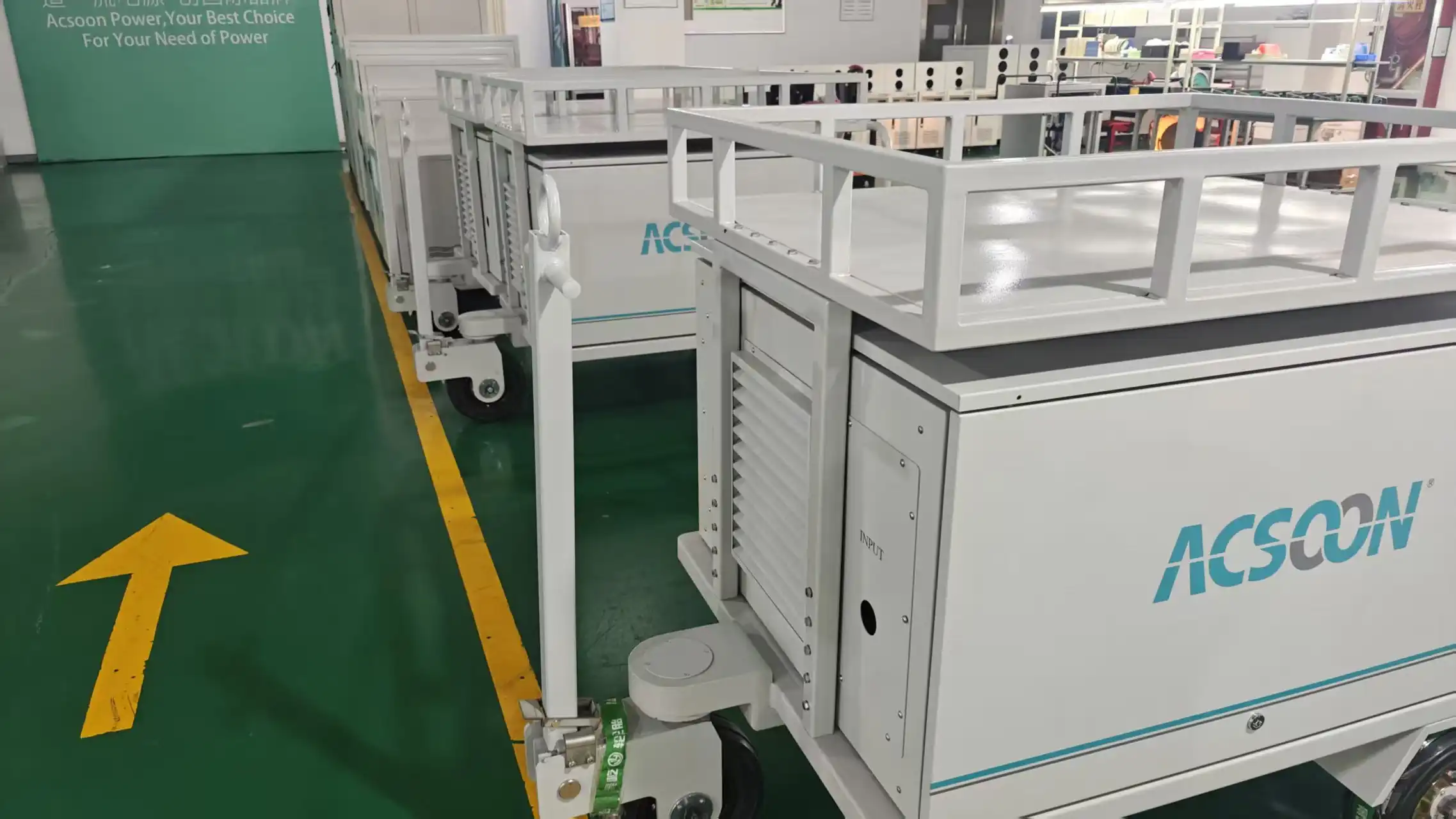
The ACSOON GPU400-330090 is a prime example of this development; it accepts input voltages between 208 and 480V at 50 or 60 Hz and produces 90 kVA of output power before stabilizing at 200 or 208V at 400 Hz. Even in the most dusty and humid airport settings, where exposure to the elements is inevitable, outdoor aviation environments require appropriate enclosure protection against dust, moisture, and weather exposure.
Regulatory Compliance and Certification Standards
Aviation ground support equipment must meet stringent regulatory requirements. Aviation operators and airports follow relevant aviation safety requirements and ground support equipment standards when selecting GPU systems. MIL-STD-704F defines aircraft electric power characteristics for military applications, specifying voltage limits, frequency tolerances, transient response times, and harmonic content thresholds. DO-160G addresses environmental conditions and test procedures for airborne equipment, though ground units serving aircraft must often demonstrate comparable resilience to electromagnetic interference, vibration, and temperature extremes.
Critical Factors Buyers Should Consider When Choosing a 400Hz Ground Power Supply
Power Output Capacity Matched to Aircraft Requirements
Aircraft vary dramatically in their power demands. Regional turboprops may require 30-40kVA during ground operations, while wide-body commercial jets can draw 90kVA or more when running full environmental control systems, galley equipment, and avionics simultaneously.Actual requirements depend on aircraft type, onboard systems, maintenance procedures, and operational conditions. Military transport aircraft and specialized surveillance platforms may have unique power profiles requiring customization. Buyers must accurately assess their fleet composition and operational scenarios to specify appropriate capacity with reasonable overhead for peak demand situations.
The fixed-mounted GPU400-330090 with its 90kVA rating serves a broad range of medium to large aircraft during maintenance operations, eliminating the need to start auxiliary power units that consume expensive jet fuel and accumulate operating hours. Installation on a transport trolley provides mobility within hangars and maintenance bays while maintaining the stability of a fixed unit.
Safety Features and Built-In Protection Systems
Electrical risks are a genuine concern during ground power operations. Multiple levels of protection, such as temperature management systems, ground fault monitoring, overcurrent detection, and short-circuit interruption, must be incorporated into equipment. If an aircraft's generator starts up while the ground power is still connected, reverse power protection will prevent backfeeding. Phase sequence detection verifies the proper wiring of aircraft electrical buses before they are powered on.
The ACSOON design has automatic voltage adjustment technologies that keep the output voltage stable regardless of changes in the power supply or load conditions. During crucial pre-flight testing processes, this feature safeguards aircraft systems from undervoltage circumstances that could lead to equipment breakdowns or misleading fault indications.

Construction Quality and Environmental Durability
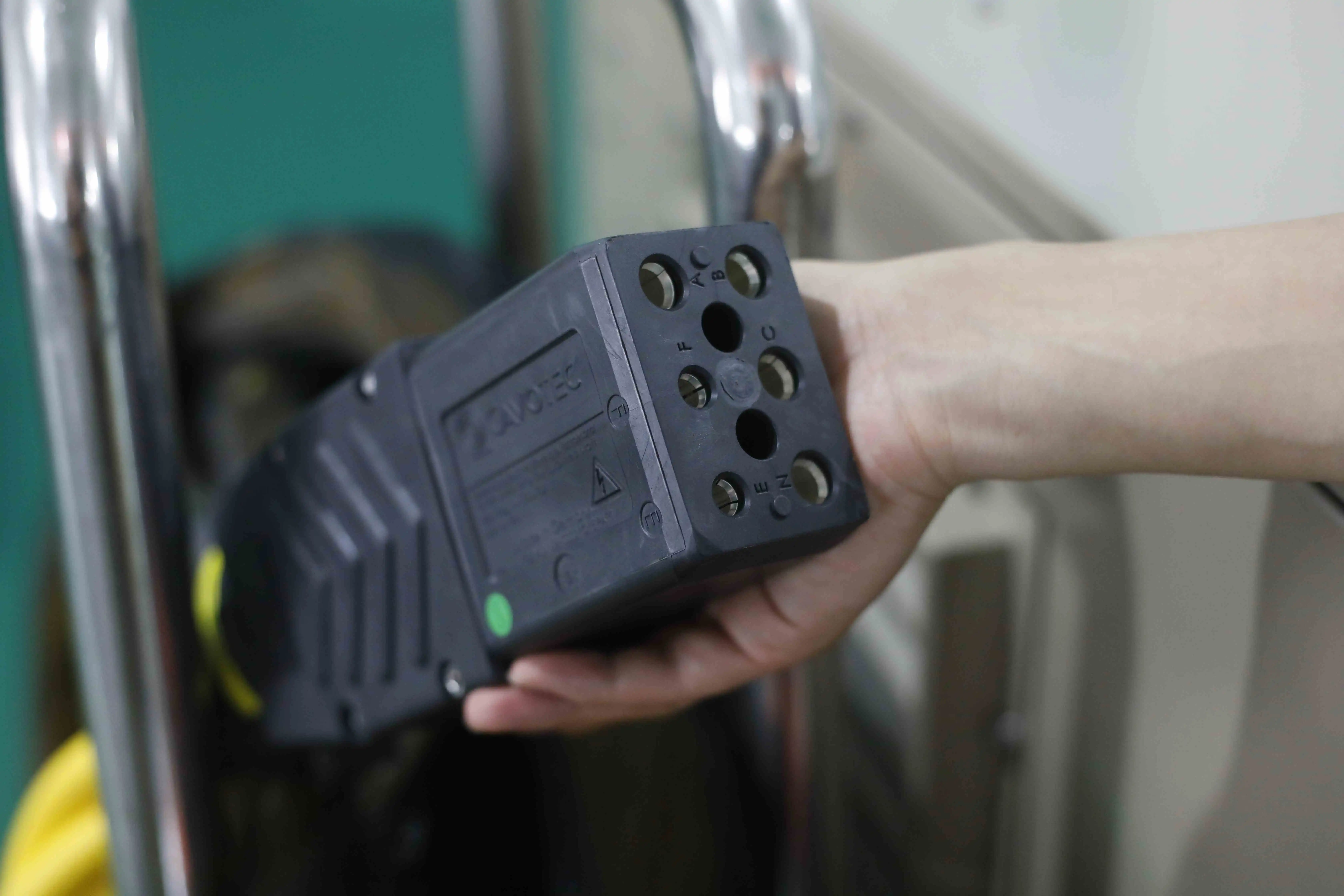
Airport ramps and military installations subject equipment to harsh conditions—temperature swings, precipitation, dust, de-icing chemicals, and jet blast turbulence. Enclosure design must balance protection with thermal management, as power electronics generate substantial heat during operation. An IP54 rating provides robust dust protection and splash resistance suitable for outdoor use while allowing necessary ventilation. Corrosion-resistant materials and protective coatings extend service life in coastal environments where salt spray accelerates deterioration.
Digital LCD displays have replaced analog meters on modern units, providing clear parameter monitoring and diagnostic information that maintenance personnel need for troubleshooting. Real-time visibility into voltage, current, frequency, and fault conditions accelerates problem resolution and reduces downtime.
Supplier Credentials and Long-Term Support
When you work with a ground power supplier, your connection doesn't end with the sale. Xi'an Jerrystar Instrument Co., Ltd. has been in the business of manufacturing aviation and military power systems for more than 19 years. Their facility in Shaanxi Province is over 7,000 square meters. At this size, we can maintain quality control in production while still having enough inventory to meet urgent delivery needs. Systematic quality management methods guarantee consistent product performance, as ISO 9001 certification demonstrates.
Customization fulfills specific operational needs that regular catalog products may not meet. With original equipment manufacturer (OEM) assistance, operators can easily incorporate ground power units into their current systems or meet branding standards. The equipment's total cost of ownership for a decade or more of service life is determined by warranty coverage, accessibility of technical support, and availability of spare parts.
Comparison Insights: 400Hz Ground Power Supply vs Alternatives
400Hz Systems Versus 50Hz/60Hz Alternatives
Instead of utilizing specialized ground power units, several facilities are considering employing conventional utility frequency with onboard aircraft converters. This method imposes important restrictions. Aircraft-mounted converters built for backup purposes aren't reliable when really needed in flight because they can't handle long periods of ground operations and wear out over time. Most aviation applications cannot make use of this design due to the space and weight limitations associated with 50Hz transformers.
The full power chain, from utility connection to aircraft interface, is optimized using dedicated 400 Hz ground power supply units. Instead of settling for generic designs borrowed from other sectors, aviation-specific protective systems, power quality, and conversion efficiency meet the demands of the industry.
Fixed-Mounted Units Versus Portable Alternatives
Operational context determines the optimal unit configuration. Portable ground power carts offer maximum flexibility, moving between aircraft positions on crowded ramps or deploying to remote locations for emergency support. Their mobility comes with capacity limitations, typically topping out around 60kVA, and they require more frequent inspection due to transportation wear and vibration exposure.
Fixed-mounted units like the GPU400-330090 provide higher power capacity and greater stability during operation. When installed on transport trolleys, they combine the infrastructure benefits of permanent installations with repositioning capability within controlled spaces such as maintenance hangars. MRO facilities conducting extended maintenance checks benefit from this configuration, as aircraft remain stationary while ground power remains continuously available without tying up mobile assets.
Commercial airports increasingly install fixed ground power connections at terminal gates, eliminating tug-and-cart operations that congest ramp areas and create safety hazards. These installations integrate with gate management systems, automatically tracking power consumption and aircraft connection status.
Lifecycle Cost Analysis
small portion of overall ownership expenses goes toward the purchase price. For high-utilization machinery that runs numerous shifts per day, energy efficiency has a direct bearing on operational costs. Reduced cooling needs and utility bills are two benefits of modern solid-state converters over motor-generator technology. Different designs have vastly different maintenance intervals and part costs; designs with fewer moving parts have longer service intervals and less need for parts inventories.
Beyond maintenance expenditures, reliability impacts expenses. Delays in aircraft departures caused by unanticipated technical failures have a domino effect that affects crew scheduling, costs associated with rebooking passengers, and the possibility of regulatory fines. Comparing choices across different price points requires buyers to examine field service capabilities, warranty terms, and supplier track records.
Procurement Best Practices for 400Hz Ground Power Supply
Identifying Qualified Suppliers and Manufacturers
Sourcing aviation ground support equipment requires due diligence beyond standard procurement processes. Suppliers should demonstrate relevant industry certifications, established manufacturing facilities, and documented quality management systems. References from existing customers operating similar aircraft types in comparable environments provide valuable insights into real-world performance and support responsiveness.
Manufacturers offering both standard products and custom engineering capability provide flexibility as operational needs evolve. The ability to modify voltage ranges, add remote monitoring interfaces, or integrate specialized protection schemes addresses unique facility requirements without forcing compromises with off-the-shelf solutions that don't quite fit.
Geographic considerations affect lead times and logistics costs. International sourcing from manufacturers like Jerrystar requires planning for shipping durations, customs clearance, and potential voltage/frequency differences in test facilities. Adequate supplier inventory enables faster delivery for urgent replacement needs, while customization naturally extends production timelines.
Evaluating New Versus Refurbished Equipment
Budget constraints sometimes direct buyers toward used ground power units available on secondary markets. This strategy carries risks that must be carefully weighed. Aviation equipment endures demanding service conditions, and previous maintenance history may be incomplete or unknown. Critical safety certifications may have lapsed, requiring expensive recertification before deployment. Parts availability for older designs becomes problematic as manufacturers discontinue components.
New equipment from established manufacturers includes comprehensive warranties, current safety certifications, and compatibility with modern aircraft systems. Documented testing and quality control provide traceability that aviation regulations increasingly demand. The GPU400-330090 ships with complete technical documentation, test reports, and certification paperwork necessary for regulatory compliance and insurance requirements.
Streamlining the Procurement Process
Effective purchasing begins with detailed specification development that captures operational requirements, environmental conditions, interface standards, and regulatory obligations. Technical discussions with potential suppliers should address power capacity calculations, installation requirements, utility connection specifications, and integration with existing ground support infrastructure.
Request for quotation documents must clearly define evaluation criteria beyond purchase price—warranty duration, technical support terms, spare parts availability, training provisions, and delivery schedules all factor into supplier selection. Site surveys may be necessary for fixed installations to identify utility connections, cable routing paths, environmental protection needs, and operator access considerations.
After-sales support arrangements deserve explicit definition during procurement. What response times can buyers expect for technical assistance? Which maintenance activities require factory-authorized service versus operator-performed procedures? How are software updates and engineering bulletins communicated? Clear expectations established during purchasing prevent misunderstandings that strain supplier relationships later.
Installation, Maintenance, and Troubleshooting Guidance
Installation Requirements and Best Practices
Proper installation establishes the foundation for reliable long-term performance. Electrical connections must accommodate the three-phase input requirements with appropriate circuit protection, conductor sizing, and grounding according to local electrical codes and aviation facility standards. The GPU400-330090 accepts wide input voltage ranges from 208 to 480V, providing installation flexibility across different facility electrical systems, but proper voltage selection and wiring configuration remain critical.
Cable management between ground power units and aircraft connection points requires attention to routing paths that avoid pinch points, jet blast exposure, and vehicle traffic patterns. Quick-disconnect aircraft cables should be inspected regularly for contact wear, insulation damage, and connector corrosion that increase resistance and create voltage drop issues during operation.
Routine Maintenance and Inspection Protocols
Preventive maintenance extends equipment lifespan and maintains reliability between overhaul cycles. Weekly visual inspections should check for fluid leaks, unusual sounds during operation, display error messages, and physical damage to enclosures or cables. Monthly tasks include verifying cooling system airflow, cleaning air filters, checking electrical connections for tightness, and testing emergency stop functions.
Annual comprehensive maintenance performed by qualified technicians includes calibration verification of voltage and frequency outputs, insulation resistance testing, protective relay function checks, and thermal imaging to identify developing hot spots in electrical connections. Maintenance records document these activities, creating service history essential for troubleshooting future issues and demonstrating regulatory compliance during facility audits.
Troubleshooting Common Issues
Digital diagnostic displays simplify fault identification when problems occur. Output voltage deviations may indicate utility supply issues, internal regulator problems, or excessive voltage drop in aircraft connection cables. Frequency instability could point to control circuit faults or failing power electronics components. Overcurrent trips during aircraft connection often result from improper cable connections, aircraft electrical system faults, or attempting to power aircraft beyond unit capacity.
Systematic troubleshooting begins with verifying utility supply quality at the input, then checking output parameters at the unit before investigating aircraft connection cables and interfaces. When issues exceed operator training or require specialized test equipment, contacting factory technical support prevents unnecessary component replacement and reduces diagnostic time.
Conclusion
Selecting the right ground power equipment demands careful evaluation of technical specifications, operational requirements, supplier capabilities, and lifecycle costs. The 400 Hz ground power supply is essential for aviation, military, and marine applications where reliability and power quality directly impact mission success. Buyers who thoroughly assess power capacity needs, prioritize safety features and environmental durability, verify supplier credentials and support infrastructure, and implement proper maintenance protocols position their operations for sustained success. The GPU400-330090 from ACSOON represents current manufacturing standards—solid-state technology, comprehensive protection systems, and practical features like automatic voltage compensation and diagnostic displays that reduce operational burden. Aviation ground support continues evolving with aircraft technology, making partnerships with experienced manufacturers essential for adapting to future requirements while maintaining fleet operational readiness today.
FAQ
Why do aircraft require 400 Hz power instead of standard utility frequency?
Aircraft electrical systems use 400 Hz because a higher frequency dramatically reduces the size and weight of transformers, motors, and generators throughout the aircraft. This weight savings directly improves fuel efficiency and payload capacity. Ground power units must match this frequency to properly interface with aircraft electrical buses without requiring additional conversion equipment.
What's the difference between portable and fixed ground power units?
Portable units mount on wheeled carts for maximum mobility between aircraft positions but typically offer lower power capacity and experience more wear from transportation. Fixed-mounted units provide higher capacity and stability, ideal for maintenance facilities where aircraft remain stationary. Trolley-mounted designs like the GPU400-330090 bridge these categories, offering repositioning capability within controlled spaces.
Which certifications matter most when evaluating ground power suppliers?
ISO 9001 quality management certification demonstrates systematic manufacturing processes. MIL-STD-704F compliance proves the unit meets military aircraft power quality standards, while DO-160 compatibility indicates resilience to electromagnetic interference and environmental extremes. Supplier facility certifications and documented testing procedures validate claimed performance specifications.
How do I calculate the power capacity my operation needs?
Review aircraft electrical load data from manufacturer specifications, accounting for environmental control systems, galley equipment, avionics, and lighting—all operating simultaneously during ground servicing. Add 20-30% margin for safety and future aircraft additions. MRO facilities should consider their largest aircraft type, while airports may average fleet requirements across gate assignments.
Partner with JERRYSTAR for Your Aviation Ground Power Requirements
Xi'an Jerrystar Instrument Co., Ltd. stands ready to support your ground power infrastructure with proven ACSOON brand solutions engineered for aviation's demanding environment. Our GPU400-330090 model delivers 90kVA output capacity with rock-solid frequency stability, comprehensive protection features, and the automatic voltage compensation essential for sensitive avionics protection. As an established 400 Hz ground power supply manufacturer with ISO 9001 certification and over 15 years specializing in aviation power systems, we maintain adequate inventory for rapid deployment while supporting custom configurations when standard products don't perfectly match your operational profile. Contact our technical team at acpower@acsoonpower.com to discuss your specific aircraft fleet requirements, facility constraints, and timeline expectations—we'll provide detailed specifications, application guidance, and competitive quotations backed by comprehensive warranty coverage and ongoing support that extends throughout your equipment's service life.
References
1. Society of Automotive Engineers. "Aerospace Standard AS50881: Wiring Aerospace Vehicle." SAE International, 2018.
2. Department of Defense. MIL-STD-704F: Aircraft Electric Power Characteristics." United States Military Standard, 2004.
3. Radio Technical Commission for Aeronautics. "DO-160G Environmental Conditions and Test Procedures for Airborne Equipment." RTCA, Inc., 2010.
4. International Organization for Standardization. "ISO 6858:1982 Aircraft Ground Equipment - Basic Requirements." ISO Standards, 1982.
5. Federal Aviation Administration. "Advisory Circular 150/5220-21A: Aircraft Rescue and Fire Fighting Station Building Design." U.S. Department of Transportation, 2012.
6. International Air Transport Association. "Airport Handling Manual, 41st Edition - Ground Support Equipment Standards." IATA Publications, 2023.