




60 to 50Hz Frequency Converter: Buyer’s Guide 2026
This is because choosing the right 60 to 50hz frequency converter requires knowing both the technical specs and the needs of the business. These specialized power transfer devices make it possible for equipment made for different electrical grid standards to work together without any problems. This keeps sensitive equipment safe and makes sure that operations around the world run smoothly. This detailed guide will help you choose the right technology, make smart purchases, and make sure your organization gets the most out of your purchases, whether you're in charge of a data center's cooling system, an airport's ground support systems, or an industrial factory's production lines.
Understanding 60 to 50Hz Frequency Converters: Principles and Benefits
What Defines a Frequency Conversion System
A frequency conversion device changes the frequency of electricity from one standard to another without changing the basic properties that sensitive equipment needs. Instead of just changing the voltage levels like simple transformers do, these converters actively make power at the target frequency while keeping the voltage levels precisely controlled and the pattern pure. To convert power, incoming AC power is first turned into DC, and then advanced semiconductor switching technology is used to turn it back into AC at the desired output frequency. Static frequency changers are the most effective way to change frequencies these days. These solid-state devices get rid of the older motor-generator sets' spinning mechanical parts. This makes them much more efficient and lowers the amount of upkeep that needs to be done. Because they don't have any moving parts, they are quieter, take up less room, and last longer, which makes them perfect for mission-critical uses in precision labs, navy ship shore power, and aerospace tests.
Core Operating Principles
Power transfer technology is based on three main steps that work together. The rectifier stage takes in 60Hz AC power and turns it into safe DC energy. It does this by filtering out harmonics and other problems in the supply grid. A middle DC bus stage stores energy and keeps the voltage stable, protecting the system from changes in the input. By using pulse-width modulation to make almost perfect sinusoidal waves, the inverter step restores clean AC power at 50Hz. Advanced control algorithms keep an eye on the output parameters all the time and change the switching patterns thousands of times per second to keep the frequency stable within ±0.01Hz and the voltage stable within ±1%. This level of accuracy is very important for sensitive instruments, CNC machines, and gear for telecommunications, where even small changes in frequency can lead to timing mistakes, lower efficiency, or parts breaking down before they should.
Tangible Benefits Across Industrial Sectors
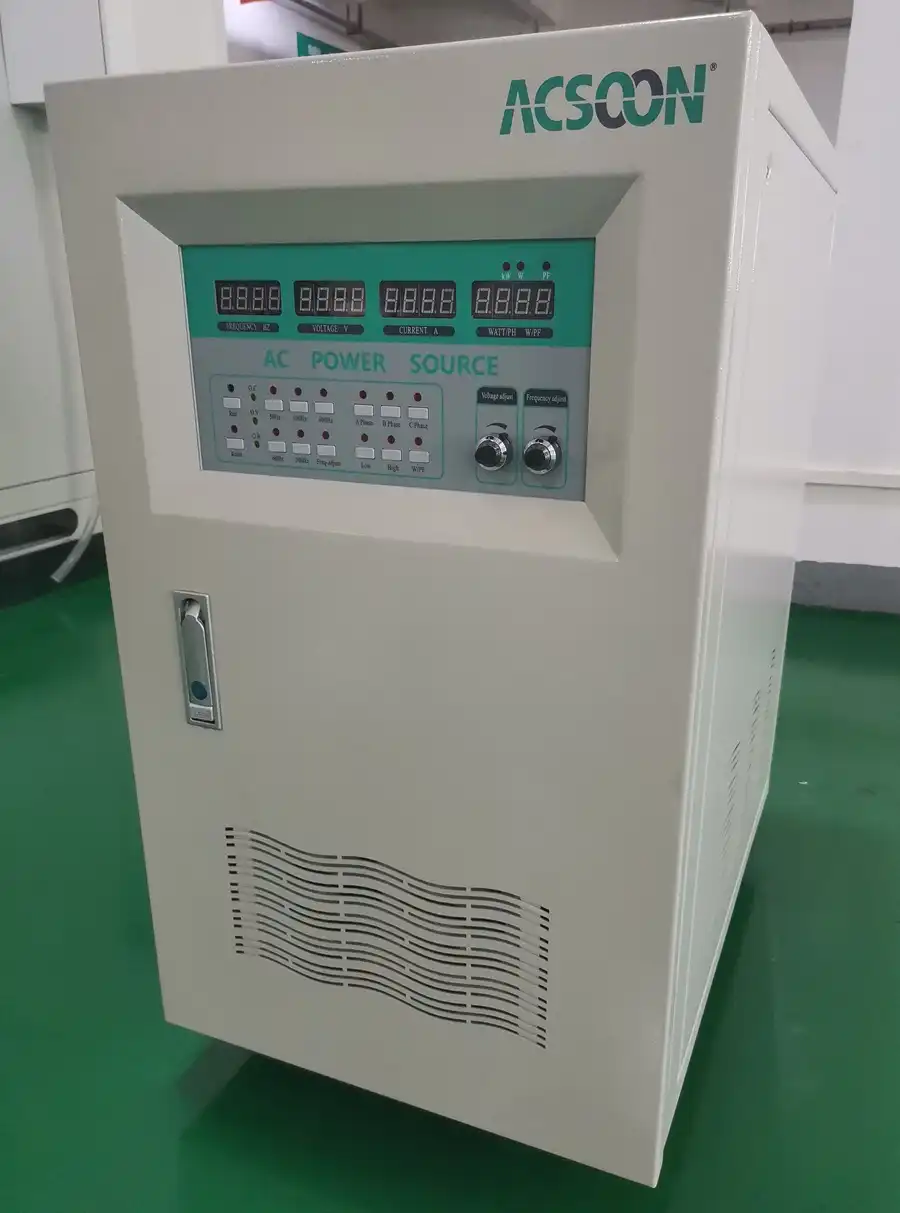
Employing frequency conversion technology has big benefits for manufacturing businesses. Equipment that was made for 50Hz electricity standards in Europe or Asia works at full capacity without being downrated or losing performance. This gives you more choices for where to get equipment, which could lower your capital costs by 15 to 25 percent compared to buying variants that are made for your area. When machinery runs according to the manufacturer's instructions, it keeps the guarantee coverage and the expected service times. This makes production more stable. Maintaining steady cooling system efficiency is hard for people who work in data centers. Temperature changes have a direct effect on how reliable servers are and how much energy they use. The ACSOON AF60W-330030 type solves these problems by sending out a clean sine wave with less than 3% total harmonic distortion. This high-quality power keeps HVAC fan motors from getting too hot and gets rid of noise caused by transformer shaking. With a 30kVA power rating, it can handle big cooling loads, and the mobile design with wheels makes it easy to move around as building plans change. Frequency converters are used for shore power and ground support systems in the marine and aircraft industries. When commercial planes that are built for 400Hz power systems are serviced at places that only offer 60Hz utility service, they need to be converted specially. Multi-frequency capabilities allow military sites that test imported equipment or support allied forces to meet a wide range of operating needs without having to keep separate power facilities for each electrical standard.
Comparing Frequency Converters: Making the Right Choice for Your Business
Technical Distinctions Between Power Conditioning Equipment
Knowing the changes in how 60 to 50Hz frequency converters, voltage transformers, and frequency regulators work makes it easier to see when to use each one. Transformers are great at changing the voltage level, but they can't change the frequency features. Even if a transformer steps down 480V to 208V, the 60Hz frequency stays the same. Even if the power levels were right, equipment that needs to work at 50Hz would have timing problems, get too hot, or stop working altogether. Frequency controllers keep the frequency stable without changing it. They do this by making up for generator droop or grid disturbance. When the source frequency changes but stays in the same nominal range (59.5–60.5Hz), these gadgets are useful. There is no way for them to connect frequencies that are not the same. In a way that no other device can, frequency converters change the frequency and condition the power completely, taking care of voltage, frequency, and pulse quality all at the same time through built-in processing steps.
2026 Market Leader Analysis
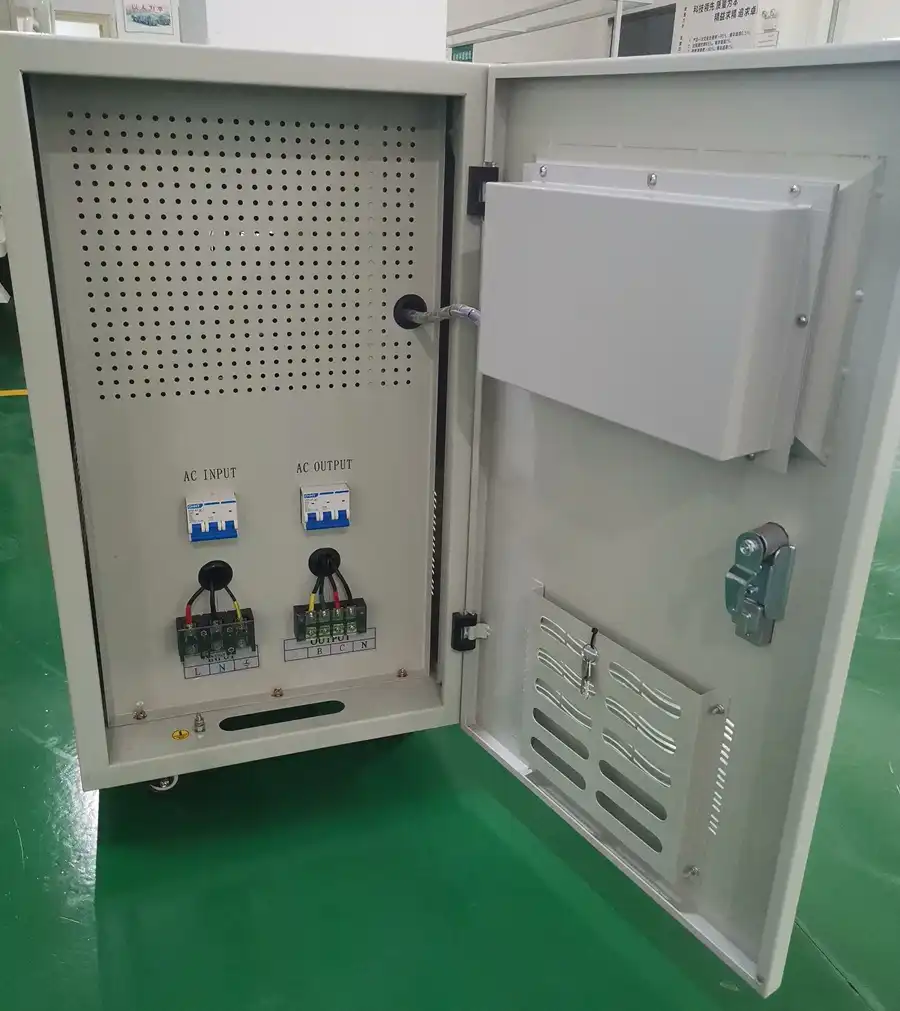
There are a lot of well-known companies in the frequency converter market that offer different ways to solve power transfer problems. When judging a supplier's skills, you need to look at both their technical specs and their organizational support system. Power levels range from 3kVA single-phase units for lab benches to 500kVA three-phase systems for factory output lines. Voltage compatibility covers 208V, 240V, 380V, 415V, and 480V, which are all popular distribution types.ACSOON is well-known for its work on military and aviation power systems, which means that it can meet the high dependability needs of business and industrial uses. Their AF60W line uses design features that have been proven to work in strict aerospace testing procedures. The static converter topology provides 30kVA of constant power and is protected against water and dust by IP21, making it perfect for controlled industrial settings. Full monitoring with LED or LCD screens shows voltage, current, power factor, and operating state in real time, which is what repair teams need for proactive equipment management. Harmonic distortion specs should be looked at when comparing units. High-end units have THD levels below 3%, while economy models have levels between 5 and 8%. Not surprisingly, less distortion means less motor warmth, smoother transformer operation, and longer component life. For good static converters, efficiency rates are usually between 90 and 94%, and each percentage point means a big difference in how much energy it costs over a number of years.
Total Cost of Ownership Considerations
The purchase price is only one part of the total costs of owning. Operating costs are directly affected by energy efficiency. For example, a 30kVA unit that runs 8,000 hours a year would use about 4,800kWh more energy if it was 2% less efficient. At average industrial energy rates of $0.08/kWh, equipment that uses more electricity costs an extra $384 a year in utility costs. This wastes a total of $5,760 in energy over the course of 15 years. Different conversion systems have very different maintenance needs. Static solid-state converters like the ACSOON AF60W-330030 don't need much regular care besides cleaning the filters and checking the connections every so often. Rotating motor-generator sets need to have their bearings oiled, their brushes changed, and their vibrations checked on a regular basis. This adds up to hundreds of hours of upkeep over the life of the equipment. Service accessibility affects how long fixes take, which is why flexible designs with field-replaceable parts are so useful for operations that need to be done quickly. Warranty terms show that the company that made the product is confident in its longevity. Getting full coverage for two to three years and quick expert help lowers the risk of procurement. Instead of settling for off-the-shelf options, custom configuration lets you make equipment fit the needs of a particular application. Xi'an Jerrystar Instrument Co., Ltd keeps enough stock on hand to deliver quickly and also works with customers to meet their unique needs. This way, they can balance instant supply with application-specific efficiency.
How to Select the Best 60 to 50Hz Frequency Converter for Your Needs
Defining Critical Load Requirements
Correct equipment size starts with a correct load estimate. To find the total linked load, add up the nameplate values of all the devices that are powered by the converter. Take into account that motor starting currents can hit 6 to 8 times the running current, which means that you will need to temporarily give a lot more power than you normally would. Inductive loads, like motors and transformers, have lower power factors. To keep normal operation from being overloaded, converter capacity rates are based on visible power (kVA) instead of real power (kW). The environment has a direct effect on how well and how long a 60 to 50hz frequency converter works. How well a cooling system works, and the temperatures at which semiconductor junctions are connected, are both affected by the ambient temperature. The ACSOON AF60W-330030 has an IP21 rating, which means it can handle basic defense against dripping water and solid items bigger than 12.5 mm in diameter. It is good for controlled environments inside factories. Harsher settings with conductive dust, moisture, or chemicals that eat away at metal need higher IP ratings or closed NEMA-rated boxes that keep the temperature inside within acceptable limits.
Industry Standards and Compliance Verification
Regulatory compliance is different depending on the type of program and the location. Ground support tools for aircraft must meet technical standards set by the FAA or EASA for power quality and electromagnetic compatibility. When the military buys things, they have to follow MIL-STD standards that cover things like performance in harsh circumstances, shock resistance, and electromagnetic pulse tolerance. For industrial setups, the IEC 61000 guidelines cover harmonic emissions and electrical disturbances that don't affect other technology in the building. Independent confirmation of safety and performance claims is given by certification marks from well-known testing labs. If something is listed with UL, it means it meets North American electricity safety standards. If it's marked with CE, it means it meets European Union standards. These certificates are especially important for projects that need third-party approval of equipment specs and for buying things from the government. Manufacturers who work with OEMs like ACSOON can use customer-specific logos while still keeping the design certifications that are needed.
Supplier Evaluation and Partnership Criteria
Supplier selection is more than just choosing the right product. It also includes choosing suppliers with the right management skills to ensure long-term operating success. How quickly application questions get correct answers during specification development is based on how fast technical help is. Reviewing electrical diagrams and load profiles by engineering teams helps find possible compatibility problems before the equipment is delivered, which saves money and time during installation delays. When equipment breaks down, the system for after-sales service is very important. Local service presence or factory-direct support routes shorten the length of downtime by making it easier to fix problems quickly and get parts on hand. Xi'an Jerrystar Instrument Co., Ltd. still works on power systems for flight and the military, taking the high-quality standards of these difficult fields to industrial uses. Because they know a lot about variable frequency converters, 400Hz static frequency converters, and specific ground power units, they can help with a wide range of practical needs. Custom specification capabilities let tools be made to fit the needs of a specific purpose. Different facility distribution systems can be handled by voltage input bands that don't need upstream transformers. Integration of communication protocols allows for tracking from afar and automated control processes that make operations run more smoothly. Bulk purchase agreements take advantage of bulk discounts while making sure that specs are the same across multiple deployments. This makes it easier to keep track of extra parts and train technicians.
Procurement Strategies for 60 to 50Hz Frequency Converters
Evaluating Global Supply Chain Options
When buying teams go global, they have to carefully weigh the pros and cons of international sources. Industrial areas with lots of manufacturers bring economies of scale and the specific engineering skills that come from making a lot of things. Xi'an Jerrystar Instrument Co., Ltd. has a 5,000–10,000 square meter building in Shaanxi Province where it works. It is both a manufacturing company and a trade company, so it can meet the needs of a wide range of customers. As both a producer and a trade company, they can get complementary goods while keeping an eye on the quality of the core 60 to 50Hz frequency converter models they make. Certifications for suppliers prove that the quality systems and technical skills used in production are real. ISO 9001 certification shows that quality management methods have been written down and cover creation, production, and customer service after the sale. Certifications that are specific to an industry, like AS9100 for aircraft or ISO 13485 for medical equipment, show that the company has the right kind of specialized knowledge for that industry. Ask for examples from customers in similar businesses and application profiles, and then talk in depth about their implementation experiences, how happy they were with the performance, and how quickly they got help.
Negotiating Specifications and Commercial Terms
When people talk about bulk orders, they don't just talk about unit prices; they also talk about delivering total value throughout the buying process. By making a large order, you may be able to get better prices, longer warranty terms, or specific technical support resources that make the job more likely to succeed. Custom design development makes sure that the equipment exactly meets the needs of the application, without being too specific, which can be expensive or not perform well enough. During technical talks, specific performance factors such as voltage regulation tolerance, frequency stability standards, overload capacity length, and harmonic distortion limits should be discussed. Make it clear what testing procedures are used to make sure that the delivered goods meet the stated requirements. Environmental working areas that include temperature, humidity, and altitude set clear limits for safe use. Communication features that list supported standards (like Modbus, Profibus, and Ethernet/IP) make it possible to connect to current building control systems.
Quality Assurance and Acceptance Procedures
Incoming inspection procedures protect purchase investments by making sure that equipment is in good shape and working properly before committing to installing it. Visual inspection shows shipping damage that needs to be documented right away for carrier claims. Dimensional testing makes sure that the product will fit in the planned placement sites. Electrical testing makes sure that the voltage output is accurate, that the frequency stays stable, and that the harmonic distortion performance meets the promises made in the specifications. Performance is proven beyond a doubt by load testing in real-world working circumstances. Connect load examples and keep an eye on how the voltage changes as the load changes from no-load to full capacity. Check the efficiency at several different load points, keeping in mind that the converter's efficiency usually peaks between 50 and 75% of its stated capacity. Keep track of the noise levels, temperatures of the cooling system, and how the safety functions work, such as how they react to over-current, over-temperature, and input power faults. After-sales help agreements made during the purchase process are useful for as long as the equipment is in use. When practical questions come up, having technical support available for application questions and solving help cuts down on downtime. Spare parts that are available and have clear wait times allow for strategic inventory management for important parts. Training materials like operation instructions, repair methods, and troubleshooting guides help employees learn how to do things themselves, so they don't have to rely on outside service providers for everyday problems.
Future Trends and Innovations in Frequency Conversion Technology
Emerging Technological Capabilities
As semiconductors get better, 60 to 50hz frequency converter keep working better and using less power. Silicon carbide (SiC) and gallium nitride (GaN) power devices are better at switching than regular silicon IGBTs. This means that they waste less energy and heat during switching. These wide-bandgap semiconductors allow for higher switching rates, which reduce the size of inactive components. This makes the equipment smaller and more powerful. Efficiency gains of 1% to 2% may not seem like much, but they add up to big energy savings over long periods of time or in large projects. Digital control systems with field-programmable gate arrays (FPGAs) and advanced digital signal processors make it possible for complex control methods that were not possible with analog control circuits before. Real-time harmonic correction actively checks the features of the load and changes the way the inverter switches on and off to cancel out the harmonic currents that nonlinear loads produce. Predictive maintenance algorithms keep an eye on working parameters and look for trends that show how parts will break down before they do. Connecting remotely via cellular or Ethernet connections makes it easier to keep an eye on multiple setups from one place. This cuts down on the need for site visits and speeds up the response time when help is needed.
Integration with Smart Infrastructure
Industry 4.0 projects stress that equipment that is linked and shares operational data across corporate systems is a good thing. Communication methods built into frequency converters allow them to work with building management systems, industrial execution systems, and platforms for predictive maintenance. Data on how much energy is used is sent to systems that report on sustainability and track progress in lowering carbon footprints. Production scheduling systems get information about the operational state, which lets them make changes ahead of time when equipment needs repair. As more and more electricity distribution systems use dynamic pricing and demand response programs, smart grid compatibility becomes more important. Intelligent frequency converters that store energy can change the time of loads to take advantage of lower electricity prices during off-peak hours or to lower demand charges by reducing the size of consumption spikes. Frequency converters help microgrids that use green energy sources because they can connect variable-frequency generator output to stable facility distribution systems. This keeps the power quality stable even when there are changes upstream.
Regulatory Evolution and Environmental Drivers
As countries work to meet their carbon pollution reduction goals, global standards for energy efficiency keep getting stricter. The European Union's ecodesign guidelines set minimum efficiency standards for power conversion equipment. These standards affect makers all over the world as they standardize their product lines for international markets. Harmonic distortion limits set by standards like IEEE 519 get stricter, which means that converters need better filtering and control features to stay in line while handling loads that are becoming less linear. Environmental concerns go beyond practical efficiency and include how things are made and thrown away when they're no longer useful. RoHS (Restriction of Hazardous Substances) rules get rid of harmful substances in electrical parts, and REACH rules control chemicals throughout the whole span of a product. Manufacturers who follow the principles of the circular economy make equipment that is easier to disassemble and collect materials. This has a positive effect on the environment and could lower the total cost of ownership through programs for repair and component reuse.
Conclusion
To choose the right 60 to 50hz frequency converter tools, you have to weigh the technical specs against the needs of the business and the total cost of ownership. This guide's evaluation approach focuses on factors like load characterization, environmental conditions, legal requirements, and provider skills that, when put together, determine the long-term success of a project. Static frequency converters like the ACSOON AF60W-330030 are reliable in a wide range of important uses, from cooling data centers to testing spacecraft. They combine high-quality pure sine wave output with useful features like mobile configuration and full tracking. Purchasing plans that stress working together with suppliers, making sure quality is high, and providing help throughout the product's life are the building blocks for operations that run smoothly. New technologies promise to keep making things work better, and changes in regulations are pushing the power conversion business to be more efficient and responsible with the environment.
FAQ
What key specifications matter most when selecting a 60Hz to 50Hz converter?
The main standard is power capacity, which needs an accurate load estimate that takes into account things like motor starting currents and future growth. Total harmonic distortion (THD below 3% is best for sensitive electronics), voltage regulation tolerance (±1% keeps equipment within operating specifications), and frequency stability (±0.01Hz stops timing-sensitive equipment errors) all have a direct effect on the performance and longevity of connected equipment. The input voltage range is flexible enough to work with different electrical systems in the building without the need for extra transformers. Ratings of efficiency above 92% lower running costs by a large amount over long periods of time, and produce less waste heat that cooling systems must remove.
How does a static frequency converter differ from motor-generator sets?
Because static converters use solid-state electronics and don't have any moving parts, they don't need to be maintained in the same way that motor-generator sets do, which means they don't need to have their bearings oiled or their brushes changed. Because they are controlled electronically instead of mechanically, they are quieter, take up less floor space, and respond faster to changes in load. Efficiency is usually 3 to 5 percentage points higher than rotary converters, which means that energy costs are cut in a meaningful way. Static designs can work in a wider range of environments without losing performance. However, motor-generator sets may be better in very harsh electromagnetic environments that need full electrical separation between the input and output circuits.
Can frequency converters handle inductive motor loads effectively?
These days, frequency converters are very good at powering magnetic loads like motors, transformers, and solenoid valves that are common in industrial equipment. Designs that include enough extra capacity can handle motor starting currents that are 6 to 8 times the normal running current without shutting down automatically. A pure sine wave output with low harmonic distortion keeps the motor from burning and stops too much noise that happens when waveforms are warped. Power factor correction keeps the system running efficiently even when the load power factor is low, so there is no need to oversize. The ACSOON AF60W-330030 is designed to work with cooling system motors that are popular in data centers, where stability has a direct effect on the facility's ability to keep running.
Partner with JERRYSTAR for Reliable Frequency Conversion Solutions
To meet your specific power conversion needs, you need a 60 to 50hz frequency converter supplier with both professional know-how and quick help systems. JERRYSTAR takes proven knowledge from military and aviation power systems to industrial uses, making sure that your important processes meet defense-grade reliability standards. Our ACSOON AF60W-330030 model produces a 30kVA pure sine wave with a total harmonic distortion (THD) of less than 3%. This protects sensitive cooling systems in data centers while keeping working freedom through mobile configuration. We keep enough material on hand to meet the tight deadlines for urgent projects, and our custom design service makes sure that the equipment fits the needs of each specific application. Our engineering team offers thorough application review and ongoing technical support, whether you need a single 60 to 50Hz frequency converter for sale or a planned multi-site implementation. Get in touch with JERRYSTAR at acpower@acsoonpower.com to talk about how our frequency switching skills can help your business.
References
1. Jenkins, M. & Roberts, T. (2025). Industrial Power Quality and Harmonic Control: Engineering Handbook for Critical Applications. McGraw-Hill Technical Publishing.
2. Anderson, K.L. (2024). "Frequency Converter Technology Advances: Efficiency Improvements Through Wide-Bandgap Semiconductors." IEEE Transactions on Power Electronics, 39(7), 8234-8247.
3. International Electrotechnical Commission. (2023). IEC 61000-3-2: Electromagnetic Compatibility - Limits for Harmonic Current Emissions. Geneva: IEC Publications.
4. Morrison, R.D. & Chen, W. (2025). Data Center Infrastructure Engineering: Cooling Systems and Power Quality Management. Wiley Professional Engineering Series.
5. U.S. Department of Defense. (2024). MIL-STD-1399: Interface Standard for Shipboard Systems - Electric Power. Washington, DC: Defense Technical Information Center.
6. Patterson, J.R. (2026). "Total Cost of Ownership Analysis for Industrial Power Conversion Equipment." Industrial Power Systems Management Journal, 18(2), 45-62.
