




50Hz to 60Hz Inverter: Key Specs Every Engineer Should Know
When engineers are looking for power conversion equipment for important uses, they often run into the same problem: making sure that equipment made for 50Hz power lines can safely work in 60Hz settings, or the other way around. As an important bridge, an inverter 50Hz to 60Hz changes the receiving power from one frequency standard to meet the needs of sensitive equipment that is set up for a different frequency standard. These static frequency converters use modern power electronics to change both frequency and voltage characteristics. This makes sure that medical devices, lab tools, aerospace test equipment, and industrial gear all work at their best, no matter what the power standards are in their area. Knowing the basic specs, like the power rate, input/output parameters, waveform quality, and security grade, helps procurement professionals choose units that keep operations running smoothly and keep expensive equipment from breaking down.
Understanding the Basics of 50Hz to 60Hz Frequency Conversion
What Is a 50Hz to 60Hz Frequency Converter?
Alternating current can be changed from one frequency standard to another using a frequency converter instead of electromagnetic induction alone. There are two main types of modern frequency converters: those that use inverters and those that use rotating transformers. Inverter-based designs, which are also sometimes called static frequency converters, use semiconductor switching technology to change entering AC power to direct current and then back to AC at the desired output frequency. This method has a small size, runs quietly, and gives you fine control over output settings. Rotary converters use motor-generator sets to change frequency physically, but they make noise, take up more room, and have moving parts that can get worn out.
Core Components and Operational Principles
Static frequency converters have rectifier steps, DC bus capacitors, IGBT (Insulated Gate Bipolar Transistor) inverter modules, and control systems that are based on microprocessors. The converter stage takes in three-phase 50Hz and turns it into a stable DC power. High-frequency pulse-width modulation is used by the inverter stage to rebuild a clean 60Hz sine wave, while the DC bus smooths out voltage ripple. Advanced control algorithms keep an eye on the output parameters in real time and change the switching patterns to keep the frequency stable within ±0.1% and the total harmonic distortion below 3%. This meets the strict requirements of laboratory-grade equipment.
Key Contrasts Between 50Hz and 60Hz Power Systems
Regional power standards make it hard for things to work together. When powered by 50Hz sources, equipment that was made to work with 60Hz sees changes in motor speeds, transformer saturation, and timing mistakes. If you put 60Hz equipment on a 50Hz grid, it might run slower or not hit its maximum torque. Voltage standards make these problems even worse. Single-phase 120V/240V and three-phase 208V/480V systems are popular in North America, while 50Hz lines in Europe and Asia usually provide 230V single-phase and 400V three-phase power. A properly stated frequency converter fixes both frequency mismatch and voltage level changes, making sure that equipment works properly during international missions or testing programs that cross borders.
Key Specifications and Performance Metrics of 50Hz to 60Hz Inverters
Voltage and Power Ratings for Industrial Applications
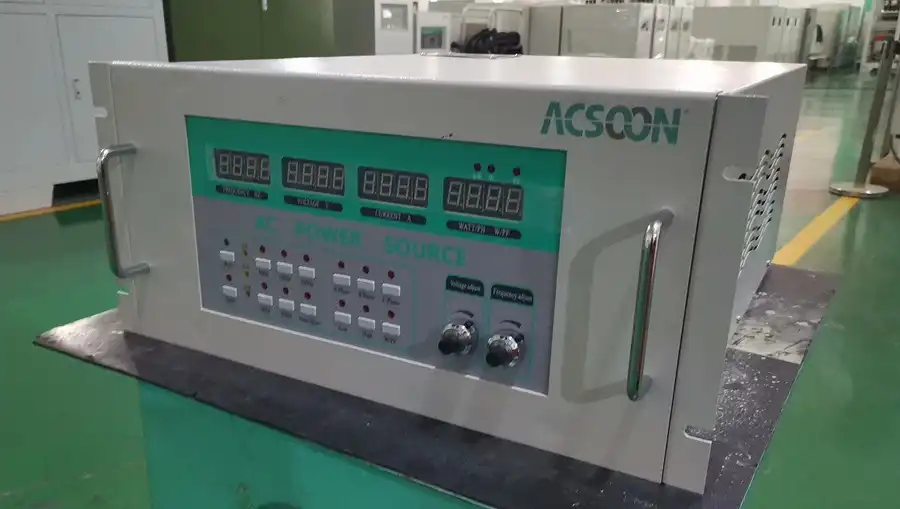
The inverter's power level tells you how much load it can constantly handle. The 3kVA ACSOON AF60W-310003 model can power most bench-top medical devices, precision tools, and small pieces of industrial equipment. The AF60W-310003 can accept three-phase inputs from 208V to 480V at 50Hz, automatically adapting to site-specific grid conditions without any manual changes. This is very important for international operations. The output provides steady single-phase power at 110V to 240V, 60Hz, which is suitable with standards for both North American and Japanese devices. Engineers should figure out the total attached load, which should include inrush currents. Motors and transformers often draw 3–5 times their normal current when they first start up, so converters need to have enough overload capacity or soft-start features to keep them from tripping.
Energy Efficiency and Operational Cost Considerations
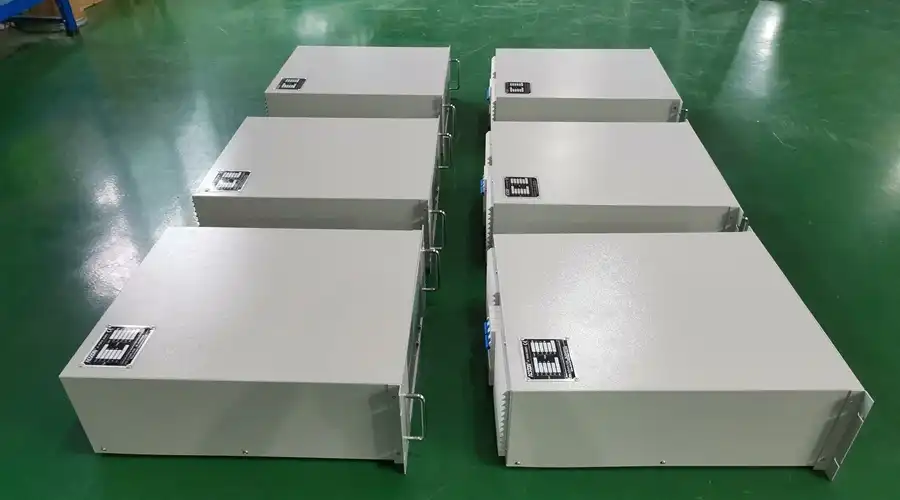
Inverter-based systems usually use 90 to 95% less energy than rotary converters, which rarely use more than 85%. This lack of efficiency leads directly to cost savings. At full load, a 3kVA inverter 50Hz to 60Hz that is running at 90% efficiency wastes about 300W as heat, while a similar spinning unit wastes at least 450W. Over continuous operation, the inverter-based method cuts yearly energy costs by hundreds of dollars per unit while making less heat, which means that climate-controlled labs need less HVAC load. The AF60W-310003's rack-mounted design makes forced convection the best way to cool it, keeping junction temperatures safe even when it's working continuously in temperatures up to 40°C.
Frequency Stability and Waveform Quality Standards
Extreme frequency stability is needed for precision tools. When the load changes, the AF60W-310003 keeps the output frequency within ±0.5 Hz. This makes sure that timing-sensitive devices like centrifuges, frequency-dependent test instruments, and synchronous motors work as they should. The quality of the output pattern is just as important. Total harmonic distortion below 3% keeps sensitive electronics from being harmed, lowers noise in recording equipment, and keeps inductive loads from getting too hot. A key feature of the AF60W-310003 is its isolated output design, which separates the input and output circuits galvanically. This gets rid of ground loops and keeps sensitive instruments safe from voltage spikes that travel through facility wiring.
Selecting the Right 50Hz to 60Hz Frequency Converter: Criteria and Considerations
Comparing Leading Industry Brands and Market Reputation
Siemens, ABB, Schneider Electric, and Mitsubishi are well-known companies in the frequency converter business. There are also smaller, more specialized companies like ACSOON. Big companies have a lot of products and service networks all over the world, but they usually charge a lot for their products. ACSOON focuses on power systems for flight, the military, ships, and labs, adding a lot of deep vertical knowledge to niche applications. This specialized knowledge leads to better designs. For example, the AF60W-310003's IP21 rating makes it suitable for indoor installs, and its small rack-mount design makes it easy to fit into instrument racks and mobile test carts. With ACSOON's OEM support, equipment makers can rename converters and add them to their own systems, which makes supply lines easier for large buyers.
Certifications, Warranty, and Technical Support Infrastructure
Compliance certifications prove that a product is safe and works with electromagnetic fields. For sales in North America, look for UL/CSA listings. In Europe, look for CE markings. For defense uses, look for MIL-STD listings. The terms of the warranty show how confident the maker is in the product. Full coverage for two to three years and fast replacement options reduce the risk of downtime. ACSOON's factory in Jinghe New Town, Xi'an, has between 5,000 and 10,000 square meters of production space and enough inventory to support quick shipping processes, which are very important when urgent purchases need to be made. Access to technical help is also important. Manufacturers that let you email a direct engineer (acpower@acsoonpower.com) make fixing go faster than those that route questions through multiple service tiers.
Cost Analysis and Return on Investment
The initial buying price is only one part of the total cost of owning. As was already shown, the energy economy has an effect on ongoing costs. Unplanned repair costs and production downtime are affected by how reliable something is. OEMs and system integrators can benefit from customization when they need different input/output setups, special mounting hardware, or monitoring ports that are built in. ACSOON can meet these needs through custom manufacturing, which doesn't require the big minimum order numbers that many larger manufacturers do. When figuring out ROI, you should look at the money you'll save by not having to fix broken equipment because of bad power, the extra work you'll get done because of reliable operation, and the strategic freedom you'll get from having partner relationships that allow for quick prototypes and short lead times.
Troubleshooting and Maintenance of 50Hz to 60Hz Inverters
Common Operational Issues and Diagnostic Approaches
Most of the time, frequency instability is caused by load transients that are faster than the inverter 50hz to 60Hz reaction time or by mistuning the control parameters. Make sure that the associated load stays within the converter's rating and that the wire runs don't add too much inductance. Overheating is often a sign that there isn't enough airflow. For convection cooling, rack-mounted units need at least 50 mm of space above and below the frame. Too many capacitive loads or equipment that makes harmonics, like switch-mode power sources, can affect the waveform. Before calling maker support, use a power tester to check the quality of the input voltage, look for loose connections in the output wiring, and read the error logs if the unit has diagnostic displays.
Preventive Maintenance and Environmental Best Practices
In tough settings, routine checks should happen every three months. If you live in a dusty area, clean the air entry filters once a month. Blocked filters stop cooling airflow and speed up the age of parts. Check electrical connections once a year for signs of overheating, like leads that have changed color or insulation that has been damaged. Using accurate instruments, measure and record the output voltage, frequency, and THD. Then, compare the results to the data from the initial testing to find performance drift. Environmental controls keep the temperature below 40°C, the humidity between 20 and 80% non-condensing, and the units safe from vibrations of more than 0.5g. The AF60W-310003 works quietly, which is good for labs where background noise can mess up accurate readings. It also means that the mechanical fixing is correct and doesn't cause resonance.
Recognizing When to Escalate to Technical Support
Failures at the component level need help from the maker. If you clear the alarms but still see fault codes, can't keep up with the recommended load even though the machine is cool enough, or the output frequency drifts too far, you should get a professional analysis. You can email ACSOON's engineering team at acpower@acsoonpower.com for technical advice based on their years of experience working with power systems in military and flight applications where dependability is essential. To speed up the settlement process, be as specific as possible about the symptoms. This should include error codes, load factors, ambient conditions, and installation information. Actively registering your guarantee and keeping service records makes it easier to replace things when fixes aren't worth the money.
Future Trends and Innovations in Frequency Conversion Technology
Advanced Power Electronics and Smart Monitoring
Silicon carbide (SiC) and gallium nitride (GaN) semiconductors are used in next-generation frequency converters. This lets them have higher switching rates, lower losses, and smaller inactive parts. These wide-bandgap devices make things more efficient (up to 98%) while also making them smaller (30–40%). IoT connection is used by smart tracking features to send real-time performance data to cloud platforms. There, predictive analytics find new problems before they happen. Engineers can find the best settings for changing loads on converters without having to go to the site. This is especially helpful for setups that are spread out physically, like those on ships or in remote test facilities.
Integration with Renewable Energy and Smart Grid Infrastructure
More and more, frequency converters are being used to connect green energy sources to the power grid. Variable-frequency AC power is made by solar inverters and wind turbines, which needs to be changed to inverter 50Hz to 60Hz or 50Hz or 60Hz before it can be synchronized. Bidirectional converters help energy storage devices work by charging batteries when demand is low and releasing them when demand is high. Smart grid connection lets converters take part in demand response programs, which change non-essential loads automatically to keep the grid stable. Because of these features, advanced frequency conversion technology can be used to build infrastructure that supports long-term manufacturing processes and strong microgrids that serve important facilities.
Implications for Global Supply Chains and Equipment Compatibility
As the industry goes global, power equipment needs to be able to work anywhere. Universal-input frequency converters that can handle 100–480V at 50Hz and 60Hz make managing goods easier and speed up exports to other countries. Parallel operation in modular designs lets power grow, so they can be used for everything from small tools on a bench to industrial processes that use many megawatts. Digital control systems make human interfaces the same across all product lines, which means that less training is needed. As companies like ACSOON increase their production capacity and certifications, procurement professionals can get specialized solutions that were only available through long custom-build processes before. This shortens project timelines and lowers the risks that come with not knowing if two pieces of equipment will work together.
Conclusion
To choose the right frequency converter, you have to weigh technical requirements against working needs. Inverter 50Hz to 60Hz is a key consideration here. Protection and lifetime costs for equipment are directly affected by its power rating, input flexibility, output quality, and economy. The ACSOON AF60W-310003 is a great example of a custom-built device that was made for portable medical devices, lab tools, and precision equipment that need clean 60Hz power in a variety of places around the world. Its small rack-mount design, separated output topology, and quiet operation make it useful in real-world settings with limited room and noise concerns. Beyond the requirements, the success of a project depends on the manufacturer's skills, such as their ability to support customization, keep stock, and provide quick expert support. As smart connectivity and better semiconductors make power conversion technology better, working with specialized providers gives you benefits in terms of reliability, delivery speed, and application knowledge that you can't get with general solutions.
FAQ
What Is the Primary Difference Between an Inverter-Based and a rotary frequency converter?
Inverter-based converters use solid-state electronics to transform frequency through rectification and pulse-width modulation, offering compact size, silent operation, and high efficiency. Rotary converters employ motor-generator sets for mechanical frequency conversion, producing noise, requiring maintenance, and consuming more space. Static inverter designs like the AF60W-310003 suit modern laboratories and mobile applications where these factors prove critical.
How Do I Calculate the Required Power Rating for My Application?
Add up the estimated power of all the devices that are linked, and then add 25 to 30 percent more to account for surge currents and future growth. Start-up spikes of 3 to 5 times running power can be seen in motors and transformers. When used normally, the 3kVA AF60W-310003 can power equipment with a total rating of up to 2.4kVA without any problems. It can handle short-term needs and won't trip during normal operation.
Can Frequency Converters Handle Both Voltage and Frequency Conversion Simultaneously?
Yes, modern static converters perform both functions. The AF60W-310003 accepts three-phase 208V–480V, 50Hz input and delivers single-phase 110V–240V, 60Hz output. This ability to change voltages twice is very useful when putting North American equipment (made for 120V/60Hz) into European buildings (usually 230V/50Hz). It gets rid of the need for two different transformers and makes installation easier.
Contact JERRYSTAR for Reliable Inverter 50Hz to 60Hz Solutions
Finding the right partner makes it easy to find frequency conversion specs. Through its ACSOON name, JERRYSTAR focuses on making power transfer systems that are reliable enough to be used in the military, on ships, in laboratories, and in the air. Our engineering team has worked on critical power systems for decades and can support unique designs, fast prototyping, and high-volume production with consistent quality. The AF60W-310003 is constructed with tried-and-true technology that has been used in tough medical and commercial settings all over the world. If you need a single test unit or are looking for a qualified inverter 50Hz to 60Hz manufacturer for long-term supply, JERRYSTAR's 5,000 to 10,000 square meter building keeps supplies on hand so that wait times are short. Get in touch with our technical experts at acpower@acsoonpower.com to talk about your needs, get application-specific advice, and get access to the customization options that set specialized providers apart from standard vendors.
References
1. Chapman, Stephen J. Electric Machinery Fundamentals, 5th Edition. McGraw-Hill Education, 2012.
2. Mohan, Ned, Tore M. Undeland, and William P. Robbins. Power Electronics: Converters, Applications, and Design, 3rd Edition. John Wiley & Sons, 2003.
3. Institute of Electrical and Electronics Engineers. IEEE Standard 519-2014: Recommended Practice and Requirements for Harmonic Control in Electric Power Systems. IEEE, 2014.
4. Rashid, Muhammad H. Power Electronics Handbook: Devices, Circuits, and Applications, 4th Edition. Butterworth-Heinemann, 2017.
5. Bose, Bimal K. Modern Power Electronics and AC Drives. Prentice Hall, 2002.
6. International Electrotechnical Commission. IEC 61000-4-7: Testing and Measurement Techniques – General Guide on Harmonics and Interharmonics Measurements. IEC, 2009.