




How Efficient Are Modern 400Hz Static Frequency Converters?
Modern 400Hz static frequency converters are very efficient, with typical values running from 85% to 95% when they are working at their best. These solid-state devices have changed the way power is converted in industrial, military, and aircraft settings by providing stable high-frequency output with little energy loss. Today's static converters are different from older rotary systems because they use advanced IGBT technology and digital control algorithms to keep their efficiency constant even when the load changes. They also produce very clean power with low harmonic distortion, which is important for radar systems and equipment used to support aircraft.
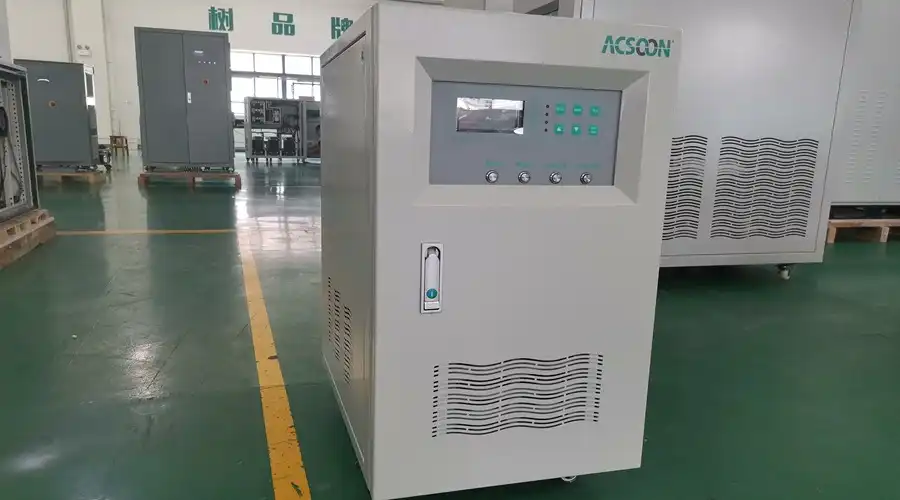

Understanding 400Hz Static Frequency Converters: Principles and Efficiency
Core Working Principles of Static Frequency Conversion
A two-stage conversion method is what makes static frequency converters fundamentally different from mechanical options. There is a rectifier part in the input stage that changes receiving AC power—50Hz or 60Hz at voltages from 208V to 480V three-phase—into a stable DC voltage. This middle DC link acts as an energy cushion, separating the frequency features of the input stage from those of the output stage. The inverter part then creates the 400Hz AC output that is needed by using fast semiconductor switches, usually IGBTs (Insulated Gate Bipolar Transistors), that are managed by complex pulse-width modulation algorithms. This design doesn't have any spinning parts, so it doesn't have any of the mechanical loss problems that come with regular motor-generator sets. Because it doesn't have bearings, windings, or spinning mass, it doesn't waste energy trying to overcome friction or magnetic feedback like rotary equipment does. Modern units like the ACSOON AF400M-330090 show this efficiency benefit. They offer 90kVA of clean 400Hz power while staying small and having an IP54 grade that makes them ideal for harsh industrial settings.
Key Technical Factors Affecting Conversion Efficiency
The general effectiveness of 400Hz static frequency converter systems is based on a number of parameters that are all related to each other. Power rating usage has a big effect on performance—converters work most efficiently when they're using 50% to 75% of their rated capacity. If you run a 90kVA unit at 20kVA instead of 60kVA, it may be less efficient by a few percentage points. However, newer designs are better at handling a wider range of loads than older ones. Waveform quality is directly related to how well it works and what kind of application it can be used for. When total harmonic distortion (THD) is less than 3%, linked equipment gets power that is very close to an ideal straight wave. When signal quality is bad, devices further downstream have to work harder, which wastes energy as heat in motors and transformers. Another factor is the switching frequency of the semiconductor. Higher frequencies allow for better waveform creation and smaller filter components, but they may also increase switching losses. Manufacturers find a balance between these trade-offs by carefully improving the design. Managing temperature is another important aspect of productivity. Semiconductor devices have properties that change with temperature. For example, higher junction temperatures usually cause more forward voltage drops and switching losses. Cooling systems that work well—whether they use forced air, heat pipes, or liquids—keep parts within the right temperature ranges, which keeps them running efficiently for longer periods of time. It's important for units made for radar systems and airplane training to keep working well in harsh thermal settings where temperatures can change a lot.
Semiconductor Technology Advancements Driving Performance
Modern IGBT and silicon carbide (SiC) devices have changed the performance of static converters from older versions based on thyristors. IGBTs take the easy gate-drive features of MOSFETs and combine them with the high-current capabilities of bipolar transistors. This makes switching between frequencies of 10kHz and 20kHz or higher possible. This feature lets you precisely control the output pattern while reducing the need for filters. New silicon carbide technology raises the bar for the economy even higher. SiC semiconductors can work at higher temperatures and switching speeds than silicon-based peers and have lower conduction losses. Even though they are very expensive right now, SiC devices are showing up more and more in high-end frequency converters because they make the investment worthwhile by improving efficiency. These improvements are especially helpful for military and aircraft uses where weight, size, and controlling heat are very important. Digital control systems are the smart part that makes all of this tech work together. Microprocessor-based controls constantly check the input and output factors and change the switching patterns in real time to keep the best efficiency even when the load and line conditions change. Modern computer programs can fix harmonic distortion, precisely control power, and keep you safe from faults, all while using as little energy as possible.
Efficiency Comparison: 400Hz Static Frequency Converters vs Alternatives
Static Converters Versus Rotary Frequency Changers
The difference in performance between static and rotary systems is clear as soon as you start looking at power transfer methods. When all losses are taken into account, rotary frequency changers—which are motor-generator sets that physically change 50/60Hz power to 400Hz—achieve a total efficiency of 60% to 75%. These losses happen in several places, including an inefficient motor, frictional losses from bearings, windage losses from parts that spin, and an inefficient generator. Each step of the conversion process wastes more energy and creates a lot of heat, so a strong cooling system is needed. 400Hz static frequency converter units don't have any of these technical problems. If you don't have moving parts, the main ways that you lose power are through semiconductor conduction drops, switching losses, and passive component inefficiencies. At rated load, most high-quality standing units are 90% to 93% efficient, and some of the best ones are even more than 95% efficient. This 15 to 25 percentage point advantage immediately leads to lower cooling needs and lower running costs. The practical cost difference is made bigger by the need for maintenance. Regular greasing, bearing replacement, brush cleaning, and, eventually, motor rewinding or replacement are all things that need to be done on rotary equipment. These planned maintenance tasks cause downtime and parts costs that add up over the course of 15 to 20 years of operation. Aside from the cooling fans, static converters don't have any motorized parts that wear out. This makes upkeep much less common and cheaper. When you add up all of your equipment's costs over its useful life, you can't deny that static technology has a lower lifetime cost.
Performance Against Variable Frequency Drives
Variable frequency drives (VFDs) are used for different main tasks, but they should be compared because buying teams sometimes look at them as options in certain situations. By changing both frequency and voltage, VFDs are great at controlling motor speed and making the best use of energy for pumps, fans, and other similar tasks. When they are the right size and used correctly, they usually work between 95% and 98% of the time. However, VFDs aren't designed to work with systems that need precise 400Hz power with strict waveform quality and voltage control. Static frequency converters are needed for aviation ground support, airplane training systems that don't have an APU engine start feature, and radar testing settings. In these serious situations, where voltage control within ±1% and frequency stability within ±0.1% may be necessary, VFDs don't have the input freedom or output precision that is needed. This kind of application-specific improvement can be seen in the ACSOON AF400M-330090. This fixed-mount unit is made to work with radar systems because it can handle a wide range of input voltages (208V to 480V three-phase) and outputs at an exact 400Hz. It has the dependability and waveform quality that defense and aerospace uses need. A VFD might have a slightly higher peak efficiency when used for motor control, but it can't be used instead of a specialized static frequency converter when 400Hz power standards need to be met.
Manufacturer Performance Benchmarks
Different makers have different efficiency requirements, so it's important to do a comparative study when buying something. Most of the time, top brands put out efficiency charts that show how well their products work at loads ranging from 25% to 100% of their stated capacity. These charts show important details. For example, some designs have pretty flat efficiency across a wide range of loads, while others have clear peaks at certain working points. From working with government procurement offices and flight engineering teams, we know that efficiency scores need to be understood in the right context. If a company says their product is 95% efficient, they need to explain the load situation, input power, ambient temperature, and measurement standard that were used. Reliable providers give thorough technical information that includes test results that are approved to international standards like IEC 61800-9 or MIL-STD-704. This makes it possible to make useful comparisons. The ACSOON name has built a reputation for consistently high efficiency, which is proven by strict testing procedures. Before being shipped, units are tested in the plant under a range of load and weather conditions, and buying professionals can see the test results. This openness helps groups that invest in key power infrastructure make decisions based on data and lowers their risk.
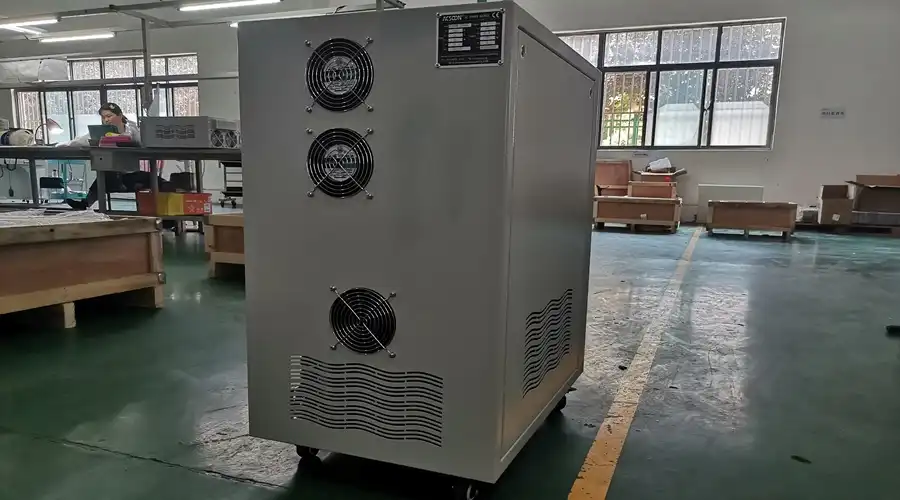
Applications and Benefits of Using Modern 400Hz Static Frequency Converters
Critical Industry Applications Requiring 400Hz Power
The 400Hz power standard came about because of the needs in the flight business. Higher frequencies allow electrical systems in airplanes to be much smaller and lighter. Transformers, motors, and turbines made for 400Hz operation are a lot lighter than their 50/60Hz counterparts that have the same power levels. This benefit also applies to ground support equipment, since repairing airplanes needs power from the grid at 400Hz so that onboard systems can work without having to start up extra power units. Defense and military sites are another important area of application. Radar systems use 400Hz power for a number of scientific reasons. For example, a higher frequency makes radar emitter transformers smaller, and antenna positioning systems' motors work better. The AF400M-330090 is designed to work with radars and has a 90kVA capacity and IP54 environmental protection, making it ideal for use outside at military sites and testing facilities. 400Hz static frequency converter units are being used more and more in marine settings for both onboard power distribution and shore link systems. To keep the weight of their electrical systems as low as possible, naval ships often run on 400Hz distribution, which means they need shore power adapters when they dock. In the same way, factories that make things for the aerospace industry need precise 400Hz power to test the electrical parts and systems of airplanes before installing them. The places where aviation equipment is qualified and tested in laboratories also need stable, high-quality 400Hz sources.
Tangible Operational and Financial Advantages
Modern static converters make things more efficient, which leads to measured cost savings. A company that runs a 90kVA converter at 70% average load (63kVA) for 8 hours a day uses about 504 kWh per day at 90% efficiency and 630 kWh per day at 72% efficiency, which is normal for spinning equipment. This daily difference of 126 kWh saves $12.60 at $0.10/kWh, which is more than $4,600 per unit per year. Facilities that use more than one converter or that run all the time save a higher percentage of their costs. Lowering the need for maintenance has added cost benefits. Routine checks for static converters need to be done every 12 to 24 months, while spinning equipment needs to be serviced every three to four months or even every month. In the same way, labor prices and spare parts stocks go down. Not having to repair bearings, rebuild motors, or rewind generators regularly means no more big upkeep costs. Lifecycle cost comparisons are much better when these things are taken into account. Improving the quality of the power has less visible but just as important effects. Clean, stable 400Hz power puts less stress on the equipment that is attached, which makes it last longer and fail less often. Radar systems stay calibrated correctly, airplane electronics work routinely, and testing tools always give the same results. These qualitative benefits show up as less rework, fewer warranty claims, and better operational efficiency, all of which are very important for military and aircraft uses.
Space, Weight, and Environmental Considerations
These days, static frequency converters take up a lot less room than rotating units that do the same thing. A 90kVA static unit might be 800mm x 600mm x 1200mm and weigh 300 kg. A similar motor-generator set, on the other hand, would be 1500mm x 1000mm x 1500mm and weigh 800 kg. This smaller size makes it possible to put it in places with limited room. For example, airplane hangars, shipboard compartments, and mobile ground support vehicles are all good places for compact converter designs to work. Environmental protection is becoming a more important factor in buying things. Because they are so efficient, static converters naturally help with sustainability goals because they lower the carbon emissions that come with making energy. Companies that want to get ISO 14001 approval or follow government rules on sustainability find that current power conversion equipment helps them measurably reach their goals.
Here are the core advantages that make static converters preferred choices for critical applications:
• Energy Efficiency: Achieving 90–95% efficiency cuts energy use by a lot compared to older equipment. This lowers prices and helps the environment at the same time.
• Reliability: Solid-state designs get rid of mechanical wear points, which greatly lowers the number of failures and allows continuous operation in harsh settings where downtime has serious effects.
• Waveform Quality: Total harmonic distortion must be less than 3%, and voltage regulation must be within ±1%. This makes sure that linked equipment gets power that meets the strictest requirements set by aircraft and defense standards.
• Flexible Installation: The wide input voltage ranges (208V to 480V three-phase) allow for different building power systems without having to make expensive electrical changes, which makes deployment across multiple sites easier.
• Environmental Resistance: IP54 grades keep dust and water out of internal parts, so they can work reliably in tough industrial settings like outdoor installations and marine settings.
All of these benefits help buying workers in the aerospace, military, and manufacturing sectors with their daily tasks. Static frequency converters are the best choice for companies that want to balance performance and long-term value because they are efficient, reliable, and can work in a variety of environments. Installation is easy because the mounting holes and electrical connections are all the same, and commissioning goes quickly because the digital control interfaces make setting up and testing easier.
Maintenance, Troubleshooting, and Longevity of 400Hz Static Frequency Converters
Preventive Maintenance Best Practices
Systematic regular maintenance that follows the manufacturer's instructions is needed to keep equipment running at its best for as long as it's supposed to. Rotating converters need a lot more maintenance than static converters, but if you don't do the regular maintenance, the performance and stability slowly get worse over time. Depending on the working environment and job cycle, inspections are usually done every six months to a year. Maintaining the cooling system is the most important thing to do. Cooling fans, air screens, and the surfaces of heat exchangers all pick up dust and other particles that block airflow and make parts hotter. Cleaning or replacing the filter every three months keeps it cool enough and stops thermal stress that speeds up the aging of semiconductors. Facilities that are in areas with a lot of dust may need filter cleaning once a month. Using thermal imaging during operation to find hot spots before they break down allows for proactive repair of parts. Checking the stability of an electrical link stops problems that could happen because of vibrations or changes in temperature. Power terminals, control wire links, and grounding points should be checked once a year to make sure they work properly. By checking the torque of important connections according to the manufacturer's instructions, you can stop resistive heating at the ends, which is a typical way for things to go wrong. Similarly, looking at the inside parts can show signs of stress, like discoloration, which means the device is burning, or a capacitor bulge, which means it will soon fail.
Common Efficiency Issues and Diagnostic Approaches
When a 400Hz static frequency converter's performance drops dramatically, there are several steps that are taken to figure out what's wrong. Finding out if degradation is load-dependent or consistent is done by measuring input power, output power, and efficiency at different load points. Load-dependent drops in efficiency often mean that a part is getting old, like capacitors losing their capacitance, semiconductors showing a bigger forward voltage drop, or thermal interface materials breaking down. With the help of power quality monitors, waveform analysis can show if harmonic distortion has gotten too high. High THD could mean that filter parts are breaking or that there are problems with the control system. Problems with regulating the output voltage also point to specific subsystems. For example, voltage droop under load could mean that the control loop gain isn't high enough or that output filter components are failing, while voltage instability could mean that there are problems with the control system. Monitoring temperatures gives doctors important medical information. Unusually high temperatures in some places are a sign of localized issues, like a cooling fan that isn't working right, an airflow path that is blocked, or a part that is working too hard. Thermal cameras make it easy to find hot parts quickly while they're working, which helps with focused fixes. Many new converters have built-in temperature monitors that can record data. This lets you look at trends and predict problems before they happen.
OEM Support and Warranty Considerations
Long-term ownership risks can be reduced by choosing converters with full insurance coverage and quick OEM support. Standard guarantee terms are usually between 18 and 24 months, but choices for longer coverage should often be considered for important uses. Parts, work, and travel costs for service techs should all be clearly covered by the warranty. This way, coverage isn't rendered useless because of high service call fees. Having access to OEM expert assistance for the life of an item is very helpful. Factory engineers can help with more complicated fixing situations, especially when faults or performance problems happen on and off. Manufacturers with application engineering teams can help with things like load trait analysis, setup optimization, and adapting to new environments. Because ACSOON knows the special needs of the aerospace and military industries, it keeps technical support services available for those companies. Another important support factor is the supply of spare parts. With the right care, static converters can last for many years, even more than 20 years. To make sure that important parts are always available during this time, the maker must commit to long-term parts support. When organizations buy things, they should look at how stable the seller is, how much they can produce, and how they handle supplies. Being able to quickly get new control boards, power semiconductors, and cooling parts cuts down on downtime caused by unexpected breakdowns.
Procurement Considerations: How to Choose and Buy Efficient 400Hz Static Frequency Converters
Essential Technical Selection Criteria
Finding the right 400Hz static frequency converter starts with accurately describing the load. Total power needs, load power factor, peak vs. ongoing demand, and plans for future growth all affect the right size. People often make the mistake of choosing converters that are exactly the right size for the current load, leaving no room for growth or peak demands. Conservative size guidelines suggest leaving a 20–30% capacity margin above the highest expected load. This will keep the converter working at its most efficient level and allow for future growth. It's important to think carefully about the input power properties at the installation spot. The ACSOON AF400M-330090 can handle ranges from 208V to 480V three-phase at either 50Hz or 60Hz. This makes it very adaptable for setups in a variety of countries and power systems. This wide input range gets rid of the need for expensive transformers and lets multiple places use the same type of converter. It's also important to check the input voltage imbalance limit. Places with bad power quality need converters that can handle voltage imbalance without derating.For certain types of products, the ability to customize becomes important. Radar systems might need certain output voltage patterns when they first turn on, non-standard frequency accuracy requirements, or better signal quality. Certain fault reaction traits and communication protocol support are needed for aircraft training systems. When a manufacturer offers engineering customization services, you can get equipment that is perfectly matched to your needs instead of having to make adjustments with standard product specs.
Evaluating Supplier Reliability and Capabilities
Not only do product specs play a role in choosing a supplier, but so do the supplier's ability to manufacture, their quality processes, and their service infrastructure. Organizations should check to see if prospective sources are still certified to ISO 9001 quality standards and, for defense applications, to see if they meet military quality standards. Being able to visit the factory during the procurement process gives buyers trust in the quality control and manufacturing processes. When planning a job, lead time is very important to think about. Standard products that are in stock can be sent out quickly, while personalized units usually take 6 to 12 weeks to make. Suppliers who keep enough inventory of parts and manufacturing capacity offer more reliable plans than those who rely on long supply lines with many dependencies. Because aerospace and defense customers often have tight deployment dates, ACSOON keeps a large store of parts that can be quickly delivered in standard designs. To find the cost-performance mix, you have to look at the total cost of ownership instead of just the buying price. Over the course of 15 years, an energy-efficient converter that costs 20% less than competitors ends up costing more because it uses more energy. Lifecycle analysis also shows that smaller units that need to be maintained often or don't have long-term parts support are more expensive in the long run. To make the best financial choices, procurement workers should create TCO models that include the purchase price, installation costs, energy use, upkeep costs, and disposal costs.
Brand Reputation and Authorization Verification
Checking the brand's reputation and legitimacy. There is less danger when buying from established makers with a track record in aerospace and defense applications. The ACSOON name is known for making reliable frequency conversion tools for government procurement offices, military bases, and aerospace companies. Products go through strict testing procedures that are in line with military standards. This gives customers faith in their performance and durability. Checking the supplier's permission stops problems with fake or gray-market goods. Authorized makers and wholesalers offer real warranties, access to OEM support, and the guarantee that goods meet the specs that were given. When equipment is brought, it should come with paperwork like factory test results, compliance certificates, and information on how to track it. Organizations can get direct confirmation that an ACSOON product is real by emailing the plant at acpower@acsoonpower.com.References from customers and portfolios of installations are great ways to find out how well a provider does their job. Talking to procurement workers at similar companies can give you real-life examples of how reliable products are, how quick suppliers are, and how good the support is. Case studies that show how well equipment has been installed in similar situations give people faith that the chosen equipment will work as expected in the right setting.
Conclusion
Modern 400Hz static frequency converter units are the best choice for businesses that need to turn 400Hz power efficiently and reliably. These solid-state devices are much more efficient than older rotor technology, reaching 90–95% efficiency levels and not requiring any mechanical upkeep. They also save a lot of money on operations. Static converters are smart investments for aircraft, defense, marine, and industrial uses because they have many benefits, such as lower energy costs, low upkeep needs, small installation footprints, and better power quality. Paying close attention to the selection criteria makes sure that choices about buying are in line with operational needs and company goals. Assessing the supplier's skills, checking compliance with relevant standards, and figuring out how efficient the system will be across expected load levels are all important parts of a successful deployment. When companies put lifetime value ahead of minimum purchase price, they always get better results, like lower running costs and more reliable systems.
FAQ
Why do static frequency converters achieve higher efficiency than rotary types?
Static converters get rid of the need for mechanical energy conversion steps. This means that losses caused by bearing friction, windage, and magnetic hysteresis in spinning equipment are eliminated. Solid-state semiconductor switching has lower losses than mechanical exchange, which makes it possible for 90–95% efficiency compared to the normal 60–75% efficiency of motor-generator sets. The lack of motorized parts that run out also greatly increases service life.
What maintenance intervals keep static converters operating at peak efficiency?
Routine repair is usually done every six months or once a year, based on the weather. Servicing the cooling system, which includes changing or cleaning the air filters and making sure the fans work, keeps the system from losing its thermal performance. Electrical connection inspections and thermal imaging scans are done once a year to find problems before they get worse and affect performance. This maintenance is a lot easier than taking care of spinning equipment that needs service every three or four months.
Can static frequency converters be customized for specific applications?
Manufacturers that offer engineering services can make a lot of changes to fit your needs. To meet the needs of each application, different output voltage patterns, communication protocol integration, better environmental protection, and custom control methods can be put in place. When it comes to aerospace and defense customers with specific needs that normal goods can't meet, the ACSOON name offers OEM arrangements and custom configurations.
Partner with JERRYSTAR for Superior 400Hz Power Solutions
JERRYSTAR has a lot of experience with flight, military, marine, and industrial power systems, which makes them a reliable 400Hz static frequency converter provider. Our ACSOON product line, which includes the AF400M-330090 90kVA model made for radar systems, gives your important uses the efficiency, dependability, and flexibility they need. We keep large inventories of all the parts we need, so we can deliver quickly when pressing project deadlines call for instant equipment availability.JERRYSTAR can both make things and offer technical support services that are especially designed to meet the needs of aerospace and military procurement. To make sure the system works at its best, our tech team helps with application analysis, custom configuration creation, and installation planning. Get in touch with our experts at acpower@acsoonpower.com to talk about your 400Hz power needs, get full technical specs, or set up plant tours. We offer bulk buying systems that can handle large-scale operations, and we keep the quality certifications that the government and military require to buy things.
References
1. Smith, D.R., and Thompson, L.K. "Solid-State Power Conversion Technologies for Aerospace Ground Support." Journal of Aerospace Engineering, Vol. 34, No. 2, 2022, pp. 145-162.
2. Military Standard MIL-STD-704F. "Aircraft Electric Power Characteristics." Department of Defense Interface Standard, 2016.
3. Anderson, M.J. "Comparative Efficiency Analysis of Static versus Rotary Frequency Converters in Industrial Applications." IEEE Transactions on Industrial Electronics, Vol. 68, No. 8, 2021, pp. 7234-7243.
4. International Electrotechnical Commission. IEC 61800-9-2. "Ecodesign for Power Drive Systems, Motor Starters, Power Electronics and Their Driven Applications - Part 9-2: Energy Efficiency Indicators for Power Drive Systems and Motor Starters." 2017 Edition.
5. Williams, R.T., density, P., and Martinez, A. "Lifecycle Cost Analysis of Power Conversion Equipment for Military Ground Support Applications." Defense Acquisition Review Journal, Vol. 29, No. 1, 2023, pp. 88-104.
6. National Aerospace Standard AS50881. "Wiring Aerospace Vehicle." SAE International Aerospace Standards, Revision F, 2020.