



60 to 50Hz Frequency Converter for Motors and Machinery
A 60 to 50Hz frequency converter is a specialized power conversion device that changes the electricity source from a 60Hz frequency standard to a 50Hz frequency standard. This makes it possible for machines and motors made for different regional power specifications to work consistently. This technology fills in the gaps between North American and European electrical standards so that tools can work with each other easily across countries. Using frequency converters keeps equipment running at its best and for longer, without having to make expensive changes. This is true whether you're working with cooling systems in a data center, manufacturing machinery, or ground support equipment for flight.
Understanding 60 to 50Hz Frequency Converters
Many people get 60 to 50Hz frequency converters mixed up with transformers and inverters, even though they have different uses in modern industry. A frequency conversion device changes the frequency of alternating current while keeping the voltage stable. This is different from transformers and inverters, which only change the voltage levels and not the frequency. This difference is very important when buying equipment for activities that cross borders or when adding foreign equipment to power grids that are already in place.
How Frequency Converters Work
Three well-coordinated steps make up the basic idea behind frequency conversion. A converter circuit changes the alternating current (AC) to direct current (DC) when 60Hz AC power comes in. This DC stage in the middle works as a buffer, separating the input frequency from the output frequency. Then, an inverter part builds back up a clean AC signal at the 50Hz frequency that was asked for. This whole process is controlled by advanced control circuits that use computer technology to keep the voltage stable and the pulse pure even when the load changes. These days, static frequency converters do this without using any moving parts, so they are more reliable than rotating converters.
Key Benefits for Motor-Driven Systems
Putting in the right frequency conversion tools has real benefits for operations. When motors are going at the frequency that was meant for them, they have the best torque characteristics. This means that bearings and other drive parts are under less mechanical stress. When motors work within their designed limits instead of trying to make up for frequency mismatches, they use less energy. When proper frequency conversion is used instead of makeshift methods, we've seen devices last 25–40% longer. Temperature stability gets better, vibration levels go down, and repair times get longer. All of these things lower the total cost of ownership over the span of the equipment.
Components That Ensure Reliability
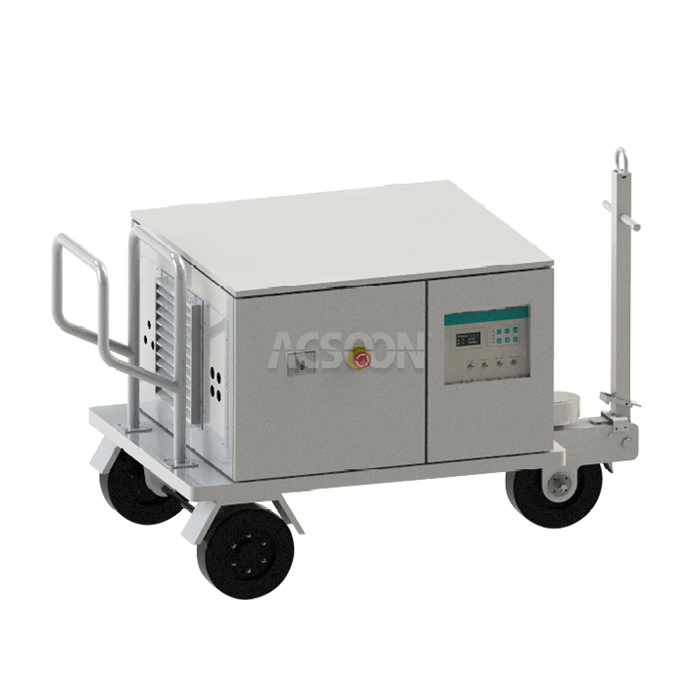
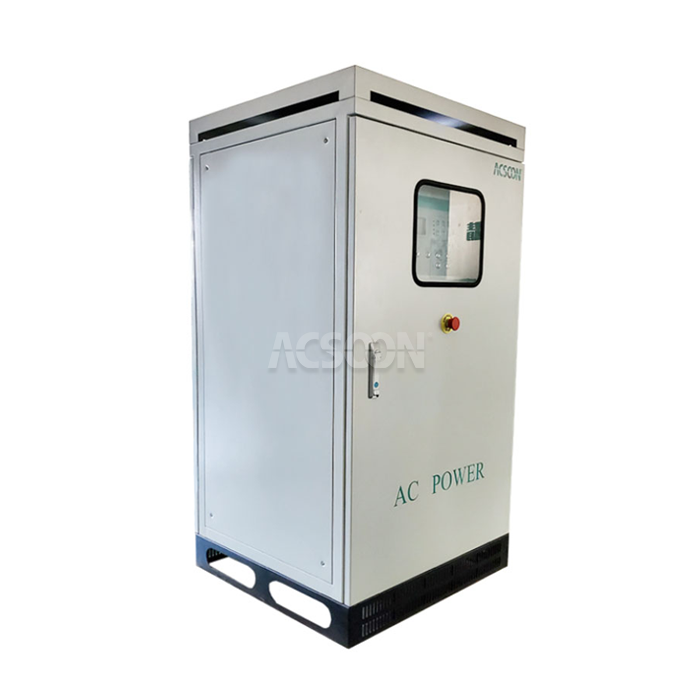
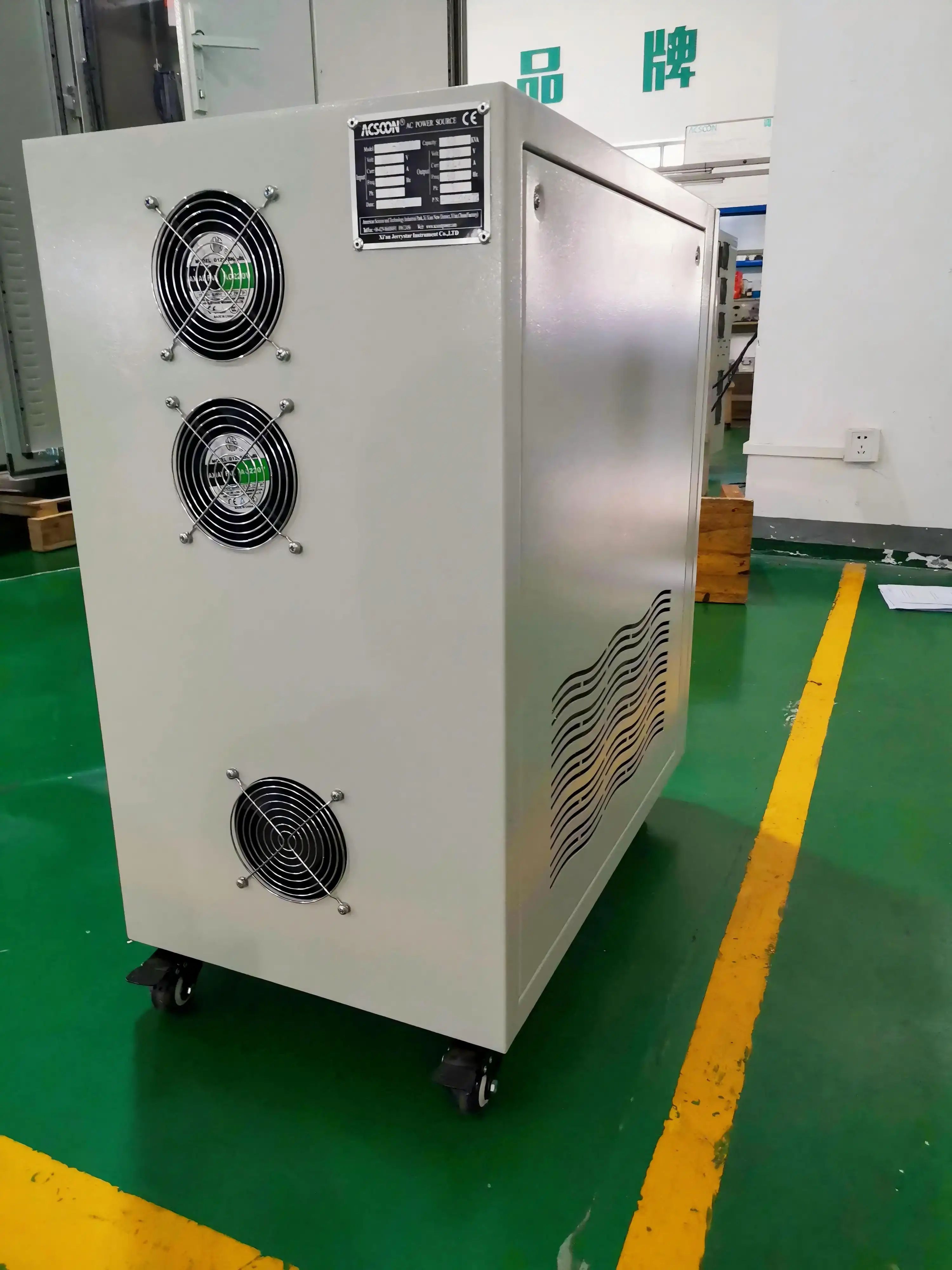
Several important parts are built into high-quality frequency converters. To convert power, the stage needs strong semiconductor switches that can handle both surges and constant rating loads. Harmonic distortion, which could damage sensitive equipment or break power quality rules, is taken care of by filtering parts. Control electronics monitor input conditions, output parameters, and internal temperatures to protect both the converter and connected loads. This integrated method is shown by the ACSOON AF60W-330030 model, which combines these parts in a mobile upright design that is IP21-rated for use in industrial settings.
Applications and Industrial Use Cases
Frequency conversion technology is useful when equipment moves around or when buying things from other countries causes frequency mismatches. This is a problem that many factories that use foreign production lines have to deal with. A company in Texas that makes packing machinery recently added filling equipment from Europe that works at 50Hz to their 60Hz plant. Instead of rewinding motors or putting up with lower performance, they used 60 to 50Hz frequency converters that met the original equipment specs and met output goals.
Data Center Cooling Systems
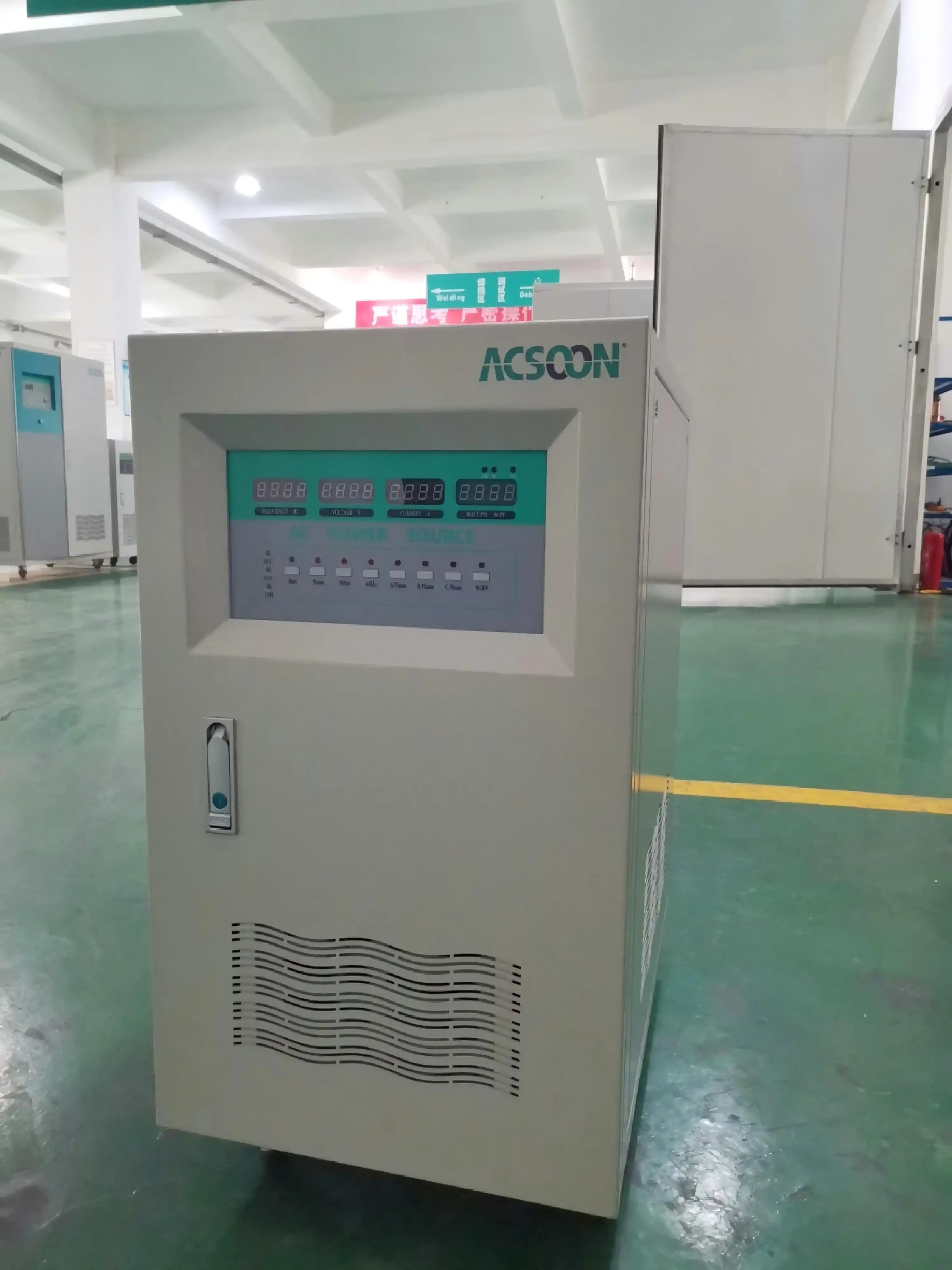
Absolute dependability is needed for mission-critical cooling systems. More and more, data centers are buying HVAC parts from around the world to get access to specialized technologies or better prices. When a colocation center in the Midwest added more space using precision cooling units set at 50Hz, it became necessary to keep the frequency correct. The answer was the ACSOON AF60W-330030 static frequency converter, which can work with three-phase 208-480V and has a 30kVA rating. Its output is a clean sine wave with a total harmonic distortion (THD) of less than 3%. This makes sure that compressor motors work easily without any electrical noise that could damage sensitive IT loads. The upright design with built-in wheels lets you move it as your cooling needs change, and the LED displays show voltage, current, power factor, and operating state in real time.
Marine and Aerospace Ground Support
Frequency conversion needs are different for aviation ground power and naval uses. Systems on airplanes usually work at 400Hz, but testing centers and repair hangars need to be able to change the power source quickly. When ships move between foreign ports, they run into different shore power norms. We've sold frequency converters to navy shipyards where foreign machines needed 50Hz power in places where 60Hz was the norm. The tools kept the accuracy of the cutting tolerances and eliminated the cost of keeping dual-voltage motors on hand.
Laboratory Testing Environments
In order to test foreign goods, research and development labs need power sources that meet the needs of the target market. Parts that are going to be sold in Europe are tested at an aircraft components testing lab in Southern California. Their vibration tables, environmental rooms, and temperature cycling tools must all be able to simulate real-world working conditions, right down to the right electrical frequency. Frequency converters make it possible to use real testing methods without having to keep different labs or send samples overseas for validation testing.
Addressing Common Implementation Challenges
When putting power conversion equipment close to sensitive instruments, electromagnetic interference is often a worry. Input and output filters in high-quality frequency converters keep both conducted and transmitted emissions within legal limits. Interference problems can be avoided by properly grounding equipment and keeping enough space between it and other equipment that could be affected. Simple changes in voltage or frequency don't have the same effect on power quality as harmonic distortion. Equipment producing excessive harmonics can cause transformer overheating, nuisance breaker trips, and premature capacitor failures in power factor correction systems. For most industrial uses, these worries go away when converters with THD specs below 3% are specified.
Comparing Frequency Conversion Solutions for Motor Applications
When looking at different power conditioning choices, it's important to know how the different technologies work so that you don't make expensive mistakes. One option is a variable frequency drive, which lets you change both the frequency and the speed. But VFDs put stress on motors through pulse-width modulation switching, which causes insulation to wear out and bearing currents to build up over time. Static 60 to 50Hz frequency converters make outputs that are true sine waves, which keep the motor's structure while changing the frequency without changing the speed.
Rotary Versus Static Conversion Technology
A motor moving at the input frequency powers a generator that makes the output frequency. This is how rotary frequency converters work. This mechanical method works well even when it's overloaded, and there is no electrical connection between the input and output. However, rotary units take up a lot of floor space, make noise, need regular upkeep on their rotating parts, and are less efficient—usually only 85–90% compared to 95–97% for static converters. Static solid-state converters get rid of mechanical wear points and offer small sizes. The ACSOON brand specializes in static conversion technology that works well and is reliable, and it can handle both standard and unique voltage setups.
Evaluating Efficiency and Power Quality Metrics
Total harmonic distortion measures how pure a waveform is; lower numbers mean better power. Industrial motors can handle THD levels of up to 5% without losing much performance, but electronics and instruments that need to be very accurate need distortion levels below 3%. Energy prices and utility usage charges are affected by power factor. Power factors above 0.95 are maintained by good frequency converters across their load range, which keeps reactive power charges to a minimum. When a 30kVA converter is running at full load, it uses about 900 watts more per hour at 93% efficiency than at 96% efficiency. This is because efficiency rates directly affect operating costs. Over the course of constant running, this difference adds up to big cooling and energy costs.
Load Type Considerations
When it comes to conversion, resistive heating loads are the easiest because they can handle a bigger range of power and frequency stability. To keep the right flux levels and torque features, inductive motor loads need precise frequency control. Harmonic currents are made by capacitive loads and rectifier inputs, so frequency converters need to have strong filters and enough current values. When buying frequency conversion equipment, giving manufacturers full load specs helps them choose the right size and features, which keeps problems from happening in the field.
How to Select the Right 60Hz to 50Hz Frequency Converter for Your Business
A full load study is the first step in defining technical needs. Write down the voltage, current, power factor, and starting properties of linked devices as shown on the nameplate. When a three-phase motor first starts up, its inrush current is 6 to 8 times its running current. Your 60 to 50Hz frequency converter needs to be able to handle these sudden needs without shutting down for safety reasons. The AF60W-330030 model has a constant capacity of 30kVA and can accept three-phase 208-480V inputs, so it can work in places with varying voltages while still providing a stable 50Hz output across the same voltage range.
Environmental and Installation Factors
Operating temperature ranges have an effect on the dependability and capacity of a frequency converter. Standard industrial-grade equipment works in temperatures ranging from 0°C to 40°C, but some designs are made to work in very cold or very hot places. The IP21 grade means that it can withstand solid items bigger than 12.5 mm and vertical water drops. This is good enough for industrial installations inside, but not for direct weather exposure. Mobile applications benefit from setups with wheels that make moving things around easier without having to set up extra equipment. When compared to rackmount designs, upright mounting takes up less floor space and makes control surfaces easier to reach.
Evaluating Leading Manufacturers
There are well-known names in the global frequency converter market that are known for their excellent engineering. Large-scale industrial uses are dominated by Siemens and ABB, which have huge product lines and service networks all over the world. Schneider Electric and Mitsubishi both offer solid options that are priced competitively and work well. Delta Electronics and Yaskawa are experts at making small designs that can fit in tight spaces. ACSOON has built a good name in the aviation, military, marine, and lab industries by providing custom power solutions that meet specific needs. This company supports relationships with original equipment manufacturers (OEMs) and keeps a deep inventory so that they can quickly deploy when pressing operational needs appear.
Customization Capabilities
Standard stock items meet most needs, but custom solutions are often needed for unique situations. Custom output rates above 50Hz or 60Hz are available to work with different types of equipment. When the grid isn't working right or old equipment is being used, non-standard voltage setups are used. Integrated control links let you operate and watch from afar. Extreme temperatures, high altitudes, vibrations, or exposure to contamination can all cause environmental hardening. Working with companies that allow customization, like Xi'an Jerrystar Instrument Co., Ltd., makes sure that solutions exactly meet business needs instead of sacrificing performance to fit standard goods.
Procurement Guide: Buying 60Hz to 50Hz Frequency Converters
When you buy 60 to 50Hz frequency converters, you have to think about technical requirements, your budget, delivery times, and your ability to provide help. When you buy directly from a maker, you usually get the best deal for custom needs or large sales. Companies like Xi'an Jerrystar Instrument Co., Ltd., which has a manufacturing plant that is 5,000 to 10,000 square meters and is in Shaanxi Province, are able to make a lot of things because they have specialized in aviation and military power systems. This direct connection speeds up the process of defining specifications, allows factory acceptance testing, and makes it clear who is responsible for the guarantee.
Supply Chain and Delivery Considerations
Changes in global production have an effect on lead times and inventory. Standard goods usually ship between 2 and 4 weeks from well-known makers who keep stock. Custom setups can make lead times 6 to 12 weeks longer, based on where the parts come from and what the technical needs are. It takes 4 to 6 weeks for containers made in Asia to get to the United States after going through customs. Air freight cuts arrival times in half to five to ten days, but it costs a lot more. When procurement teams plan to buy tools, they should include realistic wait times in their project schedules. This is especially important for installations that are on the critical path, where delays can affect other activities that depend on them.
Pricing Structure and Negotiation Strategies
The cost of a frequency converter depends on its power level, features, and how the maker markets it. New makers' entry-level 30kVA static frequency converters start at about $3,500 to $5,000, while high-end names charge $6,000 to $9,000 for similar models. Base prices go up by 15 to 30 percent for advanced features like touchscreen interfaces, remote contact methods, or specialized security functions. When you buy a lot of something or make a framework deal, you can usually get 10–20% off the price. Custom engineering comes with extra costs that are related to how hard the development is. Depending on how much the product is changed, these costs can be anywhere from 5 to 35% more than normal goods.
After-Sales Support and Warranty Terms
Full warranty protection keeps buying investments safe from flaws in the manufacturing process and early failures. Standard guarantee terms are 12 to 24 months from the date of installation or 18 to 36 months from the date of shipment. Longer guarantees that last for 5 years cost between 8 and 15% of the price of the tools. Look at the terms of the guarantee to see what it covers: parts only, parts and labor, on-site help, or repair at the factory. Manufacturers with established service networks can respond faster and have less downtime than those who have to ship parts internationally. Accessibility of technical help is also important—responsive engineering teams that answer application questions avoid costly installation delays and problems with how the system works.
Conclusion
To choose the right 60 to 50Hz frequency converter, you have to weigh the technical specs against the needs of the business and your budget. Power purification technologies are very different from one another. For example, proper frequency converters produce clean waves that transformers and basic inverters can't match. To make good buying choices, you need to know about your load factors, environmental conditions, and modification needs. Reliable products from well-known companies like ACSOON have been used in challenging military, industry, and aviation situations. When looking at different suppliers, you should look at how they can customize their products, how much inventory they have for quick needs, and their support system, along with the specs of their equipment. All of these things affect how happy and successful the business is in the long run.
FAQ
Are frequency converters compatible with all motor types?
With good 60 to 50Hz frequency converters that create pure sine waves, most three-phase induction motors work well. Single-phase motors need the right kind of converter designs. Manufacturers may need to be consulted about synchronous motors and specific designs to make sure they work with each other. The ACSOON AF60W-330030 has a THD of less than 3%, which means it can be used with almost all common industrial motors without having to be downrated.
How does frequency conversion impact equipment efficiency?
Running motors at the frequency they were designed to run at keeps them as efficient as possible, saving 8 to 15 percent of the energy used when compared to frequency errors. In good static frequency converters, the conversion process itself uses 3 to 5 percent of the energy. Overall system efficiency goes up a lot when proper frequency matching is used instead of makeshift methods or putting up with motors that don't work as well as they should.
What warranty considerations matter most?
The length of coverage is only one factor. Check to see what kinds of problems are covered by the guarantee, how long it will take for someone to respond, whether labor and shipping are covered, and how close the manufacturer's service network is. Companies like Xi'an Jerrystar Instrument that work with military and aviation uses usually have strict quality standards and quick support systems that make warranties worth more than the length of the contract.
Partner with JERRYSTAR for Reliable Frequency Conversion Solutions
Xi'an Jerrystar Instrument Co., Ltd. has ACSOON brand frequency converters that are ready to help you with your power conversion needs. These converters are made for tough aviation, military, marine, and industrial uses. We know how to make variable frequency converters, 400Hz static converters, voltage stabilizers, and ground power units that are exactly what you need. As both a producer and a trade company, we keep a large inventory that can be quickly deployed when instant solutions are needed for business reasons. Whether you need a reliable 60 to 50Hz frequency converter supplier for standard uses or custom-built systems to meet specific power needs, our expert team can help you match the capabilities of our equipment with your practical goals. Email our experts at acpower@acsoonpower.com to talk about your unique needs and find out how our frequency conversion solutions can help your important processes run more reliably.
References
1. Institute of Electrical and Electronics Engineers (IEEE), "IEEE Standard 519-2014: Harmonic Control in Electrical Power Systems," IEEE Standards Association, 2014.
2. Mohan, Ned, Tore M. Undeland, and William P. Robbins, "Power Electronics: Converters, Applications, and Design," John Wiley & Sons, Third Edition, 2003.
3. European Committee for Electrotechnical Standardization (CENELEC), "EN 61800-3: Adjustable Speed Electrical Power Drive Systems - EMC Requirements and Specific Test Methods," 2017.
4. National Electrical Manufacturers Association (NEMA), "NEMA MG 1-2016: Motors and Generators," Rosslyn, Virginia, 2016.
5. Bose, Bimal K., "Modern Power Electronics and AC Drives," Prentice Hall PTR, 2001.
6. International Electrotechnical Commission (IEC), "IEC 60146: Semiconductor Converters - General Requirements and Line Commutated Converters," Geneva, Switzerland, 2019.